DbcultAccessing Vault...
Cult Review
Senior Film Conservator
Short answer: Yes, but only if you approach it as a historical artifact rather than a cinematic narrative. This film is an essential watch for those obsessed with the intersection of archaeology and early film, but it will likely bore anyone looking for a standard plot.
This film is for history buffs, students of Egyptology, and fans of silent-era cinematography who appreciate the raw, unpolished look of 1920s location shooting. It is absolutely NOT for someone seeking a dramatic arc or the high-octane adventure typically associated with 1920s cinema like Peggy of the Secret Service.
1) This film works because it captures a version of Egypt that has since vanished under the weight of modern infrastructure and the Aswan High Dam.
2) This film fails because it adopts a detached, clinical perspective that treats its human subjects more like museum exhibits than living people.
3) You should watch it if you want to see the authentic world that surrounded the discovery of Tutankhamun, captured by the men who were actually there.
When we talk about the 'directors' of this film, we aren't talking about Hollywood auteurs. Harry Burton was the official photographer for the Metropolitan Museum of Art's Egyptian Expedition. He is the man responsible for the iconic photos of King Tut’s treasures. His eye is not one for drama; it is an eye for detail, preservation, and clarity. In Daily Life in Egypt: Ancient and Modern, this manifests as a series of long, static shots that feel incredibly deliberate.
Unlike the sweeping romanticism found in Lord Jim, Burton and Albert Morton Lythgoe avoid the urge to 'exoticize' Egypt for the sake of cheap thrills. Instead, they focus on the mechanical reality of life. There is a sequence involving a 'shaduf'—a hand-operated device for lifting water—that is shot with such technical precision you could practically use the film as an engineering manual. It’s a stark contrast to the stylized, often theatrical performances found in contemporary dramas like Stardust.
The direction here is invisible. There is no attempt to manipulate the viewer’s emotions through clever editing or fast-paced cuts. It is a slow, methodical observation. For some, this will feel like watching paint dry. For others, it is a meditative experience that allows the viewer to inhabit a space that no longer exists. It’s raw. It’s honest. It’s occasionally a bit dry.
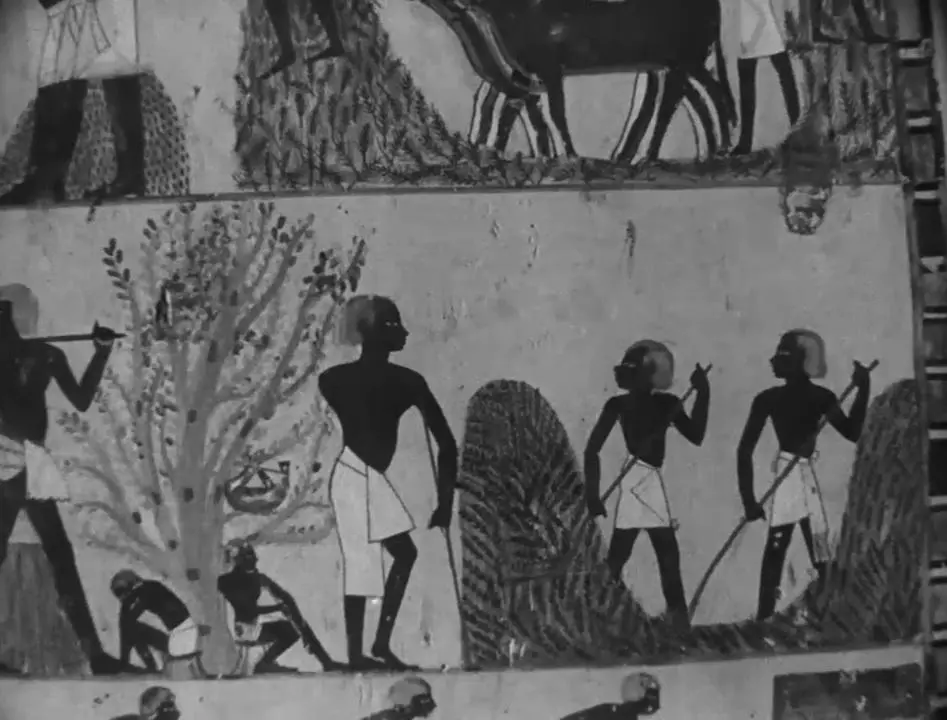
The most fascinating aspect of this documentary is its core thesis: that the Egypt of 1925 was a mirror of the Egypt of 1325 BC. This is a debatable opinion, of course. One could argue that the film ignores the massive social and political shifts of the early 20th century to satisfy a Western desire for an 'eternal' Orient. However, the visual evidence they present is compelling. When the film cuts from a 1920s farmer plowing a field to a relief carving from a tomb showing the exact same posture and tool, the effect is haunting.
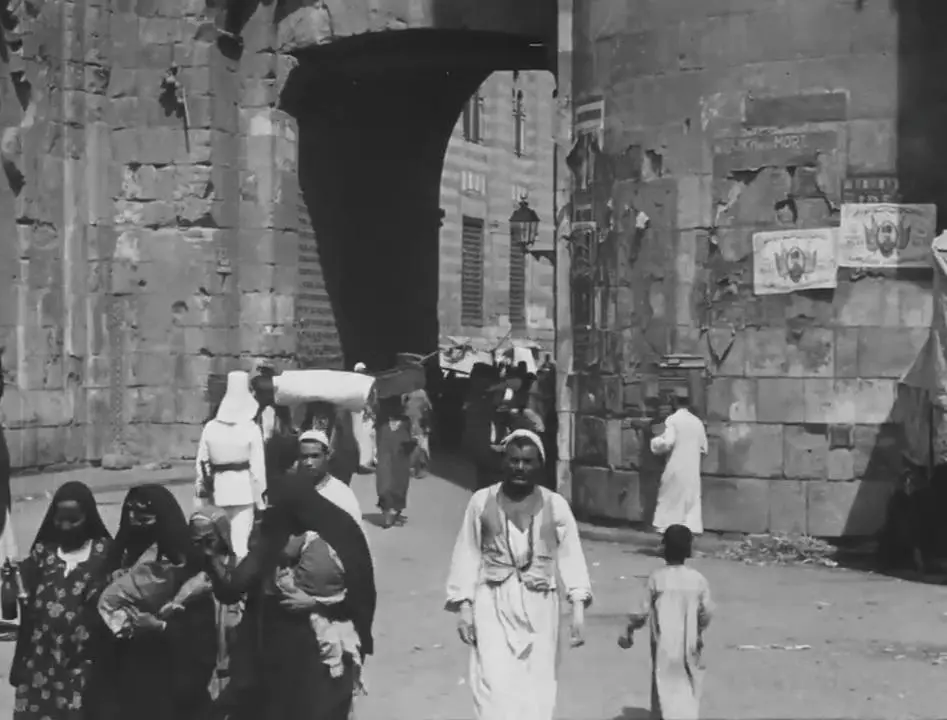
There is a specific scene in a marketplace that feels remarkably vibrant. You see the dust in the air, the texture of the robes, and the genuine interactions between traders. It lacks the polish of a studio film like A Kiss for Susie, and that is its greatest strength. You aren't looking at actors in costumes; you are looking at people living their lives. The grainy 35mm stock adds a layer of grit that makes the experience feel more tangible than any modern documentary could hope to achieve.
Yes, if you value authenticity over entertainment. This film provides a rare, unvarnished look at Egypt before the massive tourist booms and urban expansions of the mid-20th century. It is a visual primary source that is as important as any textbook. If you are looking for a story, look elsewhere. If you are looking for a window into the past, this is it.
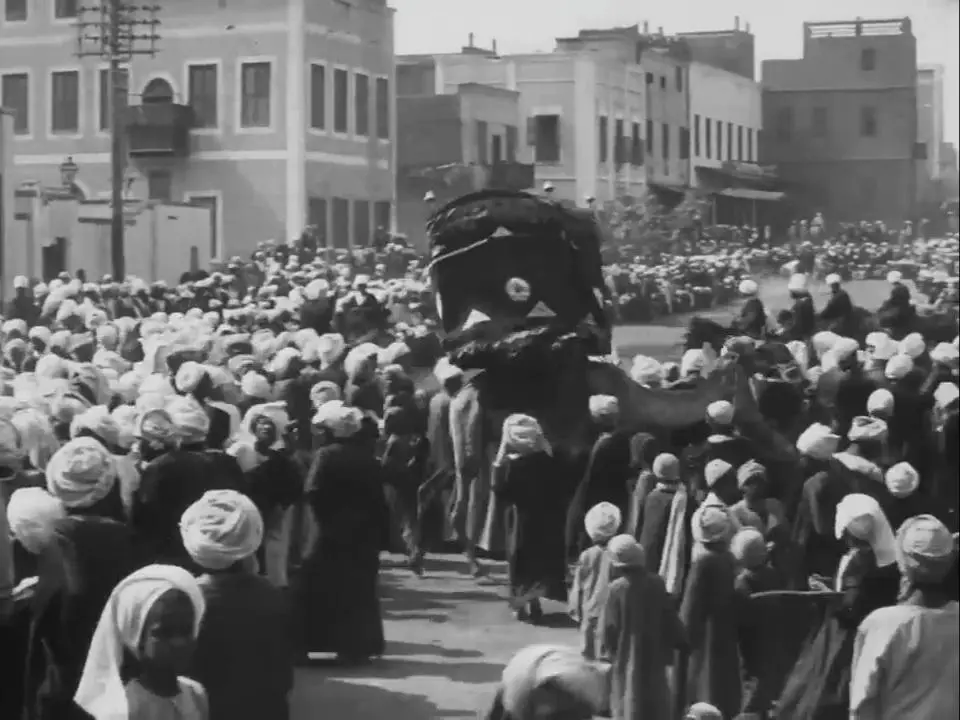
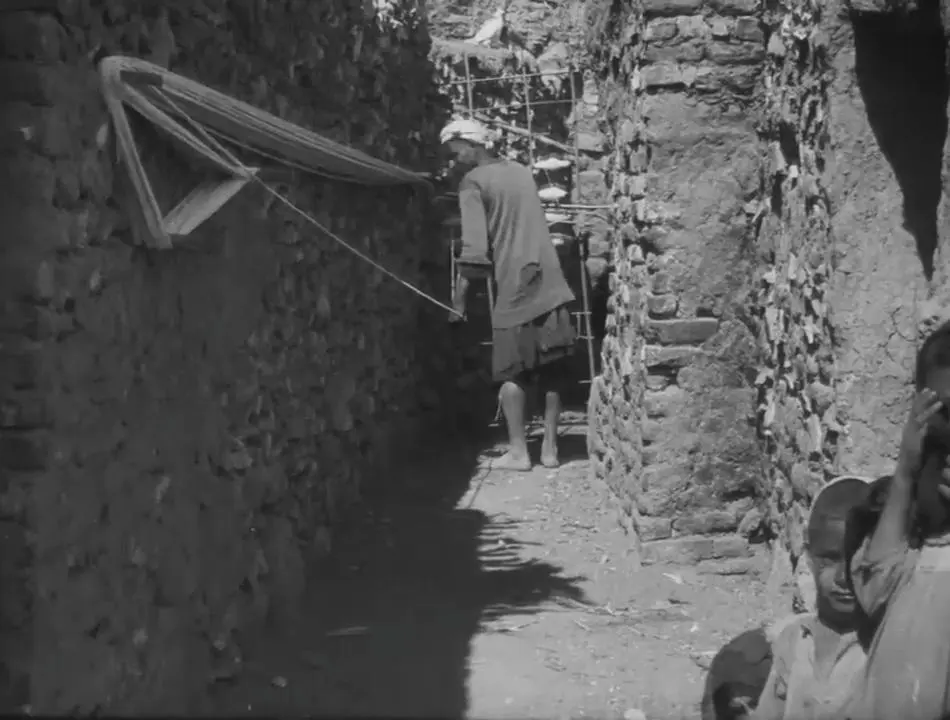
Burton’s cinematography is characterized by a deep focus and a preference for natural lighting. In the 1920s, filming in the harsh Egyptian sun was a technical nightmare. The glare off the sand could easily wash out a frame. Yet, Burton manages to capture incredible textures. You can see the individual grains of wheat and the weathered lines on the faces of the elderly men in the village. This level of detail was rare for the time, especially in non-fiction works.
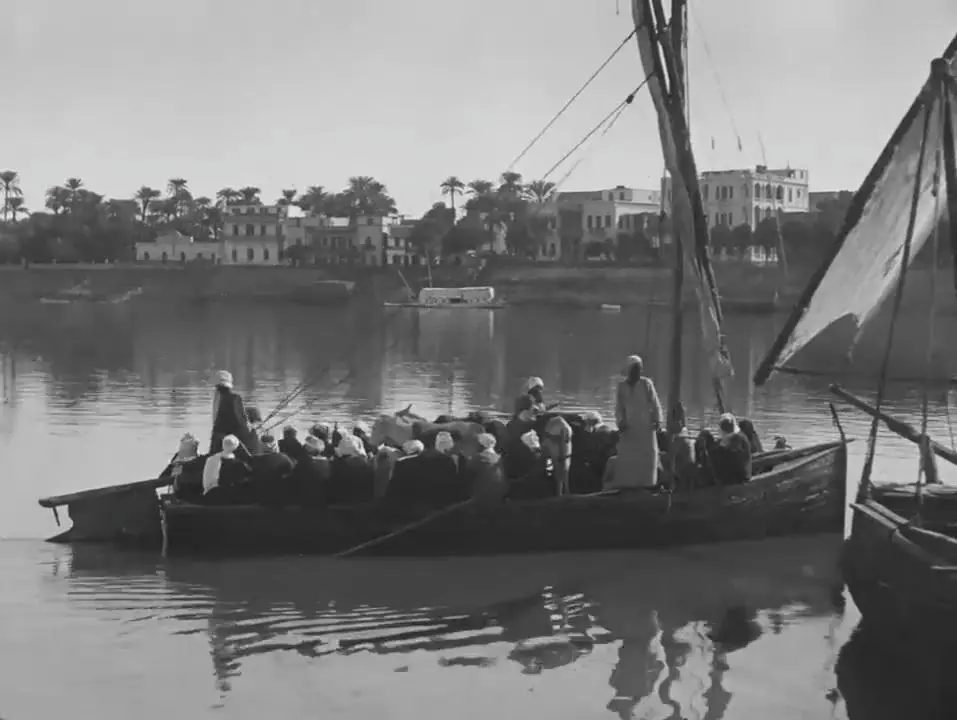
Compare this to the indoor, controlled lighting of Hamlet (1917). While fiction films were mastering the art of shadow and mood, Burton was mastering the art of the 'real.' His shots are wide, giving the subjects room to breathe. He doesn't crowd the frame. There is a respect for the landscape that borders on the spiritual. The Nile isn't just a backdrop; it is the protagonist of the film, providing the water, the transport, and the very lifeblood of every scene.
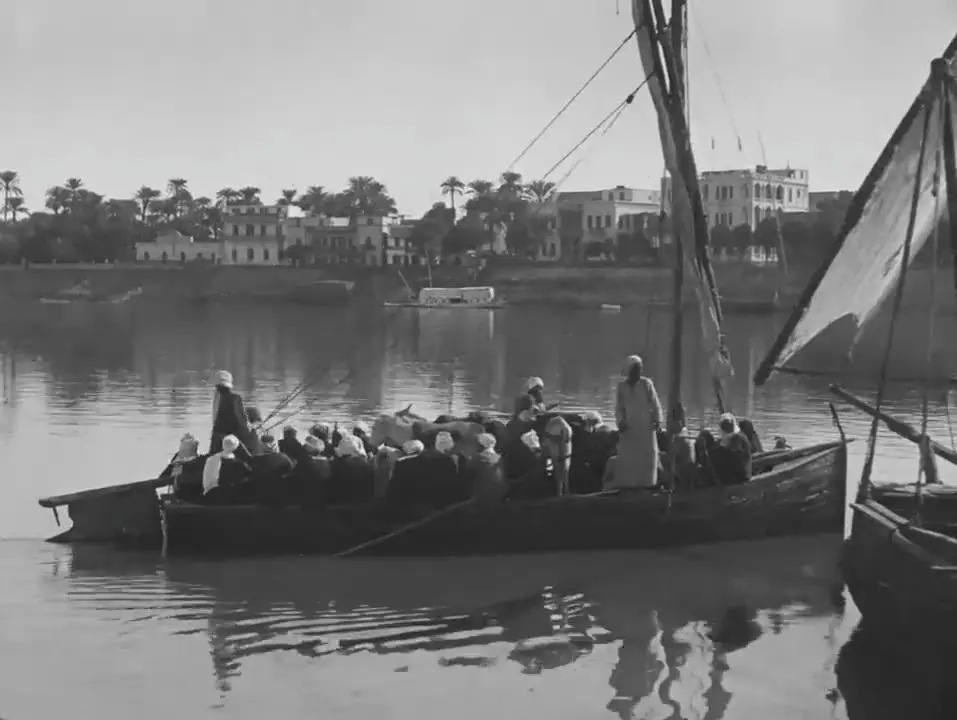
One surprising observation is the lack of 'pyramid-centrism.' While the great monuments do appear, they are often relegated to the background. The film is much more interested in the mud-brick houses and the irrigation canals. It’s a refreshing take that prioritizes the human element over the postcard view. It makes the ancient feel modern and the modern feel ancient. It’s a loop. A beautiful, dusty loop.
We have to address the elephant in the room: the colonialist lens. Lythgoe and Burton were part of a Western academic tradition that often viewed Egypt as a land to be 'discovered' and 'cataloged.' There is a certain clinical coldness to how the camera lingers on the Egyptian people. They are presented as specimens of a 'primitive' lifestyle that has survived by accident. This is a brutal truth that modern viewers must contend with.
However, I would argue that Burton’s genuine love for the country shines through despite the academic detachment. There is a lingering shot of a child smiling at the camera that feels unplanned and joyful. It breaks the 'scientific' tone and reminds us that these are individuals, not just data points. It’s a moment of humanity that rivals anything in a scripted drama like Stardust. It works. But it’s flawed. The tension between the filmmakers' intent and the reality of their subjects is what makes the film a complex watch.
Pros:
- Unmatched historical accuracy and visual preservation.
- Beautifully composed shots by a master photographer.
- A unique look at the 'common man' rather than just kings and queens.
- Short runtime makes it an easy addition to a study session.
Cons:
- Can feel repetitive in its agricultural focus.
- Silent format may be challenging for modern audiences without a score.
- The clinical, ethnographic tone can feel dehumanizing at times.
Daily Life in Egypt: Ancient and Modern is not a movie in the traditional sense. It is a visual essay. It lacks the melodrama of Lord Jim and the theatricality of Hamlet, but it possesses a weight that those films do not. It is the weight of reality. Harry Burton and Albert Morton Lythgoe succeeded in creating something that transcends its 1925 release date. They captured a moment where the ancient world was still visible in the everyday actions of the modern one.
If you can get past the silence and the lack of a 'hero,' you will find a hauntingly beautiful document. It is a film that demands you look closely at the details—the way a hand holds a plow, the way a woman carries a jar, the way the light hits the Nile at dusk. It is a quiet masterpiece of observation. It is flawed, yes, but its flaws are part of its historical value. It is a must-see for anyone who wants to understand the roots of our fascination with the land of the Pharaohs.
Community
Log in to comment.