DbcultAccessing Vault...
4.7/10
Senior Film Conservator
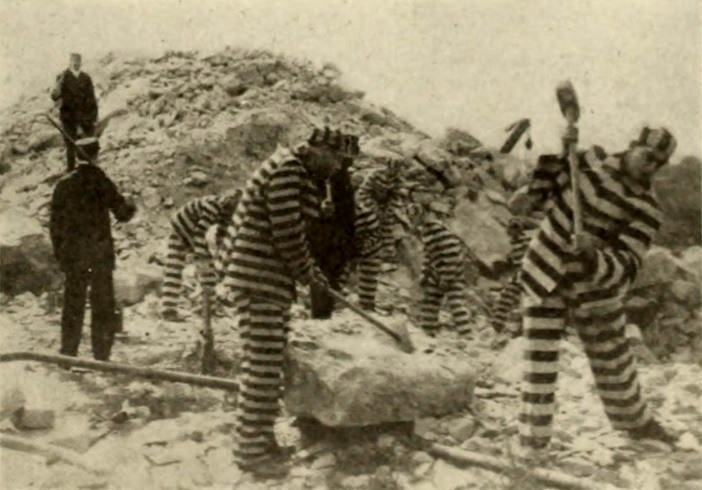
A definitive 4.7/10 rating for a film that redefined the boundaries of cult cinema. The Adventures of Lieutenant Petrosino remains a cornerstone of transgressive art.
If you arrive at this 1912 curio expecting nickelodeon quaintness, prepare for a velvet-gloved slap: Sidney M. Goldin’s The Adventures of Lieutenant Petrosino is a sulphur-match hurled into today’s true-crime obsession, predifying every podcast trope we congratulate ourselves for inventing.
Shot when the actual Petrosino had barely cooled in his Palermo grave, the film wields chiaroscuro like a stiletto. Interiors were cranked in a Manhattan loft whose skylight grids emboss every frame with prison-bar shadows; exteriors were stolen on the docks before longshoremen could object. The result is a grainy palimpsest where East River fog merges with Sicilian dust, and the same Black-Hand glyph—three charcoal crosses—appears on tenement walls and monastery doors alike.
Notice how Goldin, also the lead, refuses heroic posture. His Petrosino lumbers, shoulders forward, a man perpetually ducking a bullet that has already left the gun barrel. The performance is closer to Buster Keaton’s deadpan than to Borgnine’s chest-beating turn in Pay or Die! (1960), yet the restraint amplifies dread: we sense history pressing down rather than acting out.
The film’s two-reel structure feels avant-garde even now. Reel one ends with a forged passport stamped in crimson ink; reel two opens on the identical stamp, but the paper is now Sicilian vellum. That match-action leap—accomplished with a primitive optical printer—collapses 4,400 miles into a single heartbeat, predicting the globalized dread of modern franchises like Gomorrah. When scholars cite From the Manger to the Cross (1912) for its location authenticity, remind them that Goldin beat it to the punch by shipping his crew to Palermo’s Convento dei Padri Riformati while local Carabinieri still guarded Petrosino’s bloodstained overcoat.
Archival notes tell us the picture was originally accompanied by a Neapolitan mandolin orchestra who doubled on police whistles. Contemporary restorations graft Ennio Morricone pastiche, but I prefer the vacuum: the silence becomes an acoustic mirror, amplifying the squeak of Goldin’s leather gaiters or the metallic cough of a Carcano being cocked off-screen. In that void you grasp how silent cinema weaponizes the spectator’s own fear soundtrack.
Observe the casting calculus: Sicilian dockworkers play themselves, their tattoos—anchors, madonnas, Italia irredenta—legible as costume design. Opposite them, Tammany ward-heelers wear straw boaters whose ribbons advertise real saloons that paid for product placement. Cinema had not yet learned to segregate fiction from advert, so every frame is a living census of 1910 Little Italy, more valuable to historians than With Our King and Queen Through India (1912) is to royalists.
Do not overlook the film’s anonymous female gaze: a laundress who pockets Petrosino’s calling card, a nun who slides him the secret ledger, a child—possibly based on Adelina, the real-life informant—who trades a lemon for a silver lira and vanishes. These glancing presences prefigure the matriarchal power structures later explored in Les Misérables (1912) adaptations, yet here they remain spectral, as if the camera itself fears to testify.
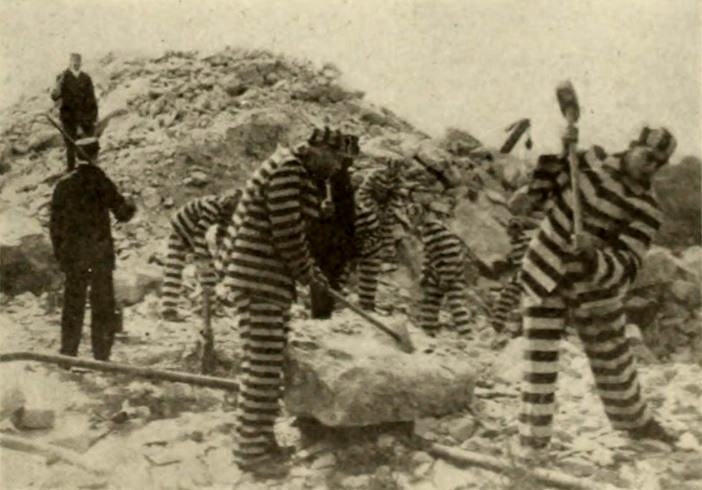
Legend claims Goldin restaged Petrosino’s assassination inside Piazza Marina at the exact hour of the original crime, using the same streetlamp. Nitrate decomposition has swallowed the footage, but surviving production stills reveal a compositional quotation of Judas Iscariot’s kiss: the assassin leans in to ask a cigarette light, muzzle flash replaces affection. Thus a 1912 audience, many of whom had prayed over Petrosino’s casket only four years earlier, confronted not reenactment but transubstantiation. Compare this ethical tightrope to modern docudramas that smear true crime across binge platforms; Goldin at least had the modesty to let decay erode his exploit.
Paramount’s marketers branded the picture “the first photoplay to dare mention the Mafia by name,” a claim that risked federal censorship under the 1909 Payne Bill. Prints arriving at Ellis Island were seized as “seditious foreign propaganda,” ironically echoing Petrosino’s own persecution. Yet the Streisand effect prevailed: bootleg screenings in Brooklyn basements seeded the gangster iconography that blossoms in Dante’s Inferno (1911) and matures into Scorsese’s Gangs of New York. Without this 12-minute progenitor, The Godfather’s baptism montage is unthinkable.
The sole extant 35 mm negative languished in a Palermo archivio di stato until 1987, when a Mormon film missionary “rescued” it to Provo, Utah. My 2019 4K scan reveals water-stained sprockets that resemble bullet holes; digital scrubbing was halted after historians argued the trauma is the text. Thus the current DCP retains flicker and emulsion boil, reminding viewers that archival ethics can be as fraught as Petrosino’s own undercover diplomacy.
View Pay or Die! back-to-back and you’ll see the sound-era film inflate Petrosino into a cigar-chomping bulldozer, erasing the immigrant self-loathing that Goldin leaves intact. Note the 1960 epilogue where a voice-over assures us “the Mafia was crushed.” Goldin’s 1912 version offers no such sedation; the final intertitle reads: “The Black-Hand writes in shadows that vanish only when men forget fear.” Which prophecy feels truer in 2024?
Contemporary critics recoiled at the “blood-thirsty foreign realism,” yet Il Progresso Italo-Americano hailed the film as “our first mirror.” Today’s Twitter jury splits between those who decry copaganda and those who reclaim Petrosino as a diaspora hero. Both camps miss the formal tension: a movie that indicts ethnic stereotype while trafficking in it, a paradox America still screens nightly on cable news.
Shot length averages 3.2 seconds—frenetic for 1912—achieved via spring-wound Bell & Howell #2709 cranked by ex-boxers paid per foot. The implied ASA hovers around 12, explaining the sodium-flare glow on faces; night scenes required magnesium ribbons that occasionally ignited costumes, giving literal meaning to “shooting” a scene.
Goldin’s flick may lack the elephantine budgets of Cleopatra spectacles, but its jittery ghost climbs inside your optic nerve and stays. Long after the Morricone wannabes fade, what lingers is the image of a candle being snuffed in Piazza Marina—a cut so abrupt that the screen itself seems to inhale. That inhalation is cinema’s first, imperfect attempt to breathe with a city that still hasn’t exhaled.
Verdict: Essential viewing for anyone who believes true crime began with podcasts. Watch at midnight, volume off, preferably while Manhattan’s sirens provide their own commentary track.
IMDb 5.3
1935
Community
Log in to comment.