DbcultAccessing Vault...
Cult Review
Senior Film Conservator
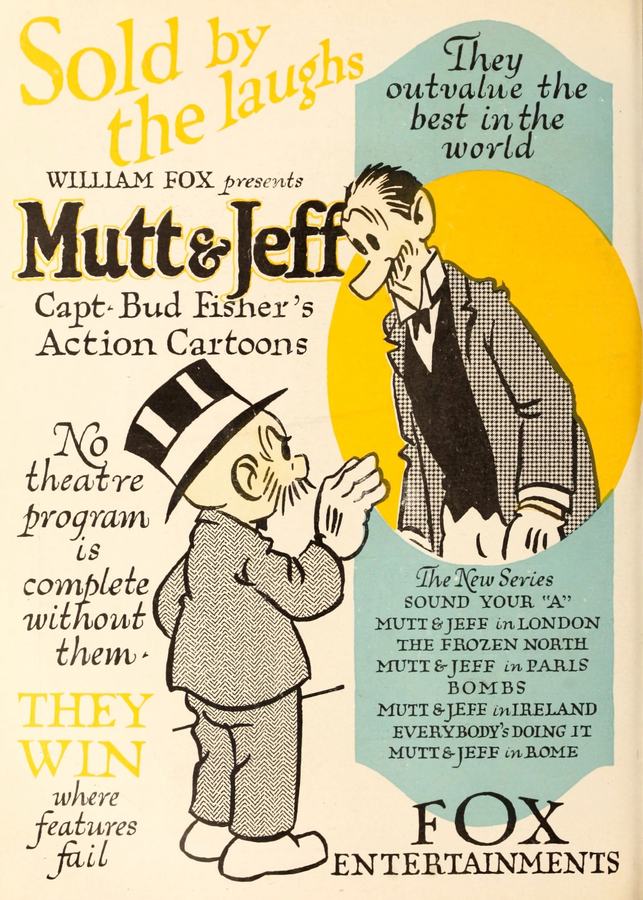
The year 1919, an epoch teetering between the Great War's exhaustion and the effervescent dawn of the Jazz Age, presented a fertile ground for social commentary, even if delivered through the most outlandish comedic lenses. "Everybody's Doing It," a cinematic curio from the prolific mind of Bud Fisher, encapsulates this transitional period with a whimsical narrative that, despite its brevity and apparent simplicity, offers surprisingly rich insights into the burgeoning cultural landscape. Fisher, renowned for his pioneering work in newspaper comic strips with the iconic Mutt and Jeff, brings a distinctly cartoonish sensibility to the live-action medium, crafting a world where physical laws bend to the whims of comedic necessity.
At its core, the film plunges viewers into the bustling, somewhat absurd world of Mutt and Jeff’s Jazz-Shimmy school. This isn't merely a dance academy; it's pitched as a revolutionary institution for corporeal transformation, a veritable sanctuary for the portly seeking emancipation from their excess poundage. The very concept of a "Jazz-Shimmy" school for weight reduction speaks volumes about the era's nascent obsession with physical fitness, body image, and the relentless pursuit of fleeting fads. Jazz, still a relatively nascent and often controversial musical form, was rapidly infiltrating mainstream culture, its syncopated rhythms and improvisational spirit seen by some as liberating, by others as morally suspect. To fuse this vibrant, often scandalous dance with the utilitarian goal of fat reduction is a stroke of satirical genius, underscoring how quickly new cultural phenomena could be co-opted and commercialized to tap into public anxieties and aspirations.
One could argue that Mutt and Jeff, with their entrepreneurial zeal, were proto-influencers, capitalizing on a societal yearning for quick fixes and effortless self-improvement. The film’s premise, though overtly farcical, strikes a chord that resonates even today with our culture of diet crazes, miracle supplements, and ever-evolving fitness trends. The idea that a specific dance, performed with sufficient fervor, could melt away adipose tissue is, of course, preposterous, yet it’s precisely this embrace of the absurd that elevates "Everybody's Doing It" beyond mere slapstick. It becomes a playful, albeit pointed, critique of consumer gullibility and the often-unrealistic promises peddled by charlatans in the name of health and beauty. In this sense, it shares a thematic lineage with later satires that poke fun at human vanity and the commercial exploitation of insecurity, though its execution remains firmly rooted in the innocent, exaggerated humor of early cinema.
The narrative arc, as delightful as it is ludicrous, centers on a particularly dedicated — or perhaps desperate — patron. This portly, middle-aged gentleman, a walking embodiment of the very demographic Mutt and Jeff aim to "sculpt," throws himself into the shimmy with an almost religious fervor. The visual spectacle of his increasingly frantic gyrations, presumably escalating in intensity with each passing scene, culminates in the film’s most memorable and audacious gag: the man literally shimmies himself into a state of extreme diminutiveness, shrinking to the size of a small boy. This transformation is not merely comedic; it’s a moment of pure, unadulterated cinematic magic, a triumph of early special effects and the suspension of disbelief. How this was achieved in 1919, likely through a combination of clever editing, forced perspective, or perhaps even a smaller actor taking over, is a testament to the ingenuity of silent film practitioners who, without the aid of sophisticated digital tools, relied on practical effects and visual trickery to conjure the impossible.
Bud Fisher's direct involvement, both as writer and cast member, is crucial to understanding the film’s unique flavor. Having pioneered the daily comic strip with "Mutt and Jeff" in 1907, Fisher possessed an innate understanding of visual storytelling, character exaggeration, and punchline delivery. His comic strip often featured slapstick humor, physical transformations, and a rapid-fire progression of gags, all elements that translate seamlessly to the silent film format. The characters of Mutt and Jeff themselves, with their distinctive personalities and comedic dynamic, were already firmly established in the public consciousness, lending an immediate familiarity and appeal to the film. Fisher’s transition from static panels to moving images allowed him to explore the kinetic potential of his creations, unleashing them into a world where their absurd adventures could unfold with dynamic energy.
Comparing "Everybody's Doing It" to other contemporary works illuminates its distinctive comedic voice. While films like Cupid's Day Off might have explored romantic entanglements with a light touch, "Everybody's Doing It" leans into a more fantastical, almost surreal brand of humor. It eschews intricate plot developments for a singular, extended gag, building towards an outrageous payoff. This isn't the nuanced social satire of a Charlie Chaplin, nor the elaborate stunt work of a Buster Keaton, but rather a more direct, almost cartoonish approach to comedy, reminiscent of early animated shorts, even though it's live-action. The film's willingness to embrace the utterly impossible, to have a human being literally shimmy away his mass, sets it apart from more grounded comedies of the era.
In an era where many films still grappled with narrative conventions, "Everybody's Doing It" feels remarkably unburdened by realism. It exists in a heightened reality where cause and effect are dictated by comedic potential rather than scientific accuracy. This freedom from verisimilitude allows for a purity of laughter, a joy derived from the sheer audacity of the premise. The audience isn't asked to believe the shrinking man is plausible, but rather to revel in the sheer visual spectacle of it, much like one would enjoy a particularly imaginative cartoon.
Beyond its comedic merits, the film inadvertently captures a slice of historical zeitgeist. The post-WWI era was one of immense social change and readjustment. As soldiers returned and society sought new forms of recreation and self-expression, phenomena like jazz music and new dance styles flourished. The film, by framing the shimmy as a weight-loss regimen, playfully comments on the rapid commodification of cultural trends. It’s a snapshot of a society grappling with new ideas about body image, health, and leisure, all filtered through the lens of a budding mass media. The title itself, "Everybody's Doing It," implies a widespread, almost viral adoption of this new activity, reflecting the societal pressure to conform to popular trends, a theme that remains perennially relevant.
While other films of 1919 might have offered starker portrayals of societal challenges, such as the dramatic narratives found in The Climbers or the explorations of social stratification in Barriers of Society, "Everybody's Doing It" chooses a path of lighthearted escapism. It’s a film that seeks to entertain and provoke laughter rather than tears or deep introspection. Yet, even in its simplicity, it offers a window into the cultural anxieties and aspirations of its time, albeit through a funhouse mirror. The film's fantastical element might even draw a loose, thematic parallel to the sense of wonder or exoticism explored in travelogues like Strange Sights in the Pacific Islands, both offering audiences a glimpse into something beyond their immediate reality, though one through geographical exploration and the other through sheer comedic fantasy.
The enduring appeal of "Everybody's Doing It," despite its relative obscurity compared to the grander epics of the silent era, lies in its sheer audacity and its charmingly direct approach to humor. It represents a particular strand of early cinematic comedy that prioritized visual gags and physical exaggeration over complex character development or intricate plotting. It's a testament to the power of a single, brilliant comedic idea executed with conviction. The film asks its audience to embrace the ridiculous, to delight in the spectacle of a man literally dancing himself thin, and in doing so, it provides a timeless moment of pure, unadulterated joy.
Moreover, the film's existence serves as an important artifact for understanding the evolution of media. Bud Fisher, a pioneer in print comics, demonstrating his versatility by transitioning to film, highlights the fluid boundaries between different narrative forms in the early 20th century. His work here underscores how quickly artists adapted to new technologies to bring their creations to wider audiences, and how the nascent film industry drew talent from various artistic fields, enriching its nascent vocabulary. This cross-pollination of ideas and talent was crucial in shaping the language of cinema.
The shrinking man gag, in particular, is a masterclass in visual absurdity. It’s a concept that would later be explored in various forms, from cartoons to science fiction, but its appearance here, in a live-action silent comedy, feels remarkably prescient. It challenges the audience's perception of reality, inviting them into a world where the impossible is not only possible but hilarious. This kind of surrealistic humor, while not a dominant feature of all silent comedies, certainly had its place, often pushing the boundaries of what could be depicted on screen.
Consider the broader context of other films of the period. While dramas like Faith or Life's Whirlpool delved into moral dilemmas and the complexities of human existence, "Everybody's Doing It" offered a much-needed dose of levity. In the aftermath of a global war, audiences were often eager for entertainment that could provide an escape from the harsh realities of life. This film, with its lighthearted premise and fantastical outcome, perfectly fit that need, providing a whimsical respite from the more serious fare. It’s a reminder that cinema, even in its infancy, served a multifaceted role, catering to a wide spectrum of human emotions and desires.
The film's title, "Everybody's Doing It," also carries a subtle layer of social commentary. It speaks to the herd mentality, the desire to be part of the latest trend, and the often-unquestioning adoption of new practices, whether it's a dance craze or a weight-loss fad. This observation of human behavior, though presented humorously, remains astute. It points to the power of collective enthusiasm and the way in which societal norms and trends are shaped and disseminated. In a sense, Mutt and Jeff are not just running a school; they are tapping into, and perhaps even creating, a cultural phenomenon.
In conclusion, "Everybody's Doing It" stands as a charming, if peculiar, testament to the inventive spirit of early cinema. It’s a film that, through its simple yet audacious premise, captures a moment in time when jazz was ascendant, body image was becoming a public concern, and the boundaries of cinematic possibility were still being joyfully explored. Bud Fisher’s unique blend of comic strip sensibilities and live-action execution results in a film that is both historically significant and genuinely amusing. It reminds us that sometimes, the most profound observations about human nature can be found in the most whimsical of tales, especially when they involve a man dancing his way to an unexpectedly small stature. Its legacy is not just in its laughter, but in its quiet reflection of a society in flux, eager for novelty and susceptible to the allure of transformation, no matter how outlandish the promise.
IMDb 6.1
1927
Community
Log in to comment.