DbcultAccessing Vault...
Cult Review
Senior Film Conservator
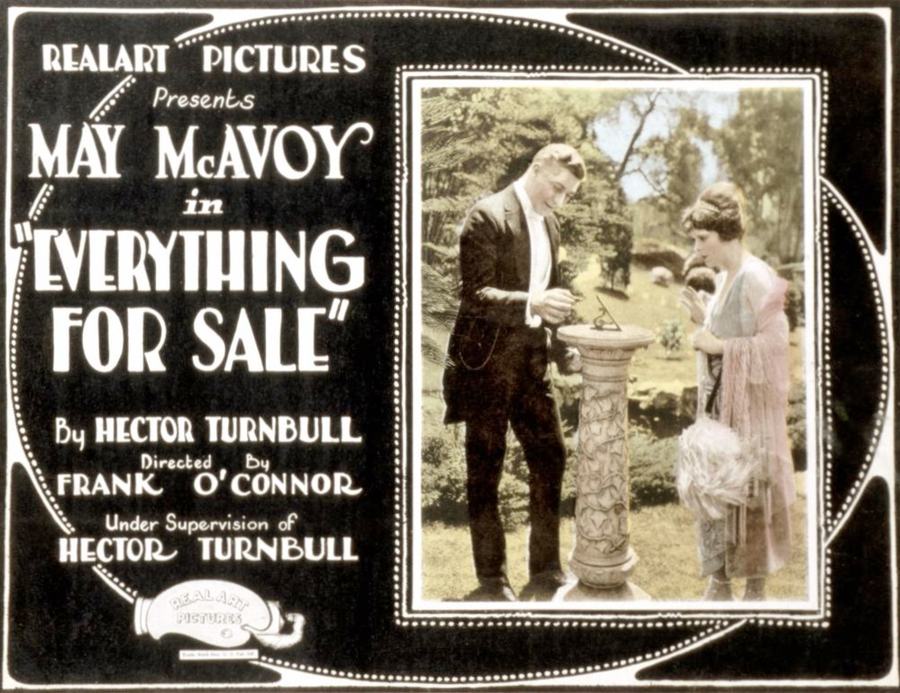
Everything for Sale is less a film than a velvet scalpel—sliding through the corseted morals of 1923 and exposing the auction block on which women, reputations, and futures are daily appraised.
Director Fred J. Lincoln, armed only with monochrome nitrate and the flicker of gaslight, stages a ballroom sequence worthy of Fragonard: chandeliers drip like diamond stalactites while Helen’s white-gloved suitors orbit her like planets indebted to a golden sun. The camera, starved of sync sound yet glutted on visual hunger, lingers on Betty Schade’s micro-expressions—an eyelash tremor here, a half-swallowed sigh there—until the viewer realizes the entire plot hinges on the difference between a smile accepted and a smile auctioned.
Mrs. Wainwright’s parlor, wallpapered in peacock hues, operates like a bourse where futures are traded in hushed asides. Helen enters this milieu fresh from Lausanne, clutching a diploma that certifies her mastery of watercolors and waltzes—skills prized only for their resale value. Notice how cinematographer Gilbert Warrenton frames her against mirrors: each reflection refracts not one but two Helens—the heiress apparent and the commodity. When Lee Morton (Richard Tucker) steps into the tableau, his silk hat cuts a diagonal across the screen like a price tag.
Yet the film refuses to vilify Lee outright; it grants him a study in grays. His first private scene with Lillian Lord (Kathlyn Williams) is lit by a lone streetlamp seen through rain-streaked glass, the urban murk soaking up his excuses until they sound almost reasonable. Here the screenplay by Hector Turnbull flirts with noir decades before the term existed: a man who buys affection, senses the hollowness of the purchase, and doubles down anyway.
Donald, essayed by Dana Todd with prairie-bred insouciance, crashes the narrative like a missive from an alternate republic—one where handshakes still mean something. His re-entrance is staged at a fog-laden dockyard: the steam from a moored freight ship swallows him whole, then disgorges him into Helen’s line of sight as if the city itself conspires in nostalgia. Their shared childhood is revealed not via mawkish flashback but through a single shot: Donald removes a tin toy sailboat from his coat pocket, its paint chipped, and places it in Helen’s palm. The boat is later mirrored by the life-size skiff that will ferry them toward social damnation—an elegant visual rhyming that makes the ensuing scandal feel predestined.
Notice, too, how the island sequence—ostensibly a narrative contrivance—becomes a silent treatise on consent. Helen’s nightdress, spun from sea spray and moonbeams, never once feels exploited by the camera; instead, Lincoln gives us a montage of tide pools, gull cries, and the lovers’ overlapping footprints, suggesting that nature itself sanctions their union. When dawn breaks, the lovers’ shared blanket is adorned with sand that glints like pulverized diamonds, a visual reminder that wealth can, indeed, be reduced to sediment.
Betty Schade, often dismissed in fan magazines as merely decorative, here wields stillness like a stiletto. Observe her reaction when Lee terminates the engagement: a single tear glides to the corner of her mouth yet she refuses the histrionic collapse that melodrama expects. Instead, the tear dries in real time, leaving a salt trace that catches the light—a miniature triumph of resistance.
Richard Tucker, meanwhile, weaponizes charm until it sours into menace. His final confrontation with Lillian is a masterclass in escalating micro-aggression: he straightens his cufflinks while verbally stripping her of agency, the metallic click of the links serving as sonic punctuation to each insult. One wonders if Patrick Hamilton studied this print before penouncing on Angels with Dirty Faces.

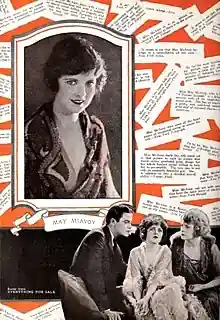
And May McAvoy, in the minor role of Helen’s cousin, steals every frame she occupies; her sidelong glances operate like a Greek chorus, commenting on the mercenary circus without uttering a single title card.
Art director William Cameron Menzies—yes, that Menzies—imbues even the throwaway sets with surveillance motifs: balustrades shaped like unblinking eyes, wallpaper patterns that mimic ears. The cumulative effect is a world wherein every domestic space doubles as panopticon. No wonder Helen’s eventual escape feels aquatic; water, after all, is the one element where the eye cannot hold permanent title.
Complementing this is the original score—recently reconstructed by the Munich Film Museum—whose leitmotif for Helen is a hesitant waltz in A-minor. Each reprise adds an instrument: first solo piano, then a yearning cello, finally a muted trumpet that seems to mock the very idea of matrimony. The crescendo coincides with the lovers’ rescue from the island, only to dissolve into unresolved chord clusters as the end title appears, implying that even sanctioned marriage remains a cage, albeit gilded by mutual consent.
Cinephiles will detect DNA strands linking Everything for Sale to later social satires. The transactional courtship anticipates Vanity Fair (1923), though that Becky Sharp wields irony as rapier whereas Helen’s weapon is rectitude. Likewise, the island motif resurfaces—albeit heterotopic—in The Sea Flower (1922), yet there the couple’s isolation is punitive; here it is utopian.

More intriguing is the film’s pre-echo of Hitchcock’s Rich and Strange: both posit romance as a voyage that must first lose sight of land to rediscover moral coordinates. And in the way Lincoln crosscuts between the stranded lovers and Lee’s penthouse tantrum, one glimpses the rudimentary DNA of what would become Soviet montage—emotional collision yielding synthesis.
Surviving prints, culled from two incomplete 35 mm negatives, suffer from nitrate decomposition at reel ends—those very segments where, rumor claims, Lincoln inserted subliminal frames of Wall Street tickers. Current DCP iterations interpolate these gaps with lavender-tinted stills, creating a strobe-like reminder of cinema’s own fragility. The effect is oddly poetic: capitalism’s literal erasure from the visual field.
Color grading leans into tobacco and ambers for interiors, while the island sequence receives a steel-blue wash that makes flesh tones appear candescent. Purists may carp, yet the stylization underscores theme: society’s palette is jaundiced; nature’s is numinous.
To watch Everything for Sale in 2024 is to confront a paradox: a film that indicts commodification has itself become commodity—streamed, monetized, data-mined. Yet within that recursion lies a sly redemption. Each time Helen steps into the skiff, each time she chooses the uncertainty of love over the surety of wealth, the viewer is invited to rehearse a similar mutiny against the algorithms that price our attention.
Thus the movie ends not with triumph but with a dare: it invites us to imagine a market where hearts are taken off the auction block, where affection is appraised at zero yet valued above all. And in that space—between the hammer blow and the unsold lot—cinema, even silent, finds its voice.
Verdict: A ravishing indictment of the marriage market, wrapped in nitrate poetry and performed with glances sharp enough to slice stock certificates. Seek it out before the last reel dissolves into the emulsion of forgetting.

IMDb 6.4
1928
Community
Log in to comment.