DbcultAccessing Vault...
Cult Review
Senior Film Conservator
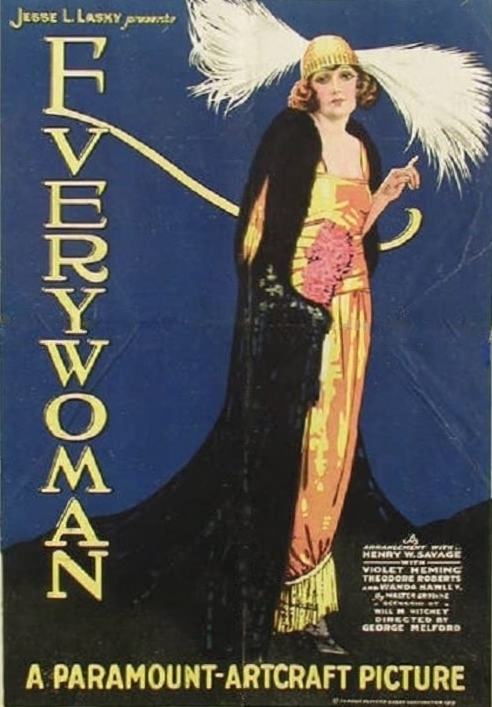
Stepping into the world of ‘Everywoman’ (1919) is akin to unwrapping a meticulously crafted moral fable, a cinematic tapestry woven with threads of allegory and profound human experience. This isn't merely a film; it’s a living, breathing morality play, a grand theatrical conceit translated onto the silver screen with a boldness that remains striking even a century later. Directed by George Melford and adapted from Walter Browne’s stage production, the film eschews traditional narrative realism for a more symbolic, almost dreamlike journey, inviting its audience not just to watch, but to reflect on their own paths through life’s myriad temptations and triumphs. It’s a testament to the power of early cinema to tackle complex philosophical themes, presenting them with a clarity and imaginative flair that often feels ahead of its time. The film’s very structure, with its personified virtues and vices, demands a particular kind of engagement, one that rewards contemplation over passive consumption. It's a film that speaks in archetypes, yet resonates with individual experience, proving that the universal stories are often the most personal.
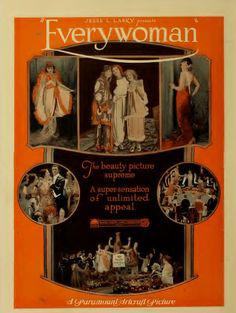
The genesis of Everywoman’s odyssey is deceptively mundane: a young woman, nameless in her initial incarnation, participates in a charity bazaar, offering a kiss for a cause. This seemingly innocent act serves as the fulcrum upon which her entire destiny pivots. It is here that she catches the discerning eye of Bluff and Stuff, two stage managers who represent the opportunistic, often superficial allure of the theatrical world. Their offer of a life on the stage is not merely a career proposition; it is an invitation to shed her ordinary existence and embrace a grander, more perilous identity. This pivotal moment is underscored by a fascinating transformation, where her three closest confidantes – her friends – morph into the very embodiments of Modesty, Youth, and Beauty. This allegorical shift is handled with a delicate touch, avoiding heavy-handedness and instead allowing the audience to embrace the symbolic nature of the narrative without feeling preached to. The film masterfully sets up this world where abstract concepts become tangible characters, each playing a crucial role in Everywoman’s unfolding drama. Her awakening as ‘Everywoman’ signals her transition from an individual to a universal archetype, a representative of all humanity navigating the moral labyrinth of existence. This narrative choice elevates the story beyond a mere personal anecdote, imbuing it with timeless relevance.
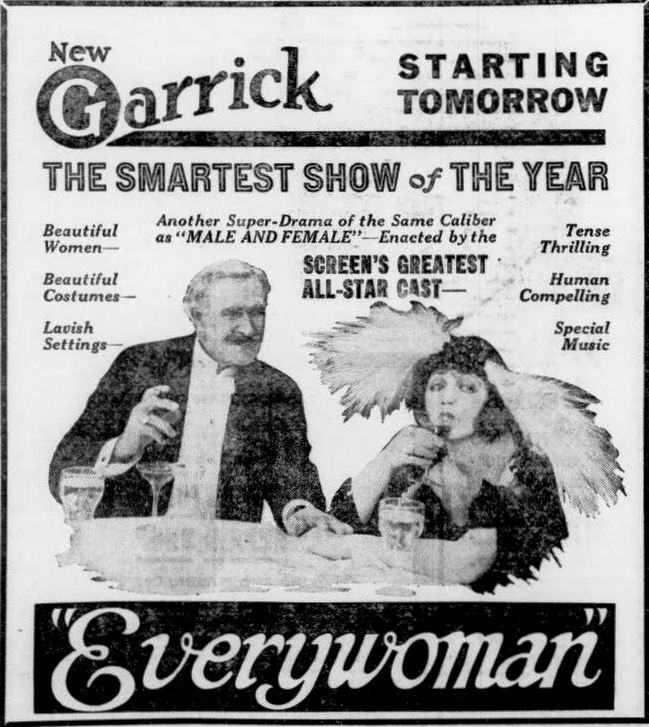
Her first significant choice arrives in the form of a marriage proposal from a struggling but earnest physician. This is the path of quiet, enduring love, of stability and genuine affection. However, Everywoman, now under the subtle sway of Flattery, an insidious whisperer who promises grander things, spurns this humble offer. Flattery, portrayed with a captivating blend of charm and deceit, convinces her that her true destiny lies on the ‘Stage of Life,’ a metaphorical realm where she must seek out ‘Love’ in its most idealized form. This rejection of the tangible for the aspirational sets the tragic trajectory of her journey. It’s a classic human failing, beautifully rendered: the allure of the spectacular over the substantial. As she embarks on this quest, she encounters Passion, a charismatic actor whose theatrical presence initially convinces her that he is the Love she seeks. The film brilliantly uses the visual language of silent cinema to convey the intoxicating, yet ultimately superficial, nature of this attraction. The dramatic lighting, the intense gazes, all contribute to the illusion. Yet, this infatuation comes at a cost: Modesty, her steadfast companion, unable to countenance this fleeting, intense attachment, quietly withdraws. The departure of Modesty is a profound moment, signifying Everywoman’s loss of innocence and the erosion of her inner compass, a poignant reminder that certain virtues are incompatible with reckless abandon.
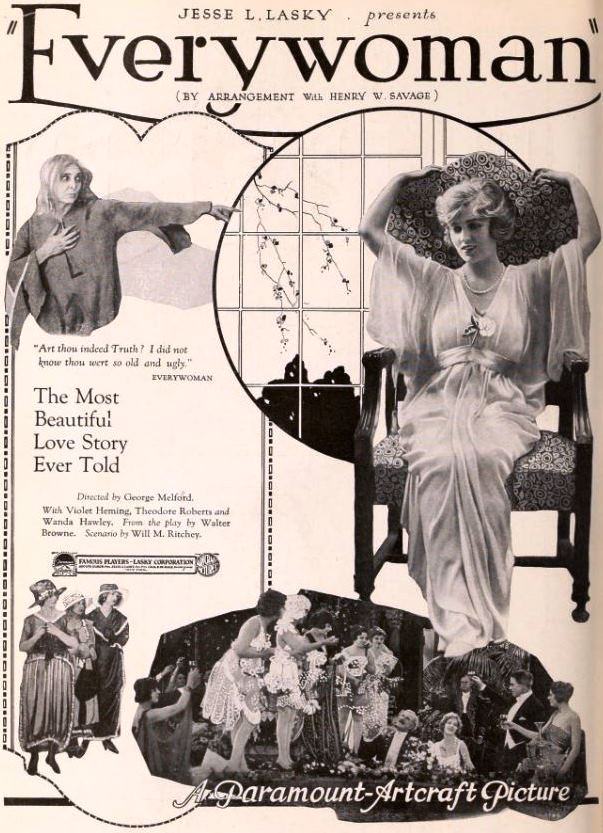
The disillusionment is swift and brutal. Everywoman soon discovers that Passion’s affection is conditional, his desire for her inextricably linked to the presence of Beauty and Youth. He is not interested in her essence, but in her attributes. This realization is a crushing blow, a stark revelation of the emptiness at the heart of her pursuit. Her rejection of Passion, though painful, marks a crucial turning point, a step towards self-awareness. But the consequences are dire: Passion, in a fit of pique, conspires with Dissipation to steal Beauty, a visually stunning sequence that underscores the fragility of external allure. With Beauty gone, Bluff and Stuff, the opportunistic impresarios, desert her, their interest waning now that her most marketable asset has vanished. This abandonment highlights the transient nature of fame and superficial connections, leaving Everywoman adrift. The relentless march of time further diminishes her, as Youth, another vital companion, is claimed. The visual metaphor of Time’s inexorable advance, perhaps depicted through subtle aging makeup or symbolic cinematic techniques, would have been particularly impactful in the silent era. Stripped of her most coveted attributes and abandoned by fair-weather friends, Everywoman descends into desperation, even attempting to sell herself to Wealth, a millionaire who, in his cold pragmatism, spurns her. This scene is a stark indictment of the commodification of human value and the emptiness of material pursuits without intrinsic worth. Her journey reaches its nadir, leaving her with only Nobody as her loyal, albeit bleak, companion. This poignant image of isolation emphasizes the profound loneliness that accompanies a life lived without genuine connection.

It is in this state of utter desolation that Everywoman embarks on her final, redemptive quest. Guided by the silent, steady presence of Truth, she follows her to her humble dwelling. This segment of the film is perhaps its most profound, shifting from the dazzling, deceptive ‘Stage of Life’ to a more intimate, authentic setting. The revelation that Truth’s son is the very physician whose proposal she had once scorned is a moment of profound recognition and bittersweet irony. It’s a powerful narrative full circle, emphasizing that the true Love she sought was always within reach, disguised in the unassuming guise of genuine affection and integrity. This epiphany brings with it the return of Modesty, her moral compass restored, signifying her renewed inner balance and wisdom. And, remarkably, Beauty also returns, not as a superficial adornment stolen by Dissipation, but as an intrinsic radiance, perhaps a reflection of her newfound inner peace and contentment. This suggests that true beauty is not merely external but an emanation of a virtuous soul. The film’s conclusion, therefore, is not a simplistic ‘happily ever after’ but a hard-won understanding of life’s true values, a testament to the enduring power of truth, humility, and authentic love. It’s a journey that mirrors countless spiritual and philosophical quests, making Everywoman’s story resonate across generations.
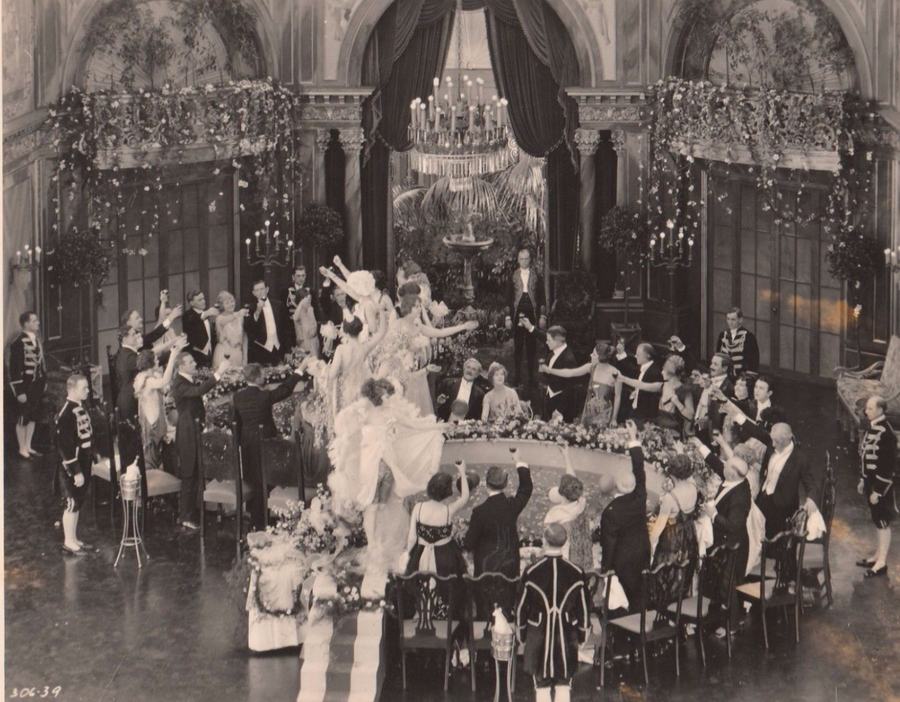
In a silent film of this allegorical nature, the performances are paramount, relying entirely on nuanced physical expression and captivating presence to convey complex emotions and abstract concepts. Jay Dwiggins, as Everywoman, carries the immense burden of embodying a universal archetype, a role that demands both vulnerability and resilience. Her portrayal must navigate the spectrum from naive hope to crushing despair, and ultimately, to enlightened wisdom, all without uttering a single word. This requires a mastery of gesture, facial expression, and body language that is truly the hallmark of a great silent film actor. Edythe Chapman, as Modesty, and Mildred Reardon, as Youth, along with Violet Heming as Beauty, must each personify their respective virtues with distinct clarity, their physical presence subtly shifting to reflect their character’s influence on Everywoman’s journey. The departure of Modesty, for instance, would have been conveyed through a poignant, almost imperceptible withdrawal, leaving a palpable void. Irving Cummings as the struggling physician (and later, Love) projects an earnestness that makes his initial rejection all the more tragic and his eventual reunion all the more satisfying. His performance grounds the fantastical elements of the narrative in a relatable human emotion.
The antagonists and tempters also deliver crucial performances. Bebe Daniels, as Flattery, would have needed to exude an irresistible charm, a seductive allure that makes Everywoman’s initial choice believable. Her performance would be a delicate balance of superficial warmth and underlying manipulation. Fred Huntley and Lucien Littlefield as Bluff and Stuff, the stage managers, embody the cynical, opportunistic side of the world, their performances likely marked by exaggerated gestures and a theatrical air. Raymond Hatton as Passion, the actor, would have had to project a captivating, almost dangerous charisma, making his initial appeal to Everywoman understandable, while subtly hinting at his superficiality. The ensemble cast, including Margaret Loomis, Monte Blue, Tully Marshall, Theodore Roberts, Clarence Geldert, Robert Brower, Charles Ogle, Clara Horton, James Neill, Noah Beery, and Wanda Hawley, each contribute to the rich tapestry of personified concepts, from Dissipation to Wealth, Nobody to Truth. The success of such a film hinges on the actors’ ability to make these abstract ideas tangible and emotionally resonant. Their collective commitment to the allegorical framework is what elevates ‘Everywoman’ beyond a mere curiosity into a genuinely compelling cinematic experience. The interplay between these personifications, all conveyed through the expressive art of silent acting, creates a dramatic tension that holds the audience captive, drawing them deeper into Everywoman’s moral dilemma. Each actor, in their own way, becomes a visual metaphor, a living embodiment of the forces that shape a life.
The visual language of ‘Everywoman’ would have been crucial in conveying its complex themes. The production design, even within the confines of early cinema technology, would have needed to differentiate clearly between the mundane world and the allegorical ‘Stage of Life.’ Costumes would play a significant role, not just in defining characters but in symbolizing their essence – Modesty in simple, elegant attire; Beauty in radiant finery; Dissipation in flamboyant, perhaps disheveled garments. The cinematography, under the guidance of Walter Browne and Will M. Ritchey’s script, would have utilized lighting and camera angles to underscore emotional states and symbolic shifts. For instance, the initial allure of the stage might be bathed in bright, almost dazzling light, while Everywoman’s descent into despair could be marked by darker, more oppressive shadows. The use of intertitles, a staple of silent film, would have been particularly vital in an allegorical narrative, providing not just dialogue but also philosophical commentary and clarification of the characters’ symbolic roles. These textual interventions serve as a guide through the moral landscape, ensuring that the audience grasps the deeper meaning behind the visual spectacle. The film’s ability to sustain its allegorical conceit without becoming overly didactic is a testament to the skill of its creators. It manages to be both entertaining and thought-provoking, a rare feat for any film, let alone one from the nascent days of the medium.
Comparing ‘Everywoman’ to other films of its era highlights its unique approach. While many films, like The Pearl of Paradise or The Unforseen, might have explored themes of love, loss, or moral dilemmas through more conventional, character-driven narratives, ‘Everywoman’ boldly embraces its theatrical origins, presenting a direct, almost personified examination of human virtues and vices. It stands in contrast to straightforward adventure narratives like Colorado or romantic dramas such as Mayblossom, which grounded their stories in specific social contexts or individual psychological journeys. ‘Everywoman’ transcends such specificity, aiming for a universal truth that resonates across time and culture. Its closest cinematic kin might be found in other morality plays or adaptations of classic allegories, but even then, its cinematic execution would have been a novel endeavor for its time. The film’s enduring power lies in its ability to strip away the superficialities of individual identity and present the core struggles of humanity, a testament to the timelessness of its source material and the visionary adaptation by its creative team. It’s a film that asks profound questions about what truly constitutes a well-lived life, and its answers, though hard-won by Everywoman, remain relevant. Its allegorical structure, far from being a limitation, becomes its greatest strength, allowing for a direct engagement with abstract concepts that might otherwise be difficult to convey cinematically. This bold choice sets it apart, making it a significant work in the history of silent cinema.
‘Everywoman’ is more than just a historical artifact; it is a vital cinematic exploration of the human condition, a mirror held up to the audience to reflect on their own choices and values. The journey of Everywoman, from naive innocence to disillusioned despair and ultimately to enlightened wisdom, is a narrative arc that continues to resonate. It reminds us that true happiness and fulfillment are not found in fleeting passions or material wealth, but in the steadfast virtues of modesty, truth, and genuine, unconditional love. The film’s powerful message, delivered through its innovative allegorical structure and compelling silent performances, ensures its place as a significant work in early cinema. It’s a film that challenges us to look beyond the surface, to identify the true players on our own ‘Stage of Life,’ and to choose our companions wisely. In an age often preoccupied with the superficial, ‘Everywoman’ offers a profound and enduring reminder of what truly matters. Its legacy lies not just in its historical significance but in its continued ability to provoke thought and inspire introspection. The writers, Walter Browne and Will M. Ritchey, crafted a narrative that, despite its specific period setting, speaks to universal experiences that transcend time. This film serves as a powerful testament to the early capabilities of cinema to not only entertain but also to deeply engage with philosophical and moral questions, making it a compelling watch for anyone interested in the roots of cinematic storytelling and the timeless exploration of the human spirit. It’s a compelling argument for the enduring power of allegory and the silent film’s capacity for profound expression. The ultimate triumph of Everywoman is not merely finding love, but discovering the truth within herself, a journey that is both personal and universally resonant.
IMDb —
1917
Community
Log in to comment.