DbcultAccessing Vault...
Cult Review
Senior Film Conservator
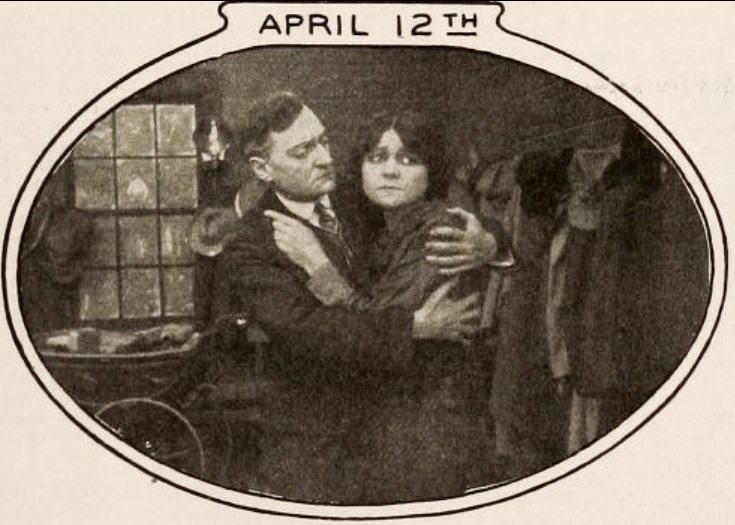
A nickelodeon ghost gallops out of 1911, trailing nitrate embers and unanswerable questions: can the heart be branded like cattle, or does it merely scar? The Cowboy and the Lady answers with a shiver you still feel eleven decades later.
The plot, stitched from Clyde Fitch’s Broadway chrysalis, is less a story than a social vivisection. Margaret Primrose—named like a hothouse bloom—enters the frame already corseted by capital. Her father’s fortune is built on porcelain, those brittle heirlooms that crack under the weight of masculine pride. When old man Primrose discovers that Ted North’s father once manipulated stocks and toppled his ceramic empire, he retaliates by weaponizing his daughter’s womb: marry the rot-gut heir Weston or be disinherited. The transactional savagery feels almost Jacobean, yet it’s pure Gilded Age.
Ted’s exile to the frontier reads like a secular pilgrim regress: from mahogany boardrooms to saddle sores, from linen spats to alkali dust. Director Fred Hornby doesn’t show the journey in montage; instead, a title card simply says, "Seven years—gone to the sage." In that ellipsis lies an ocean of American myth: the belief that landscape, not therapy, cures heartbreak.
Meanwhile, back east, Weston’s marriage deteriorates into a spectacular slow-motion suicide. He guzzles bourbon the way other men breathe—an upper-crust ancestor of the cowboy-drunk trope later perfected by post-war noirs. Margaret, clad in Worth gowns she despises, becomes a gilded prisoner, her only rebellion a refusal to produce an heir. The film hints at conjugal rape through shadow and door-slams, daring for 1911, yet never verbalizes the crime; silence itself becomes accusation.
When a consumptive diagnosis drags the Westons westward, the picture’s palette flips from drawing-room chiaroscuro to sun-scorched tableau. Cinematographer Seth Miller Kent favors wide static shots where the desert dwarfs human figures—an early visual metaphor for moral insignificance. The first re-encounter between Ted and Margaret happens beneath such a sky: her horse bolts, his lariat sings. The loop tightens, bodies collide, and for three seconds celluloid itself seems to blush. Their embrace is interrupted by the child Ted has adopted—a foundling whose father swung from a rope of Ted’s own tying. Guilt kneads his face; Margaret’s gloved hand retreats. The moment distills the entire film: desire colliding with culpability under the big empty.
Hornby’s blocking here is masterfully operatic. Ted stands left of frame, the orphan clasped to his hip like a penance; Margaret right, crinoline caught on sagebrush, a displaced Pre-Raphaelite nymph. Between them: a dead tree, its limbs petrified in cruciform agony. The composition foreshadows the trial that will pin Ted to another man’s sin.
Weston’s subsequent seduction of Molly, queen of the honky-tonk, allows the film to breathe saloon oxygen. Molly’s silk bloomers, high-kicking can-can, and contraband whiskey form a proto-feminist flare against Margaret’s porcelain purity. Yet the script refuses binaries: Molly wants escape money, not love; Weston wants maternal succor, not sex. Their transactional tryst feels almost Parisian noir transplanted to cactus country.
Enter Quick-Foot Jim, a gunslinger named for fleet trigger fingers rather than dancing prowess. Jim functions as the film’s chaotic id: when he discovers the elopement plan, he doesn’t merely shoot Weston—he annihilates the fantasy that money can purchase absolution. The murder occurs off-screen; we glimpse only Jim’s coat tails vanishing into a sandstorm. The camera lingers instead on a shattered whiskey bottle leaking amber into the dust, a visual elegy for Weston’s evaporated future.
Circumstantial evidence—Ted’s past conflict with Weston, his distinctive shell casing, a witness coached by ambition—chains the cowboy to the gallows. The trial sequence, condensed into brisk intertitles, nonetheless indicts frontier jurisprudence: "The jury retired at noon—condemned before supper." Hornby intercuts Margaret’s frantic ride to confess with the carpenters hammering together a scaffold, cross-cutting destiny like Griffith would later perfect in Intolerance.
What chills the marrow is the film’s refusal to grant catharsis. Just as Margaret learns Jim’s guilt, the villain kidnaps Molly, spiriting her toward Mexico. A posse forms—men whose faces we never learn, their torches a Murnau-esque procession. The camera irises out on pounding hooves; the End title appears. No rescue, no execution, no kiss. Only the open question: does justice require a scaffold, or simply the will to pursue?
Performance-wise, Edith Stevens’s Margaret is a marvel of micro-emotion. In close-up, her pupils dilate like ink drops in water—an entire aria of regret without a spoken word. Compare her to Helen Case’s Molly, all swagger and shoulder-blades, and you witness the era’s bifurcated vision of womanhood: angel vs. harlot, yet both caged by capital. Seth Miller Kent’s Ted is less convincing; his stone-jawed stoicism occasionally slips into barn-wood rigidity. One wonders what Lon Chaney or even a more Expressionist-trained lead could have mined from the role.
The technical package is primitive yet pregnant with future grammar. Day-for-night shooting renders moonlit chases hallucinatory. A forced-perspective miniature of the desert town anticipates German silhouette work. A double-exposure dream—Margaret imagines Weston’s corpse rising to waltz her toward a coffin—prefigures the psychic overlays of later Gothic silents. Alas, time has gnawed the print; nitrate decomposition blossoms like frost across several reels, lending certain scenes a ghostly snowfall the original audiences never saw.
Composer William Ryno’s original accompaniment, reconstructed from cue sheets, calls for a sliding chromatic waltz during the reunion scene, abruptly shifting to dissonant brass when Jim fires. The discord is startlingly modern, almost Ivesian, suggesting that even 1911 knew romanticism was dying in the West.
Socially, the film is a palimpsest of anxieties: class warfare, the liquidity of reputation, the collateral damage of masculine vendettas. Margaret’s body is literally the bond paper on which her father writes revenge; Ted’s adoption of the rustler’s child is reparations without a receipt. The lynching that orphaned the girl is mentioned only in a terse title—"Justice on the prairie"—but its moral fallout ricochets through every frame. Hornby neither endorses nor condemns; he simply exposes, letting the audience choke on its own ethical dust.
Comparative literature buffs will hear echoes of Thomas Hardy’s dynastic doom; western scholars will note the pre-code seeds of The Ox-Bow Incident. Yet the film’s true DNA is Shakespearean: fathers poisoning children’s futures, mistaken homicides, a heroine racing against the sunset to save the man she once renounced. The missing ending only amplifies the tragic aftertaste; we are denied both marriage and funeral, suspended in the amber of irresolution.
Contemporary critics, those lucky enough to catch the picture on its initial roadshow, praised its "photographic poetry" but balked at the bleak worldview. The New York Dramatic Mirror complained, "One leaves the theatre searching for a window, so dark is the air therein." Variety predicted that rural audiences would reject its anti-posse sentiment. Yet the picture toured for months, buoyed by word that "you’ll gasp at the last blackout." That blackout, of course, was literal; projectionists were instructed to freeze on the final hoofbeats, plunging the house into darkness so the audience could write its own verdict.
Modern viewers accessing the surviving 56-minute cut (the remainder is lost) will find themselves annotating absences. Where reels disintegrate, we imagine embraces; where intertitles vanish, we supply dialogue. The film becomes a participatory séance, demanding that twenty-first-century ghosts finish the nineteenth-century argument.
Ultimately, The Cowboy and the Lady survives not as nostalgia but as wound. It reminds us that America’s foundational myth—second chances in wide-open spaces—was already a cracked fairy tale by 1911. The desert doesn’t cleanse; it merely preserves bones longer.
Should you stumble across a festival screening accompanied by a live string quartet, do not hesitate. Sit where the projector’s beam cuts through cigar haze; let the photochemical ghosts climb your spine. When the screen irises to black and the hoofbeats echo into nothingness, you will understand why some silents scream louder than talkies ever could.
Until then, the film survives in footnotes, stills, and the fevered blog posts of cine-masochists who refuse to let irony flatten history. Seek it, not to scratch a completist itch, but to witness the moment when American cinema first stared into its own bloodshot reflection and flinched—cutting to black just before the mirror cracked.
IMDb —
1920
Community
Log in to comment.