DbcultAccessing Vault...
Cult Review
Senior Film Conservator
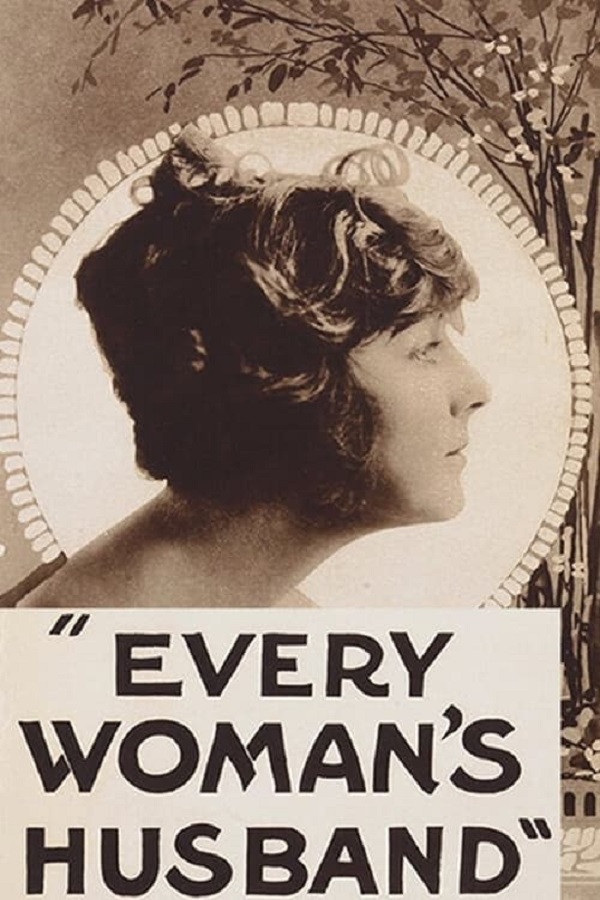
Step back into the flickering shadows of early cinema, to an era where emotions were writ large on the screen through gesture and gaze, and narratives often grappled with the profound societal shifts of the nascent 20th century. Among these cinematic artifacts, 'Everywoman's Husband' emerges as a compelling, albeit often overlooked, artifact that dissects the intricate, sometimes suffocating, dynamics of family. Released when the world was still finding its footing after the Great War, and women’s roles were undergoing a seismic re-evaluation, this film, penned by Charles J. Wilson, Charles Logue, and John B. Clymer, offers a surprisingly potent and timeless critique of maternal overreach and the quiet desperation it can sow within the domestic sphere. It’s a story that transcends its silent film origins, speaking to universal truths about autonomy, identity, and the sometimes-crippling burden of familial expectation.
At the heart of 'Everywoman's Husband' lies a matriarchal figure of formidable will, portrayed with chilling efficacy by Lillian Langdon. Her character is not a cartoonish villain, but a woman convinced of her own unassailable wisdom, whose love for her daughter is so possessive it becomes a weapon. She sees her daughter's marriage not as an independent union, but as an extension of her own will, an opportunity to exert control under the guise of guidance. This isn't merely meddling; it's a systematic dismantling of the daughter's (Lillian West) burgeoning independence, a meticulous orchestration of her life that leaves little room for self-determination. Langdon's performance, though devoid of spoken dialogue, communicates volumes through her stern countenance, her precise gestures, and the way she physically dominates the frame whenever she shares it with her daughter. It’s a masterclass in conveying psychological oppression without a single uttered word, a testament to the power of silent acting.
Lillian West, as the young wife, embodies the quiet torment of a soul caught between filial duty and personal yearning. Her initial scenes are marked by a youthful optimism, a hope for a new life distinct from her mother's shadow. However, as the mother's influence permeates every aspect of her marriage – from household decisions to personal affections – West's portrayal subtly shifts. Her eyes, initially bright, grow shadowed with a resigned sadness. Her posture, once open, becomes slightly hunched, mirroring the weight of expectation pressing down upon her. It’s a nuanced performance, capturing the insidious nature of emotional manipulation, where the victim often blames herself before realizing the external source of her unhappiness. The film meticulously builds this sense of entrapment, making the eventual breaking point all the more impactful. Comparisons can be drawn to other melodramas of the era, such as The Battle of Hearts, which also explored women caught in difficult emotional circumstances, though perhaps without the same piercing focus on the mother-daughter dynamic as the central conflict.
The titular 'Everywoman's Husband' is not merely a prop in this domestic drama; he is a crucial, if sometimes passive, participant. While the specific actor playing the husband isn't explicitly detailed in the provided cast list, the role itself is pivotal. He represents the external force attempting to forge a new unit, only to find it constantly undermined. His struggles to assert his authority, to protect his wife from her mother's overreach, highlight the societal expectations placed upon men in marriage, often to be the steadfast provider and protector, even against familial tides. The film subtly critiques the limitations placed upon him, demonstrating how even a well-intentioned man can be rendered impotent by an overwhelming matriarchal force. His frustration, his attempts to mediate, and his eventual despair are integral to understanding the full scope of the domestic tragedy. Meanwhile, George C. Pearce, likely playing the father, embodies a different kind of victimhood. His character is the quiet observer, the one who witnesses the slow strangulation of his daughter's happiness and the erosion of his own household's peace, yet remains unable or unwilling to intervene effectively. His presence is a simmering undercurrent of sorrow, a testament to the corrosive power of unchecked dominance within a family unit.
The narrative's most devastating turning point is the father's suicide. This act, often a shocking and taboo subject even in modern cinema, is handled with a stark, almost brutal realism within the confines of silent film melodrama. It is not merely a plot device, but a profound indictment of the emotional landscape created by the domineering mother. The father's self-destruction is a silent scream, an ultimate protest against a life devoid of agency, a household suffocated by a singular, unyielding will. For the daughter, this tragedy serves as a brutal awakening. It shatters the last vestiges of her childhood deference, forcing her to confront the true, devastating cost of her mother's 'love.' It's a moment of profound clarity, a realization that 'mother does not always know best,' especially when that 'best' comes at the expense of individual happiness and, ultimately, life itself. This pivotal event elevates the film beyond a simple domestic drama, imbuing it with a tragic grandeur that resonates deeply. It's a moment that could be thematically linked to the profound emotional weight found in films like Jane Eyre, where a strong female protagonist must navigate oppressive environments and make difficult, life-altering decisions in the face of profound personal loss and injustice.
The brilliance of 'Everywoman's Husband' lies in its masterful use of silent film conventions to convey complex emotions and intricate psychological states. The reliance on exaggerated facial expressions, grand gestures, and evocative body language is a hallmark of the era, yet here it feels less theatrical and more earnestly expressive. Intertitles, sparingly used but impactful, provide crucial exposition and internal monologues, guiding the audience through the characters' evolving feelings. The cinematography, while perhaps not groundbreaking for its time, effectively uses close-ups to emphasize emotional distress and wider shots to illustrate the suffocating domestic environment. The pacing, a critical element in silent films, allows moments of tension to simmer and moments of despair to fully register. It’s a testament to the skill of director and performers alike that such a nuanced story could be told with such clarity, predating the advent of synchronized sound. The film’s ability to build suspense and emotional resonance without the aid of spoken words showcases the raw, visceral power of early cinematic storytelling, a skill that some modern films could still learn from.
Beyond the central performances, the supporting cast plays a vital role in populating this world of domestic strife. Jack Livingston, Joe King, and Ed Brady contribute to the fabric of the narrative, each playing their part in the unfolding drama, whether as friends, colleagues, or perhaps other family members who witness the central conflict. Their presence, though perhaps less prominent, adds depth and realism to the film's depiction of a community observing, or perhaps inadvertently enabling, the mother's control. Intriguingly, 'Everywoman's Husband' also features an early appearance by Gloria Swanson. While her role might have been minor at this stage in her career, her presence is a fascinating historical footnote, a chance to witness the nascent talent of an actress who would soon become one of Hollywood's most iconic and enduring stars. Her eventual rise to fame in films like 'Sunset Boulevard' makes this early work a captivating piece of her cinematic journey, showcasing the foundations of her powerful screen presence. It’s a reminder that even in seemingly modest productions, the seeds of greatness are often sown.
The narrative's intricate emotional landscape and its powerful thematic core are testaments to the collaborative vision of its writers: Charles J. Wilson, Charles Logue, and John B. Clymer. In an era where screenwriting was still evolving as an art form, their ability to craft a story with such psychological depth and a compelling dramatic arc is commendable. They understood the power of domestic conflict, the subtle ways in which personalities clash and desires are thwarted. Their collective effort ensures that the mother's motivations, however misguided, are understandable, and the daughter's plight elicits genuine empathy. The progression from initial marital bliss to suffocating control, and finally to tragic liberation, is meticulously plotted, demonstrating a keen understanding of human nature and narrative structure. They crafted a story that, despite its period setting, speaks to timeless issues of family dynamics, personal freedom, and the sometimes-painful process of self-discovery.
'Everywoman's Husband' gains additional layers of meaning when viewed through the lens of its historical context. The early 20th century was a period of immense social change for women in America. The suffrage movement was gaining momentum, women were entering the workforce in increasing numbers, and traditional notions of domesticity were being challenged. While the film doesn't explicitly engage with these broader political movements, it implicitly reflects the tension between the 'old guard' (represented by the domineering mother, clinging to traditional control) and the 'new woman' (represented by the daughter, seeking autonomy and a marriage based on partnership). The mother's insistence on dictating her daughter's life can be seen as a desperate attempt to maintain a fading patriarchal order, even if she herself is a woman. This struggle for agency within the confines of marriage and family was a pervasive theme, and 'Everywoman's Husband' captures its emotional weight with striking clarity. Films like Little Eve Edgarton, while perhaps lighter in tone, also explored the burgeoning independence of young women in this transformative period, albeit through different narrative avenues.
It's also fascinating to consider 'Everywoman's Husband' in comparison to its European contemporaries. While American silent cinema often had its distinct stylistic conventions, the themes of domestic drama, marital strife, and the intricate lives of women were universal. Films such as the Danish production Selskabsdamen (The Lady of the House) or the Italian Sangue blu (Blue Blood) often explored similar societal pressures and personal struggles, albeit through different cultural filters. These comparisons highlight the shared human experience of navigating complex family relationships and the search for individual happiness, regardless of geographical or cultural boundaries. 'Everywoman's Husband' stands as a testament to the fact that emotional conflicts are not bound by language or continent, making its narrative accessible and resonant across diverse audiences and eras.
In its quiet, unassuming way, 'Everywoman's Husband' delivers a powerful, enduring message. It is a cautionary tale about the perils of unchecked control, even when cloaked in the guise of love. It speaks to the fundamental human need for autonomy, for the right to forge one's own path, and to the devastating consequences when that right is denied. The film’s exploration of the mother-daughter dynamic, the fragility of a nascent marriage, and the tragic consequences of emotional suppression remains remarkably relevant today. While the specific societal norms depicted may have evolved, the psychological undercurrents of familial manipulation and the struggle for personal identity are timeless. It reminds us that sometimes, the most profound lessons are learned through the most heartbreaking of circumstances, and that true love requires allowing another to flourish, not to be confined. This silent film, a relic from a bygone era, continues to echo with a resonance that speaks directly to the complexities of the human heart and the enduring quest for self-determination. It is a compelling argument for revisiting the often-underestimated power and insight of early cinematic narratives.
IMDb 6.1
1935
Community
Log in to comment.