DbcultAccessing Vault...
Cult Review
Senior Film Conservator
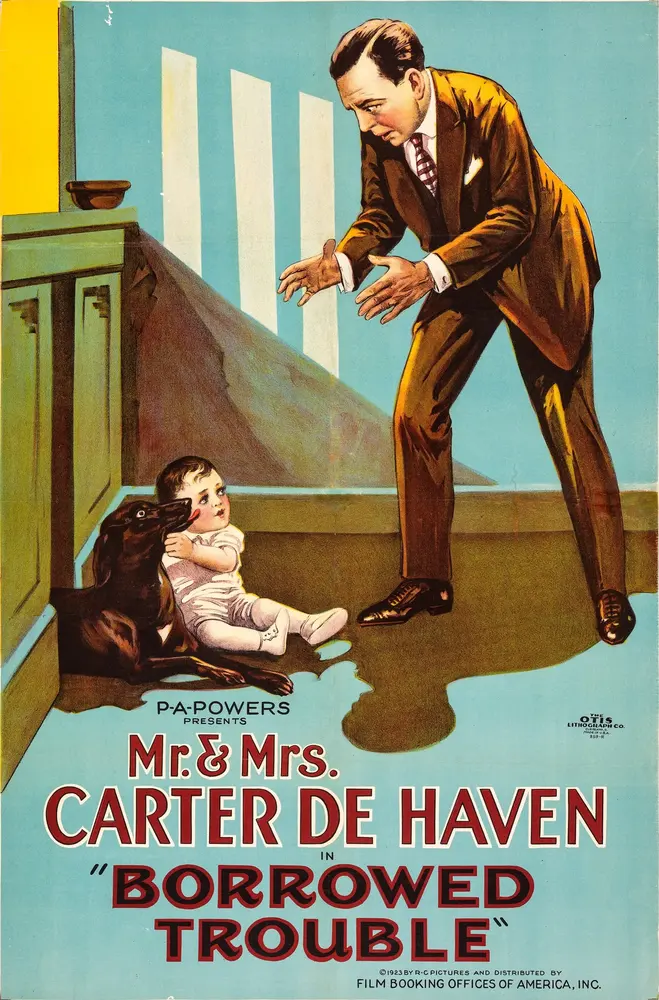
From the moment the camera settles on the freshly painted façade of the DeHaven couple’s new domicile, a palpable tension crackles in the air—a tension that is less about structural integrity and more about the yawning void of unfurnished rooms. The film’s opening tableau, rendered in crisp black‑and‑white, establishes a visual metaphor: a house brimming with potential yet barren of the trappings that confer domestic legitimacy. This juxtaposition sets the stage for a narrative that is as much about the economics of aspiration as it is about the comedy of errors that ensues when imagination collides with circumstance.
Flora Parker DeHaven, embodying the wife with a blend of coquettish optimism and steely resolve, immediately distinguishes herself from the archetypal silent‑era ingénue. Her decision to fabricate a correspondence to her parents—detailing the sumptuous furnishings of the neighboring inventor’s residence—reveals a character who is not merely passive but actively manipulates perception to safeguard familial pride. Carter DeHaven, as the husband, provides a complementary foil: his bewildered yet supportive demeanor underscores the partnership’s dynamic, wherein both parties are complicit in the grand illusion.
The narrative thrust accelerates when the parents, portrayed with affectionate gravitas, arrive at the threshold of the couple’s home. The DeHavens, seizing the serendipitous opportunity, usher their guests across the property line, presenting the inventor’s opulent interior as their own. The film’s mise‑en‑scene here is meticulous: the camera lingers on the gleaming brass fixtures, the polished parquet, and the delicate lace curtains—each element a visual cue that the audience, unlike the unsuspecting parents, is fully aware of the subterfuge. This dramatic irony fuels the comedy, allowing the viewer to revel in the impending chaos.
The inventor’s temporary absence—explained through a succinct intertitle noting his nocturnal experimentations—provides the perfect narrative loophole. He has entrusted his infant and a set of keys to the DeHavens, a plot device that simultaneously introduces a source of slapstick potential and a symbolic representation of responsibility. The baby, a cherubic figure whose wails punctuate the silent frames, becomes an unwitting catalyst for the escalating farce. Each attempt by the couple to conceal the child’s presence from their parents results in a cascade of physical comedy: a misplaced diaper, a startled squeal, a frantic scramble for a blanket—all choreographed with the precision of a well‑rehearsed vaudeville routine.
Beyond the surface-level hilarity, the film subtly interrogates themes of social expectation and the performative nature of domesticity. The DeHavens’ deception is not merely a comedic ploy; it is a commentary on the pressure to present an idealized household to one’s lineage. In an era when homeownership was synonymous with stability and respectability, the couple’s willingness to appropriate another’s property underscores a societal anxiety that remains resonant today. This thematic depth elevates *Borrowed Trouble* from a simple slapstick romp to a nuanced social satire.
Cinematically, the film employs a palette of contrasts that accentuate its comedic beats. The dark orange of the title cards, the bright yellow of the intertitles, and the occasional sea‑blue tint on the inventor’s laboratory equipment create visual anchors that guide the viewer’s attention. These color choices, though subtle in a monochrome medium, are hinted at through set design and costume accents, offering a proto‑color theory that would later flourish in sound cinema. The director’s use of tight framing during moments of tension—such as the parents peering through a slightly ajar door—heightens the sense of impending exposure, while wide shots of the couple’s frantic choreography provide comedic relief.
When comparing *Borrowed Trouble* to contemporaneous works, one cannot overlook the structural similarities with The Woman of Mystery. Both films hinge on a central deception that propels the narrative forward, yet *Borrowed Trouble* distinguishes itself through its domestic focus rather than the more exotic intrigue of its counterpart. Likewise, the whimsical misadventures echo the tone of One Arabian Night, though the latter leans heavily on fantastical elements, whereas *Borrowed Trouble* remains firmly rooted in the quotidian anxieties of a young couple.
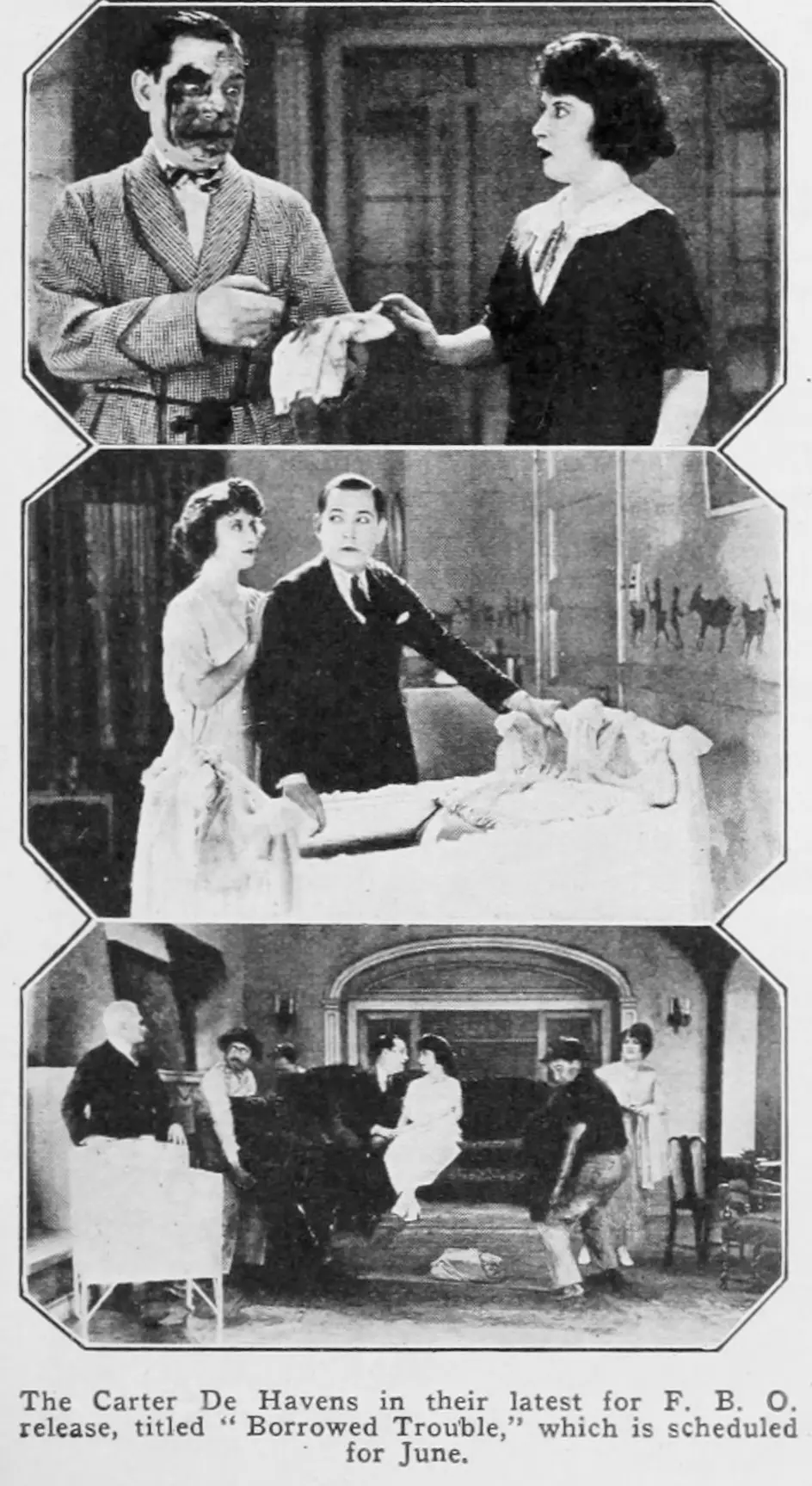
The performances of the DeHaven duo merit particular attention. Flora’s expressive eyes convey a spectrum of emotions—from hopeful anticipation to panicked desperation—without the need for dialogue. Carter’s physicality, especially during the sequences involving the baby’s sudden cries, showcases a mastery of timing that rivals the best slapstick veterans of the era. Their chemistry feels authentic, a testament to their real‑life partnership, which infuses the film with an intimacy that transcends the scripted farce.
The supporting cast, though limited, provides essential counterpoints. The parents, portrayed with a dignified gravitas, serve as the moral compass against which the couple’s deception is measured. Their eventual discovery of the truth—delivered in a climactic intertitle that reads, “We see through your borrowed trouble!”—is handled with a blend of surprise and affectionate forgiveness, reinforcing the film’s underlying message that love and honesty ultimately triumph over pretense.
From a technical standpoint, the film’s editing is noteworthy for its rhythmic precision. Cuts are timed to the beats of the accompanying piano score, ensuring that visual gags land with maximum impact. The use of cross‑cutting during the inventor’s return—showing his frantic search for his keys juxtaposed with the DeHavens’ frantic attempts to hide evidence—creates a tension‑release pattern that keeps the audience engaged throughout the climax.
The film’s conclusion, wherein the inventor returns to find his home temporarily inhabited by a bewildered couple and a bewildered baby, resolves the narrative threads with a satisfying blend of humor and reconciliation. The inventor’s magnanimous forgiveness, coupled with the parents’ amused acceptance, restores the equilibrium disrupted by the earlier deception. This denouement reinforces the film’s moral: authenticity, though occasionally uncomfortable, ultimately yields a more stable foundation than any borrowed façade.
In the broader context of silent comedy, *Borrowed Trouble* occupies a unique niche. While it shares the physicality of Chaplin’s *The Kid* and the situational absurdity of Keaton’s *The Goat*, its focus on domestic deception offers a fresh perspective on the genre’s possibilities. The film’s ability to balance slapstick with social commentary anticipates later works such as Ernst Lubitsch’s *The Marriage Circle* (1924), which similarly blends humor with an examination of marital dynamics.
For modern viewers, the film’s relevance endures. The pressures of curating a perfect home life, the temptation to present an embellished version of oneself to family, and the inevitable comedic fallout when reality intrudes are themes that resonate across generations. The DeHavens’ escapade serves as both a cautionary tale and a celebration of the human capacity for creative problem‑solving under duress.
If you find yourself intrigued by the interplay of deception and domesticity in *Borrowed Trouble*, you may also appreciate the nuanced humor of Are You a Mason?, the chaotic energy of Roars and Uproars, and the romantic misadventures in The Lottery Man. Each of these titles, while distinct in narrative, shares a common thread of characters navigating societal expectations through wit and ingenuity.
In sum, *Borrowed Trouble* is a masterclass in silent‑era storytelling, marrying visual comedy with a poignant exploration of marital partnership and societal pressure. Its deft direction, compelling performances, and thoughtful thematic undercurrents render it a timeless piece of cinema that continues to entertain and enlighten. Whether you are a scholar of early film history or a casual enthusiast seeking a hearty laugh, this 1920 gem offers a richly layered experience that rewards repeated viewings.
IMDb 6.2
1928
Community
Log in to comment.