DbcultAccessing Vault...
Cult Review
Senior Film Conservator
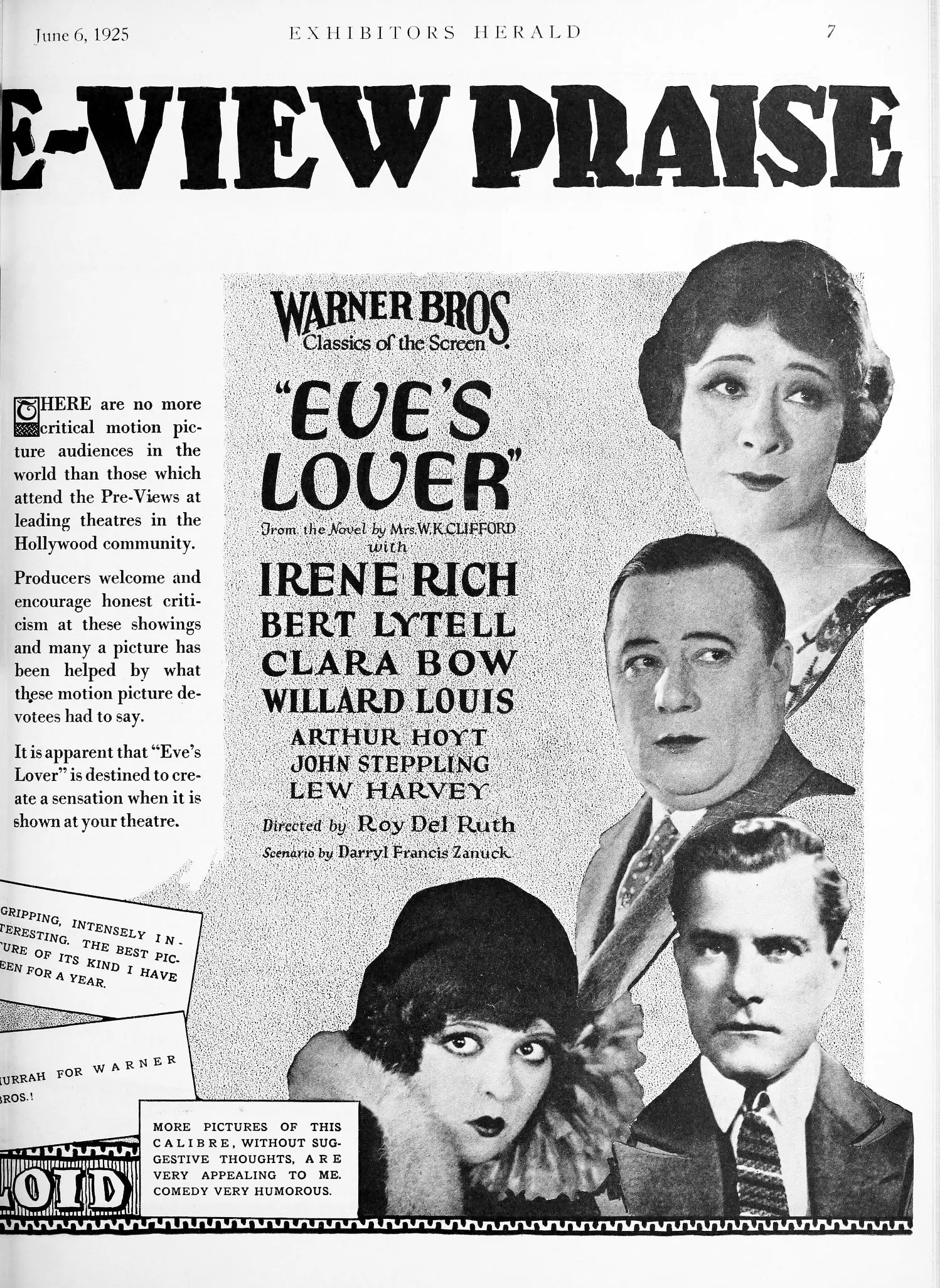
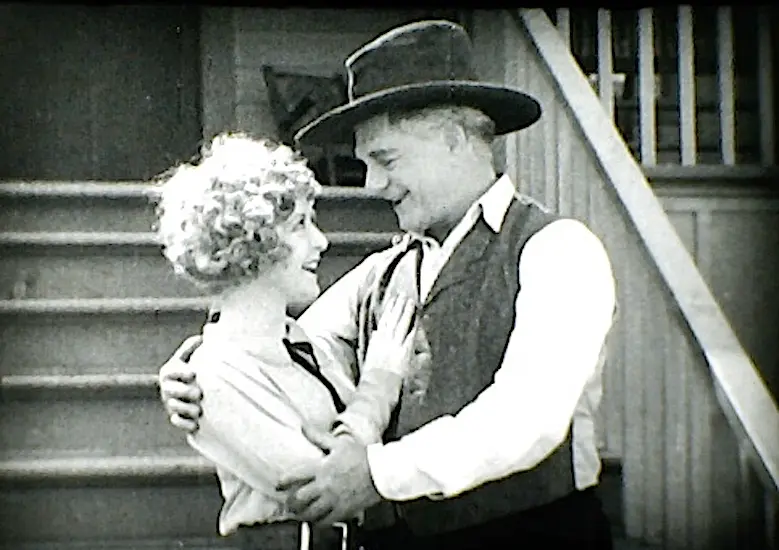
From the outset, 'Eve's Lover' (1927) emerges as a sophisticated and intricate narrative, weaving together themes of ambition, love, and betrayal in a manner that is both captivating and thought-provoking. The film is a testament to the golden era of cinema, with its rich, melodramatic storyline and stellar performances that bring to life the complexities of human desire and loyalty.
The plot revolves around Austin Starfield (Willard Louis), a man with his eyes set on Eve Burnside's (Irene Rich) steel mill. Starfield's scheme is brilliantly executed, utilizing the impoverished count, Leon Molnar (Bert Lytell), as a pawn to marry Eve and gain access to her wealth. However, what begins as a calculated game of manipulation and greed soon takes an unexpected turn. Leon, played with subtlety and depth by Lytell, finds himself genuinely falling in love with Eve, thus breaking off his ties with Starfield.
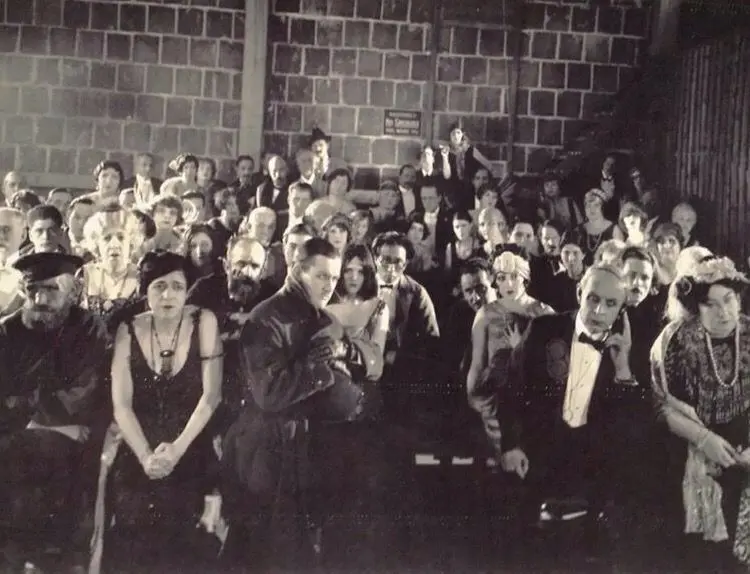
The film's narrative is further complicated by Clara Bow (Clara Bow), Leon's old girlfriend, who arrives on the scene and, driven by jealousy, plants the seed of doubt in Eve's mind. This act of sabotage not only adds layers of tension to the story but also serves as a catalyst for the ensuing drama. Bow's character is a standout, her presence electrifying and her performance a masterclass in the art of sultry resentment.
As the narrative unfolds, the workers at Eve's mill, influenced by Starfield, start a labor dispute, and chaos ensues. Lytell's Leon, now torn between his love for Eve and the need to expose Starfield's nefarious plans, must navigate a treacherous landscape. The climax is a masterful blend of suspense and emotional resonance, culminating in a confrontation that is both dramatic and satisfying.
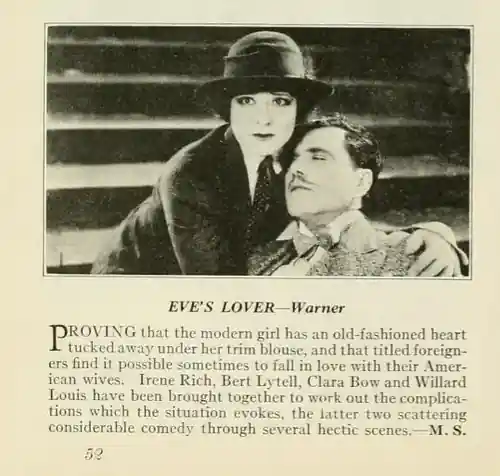
Technically, 'Eve's Lover' is a marvel, boasting a visually stunning production design that complements the film's period setting. The cinematography captures the opulence of the time, from the grandiose interiors of Eve's estate to the gritty, industrial landscapes of the mill. The film's score, while not explicitly mentioned, likely adds to the overall emotional impact, underscoring the highs and lows of the characters' journeys.
The acting performances are uniformly excellent. Louis delivers a nuanced portrayal of Starfield, a character whose motivations are both understandable and morally ambiguous. Lytell's performance as Leon is particularly commendable, capturing a range of emotions from vulnerability to strength. Rich's portrayal of Eve is equally compelling, balancing moments of vulnerability with a steely resolve.
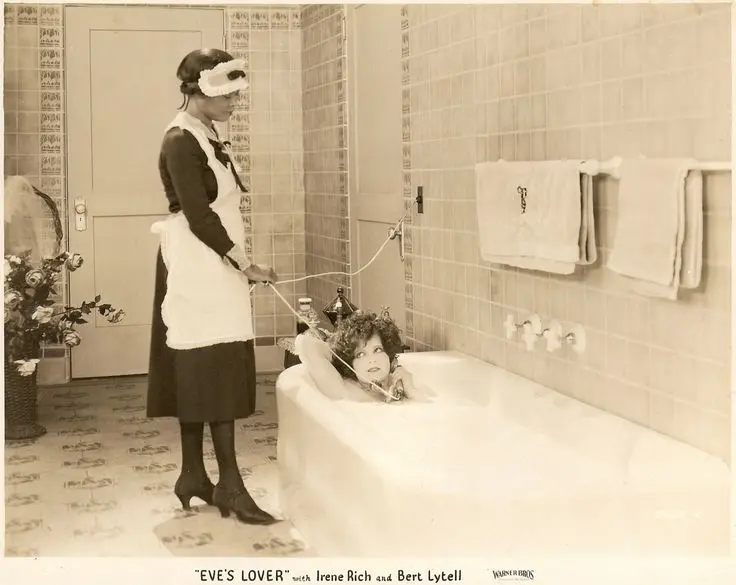
When compared to contemporaries like 'Youth to Youth' (1927), a film that explores similar themes of forbidden love and societal expectations, 'Eve's Lover' stands out for its more sophisticated narrative structure and deeper character development. Both films delve into the complexities of human relationships, but 'Eve's Lover' does so with a greater sense of psychological depth and emotional nuance.
In conclusion, 'Eve's Lover' is a must-watch for anyone interested in the golden age of cinema. Its intricate plot, stellar performances, and rich, evocative atmosphere make it a timeless classic that continues to resonate with audiences today. It is a film that not only entertains but also challenges viewers to reflect on the nature of love, ambition, and the often precarious balance between them.
IMDb 5.3
1918
Community
Log in to comment.