DbcultAccessing Vault...
Cult Review
Senior Film Conservator
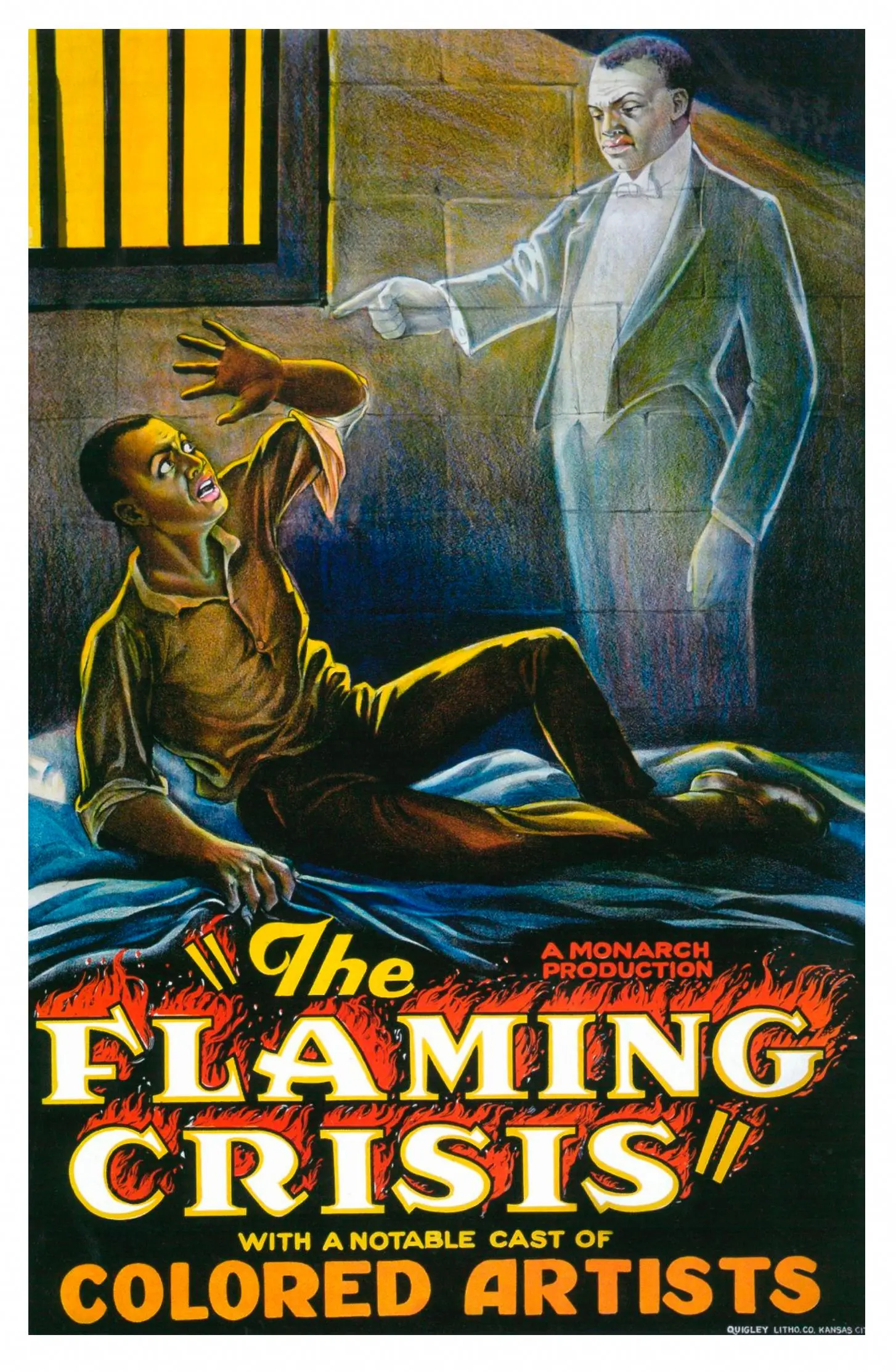
The Flaming Crisis, a cinematic masterpiece from the silent era, presents a searing indictment of corruption, a tale of redemption, and a romance that defies the conventions of its time. This gripping narrative, expertly crafted by writer William H. Grimes, follows Robert Mason, a fearless young black newspaperman, as he takes on the corrupt labor leader Mark Lethier, played by William Butler.
Mason's crusade against Lethier leads to a rupture in his personal life, as his engagement to Vivian Lethier, Mark's daughter, is terminated. The situation takes a darker turn when Mark is murdered, and Mason is wrongly convicted on circumstantial evidence. The film's use of dramatic irony heightens the tension as the audience is aware of Mason's innocence, yet powerless to prevent his downfall.
Imprisoned for several years, Mason eventually orchestrates a daring escape, fleeing to the southwestern cattle country. It is here that he meets Tex Miller, a beautiful cowgirl, played by Dorothy Dunbar, and becomes embroiled in a new chapter of his life. As Mason navigates this unfamiliar world, he finds himself drawn to Tex, and their romance blossoms.
The film's portrayal of Mason's relationship with Tex is noteworthy, as it subverts the traditional romantic tropes of the time. Their love story, told against the backdrop of the rugged American West, serves as a testament to the power of human connection in the face of adversity.
Mason's actions as a hero, taking on the notorious outlaw Buck Conley, a.k.a. the 'Night Terror,' and his gang, serve as a scathing critique of lawlessness and corruption in the American West. The film's climax, as Mason confronts Conley and his cohorts, is both suspenseful and cathartic, as our protagonist emerges victorious.
Ultimately, Mason's story serves as a poignant exploration of redemption and forgiveness. When he learns that the true perpetrator of Mark Lethier's murder has confessed, Mason is faced with a choice: to surrender to the authorities or to remain free. In a heartwarming conclusion, Mason elects to rejoin Tex and the country he has grown to love.
The Flaming Crisis can be situated within a broader cinematic context, alongside films like Crime and Punishment (1923) and Not Guilty (1921), which also explore themes of justice, morality, and personal redemption. However, The Flaming Crisis distinguishes itself through its unyielding commitment to social commentary and its nuanced portrayal of complex characters.
From a technical standpoint, the film's cinematography is noteworthy, capturing the vast expanses of the American West in a manner that is both breathtaking and haunting. The performances, too, are impressive, with the cast delivering nuanced and convincing portrayals of their characters.
In conclusion, The Flaming Crisis is a landmark film that deserves to be recognized as a classic of the silent era. Its thought-provoking narrative, coupled with its technical achievements, make it a must-see for film enthusiasts and historians alike. As a testament to the power of cinema to challenge social norms and inspire change, The Flaming Crisis remains a vital work, one that continues to resonate with audiences today.
In an era marked by social and economic upheaval, The Flaming Crisis serves as a powerful reminder of the importance of courage, conviction, and compassion. As we reflect on this film, we are reminded of the enduring power of storytelling to shape our understanding of the world and ourselves.
The film's exploration of themes such as corruption, redemption, and love serves as a testament to the complexity and nuance of the human experience. As we navigate the complexities of our own world, The Flaming Crisis offers a poignant reminder of the importance of empathy, understanding, and social responsibility.
IMDb 6.7
1919
Community
Log in to comment.