DbcultAccessing Vault...
Cult Review
Senior Film Conservator
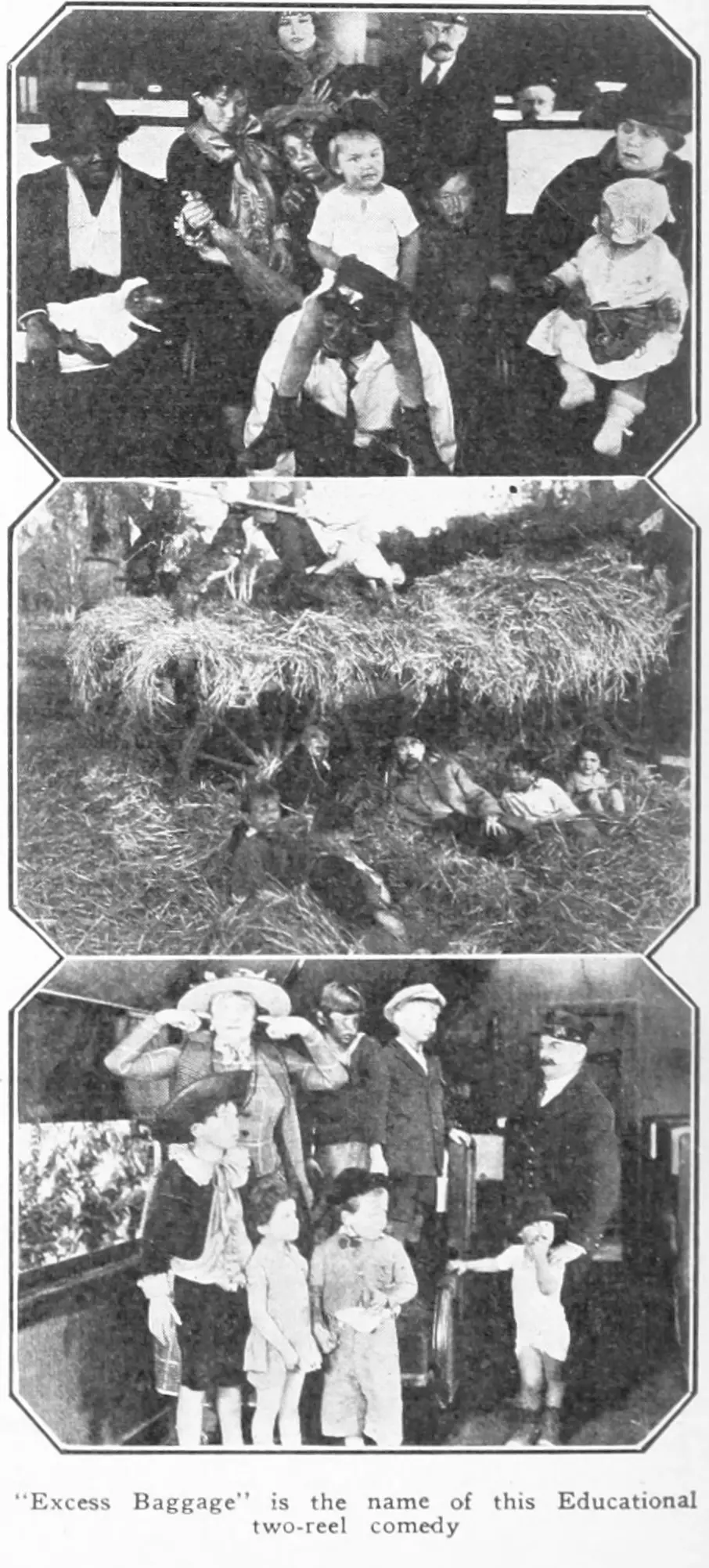
Is “Excess Baggage” worth watching today? Short answer: yes, but with significant caveats. This early 20th-century silent comedy offers a fascinating glimpse into the slapstick sensibilities of its era, delivering a riot of innocent, train-based mischief that will genuinely amuse specific audiences.
This film is absolutely for anyone with a keen interest in film history, silent cinema, or those seeking a light, unpretentious diversion. However, it is decidedly NOT for viewers expecting sophisticated humor, intricate plotlines, or modern production values. If you prefer your comedies with dialogue, nuanced character development, or a runtime exceeding a brisk ten minutes, you might find your patience tested.
“Excess Baggage” is a delightful, if fleeting, testament to the enduring appeal of childhood mischief. Directed with an eye for escalating visual gags, this silent short captures a specific brand of early cinema humor that, surprisingly, still lands some of its punches a century later. The premise is simple: a young boy, Jackie, rebels against his aunt’s insistence on dressing him in foppish clothes by proving his toughness, inadvertently unleashing pandemonium on a passenger train with his friends and their unusual pets.
The film’s genius lies in its relentless, almost manic, pacing. From the moment Jackie’s frog escapes to wreak havoc on a bald man’s head – a classic, timeless visual gag – the film rarely lets up. It’s a masterclass in how to build comedic tension through sheer accumulation of absurdity. The director understands that the humor isn't just in the individual gags, but in the snowball effect of one small act of mischief leading to a colossal, train-wide catastrophe.
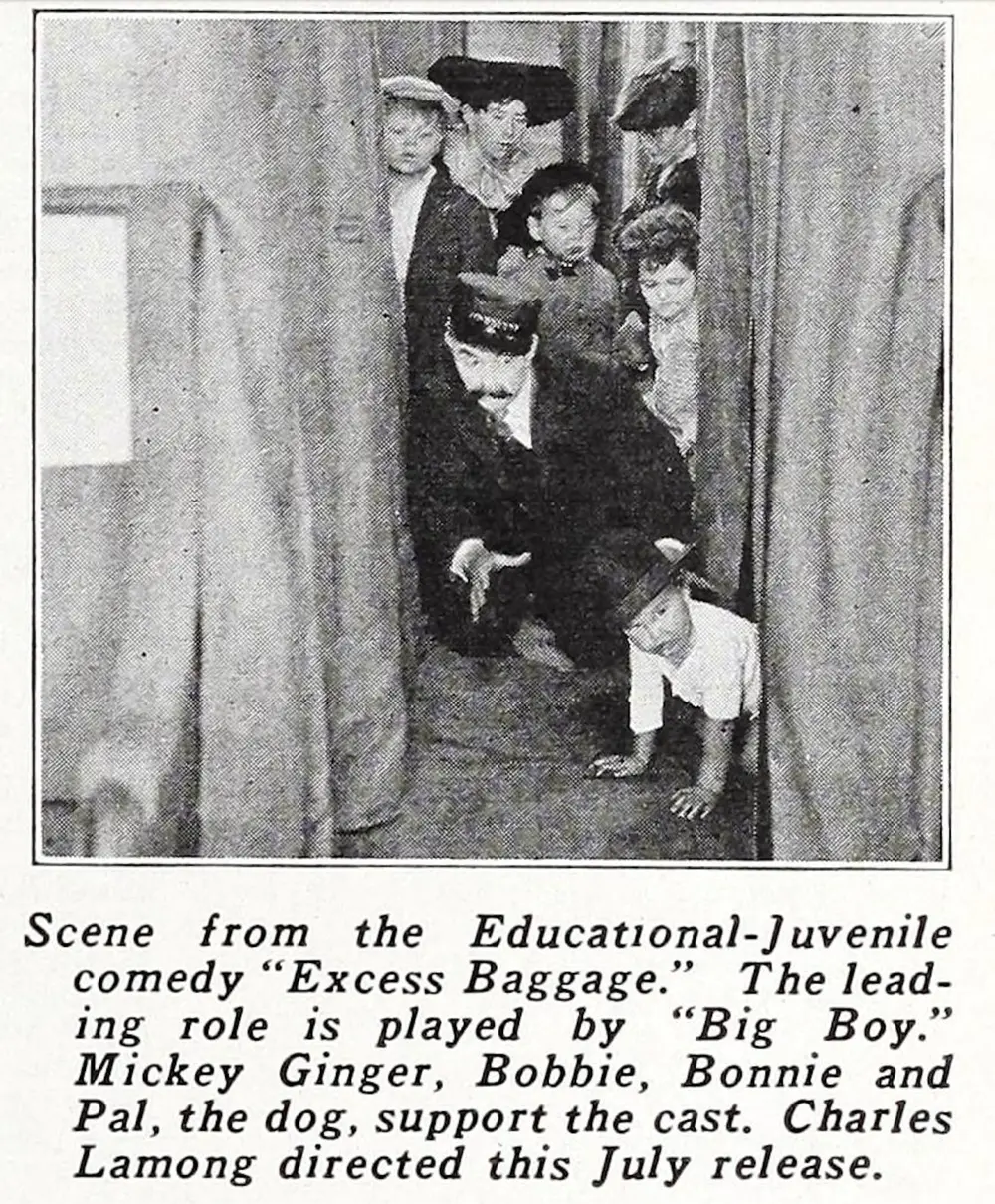
The performances, particularly from young Jack McHugh as Jackie, are surprisingly effective. McHugh embodies the 'tough egg' persona with an undeniable youthful swagger, conveying defiance and mischievous glee without uttering a single word. His expressions, often a mix of feigned innocence and barely contained glee, are central to the film's charm. The supporting cast, largely comprised of other children and exasperated adults, play their parts with broad, expressive gestures typical of the era, yet never tipping into outright caricature to the point of annoyance. Bonnie Barrett, as the long-suffering aunt, manages to convey a palpable sense of escalating despair that grounds the otherwise fantastical antics.
The cinematography, while rudimentary by today’s standards, is functional and effective for its time. The camera largely remains static, capturing the action in wide shots that allow the physical comedy to unfold naturally. This approach ensures that the audience can clearly track the various threads of chaos – the escaped frog, the fleeing chickens, the bewildered donkey – as they weave through the passenger coaches. It’s a testament to the clarity of visual storytelling that even without intertitles (though some versions may include them), the narrative remains perfectly coherent.
The film’s editing, too, deserves a nod. For a short film, it manages to maintain a brisk rhythm, cutting between the children’s antics and the adults’ reactions with precision. There’s a particular sequence where the animals are unceremoniously released into the passenger cars that exemplifies this. The rapid cuts between a startled passenger, a chicken flapping wildly, and the children’s gleeful faces create a sense of frantic energy that is genuinely infectious. It's an early example of how montage could be used to amplify comedic effect, a technique that would be refined by later silent film luminaries.
The tone of “Excess Baggage” is undeniably lighthearted and purely comedic. There are no grand dramatic stakes, no underlying social commentary, and certainly no deep character arcs. It is a film designed solely to entertain through escalating slapstick and the universal appeal of children getting away with absolute mayhem. In an era where cinema was still finding its voice, this focused approach to entertainment was a strength, allowing the filmmakers to hone their craft in visual humor.
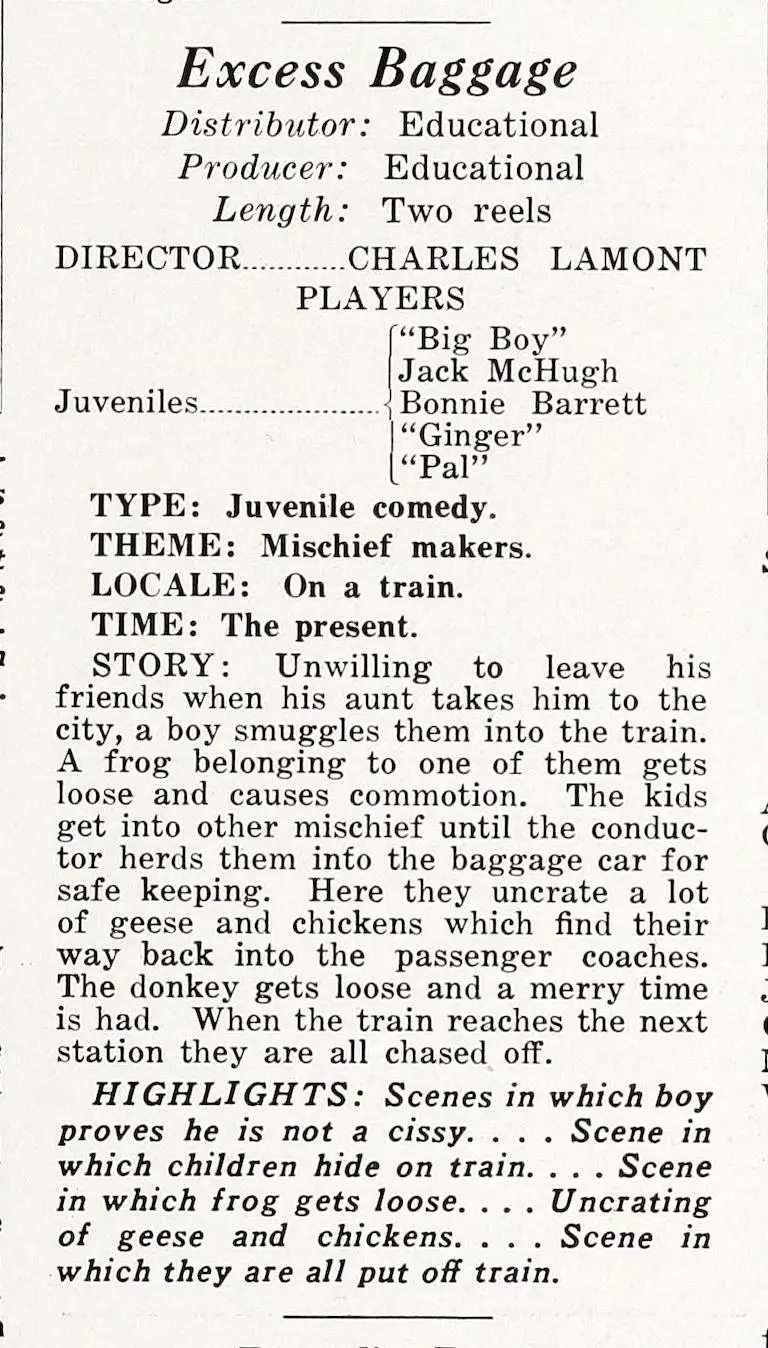
Yes, “Excess Baggage” is worth watching, particularly for those who appreciate the historical context and unique charm of early cinema. It’s a short, sharp burst of comedic energy that, despite its age, still possesses a certain infectious quality. It works. But it’s flawed.
This film works because of its relentless, physical comedy and the surprisingly effective performances from its young cast. It fails because its humor, while occasionally timeless, relies heavily on a specific, broad slapstick style that might not resonate with all modern viewers. You should watch it if you're a film student, a silent film enthusiast, or simply curious about the roots of cinematic comedy and don't mind a brief, dialogue-free experience.
One surprising aspect of “Excess Baggage” is how it inadvertently highlights the sheer lack of entertainment options for children during long journeys in the early 20th century. The children's elaborate, destructive games feel less like pure malice and more like a desperate attempt to stave off boredom in a confined, adult-centric space. It's a subtle, unintentional commentary on the need for child-friendly travel solutions, long before the advent of in-flight entertainment or even simple coloring books.
I’d argue that the film’s biggest strength, its escalating chaos, is also its most dated element. While the frog gag is universally funny, the prolonged sequence of animals running amok, while technically impressive for its time, eventually verges on repetitive. Modern audiences, accustomed to tighter comedic pacing and more diverse forms of humor, might find the extended animal chase less hilarious and more… well, just noisy. It's a testament to the era's different comedic rhythms, but it doesn't always translate perfectly.
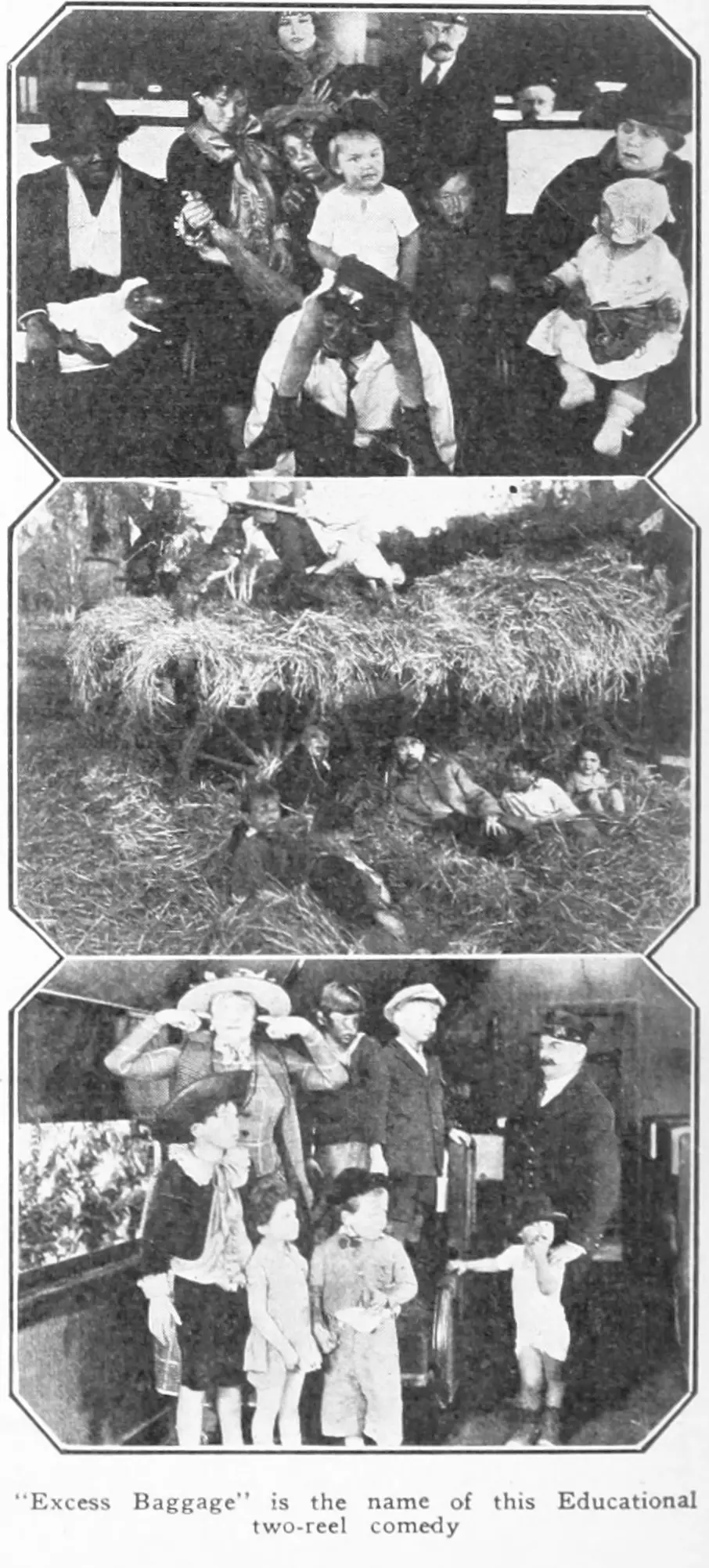
Furthermore, the character of the conductor, while a necessary foil, feels particularly one-dimensional. He’s merely a reactive force, a human pinball constantly batted around by the children’s antics. While this serves the slapstick, it misses an opportunity for a more nuanced comedic dynamic. Imagine if the conductor had a quirky personality or a hidden soft spot for children; the humor could have been elevated beyond simple frustration.
The pacing of “Excess Baggage” is rapid-fire, designed to elicit continuous chuckles rather than sustained belly laughs. Each gag flows quickly into the next, maintaining a high energy level throughout its brief runtime. This approach prevents any single joke from overstaying its welcome, a crucial element for silent comedy where visual impact is paramount. The film operates on a principle of comedic escalation: a frog leads to a porcupine, which leads to geese, which then culminates in a donkey. It’s a formula that early filmmakers understood well, and it’s executed here with admirable efficiency.
The tone is consistently light and farcical. There’s no malice in the children's actions, only an innocent, almost primal, desire for play and rebellion against adult authority. This innocence makes the film palatable even when the chaos becomes truly destructive. The film never judges its young protagonists; instead, it revels in their unbridled energy and the havoc they unwittingly create. This makes it a surprisingly feel-good experience, despite the exasperation of the on-screen adults.
Comparing it to other comedies of the era, “Excess Baggage” holds its own as a solid example of early short-form slapstick. While it lacks the iconic star power or intricate stunts of a Buster Keaton or Charlie Chaplin film, it shares a similar spirit of physical comedy and a knack for visual storytelling. It’s perhaps closer in spirit to shorts like All Wet or A Perfect 36, focusing on everyday settings turned upside down by unexpected events. Its lasting impression is one of pure, unadulterated fun, a simple comedic confection from a bygone era.
“Excess Baggage” is more than just a historical curiosity; it’s a vibrant, if brief, example of early cinematic comedy that still manages to charm. While it won't redefine your understanding of the genre, it provides a solid, entertaining ten minutes of pure, unadulterated mischief. It’s a film that asks little of its audience beyond an open mind and a willingness to embrace the simple joys of a frog on a bald head or a donkey in a passenger coach. For those seeking a taste of silent-era slapstick, or a quick, low-stakes laugh, it’s a ticket worth punching. Just don't expect it to pack the punch of a modern blockbuster. It's a delightful, if slight, piece of history that still delivers some smiles, even a century later.

IMDb —
1927
Community
Log in to comment.