DbcultAccessing Vault...
Cult Review
Senior Film Conservator
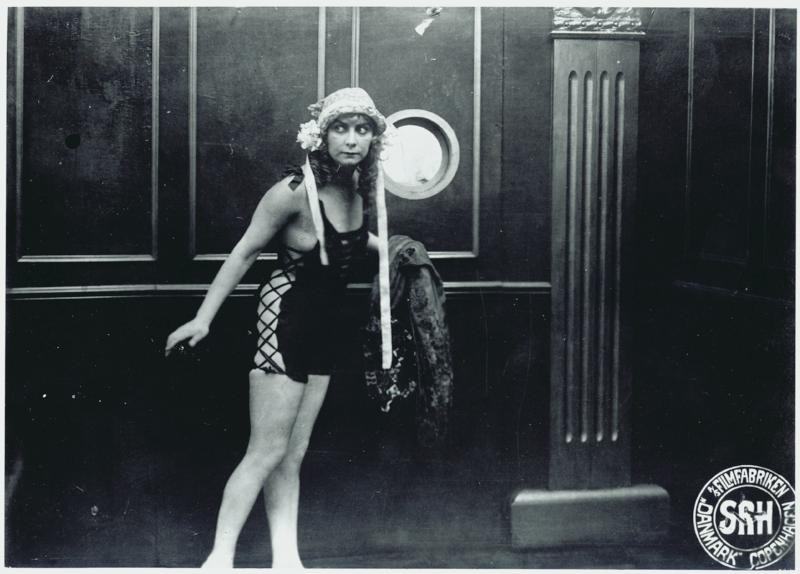
*Panopta II* (1930) is a film that thrums with the quiet urgency of a ticking clock. It is not merely a detective story but a layered exploration of power, corruption, and the fragile morality that binds society. Directed with a painter’s eye for shadow and light, the film immerses viewers in a world where every character is both a suspect and a victim, and every decision carves deeper into the moral fabric of its protagonist.
At the center of this noir-tinged odyssey is Hertha Christophersen’s performance as Panopta, a role that demands both physicality and introspection. Her character is not the archetypal femme fatale but a woman whose pursuit of justice is as much an act of self-preservation as it is an ethical imperative. The script, co-written by Richard Lund and Zilva Bébé, treats her as a multidimensional force—her determination is laced with doubt, her triumphs shadowed by the cost of her choices. This duality is mirrored in the city itself, a character in its own right, where neon signs flicker against rain-slicked streets and alleyways conceal both danger and fleeting hope.
The antagonist, Kippy, portrayed with unsettling charm by Aage Hyllested, is less a cartoonish villain than a mirror to Panopta’s own vulnerabilities. His operations are not merely criminal but a reflection of the systemic rot that allows him to thrive. The film’s brilliance lies in its refusal to simplify him; his ruthlessness is tempered by a perverse loyalty to his organization, and his downfall is as tragic as it is inevitable. This complexity elevates *Panopta II* beyond genre tropes, situating it within the lineage of films like *The Manxman* and *Nedra*, where antagonists are as compelling as protagonists.
Visually, the film is a masterclass in early cinematography. The use of deep focus and Dutch angles creates a sense of claustrophobia, trapping the audience in Panopta’s perspective. A standout sequence involves a midnight confrontation in a derelict warehouse, lit by a single overhead bulb, where the interplay of light and shadow becomes a metaphor for the blurred lines between hero and villain. The score, a blend of atonal strings and melancholic piano, underscores the tension without overpowering the narrative, a technique that echoes the minimalist approach of *The Double Event*.
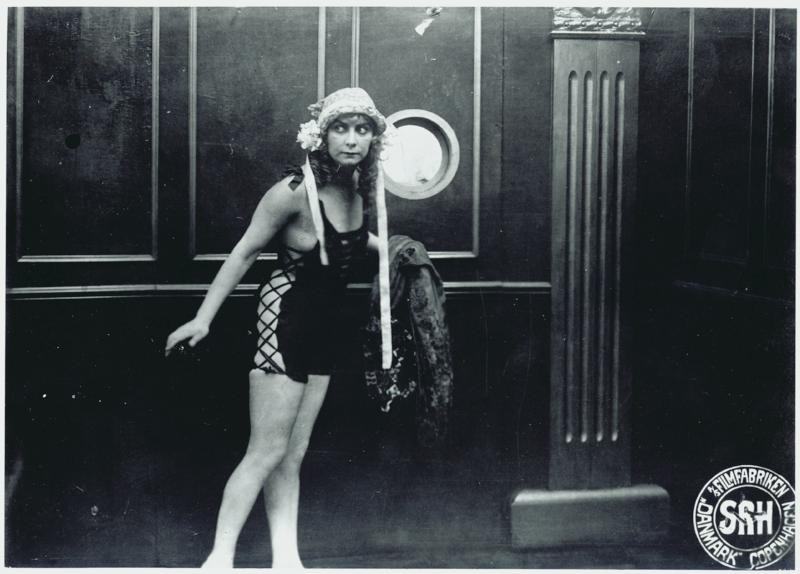
The supporting cast, including Viggo Larsen and Emilie Sannom, adds texture to the film’s moral landscape. Larsen’s role as a conflicted informant and Sannom’s portrayal of a woman caught between two worlds provide moments of emotional resonance that contrast with the film’s darker themes. Their interactions with Panopta reveal the societal pressures that bind individuals to systems of power, a theme also explored in *Envar sin egen lyckas smed* and *The Straight Road*.
What sets *Panopta II* apart is its thematic ambition. It does not merely tell a story of crime and punishment but interrogates the structures that enable such crimes. The film’s climax, where Panopta dismantles Kippy’s network, is not a victory but a reckoning—a recognition that the fight against corruption is cyclical and personal. This philosophical undercurrent aligns it with the existential dread of *The Price of a Good Time* and the societal critiques of *Grekh*.
Comparisons to other films of the era are inevitable. Like *The Ring and the Man*, *Panopta II* uses its protagonist’s journey to critique male-dominated power structures. However, it diverges by centering a female lead whose agency is both her strength and her vulnerability. The film’s pacing, reminiscent of *The Fighting Grin*, avoids the melodrama that often plagues noir, instead favoring a taut, psychological tension that keeps viewers on edge.
Technically, the film is a triumph. The editing, though rudimentary by modern standards, is precise in its storytelling, and the use of montage in the final act is particularly effective. The production design, from the decaying industrial settings to the sterile interiors of Kippy’s lair, reinforces the film’s themes of decay and order. These elements, combined with the performances, create a cohesive world that feels both specific and universal.
In conclusion, *Panopta II* is a landmark in early cinema, offering a nuanced exploration of justice, identity, and societal decay. Its legacy lies in its ability to balance genre conventions with artistic innovation, a feat that continues to influence filmmakers today. For those seeking a film that challenges as much as it entertains, this is an essential watch. It stands alongside *The Sea Flower* and *Neptune’s Daughter* as a testament to the power of cinematic storytelling to reflect the complexities of the human condition.
IMDb —
1926
Community
Log in to comment.