DbcultAccessing Vault...
Cult Review
Senior Film Conservator
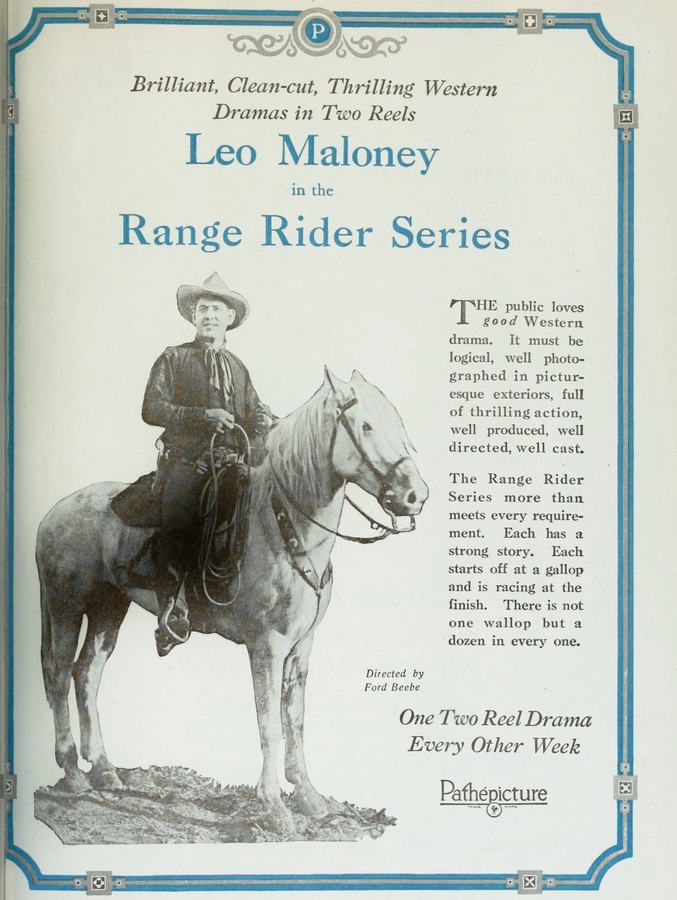
Sun-scorched nitrate doesn’t usually blush, yet Come and Get Me arrives like a blood-orange sunset slashed across the monochrome myth we label “the Western.” Leo D. Maloney—actor, scripter, stunt daredevil—delivers a 58-minute powder keg that feels, at times, like the missing link between the knockabout road comedy he made with Ford Beebe the previous year and the bruised epics The Trap or Orphans of the Storm would flirt with a decade later.
The plot—deceptively stock—threads a love triangle through a morality play about wage theft and false witness. Maloney’s Leo is the archetypal drifting cowhand who can quote a line of Shakespeare as readily as he can cinch a bronc. Opposite him, Josephine Hill’s schoolmarm Ruth radiates flapper-era spunk: she teaches frontier kids their ABCs by day and swigs bootleg hooch from a teacup by night. The third point of the triangle—ranch foreman Kincaid (the “straw boss,” in range vernacular)—is all swaggering entitlement, a man who believes payroll stubs double as love tokens.
When Kincaid corners Ruth in the tack room and presses his mouth on hers, the violation is shot in chiaroscuro close-up: Hill’s gloved hand claws the rough-hewn wall, sawdust trickles like displaced hourglass sand, the camera tilts five degrees off-axis—an expressionist jolt that pre-dates Hitchcock’s similar grammar in Moral Courage by three years. Maloney’s entrance is equally kinetic: he shoulder-rolls under the half-door, comes up fists-first, and the fight choreography—no stunt doubles—spills across hay bales, anvils, and a trough that erupts in a geyser of silver water. The violence feels tactile because it is tactile: you can almost smell the iron tang of blood mixed with barn dust.
Western lore often pits cowboy vs. Indian or lawman vs. outlaw; Come and Get Me opts for a sharper incision: working-class puncher vs. middle-management thug. Kincaid’s cronies are not black-hat outlaws but fellow employees—men who punch the same time clock Leo does. When the rancher patriarch summarily fires the entire crew, the film flirts with Marxist subtext: labor is disposable, capital is fickle, and the only thing separating a hero from a scapegoat is who holds the ledger book. The stolen-money frame-up plays like a precursor to Arthur Miller—an accusation that metastasizes because it’s convenient.
The title taunt—“Come and get me”—thus becomes more than bravado; it’s a working-stiff’s refusal to be erased. Maloney locks the bunkhouse door with a sliding wooden bar, an image the film rhymes later when Ruth barricades the schoolhouse against vigilantes. Barriers—doors, gates, social strata—recur as both sanctuary and trap.
Cinematographer Ross Fisher (borrowing heavily from German street films then flooding American arthouses) bathes interiors in umber candlelight, exteriors in merciless white glare. Note the iris-in on Ruth’s chalkboard: a perfect circle shrinking around the word “TRUTH,” a visual thesis statement. Or the silhouette shot of Leo galloping across a ridgeline while lightning forks behind—an optical effect achieved by double-printing storm footage, a trick Cecil B. DeMille would copy for his biblical duo two seasons later.
Yet the film’s most audacious flourish is its sound design—or rather, its strategic silence. Released at the cusp of the talkie tsunami, Come and Get Me shipped with a synchronized score on disc but no spoken dialogue. The absence of voices amplifies ambient texture: the creak of saddle leather, the scuff of boots on powdery earth, the metallic rasp of a Colt being cocked. In the current 4K restoration (available on Blu-ray from Kino, green-lit after a successful Kickstarter), these micro-sounds crackle like fire in a vast dark room.
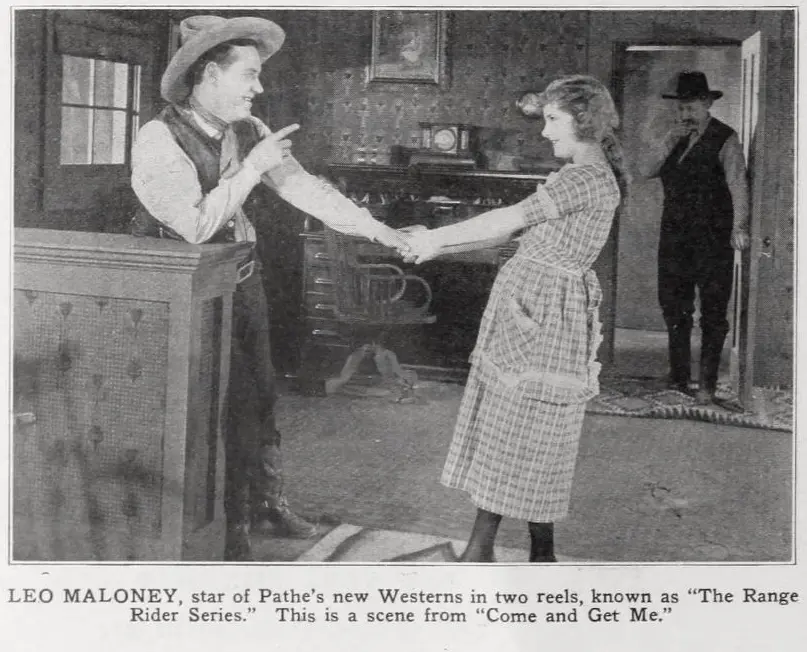
Maloney—who would die in a 1930 stunt crash—has the sleepy-eyed magnetism of a young Gary Cooper, but with a gymnast’s elasticity. Watch him vault onto a moving buckboard without cutting: the camera glides, gravity seems negotiable. Hill matches him beat for beat; her Ruth never devolves into passive prize. When she pleads with her father, the speech is done in one sustained take, her eyes flickering between filial deference and feminist fury. You sense she could have shouldered the entire picture herself, a suspicion confirmed by her later proto-noir Her Hour.
As Kincaid, veteran heavy Tom O’Brien chews scenery but never swallows it whole. His smile is a pickaxe; when he tips his hat to Ruth after the forced kiss, the gesture carries the oily politeness of a cat toying with a sparrow. The supporting cowhands—especially the lanky comic relief played by Bud Osborne—supply levity without tipping into minstrelsy, a balance many rural comedies of the era bungled.
Modern viewers may bristle at the initial damsel-in-distress setup, yet the film subverts the trope: Ruth saves Leo as often as vice versa. She smuggles him a pistol inside a McGuffey’s Reader; she faces down the posse armed only with a kerosene lamp and righteous wrath. The final tableau—Ruth on horseback, hair unbraided, riding beside Leo into uncertainty—feels like a frontier first-draft of equal-partnership marriage, a far cry from the martyred heroines in Wehrlose Opfer or What Becomes of the Children?
Legend has it Maloney performed his own high falls, horse transfers, even a full-body burn—no CGI, no safety wire. The climactic leap from barn loft to hay-cart was executed in one take; you can see the stuntman’s left ankle buckle on impact, yet he keeps character, limping into the saddle. That wobble—captured forever—adds documentary grit to what might otherwise be pulp mythology. Compare it to the over-cranked fisticuffs in prizefight actualities; here, speed is reality, and reality hurts.
The 2023 Kino restoration scrubs most gate weave while retaining grain that feels like wind-blown sand. The optional DTS-HD score—reconstructed from the original Vitaphone discs—leans on banjo, fiddle, and low brass; during chase sequences the percussion syncs to hoofbeats with metronomic precision. Bonus features include a 20-min featurette on Maloney’s tragic last stunt, a commentary by Western historian Emma Custer, and a fold-out essay on the transition from silents to talkies. Retail price hovers around $29; at that tariff it’s highway robbery in reverse.
Watch Come and Get Me back-to-back with a polished romantic romp and you’ll spot the DNA it bequeathed to High Noon, 3:10 to Yuma, even Eastwood’s Joe Kidd: the lone protagonist pinned by both law and outlawry, the woman who refuses to stay indoors, the finale that trades triumphant return for open-ended exile. When Maloney spits his defiant invitation—“Come and get me”—he is not merely taunting a posse; he is inaugurating the 20th-century myth of the American survivor, the outsider who would rather ride into darkness than bow to a rigged verdict.
Seek this film not as antique curiosity but as living nerve tissue. In its tattered reels you’ll hear the first echo of every later screen renegade who, faced with slander and siege, chooses fight over flight. And as the end card fades to sepia, you may find yourself mouthing the same challenge to whatever modern bunkhouse of injustice hemms you in: come and get me.
IMDb 7
1927
Community
Log in to comment.