DbcultAccessing Vault...
7.6/10
Senior Film Conservator
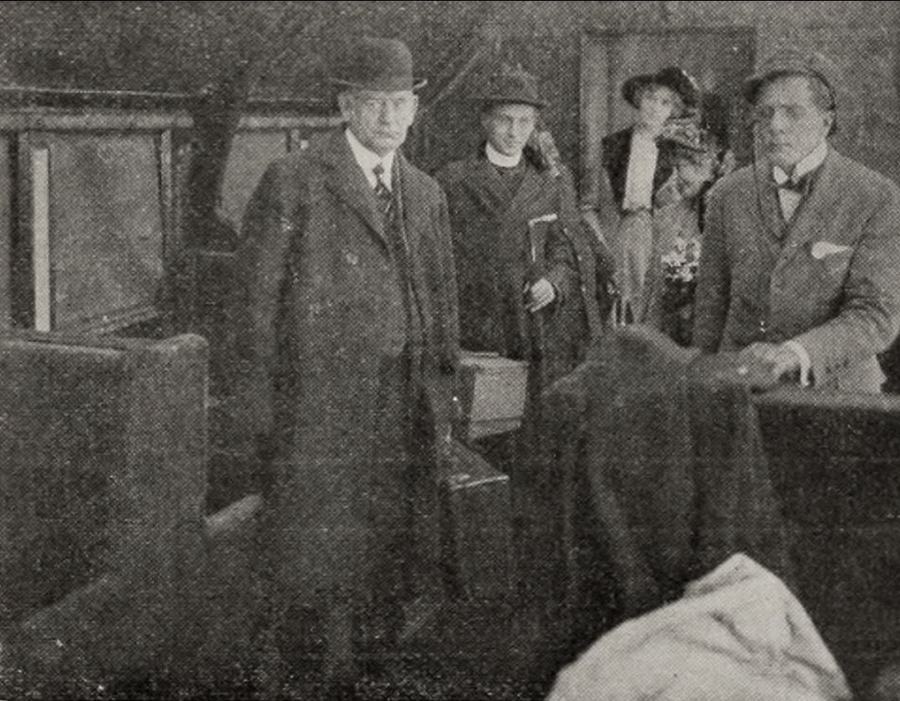
A definitive 7.6/10 rating for a film that redefined the boundaries of cult cinema. Excuse Me remains a cornerstone of transgressive art.
The year 1925 unfurled like a fresh spool of nitrate, crackling with jazz rhythms and the perfume of bootleg gin; into that incandescent moment arrives Excuse Me, Rupert Hughes’ whip-crack train comedy that treats the Overland Limited as both cathedral and brothel. Viewed today, the film feels like a sped-up confession from a society terrified of its own pulse rate. Hughes—novelist, scenarist, boulevardier—adapts his own stage hit with the glee of a conductor shovelling coal into a furnace: every scene belches sooty laughter, every title card snaps like a conductor’s punch.
George F. Marion’s Reverend Doctor Temple is the film’s stealth philosopher, entering in a cloud of Midwestern boredom, clerical collar tucked into his pocket like contraband. Marion, best remembered for paternal roles in Little Pal, here weaponizes his potato-sack silhouette and hooded eyes, letting us watch a man sample sin the way a tourist sips absinthe. When the Mormon elder boards at Provo, Marion’s face cycles through fear, envy, epiphany—an entire circuit of Calvinist terror compressed into twelve jittery frames.
Opposite him, Geraldine O’Brien’s Marjorie clutches virtue like a handbag she’s not sure she can afford to replace. O’Brien possesses that rare silent-era gift: cheekbones that read as both innocent and carnivorous. In the cramped Pullman corridor she navigates lust and logistics simultaneously—her eyes flick to Mallory, to the porter, to the unseen audience beyond the lens, asking: Is marriage the only passport out of disgrace? The question ricochets through the berth, unanswered, until a bandit’s revolver provides the wedding bells.
Jack B. Hollis, as Mallory, is the film’s wound spring: ramrod posture, pencil moustache, a uniform pressed so sharply it could slice conscience. Hollis understands that farce is merely tragedy at 45 r.p.m.; he hurtles down the aisle, trips over a sleeping dog, rebounds upright with the elastic dignity of a man who has mistaken panic for valor. His chemistry with O’Brien is less romantic than transactional—two adolescents bartering virginity against a ticking timetable.
And then there is Robert Fischer’s porter, the unacknowledged Atlas of the narrative. Fischer, a Swiss-German comic built like a broomstick, gives the role a Chaplinesque pathos minus the tramp’s sentimentality. He polishes shoes, eavesdrops, absorbs racial epithets with a smile that never reaches the eyes, and still finds bandwidth to engineer last-act redemption. In 1925, Hollywood routinely relegated Black actors to porters; Fischer’s casting flips the trope—his porter is European, accented, perpetually baffled by American savagery, a stranger in a strange land twice over.
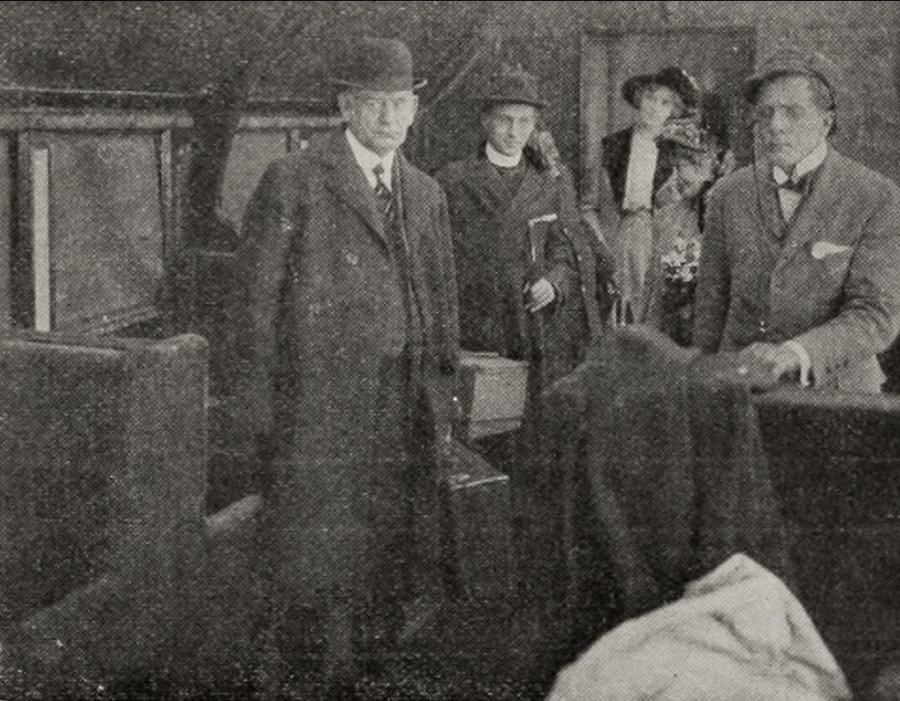
Visually, cinematographer William Marshall floods the train with chiaroscuro that anticipates noir. Shadows of connecting rods stripe faces like prison bars; moonlight drips through clerestory windows, baptizing the lovers in argent irony. The hold-up sequence—shot on a soundstage but cut with documentary verve—uses a single kerosene lamp as its lighting anchor; when the bandit snuffs it, the screen blacks out for eight seconds, an eternity in silent cinema. The audience, robbed of image, becomes accessory to the crime.
Hughes’ intertitles deserve their own footnote in literary history. Rather than mere exposition, they pirouette in iambic couplets, limericks, advertising slogans. One card, flashed after the bracelet vanishes, reads: “A bauble lost, a virtue tossed—America, please exit to the left.” The joke is both Wildean and Whitmanesque, a love-letter to a republic that can’t decide whether it’s a bordello or a church picnic.
Comparative context enriches the experience. Where Springtime traffics in bucolic innocence and The Man from Mexico stages ethnic caricature, Excuse Me occupies a liminal corridor: too urbane for rural melodrama, too raucous for drawing-room sophistication. Its closest cousin is the continental cynicism of La dame aux camélias, yet Hughes replaces tubercular doom with the democratic optimism of a nation that believes every problem can be outrun given sufficient track.
Gender politics, inevitably, fray under modern scrutiny. Marjorie’s virtue is the coin of the realm; Mallory’s promiscuity a punchline. Yet the film slyly undercuts the double standard: the other woman, played with flapper insouciance by Vivian Blackburn, struts through the carriage puffing a cigarette the circumference of a tram wheel, daring the camera to judge her. When the hold-up relieves her of the incriminating bracelet, she laughs—a guttural, silent-movie cackle that shames the entire chivalric code. For a heartbeat, the film acknowledges that female desire might be more than narrative accelerant.
The Utah finale, in which Reverend Temple reclaims his vocation, could have played as moralistic sop. Hughes instead stages it as burlesque: the Mormon elder is a towering septuagenarian with a beard like a burlap sack; Temple’s clerical collar snaps shut with the resonance of a guillotine. Marriage, once the train’s elusive destination, becomes an impromptu layover, a bureaucratic afterthought ratified by a state that outlaws polygamy but sanctions shotgun weddings. The couple kiss against a backdrop of alkali flats, the horizon so flat it mocks eternity.
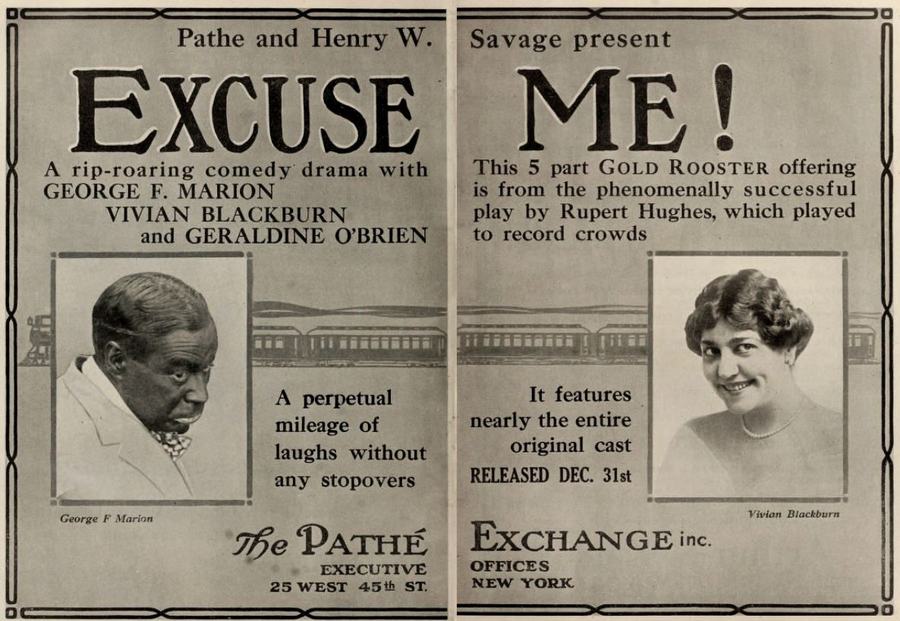
Criticism must note the film’s lacunae: no print survives in complete form; the third reel is cobbled together from a 9.5 mm Pathescope condensation and a 1947 censored reissue intended for church basements. The restored Kino edition compensates with tinting—amber for interiors, cyan for exteriors, a fuchsia flourish for the hold-up—yet the missing footage manifests as narrative stutter, a hiccup in the locomotive’s heartbeat. Still, the elisions oddly enhance the comedy: we supply the pratfalls, the off-screen groans, our imaginations becoming co-authors.
Sound, paradoxically, haunts the silence. The clatter of wheels on rail, the wheeze of steam pistons, the syncopated hiss of a flask unscrewed—each is heard in the mind’s ear louder than any talkie foley. When Wellington finally meets his wife over a cinder-in-the-eye, the absence of dialogue amplifies the tenderness; their reconciliation unfolds in gestures so precise they verge on pantomime haiku.
Contemporary viewers, marinated in Marvel bombast, may scoff at the modest stakes: a lost bracelet, a missed wedding, a porter’s bruised dignity. Yet the genius of Excuse Me lies in its conviction that micro-catastrophes contain galaxies. Hughes stretches the elastic of coincidence until it snaps back as communal catharsis; we exit the cinema—or the 4K scan—laughing not because the characters are absurd, but because the absurdity is us.
Restorationists at EYE Filmmuseum recently unearthed a 35 mm nitrate fragment containing the censored honeymoon suite gag: Mallory attempting to fold a Murphy bed while Marjorie’s silk stocking slithers across the floor like a runaway serpent. The footage, water-damaged and bubbled, resembles a Dalí canvas—time itself melting into comic delirium. When spliced back, the rhythm realigns; the gag’s payoff (Temple entering, Bible first) now lands with seismic timing. The find reaffirms that silent cinema remains an archaeological dig where laughter is the artifact.
Ultimately, Excuse Me is less a narrative than a vector: a steel artery pumping hormones, scripture, alcohol, and propaganda across a continent that has just discovered it can move faster than a horse. The film doesn’t end; it simply uncouples the final carriage, letting the audience coast into darkness, clutching our own bracelets of private shame. Somewhere between the hiccup of the intertitles and the lullaby of the rails, Hughes whispers: “You, too, can outrun disgrace—provided the track is long enough and your porter forgives you.” The lights rise, the locomotive vanishes, but the whistle keeps echoing, a highball chord calling every runaway heart to the next station.
IMDb —
1928
Community
Log in to comment.