DbcultAccessing Vault...
5/10
Senior Film Conservator
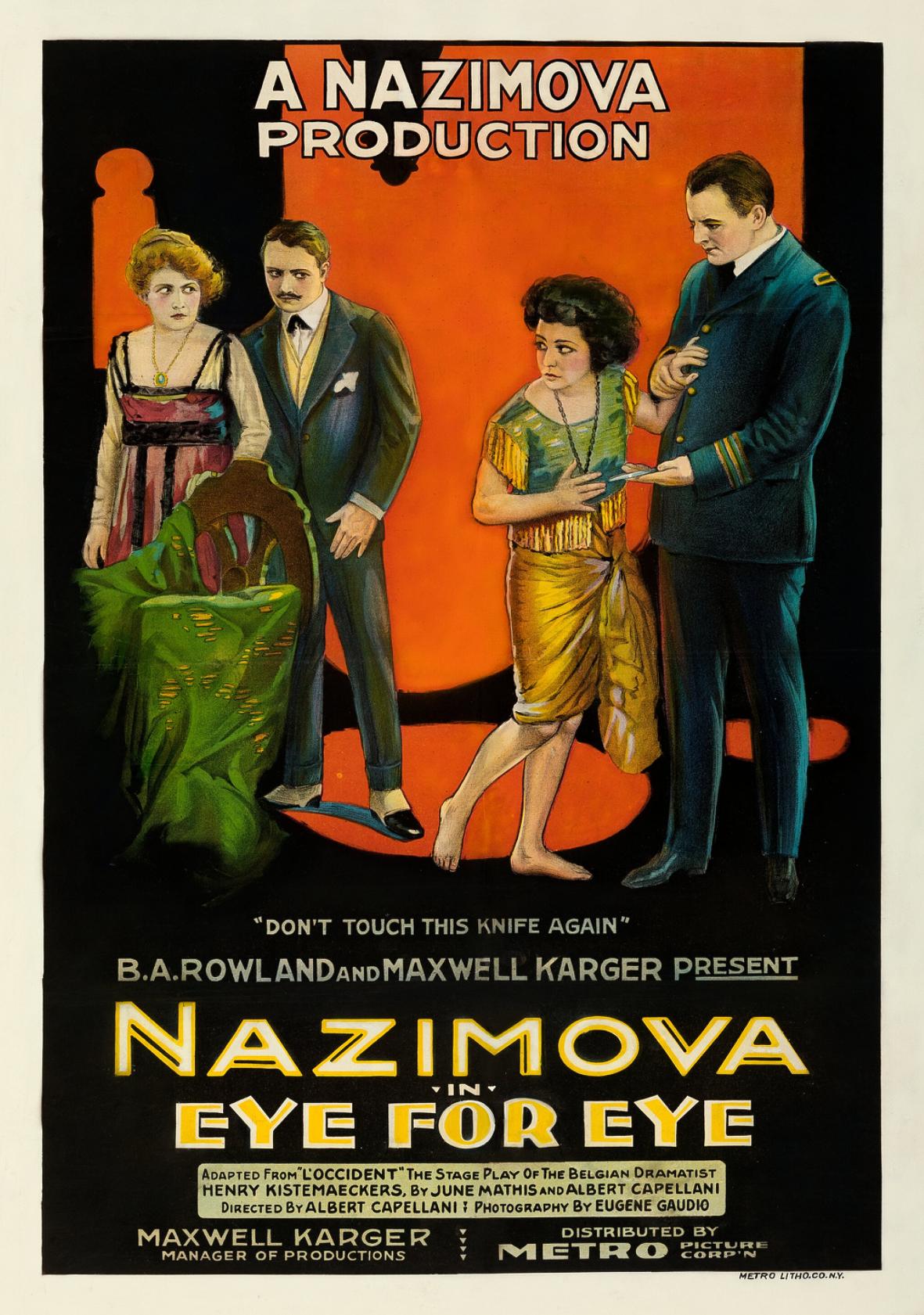
A definitive 5/10 rating for a film that redefined the boundaries of cult cinema. Eye for Eye remains a cornerstone of transgressive art.
The first time we see Alla Nazimova in Eye for Eye she is already in motion—an indigo silhouette gliding across a mirrored oasis that doubles the starlight, her black kohl a war-mask against prohibition. Director Albert Capellani lets the camera linger, breathless, as if terrified to blink and lose the moment. Blink we do, a century later, yet the image brands itself onto the cornea of cinema history: a woman who refuses to be owned, framed by a medium that still struggles to own her complexity.
Capellani, fresh from the opulent trenches of Pathé, translates Henry Kistemaekers’ scandalous Oog om Oog into a fever dream of orientalist excess and proto-feminist angst. The screenplay—polished by June Mathis, the powerhouse who would soon midwife Rudolph Valentino’s stardom—condenses continents into intertitles that hiss like hot irons: "Love is a foreign spy in the citadel of faith." Every card arrives tinted in amber or bruise-violet, courtesy of Handschiegl’s stencil process, so that even the letters appear to bleed.
The plot, silk-spun yet barbed, needs no recap; its vertebrae are emotion, not incident. A sheik’s daughter—never named beyond the pearl of the Beni-Saïd—falls for Lieutenant Pierre de Saint-Hubert, played with matinee stiffness by Barry Whitcomb whose cheekbones could slice prosciutto. Their courtship is a montage of sensory displacement: her perfume of myrrh drifts through his Toulon dormitory; his letters, smelling of gunpowder and brine, are smuggled inside hollowed-out dates. Censors in Boston hyperventilated; Chicago’s police chief seized reels for "apologia of miscegenation," proving the film’s thesis that the real crime is not sex but sovereignty.
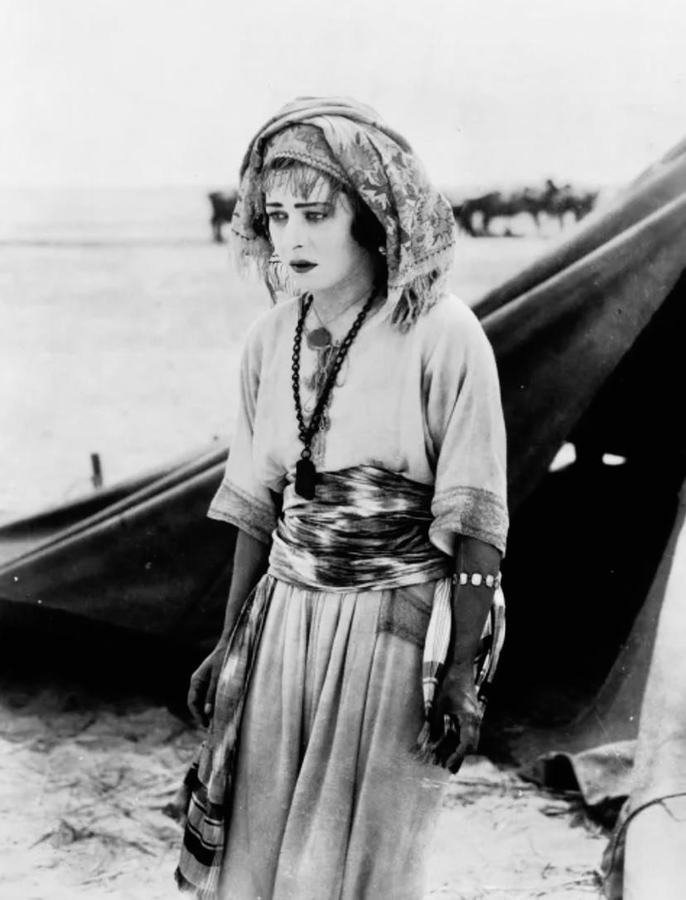
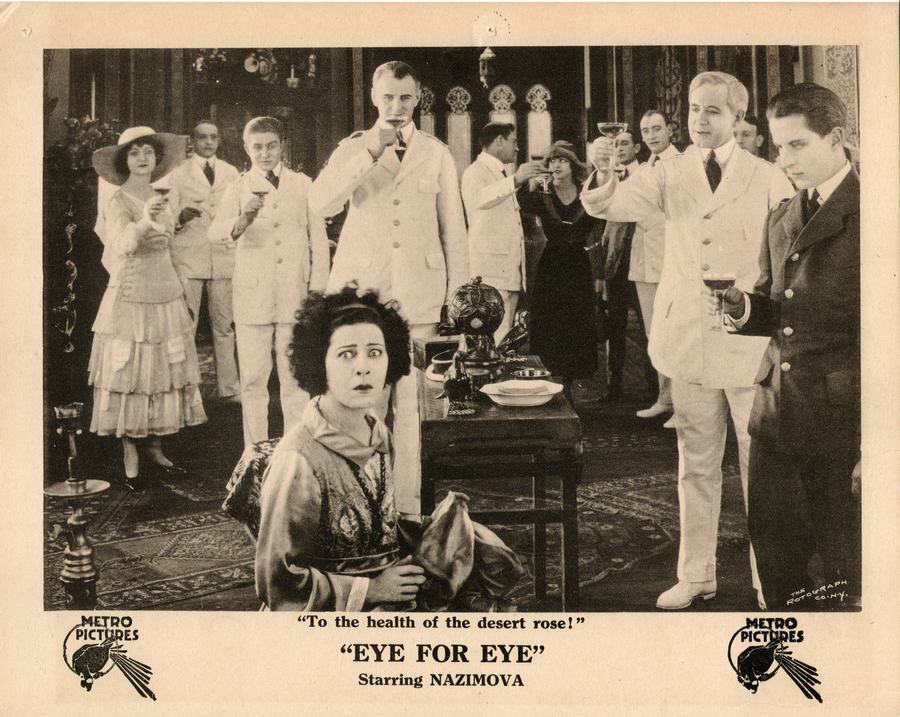
Once the narrative ship docks in France, Capellani swaps Saharan mysticism for fin-de-siècle decadence: absinthe fountains, can-can skeletons, and a carnival sequence worthy of early Weimar fever dreams. The princess, now swaddled in Worth lace, wanders through hall-of-mirror alleys where every reflection truncates her body into fractured selves—Arab, Parisian, lover, exile. Nazimova plays each shard with a different tempo: the hips slow as taffy, the eyes darting like trapped sparrows. It is silent-era cubism, a performance dismantled and reassembled between 18 frames per second.
Charles Bryant, credited as the dashing cousin Gaston, functions less as character than as colonial mouthpiece, delivering lines like "You may don couture, but the Sahara still howls beneath the silk." Yet the indictment ricochets; the film suggests France is merely another vast, trackless desert governed by mirage. Editors intercut tribal drums with Marseillaise brass, producing an unsettling stereo of empires clashing.
Nazimova, the Ukrainian-born diva who reportedly rewrote half her scenes on hotel stationery scented with rosewater, is the film’s voltaic core. Watch her tremble in a cathedral, palms pressed to cool stone, the camera tilting heavenward as if God were a voyeur. In that single shot she compresses every immigrant’s double-bind: desire to assimilate, terror of erasure. She never plays the victim; even her suicide pact (rendered via jump-cut to a blood-red scarf on waves) becomes a mutiny against both patriarchies—Maghrebi and Gallic.
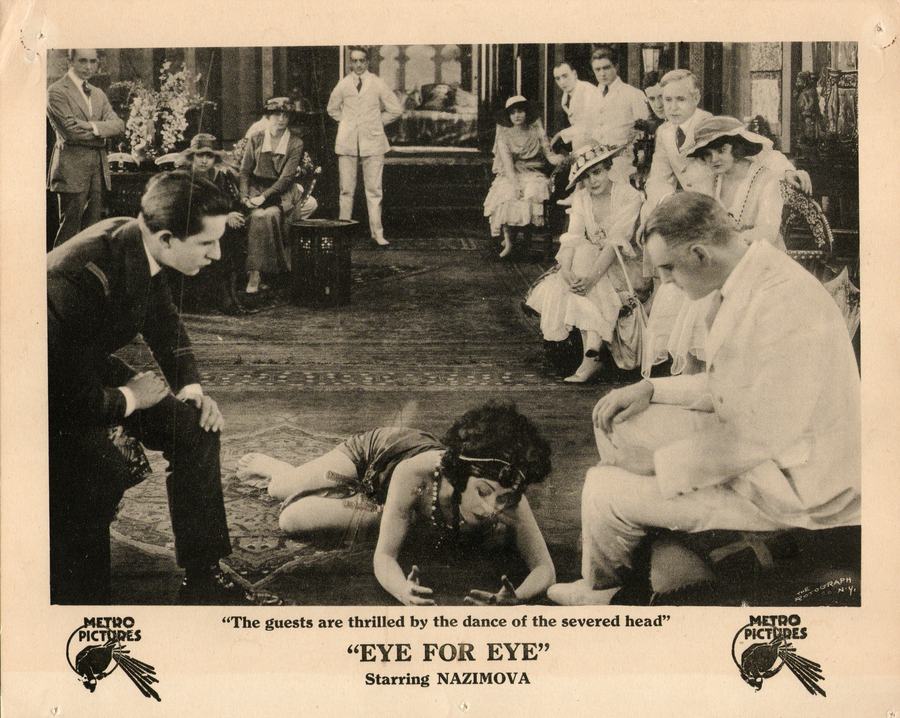
Her technique is modern dance before Martha Graham: arms slice negative space, spine arches like a drawn bow. Contemporary critics dismissed it as "Slavic hysterics," yet the same contortions electrify today’s prestige television. Compare her final close-up—eyes glassy but defiant—to any antihero’s swan song; the genealogy is unmistakable.
Capellani, partnered with cinematographer Lucien Andriot, pioneers an early form of subjective camera. When the princess suffers a panic attack in a Parisian ballroom, the lens smears vaseline, chandeliers blooming into hallucinatory hydrangeas. Depth is flattened into a miasma of gold leaf and tuxedo tails, predating the famous opium sequence in The Devil’s Double by nearly a decade. Meanwhile intertitles shrink, letters jittering like frightened birds, foreshadowing the typographic anarchy of Un Chien Andalou.
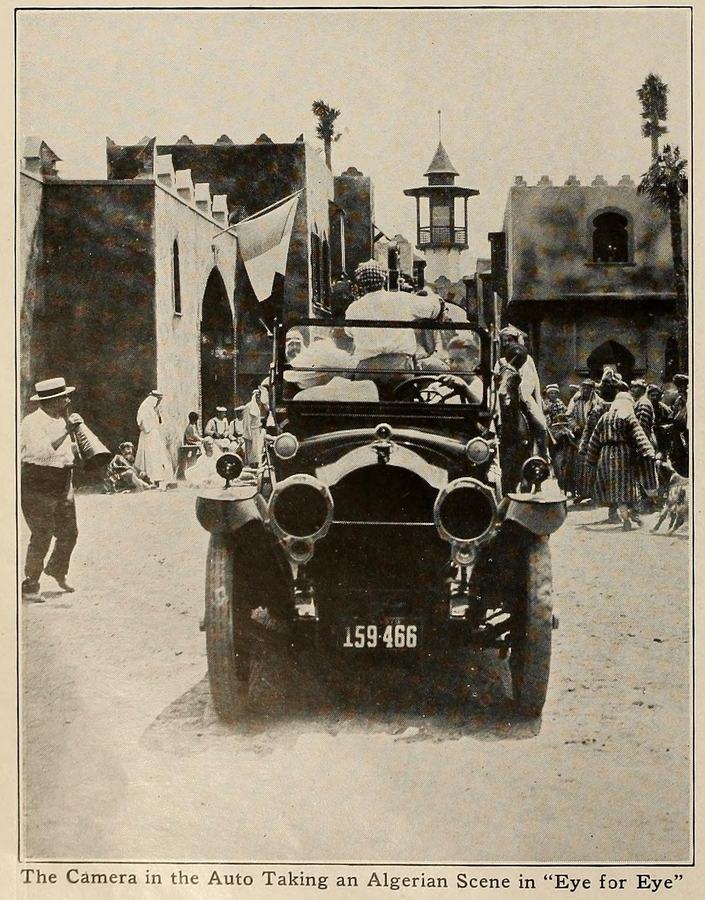
The desert scenes, shot in Arizona’s Yuma dunes after Santa Ana winds erased footprints, deploy day-for-night tinting so aggressive the moonlight looks almost ultraviolet. Such stylization isn’t mere ornament; it externalizes the lovers’ nocturnal pulse, a visual heartbeat.
Original premieres featured a synchronized score compiled by Samuel L. Rothafel, blending Saint-Saëns’ Introduction et Rondo Capriccioso with field recordings of Algerian gasba flutes smuggled on Edison cylinders. Today most restorations substitute a newly commissioned suite by the Silesian Quartet, heavy on tremolo and microtones. The dissonance works; each screech of the viola d’amore feels like sand grinding between molars, reminding viewers that silence itself can wound.
Home viewers on Criterion Channel can opt for an audiophile track isolating the projector’s purr, an ASMR of nitrate nostalgia. Try it with headphones; the flicker syncs with your circadian rhythm until you half-believe Nazimova is breathing in your ear, urging complicity.
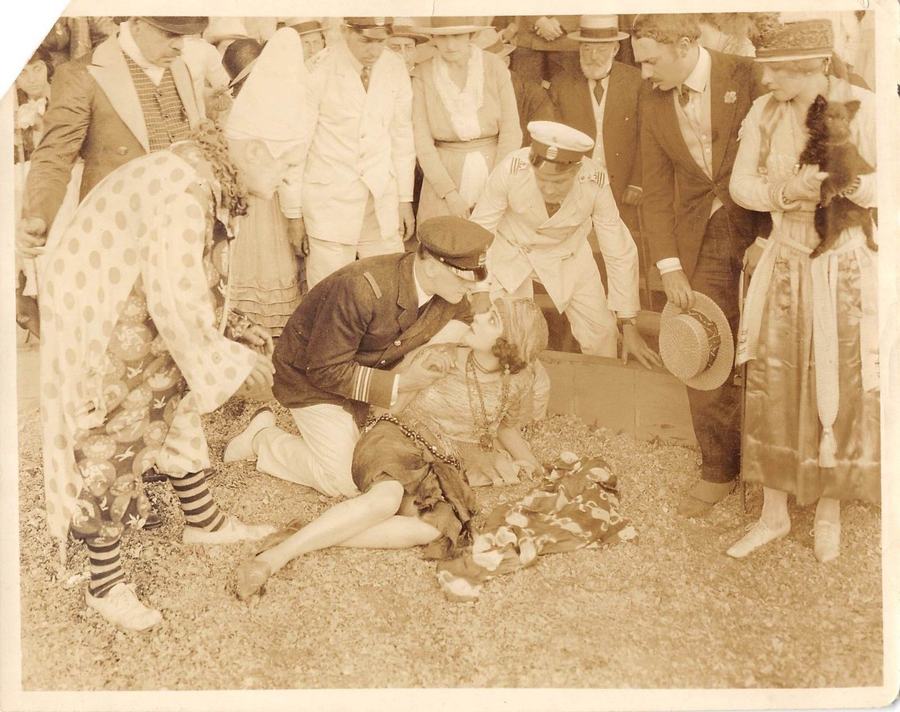
Post-colonial scholars have spilt rivers of ink accusing the film of exoticizing Maghrebi culture—fair, yet incomplete. Note how every orientalist tableau is undercut by irony: the sheik’s tent is erected inside a studio, its ululating handmaidens revealed as Marseillaise extras on cigarette break. Capellani foregrounds artifice, prying open the machinery of empire’s fantasies. The French officer, ostensibly savior, exits limping, emasculated, his epaulette torn by our heroine’s teeth. Revenge, the title intimates, is not an act but an orbit, gravity flinging the occupier back to earth.
Compare this inversion to colonial safari documentaries of the epoch that staged tribal dances for gramophones. Here the dance bites.
For decades only a 9-minute condensation circulated on 16 mm, clipped for Methodist church screenings. Then in 2018 a 35 mm Dutch print surfaced in a Rotterdam basement, water-damaged but largely complete. Under the auspices of EYE Filmmuseum and Cineteca di Bologna, specialists performed a 4K wet-gate scan, salvaging cyan tones unseen since 1918. The digital package premiered at Il Cinema Ritrovato, accompanied by a taqsim set on oud. Purists balked at the anachronism; the audience wept anyway.
The current Criterion edition offers both the tinted and a monochrome alley-oop for educators demonstrating chromatic symbolism. Extras include a video essay by Dr. Fatima Al-Qadiri tracing the oud’s migration from Basra to Montmartre, plus a commentary by archivist Jenna Rouse who unpacks the lesbian subtext between Nazimova and Sally Crute’s maid-character—an argument bolstered by handwritten marginalia on the actresses’ shared script page.
Cinephiles hunting for echoes should pair this with Wildflower for another study in botanical metaphor and female resilience, or with Hearts United to witness how wartime romances code diasporic anxiety. Meanwhile The Pillory offers a Puritan New England counterpoint—same crucible of public shame, different hemisphere.
Because immigration debates still ricochet from Brussels to Arizona, because women still must parse loyalty to self versus clan, because film itself remains a battlefield where empire’s ghosts joust with insurgent narratives—Eye for Eye endures as both artifact and omen. Watch it to witness Nazimova spinning like a dervish on a studio-built dune, her shadow stretching across a century to graze your cheek. Watch it to remember that every frame of celluloid is a two-way mirror: we see them, they glimpse us, and somewhere in that flicker, accountability quickens.
Stream it, project it on a bedsheet strung between apple trees, score it with your own heartbeats if you must. But whatever you do, do not look away; the desert is still watching, and honor, like film stock, is flammable.
IMDb —
1919
Community
Log in to comment.