DbcultAccessing Vault...
Cult Review
Senior Film Conservator

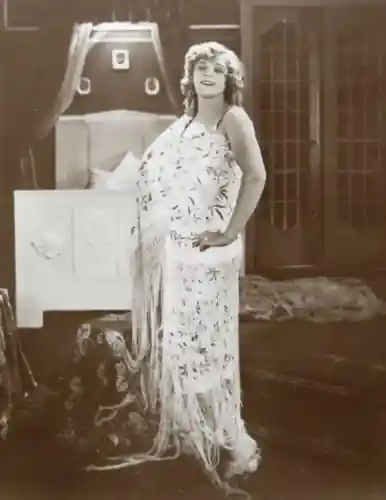
*Miss Venus* (1932) is a cinematic jewel that sparkles with the contradictions of its era—its glittering surface reflecting the anxieties of a society on the brink of upheaval. Directed with a deft hand by an ensemble of German Expressionist veterans, the film positions its protagonist, Maud Goodin (played with magnetic nuance by Johanna Ewald), at the intersection of privilege and peril. Here, wealth is both a gilded cage and a ladder to be climbed, and every character orbits Maud like a comet drawn to the sun.
The narrative unfolds in the opulent yet precarious world of 1930s Berlin, where Maud’s inheritance from her millionaire father makes her a target for social climbers, schemers, and lovers with agendas. The film’s strength lies in its ability to balance the grandeur of its settings with the intimate, often brutal, psychological stakes of its characters. Maud’s journey—from a contented heiress to a woman besieged by external pressures—mirrors the broader societal tensions of the time, where the old money elite clashed with the rising middle class desperate to ascend.
What elevates *Miss Venus* beyond a mere melodrama is its meticulous attention to the subtext of every interaction. A glance, a pause, the way Maud adjusts her gloves before a soirée—all are laden with meaning. The writers, Georg Okonkowski and Ludwig Czerny, weave a screenplay that thrives on ambiguity. Is Maud complicit in her own manipulation, or is she a victim of a world that sees her as a means to an end? The answer, like much in the film, is elusive, and that is its genius.
The cast delivers performances that are both restrained and explosive. Ewald’s portrayal of Maud is a masterclass in subtlety; her face, a canvas of shifting emotions, reveals more than the script explicitly states. Friedrich Berger, as the smoldering yet morally ambiguous Friedrich, embodies the archetype of the man who covets Maud’s world even as he resents its constraints. Their chemistry crackles with tension, a dance of mutual exploitation cloaked in passion.
Visually, *Miss Venus* is a feast for the eyes. The cinematography leans into the Expressionist tradition, using sharp angles and stark contrasts to mirror the fractured psyches of its characters. One particularly striking sequence involves Maud standing before a mirror, her reflection distorted by the room’s warped architecture. It’s a silent, devastating moment that encapsulates her internal conflict—her desire to maintain her identity while being pulled into a world that demands she become someone else.
Comparisons to contemporaries like *Yes Dear* (yes-dear) and *The Woman Untamed* (the-woman-untamed) are inevitable, but *Miss Venus* distinguishes itself with its layered exploration of class dynamics. Unlike the more plot-driven narratives of these films, this one lingers in the spaces between dialogue, where the true story unfolds. The film’s pacing, deliberate and measured, allows the audience to absorb the weight of each decision and its consequences.
The supporting cast is equally compelling. Ingo Brandt’s portrayal of a jaded aristocrat adds a layer of world-weariness, while Ada Svedin’s sharp-tongued socialite serves as a foil to Maud’s more reserved demeanor. These characters, though secondary, are given moments of depth that prevent them from becoming mere plot devices. The film’s dialogue, crisp and layered with double entendres, reflects the era’s fascination with wit as both armor and weapon.
One of the film’s most daring choices is its handling of gender roles. Maud is not a passive heroine; she actively navigates her world, making choices that challenge the expectations placed upon her. This complexity is rare for the time, and it speaks to the filmmakers’ progressive instincts. The film questions whether true agency is possible in a society that views women as either trophies or threats, a theme that resonates powerfully even today.
The score, though uncredited, deserves mention for its haunting, minimalist motifs that underscore the tension. It’s a sound that haunts the background of every scene, a reminder that the stakes are high and the outcomes precarious. The use of diegetic music—such as a piano melody playing softly in a background room—adds to the film’s atmosphere of impending doom, a lullaby for a world on the verge of collapse.
In its final act, *Miss Venus* delivers a twist that is as shocking as it is inevitable. The resolution, while bittersweet, avoids the clichés of typical Hollywood endings. Instead, it offers a quiet, almost elegiac conclusion that lingers in the mind. Maud’s fate is ambiguous, left to the viewer to interpret—a choice that reflects the film’s trust in its audience’s intelligence.
For modern viewers, *Miss Venus* serves as a fascinating artifact of pre-war cinema and a timeless meditation on power and identity. Its themes of social climbing and self-determination are as relevant now as they were nearly a century ago. The film’s exploration of how wealth and status shape—and often destroy—human relationships remains strikingly prescient.
In the pantheon of 1930s German cinema, *Miss Venus* holds its own alongside classics like *The House with the Golden Windows* (the-house-with-the-golden-windows) and *Die ewige Nacht* (die-ewige-nacht). Yet it stands apart for its focus on the personal over the political, its intimate scale amplifying the emotional impact. It’s a film that rewards repeated viewings, each time revealing new layers of meaning beneath its surface elegance.
Ultimately, *Miss Venus* is more than a period piece. It is a mirror held up to the human condition, reflecting our enduring fascination with ambition, the masks we wear, and the price of climbing the social ladder. In an age where materialism and status remain central to our lives, this film offers a cautionary tale wrapped in the glamour of a bygone era. Its legacy endures not just in its craftsmanship but in its timeless questions: How much of ourselves are we willing to sacrifice for success? And what does it mean to truly belong to a world that values position over personhood?
IMDb —
1929
Community
Log in to comment.