DbcultAccessing Vault...
6.8/10
Senior Film Conservator
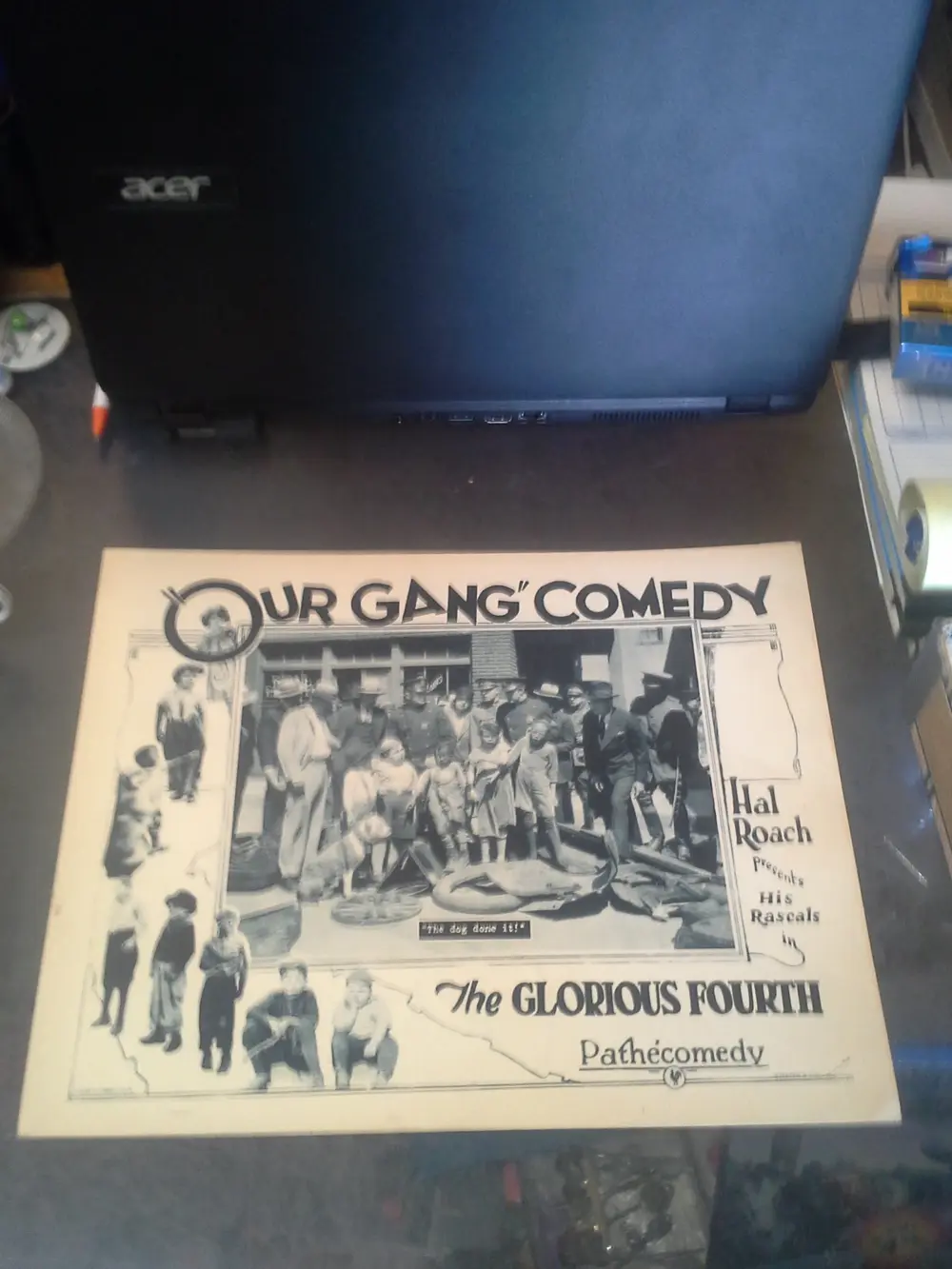
A definitive 6.8/10 rating for a film that redefined the boundaries of cult cinema. The Glorious Fourth remains a cornerstone of transgressive art.
Is The Glorious Fourth worth watching today? Short answer: yes, but with significant caveats that anchor it firmly in its historical context rather than as a universally engaging piece of modern cinema. This film is a delightful, if slight, diversion for enthusiasts of early silent comedy and Hal Roach's formative work, yet it will likely test the patience of viewers accustomed to contemporary narrative pacing and sophisticated humor.
It's a curious artifact, a snapshot of a bygone era's comedic sensibilities, and as such, it holds a unique value. This film works because of its unbridled, almost anarchic energy, characteristic of early slapstick, and the surprisingly effective physical comedy from its young cast. This film fails because its narrative is paper-thin, even for a short, relying heavily on a single escalating gag that eventually overstays its welcome, and its technical limitations are stark.
You should watch it if you're a film historian, a dedicated fan of the 'Our Gang' shorts, or simply curious about the roots of cinematic comedy, especially the explosive, consequence-free variety. Conversely, if your comedic palate demands nuanced character development, intricate plotting, or polished production values, The Glorious Fourth will likely feel less like a bang and more like a fizzle. It’s a specific taste, acquired through an appreciation of cinema’s foundational moments.
At its core, The Glorious Fourth isn't just a film; it's a testament to the primal appeal of chaos. The narrative, if one can call such a streamlined vehicle for gags a 'narrative,' centers on Joe, whose mother's fireworks stand provides an irresistible, volatile playground for his gang. This isn't just about fireworks; it's about the weaponization of innocent celebration, a theme that, while played for laughs here, has a fascinating, dark undercurrent.
The film swiftly establishes its premise: the fireworks stand as a treasure trove of mischief. The early pranks are simple, direct, and increasingly destructive. We see the children, full of youthful exuberance, experimenting with the pyrotechnics in ways that would send modern parents into a panic. This escalating series of minor explosions and near-misses serves as a preamble to the main event, a carefully orchestrated build-up to maximum pandemonium.
The critical turning point, and indeed the film's comedic zenith, arrives when Joe, with a glint of pure, unadulterated mischief in his eyes, launches a rocket directly at the very source of their amusement: the fireworks stand itself. The resulting explosion is less a controlled cinematic effect and more an honest-to-goodness detonation, a spectacle of fire and smoke that, even a century later, retains a certain raw, visceral appeal. It’s a moment of pure, unadulterated slapstick, demonstrating Hal Roach’s willingness to push the boundaries of what was acceptable onscreen.
But the chaos doesn't end there. In a truly bizarre and memorable twist, the gang's dog, 'The Wonder Dog Pal', inadvertently consumes a handful of loose firework capsules amidst the debris. This introduces a new, hilariously absurd layer of panic: the fear that the dog itself might explode. The ensuing scramble, with everyone trying to catch the 'ticking' canine, is a masterclass in physical comedy, a testament to the era's ability to wring humor from the most ludicrous situations. It’s a bizarre, almost unsettling premise when viewed through a modern lens, yet utterly compelling in its execution.
In the realm of silent comedy, performances are less about dialogue and more about exaggerated physicality, expressive facial contortions, and precise timing. The young cast of The Glorious Fourth, including familiar faces like Joe Cobb, Jay R. Smith, and Allen 'Farina' Hoskins, delivers exactly what is required. They embody the untamed spirit of childhood, their performances a whirlwind of running, jumping, and wide-eyed reactions.
Joe Cobb, with his signature round face, is particularly adept at conveying a sense of mischievous glee and innocent culpability. His decision to launch the rocket at the stand feels entirely authentic to the character of a boy who hasn't quite grasped the full implications of his actions. It’s a testament to his natural comedic timing, a quality that would serve him well in later 'Our Gang' shorts. The reactions of the other children, a mix of shock, delight, and eventual terror, are equally convincing, forming a cohesive ensemble of young, energetic performers.
However, the true star, in a surprising and utterly charming turn, might just be 'The Wonder Dog Pal'. This canine performer's bewildered reactions to the impending doom, his frantic scurrying, and his confused glances at his panicked human companions are genuinely more nuanced than some human performances of the era. The dog doesn’t just perform; it reacts, adding an unexpected layer of pathos and absurdity to the escalating situation. His role in the film's climax is not merely a prop but a key driver of the comedic tension, a testament to the animal trainers of the time.
The adult cast, while less central, provides a necessary grounding for the children's antics. Figures like Arthur Millett and Dorothy Vernon, presumably Joe's parents or guardians, offer the archetypal exasperated adult reactions, their expressions ranging from mild annoyance to outright horror as the chaos unfolds. Their performances, though brief, effectively underscore the severity of the children's actions, even if the film's tone remains lighthearted.
Hal Roach, a titan of silent comedy, demonstrates his early prowess in The Glorious Fourth. His direction here is a masterclass in orchestrating comedic pandemonium. Roach understands that for slapstick to work, it needs to build, to escalate, and then to explode – quite literally in this case. The pacing of the film is remarkably efficient for a short, moving from one prank to the next with a relentless, almost breathless energy.
The film doesn't waste time on exposition or character development; it dives straight into the action. This directness is a hallmark of early silent shorts, designed to capture attention quickly and deliver laughs without delay. Roach uses simple, effective cuts to maintain momentum, ensuring that the audience is always engaged in the unfolding chaos. There’s a particular sequence, for instance, where the rocket is launched towards the stand; the cut from Joe's determined face to the rocket's flight path, then to the fiery impact, is sharp and impactful, maximizing the comedic payoff.
One could argue that the film’s biggest strength, its breakneck pace, also contributes to its ultimate limitation. The gags, while initially hilarious, don't evolve significantly beyond their initial premise. The humor largely relies on the increasing scale of destruction and the sheer absurdity of the situation. While effective for a short, a longer feature built on such a foundation would undoubtedly falter. This is an era where films like The Gasoline Trail or A Regular Fellow would later show more sophisticated narrative structures, even within comedy.
Roach’s ability to manage multiple child actors and an animal in a chaotic environment is commendable. The scene where the entire gang scrambles to catch 'The Wonder Dog Pal' is a perfectly choreographed dance of comedic panic, a testament to his skill in wrangling both human and animal performers into a cohesive comedic unit. It works. But it’s flawed, in that it relies almost entirely on that one central, escalating joke.
As a product of early cinema, The Glorious Fourth naturally bears the technical hallmarks of its time. The cinematography is functional rather than artistic, characterized by static camera positions and wide shots that capture the entirety of the action. There are few close-ups, meaning much of the comedic expression relies on broad physical gestures and full-body reactions rather than subtle facial cues. This approach is typical of the era, prioritizing clarity of action over stylistic flair, a stark contrast to later works by cinematographers pushing boundaries.
The black and white aesthetic lends the film a timeless, almost dreamlike quality, even as it highlights the stark simplicity of the sets and costumes. The fireworks, in particular, translate surprisingly well to monochrome, their flashes and smoke providing dramatic visual punctuation to the comedic mayhem. The lack of color forces the audience to focus on movement and light, which the film uses to its advantage during the explosive sequences.
The tone of The Glorious Fourth is unequivocally lighthearted, despite the inherent danger of the children's actions. There's a pervasive sense of innocent mischief, a childlike disregard for consequences that permeates every frame. Even when the fireworks stand detonates, the aftermath is played for laughs, with characters scattering in comical terror rather than genuine injury. This commitment to pure, consequence-free slapstick is a defining characteristic of early Hal Roach productions and distinguishes it from later, more cynical comedies.
One could argue that this uncritical celebration of chaos, where danger is merely a setup for a gag, is one of the film's most intriguing aspects. It reflects a different cultural attitude towards risk and entertainment, one that modern audiences might find both charming and slightly alarming. The film's visual language, while rudimentary by today's standards, perfectly serves its comedic purpose, delivering a clear, concise, and consistently amusing spectacle.
Absolutely, but understand what you're getting into. The Glorious Fourth is not a film that will resonate with everyone, nor should it be approached with expectations of modern cinematic polish.
Who should watch The Glorious Fourth?
- Film historians and academics studying early American cinema.
- Fans of Hal Roach's work, particularly his pre-'Our Gang' shorts.
- Anyone interested in the evolution of slapstick comedy.
- Viewers seeking a brief, lighthearted glimpse into a bygone era.
Who should probably skip it?
- Viewers who struggle with silent film conventions (lack of dialogue, exaggerated acting).
- Those who require complex plots or deep character development.
- Anyone easily bored by simple, repetitive gags.
- Individuals sensitive to depictions of children in potentially dangerous situations.
Its value lies in its historical context and its pure, unadulterated comedic energy. It's a foundational text for understanding the roots of American screen comedy, showcasing the raw talent of young performers and the directorial vision of a pioneering filmmaker. It offers a unique opportunity to witness the birth of cinematic mayhem, captured in black and white, sans dialogue, but full of boisterous charm.
The Glorious Fourth is not a forgotten masterpiece waiting to be rediscovered by the masses. Instead, it is a boisterous, charming, and historically significant relic that offers a pure, unadulterated dose of early American slapstick. It’s a film that operates on the most basic, visceral level of comedy: the thrill of escalating chaos and the absurdity of consequence-free destruction. While its narrative is thin and its technical execution rudimentary, these are not flaws as much as they are characteristics of its time and genre.
For those who appreciate the foundational building blocks of cinematic humor, this Hal Roach short is an essential watch. It provides valuable insight into the comedic sensibilities of the 1920s and showcases the raw talent that would later define the careers of many involved, including the burgeoning 'Our Gang' ensemble. It's a film that demands a specific kind of appreciation, one rooted in historical context rather than contemporary critical standards. It’s loud, it’s silly, and it’s undeniably a product of its time – and that, in itself, is its greatest strength. It’s a glorious, if fleeting, glimpse into the anarchic joy of early cinema, a film that, despite its age, still sparks with a certain undeniable, explosive energy. Just don't expect a profound artistic statement; expect a good, old-fashioned, dog-eating-fireworks-capsules kind of laugh.
IMDb —
1924
Community
Log in to comment.