DbcultAccessing Vault...
7.4/10
Senior Film Conservator
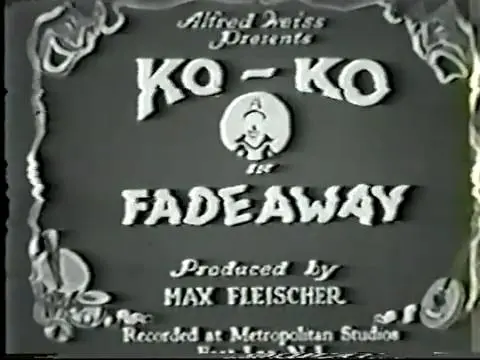
A definitive 7.4/10 rating for a film that redefined the boundaries of cult cinema. Fadeaway remains a cornerstone of transgressive art.
Is Max Fleischer's 1920 short, Fadeaway, still worth watching today? Short answer: yes, absolutely, but with a significant caveat. This early animated gem is a foundational piece of cinema history, a vibrant testament to nascent creative genius, yet it will primarily resonate with animation enthusiasts, film historians, and those with an appreciation for early experimental filmmaking.
It is decidedly not for audiences seeking complex narratives, sophisticated character development, or high-definition visual polish. This is a journey back to animation's raw, inventive origins, a charming, if brief, peek behind the curtain of creation itself.
Max Fleischer, a name synonymous with early animation innovation, consistently pushed the boundaries of what was possible on screen. His Out of the Inkwell series, featuring Ko-Ko the Clown, was revolutionary for its time, blurring the lines between the animator's desk and the animated world. Fadeaway stands as a particularly striking example of this pioneering spirit, a short that, despite its simplicity, offers profound insights into the birth of a new art form.
The film’s central conceit – objects vanishing into thin air – is not merely a visual gag; it’s a meta-commentary on the ephemeral nature of animation itself, a medium where anything can be created or erased at will. This destructive power, however, is wielded with playful abandon, never with malice, imbuing the short with an infectious, childlike wonder that remains its greatest strength.
This film works because of its groundbreaking technical innovation, particularly Fleischer's use of rotoscoping and his audacious blending of live-action and animation. It showcased a direct, tangible interaction between creator and creation that was truly unprecedented, giving audiences a glimpse into the magic behind the moving image.
This film fails because its narrative is exceptionally thin, even for a short. Modern viewers accustomed to intricate storytelling might find its simplicity bordering on monotonous, lacking the emotional depth or character arcs that define contemporary cinema. It’s a concept executed, not a story told.
You should watch it if you are a student of animation history, a cinephile curious about early special effects, or someone who appreciates the sheer ingenuity of early 20th-century filmmaking. It’s a vital piece of the puzzle that explains how we got to where we are today.
At the heart of Fadeaway's brilliance is its technical audacity. Max Fleischer’s signature rotoscoping technique, where live-action footage is traced frame by frame, gives Ko-Ko a fluidity and realism that was unmatched by many of his contemporaries. This wasn't merely a stylistic choice; it was a foundational approach that allowed Fleischer to push boundaries, particularly in how his animated characters interacted with the 'real world'.
The introduction of the 'Fade-Out Powder' is where the film truly shines. We see a live-action Max Fleischer, seated at his drawing board, dipping his pen into a bottle labeled 'Fade-Out Powder'. The immediate consequence within Ko-Ko’s animated world is a spontaneous, almost chaotic, disappearance of objects. A chair vanishes. A table follows. Even Ko-Ko’s own body parts flicker in and out of existence. This effect, simple by today's standards, was mind-bending for 1920 audiences, a genuine 'how did they do that?' moment.
The seamless integration of live-action and animation is a marvel. When Ko-Ko and Fitz eventually escape the dissolving animated page, floating on a balloon into the 'real world' – Fleischer’s studio – the transition is executed with such confidence that it still feels fresh. They don't just exist side-by-side; they interact directly. The animated characters sprinkle their vanishing powder on real-world objects, causing them to disappear, completing the illusion of a shared reality. This wasn't just a trick; it was a statement about the power of the animator's hand.
Compared to other films of the era, even those pushing technical boundaries like Moving Silhouette Images Broadcast, Fleischer’s work often felt more intimate, more directly connected to the act of creation. It wasn't just about showing moving pictures; it was about showing *how* those pictures moved, and how they could transcend their two-dimensional origins.
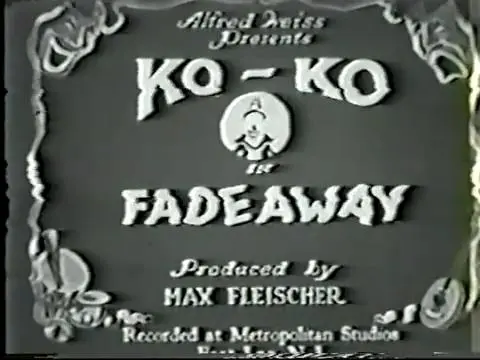
While the technical spectacle is the main draw, Ko-Ko and Fitz provide the necessary comedic grounding. Ko-Ko, with his perpetually surprised expression and rubbery movements, reacts to the disappearing world with a mixture of bewildered panic and ingenious adaptability. His physical comedy, often a hallmark of silent-era shorts, is perfectly suited to the escalating absurdity.
Fitz, Ko-Ko's loyal canine companion, adds another layer of charm. His reactions are often more visceral, embodying a simpler, more instinctual fear, which contrasts nicely with Ko-Ko's more considered (though still frantic) responses. The duo's dynamic, though not deeply explored, is instantly understandable: two friends facing an existential threat with a blend of slapstick and cleverness.
Their escape from the animated world, propelled by a desperate leap onto a floating balloon, is a testament to their budding personalities. They aren't just puppets; they are characters driven by a desire for survival and, ultimately, a mischievous glee in turning the tables on their creator’s destructive power. This subtle shift from victim to playful aggressor is a delightful, if brief, character arc.
Fadeaway moves at a brisk, almost frantic pace, befitting a silent-era short. The disappearances are frequent and unexpected, preventing any moment from lingering too long. This rapid-fire succession of gags keeps the energy high, ensuring that despite the lack of complex dialogue, the audience remains engaged by the visual spectacle.
The tone is overwhelmingly lighthearted and whimsical. There's no real sense of danger, even when Ko-Ko's own limbs begin to vanish. Instead, the film embraces the absurdity, treating the 'Fade-Out Powder' as a source of endless comedic possibility. This playful destruction is an unconventional choice, especially considering the potential for genuine peril. It's a surprisingly optimistic take on chaos.
The most striking aspect of Fadeaway, and indeed the entire Out of the Inkwell series, is its meta-narrative. Max Fleischer doesn’t just animate; he is a character within his own creations. His hand reaches into the animated world, his ink affects Ko-Ko directly. This breaking of the fourth wall, this direct interplay between creator and creation, was revolutionary. It invited the audience into the magic, showing them not just the illusion, but the illusionist at work.
This approach predates many later meta-commentaries in film by decades, making Fleischer a true pioneer. He wasn't just telling stories; he was exploring the very nature of storytelling and the relationship between the artist and their art. It’s a level of conceptual depth rarely seen in such early, seemingly simple, shorts.
Yes, Fadeaway is absolutely worth watching, but it requires a specific lens. It’s not a film that will entertain a casual viewer in the same way a modern animated feature might. Instead, it offers a fascinating glimpse into the nascent stages of animation, demonstrating Max Fleischer’s boundless imagination and technical skill.
For those interested in the evolution of cinema, the roots of special effects, or the history of animation, this short is indispensable. It showcases inventive rotoscoping, clever live-action integration, and a unique meta-narrative that was far ahead of its time. It serves as a vital historical document, illustrating how early filmmakers experimented and pushed the boundaries of their craft with limited resources.
However, for general audiences seeking entertainment, its almost century-old pacing, lack of a complex plot, and primitive visual style (by today's standards) might prove challenging. It’s a silent film, requiring an appreciation for visual storytelling without dialogue, and its humor is largely visual and situational. It is a foundational piece. But it's also a product of its time.
Max Fleischer’s Fadeaway is more than just an early cartoon; it’s a vibrant historical document, a testament to the audacious creativity that defined animation’s formative years. While its narrative simplicity and dated visuals might not captivate a casual modern viewer, its technical innovations and meta-textual ambition remain profoundly impressive. It's a film that doesn't just show you a story; it shows you the magic of storytelling itself, the hand of the creator directly shaping reality. For anyone with even a passing interest in how film became what it is today, this short is essential viewing. It’s a brief, delightful masterclass in pushing boundaries, and a powerful reminder that true innovation often springs from the simplest, most imaginative ideas. It's not a film to simply enjoy; it's a film to study and appreciate.
IMDb —
1932
Community
Log in to comment.