DbcultAccessing Vault...
Cult Review
Senior Film Conservator
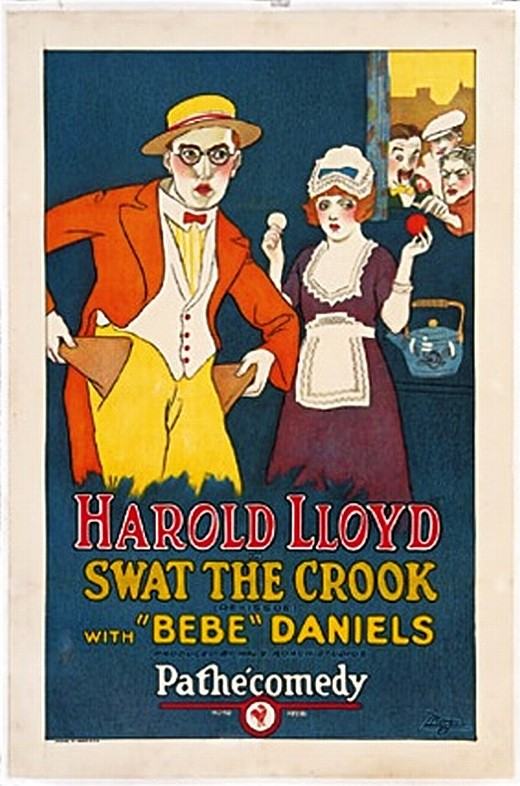
In the burgeoning landscape of 1919, cinema was rapidly shedding its primitive skin, evolving from mere novelty into a sophisticated language of movement and visual syntax. Swat the Crook emerges as a pivotal artifact from this era, capturing Harold Lloyd at a crucial juncture of his artistic metamorphosis. No longer tethered to the derivative 'Lonesome Luke' persona, Lloyd here inhabits the 'Glass' character—a bespectacled, optimistic Everyman whose resilience is matched only by his inadvertent athleticism. This film is not merely a short subject; it is a laboratory of timing, a masterclass in the utilization of restricted space to generate maximum comedic friction.
The premise is deceptively simple, yet the execution reveals the complex machinations of the Hal Roach studio. Our protagonist, characterized by his threadbare pockets and a quixotic sense of dignity, finds himself ensnared in a domestic den of iniquity. Unlike the sprawling romantic epics such as Graustark, which sought to transport audiences to fictional kingdoms, Swat the Crook finds its magic in the mundane and the claustrophobic. The house becomes a character in its own right, a sentient puzzle box of trapdoors, hidden alcoves, and precarious stairwells that Lloyd navigates with a mercurial grace.
While the spotlight inevitably gravitates toward Lloyd, the supporting cast provides the essential gravitational pull that keeps the narrative from spinning into pure abstraction. Bebe Daniels, often relegated to the role of the 'Girl,' demonstrates a sharp, reactive intelligence that elevates her beyond a mere plot device. Her chemistry with Lloyd is palpable, a precursor to the sophisticated romantic pairings that would later define the 1920s. In contrast to the heavy-handed moralizing found in contemporary dramas like The Children in the House, Daniels and Lloyd engage in a flirtatious dance that feels remarkably modern.
'Snub' Pollard, with his distinctive downward-sloping mustache and deadpan delivery, serves as the perfect foil to Lloyd’s frantic energy. The ensemble, including stalwarts like Noah Young and James Parrott, creates a tapestry of villainy that is more buffoonish than threatening, allowing the film to maintain its lighthearted buoyancy. This was a period where the line between comedy and drama was often blurred, as seen in Souls in Pawn, but Swat the Crook remains steadfast in its commitment to the visceral joy of the gag.
Fred C. Newmeyer’s direction is characterized by a relentless forward momentum. There is a perceptible lack of wasted frames; every cut serves to accelerate the pacing or sharpen the punchline. This efficiency was a hallmark of the Roach studio, which prioritized rhythmic consistency over the sprawling experimentation of Griffith or DeMille. When compared to the theatrical stiffness of The Second Mrs. Tanqueray, Newmeyer’s work feels liberated, embracing the inherent fluidity of the film medium.
The cinematography, though limited by the technical constraints of the time, manages to capture the frantic choreography with surprising clarity. The use of natural light filtering through the windows of the set creates a sense of depth that was often missing in earlier silents. The film’s visual language is one of geometry—lines of sight are established and then subverted, while the verticality of the set is exploited for comedic effect. This isn't the grand historical reenactment seen in Famous Battles of Napoleon; it is an intimate, high-velocity skirmish within the confines of four walls.
Beneath the veneer of slapstick lies a subtle commentary on the precariousness of the American dream during the post-WWI era. Lloyd’s character is defined by his lack of resources, yet he maintains a sartorial elegance—the straw boater and the spectacles—that suggests a refusal to be crushed by his economic status. This archetype resonated deeply with audiences who were navigating their own financial uncertainties. While films like Venus in the East explored the aspirations of the upwardly mobile, Swat the Crook celebrates the cleverness of the underdog.
The "crooks" in the film are not merely antagonists; they represent a corrupted version of the protagonist's own ambition. They seek to acquire wealth through deception, whereas Lloyd’s character relies on his wits and physical dexterity to survive. This moral dichotomy is presented without the overbearing piety found in The Chosen Prince, or the Friendship of David and Jonathan. Instead, the morality is baked into the action—the crook is swatted not because of a divine decree, but because his own greed makes him clumsy.
In the broader context of 1919 cinema, Swat the Crook stands as a testament to the power of the short-form narrative. While European imports like Ene i verden or Det gamle Købmandshjem were exploring psychological interiority and domestic drama, the American comedy was perfecting the art of the externalized conflict. There is a visceral honesty in Lloyd’s performance that transcends the linguistic barriers of the silent era. His reactions are universal; his fear, his triumph, and his bewilderment require no intertitles to be understood.
Even when compared to other comedic offerings of the time, such as Polly Put the Kettle On, Lloyd’s work displays a higher degree of physical sophistication. The gags are not isolated incidents; they are interconnected beats in a larger percussive symphony. The sequence involving the hidden loot and the revolving doors is a precursor to the elaborate set pieces Lloyd would later execute in Safety Last!. It is this commitment to the "thrill comedy" that distinguishes Lloyd from his contemporaries.
Analyzing the film from a technical standpoint reveals the ingenuity of the Roach production team. The use of "under-cranking"—filming at a slower frame rate to make the action appear faster when projected—is utilized here with surgical precision. This technique enhances the supernatural agility of the characters, turning a simple chase into a blur of kinetic energy. It creates a dreamlike state where the laws of physics are slightly skewed, a world where a man can slide down a banister or dive through a window with the effortless grace of a dancer.
Furthermore, the set design of the crook’s house deserves commendation. It is a masterpiece of functional art, designed specifically to facilitate the movement of the actors. Every piece of furniture is a potential prop, every door a potential revelation. This level of environmental integration was far more advanced than the static stagings found in When Doctors Disagree. In Swat the Crook, the set is not just a background; it is the primary antagonist.
Looking back from a century’s distance, Swat the Crook remains remarkably vibrant. It lacks the cynicism of modern parody, preferring instead a genuine engagement with the absurdity of the human condition. Lloyd’s Everyman is a figure of hope, a reminder that even in a house full of crooks, the individual can prevail through a combination of luck and pluck. This film laid the groundwork for the action-comedy genre, influencing everyone from Buster Keaton to Jackie Chan.
While some might dismiss these early shorts as mere stepping stones to Lloyd’s feature-length masterpieces, such a view ignores the concentrated brilliance of the twenty-minute format. There is a purity in the short-form gag that is often diluted in longer narratives. Swat the Crook is a shot of pure cinematic adrenaline, a reminder of the time when movies were still discovering their power to move, to surprise, and to delight. It stands as a vibrant counterpoint to the more somber offerings of its time, such as Manden med Arret or the ethereal The Kingdom of Love, proving that humor is perhaps the most resilient of all cinematic languages.
In the final analysis, the film is a celebration of the human spirit’s ability to navigate chaos. Whether facing off against a house full of thieves or the existential dread of the early 20th century, Lloyd’s protagonist remains undaunted. He swats the crook, wins the girl, and exits the frame with the same jaunty step with which he entered. It is a simple victory, perhaps, but in the world of 1919, it was everything.

IMDb 6.2
1930
Community
Log in to comment.