DbcultAccessing Vault...
Cult Review
Senior Film Conservator
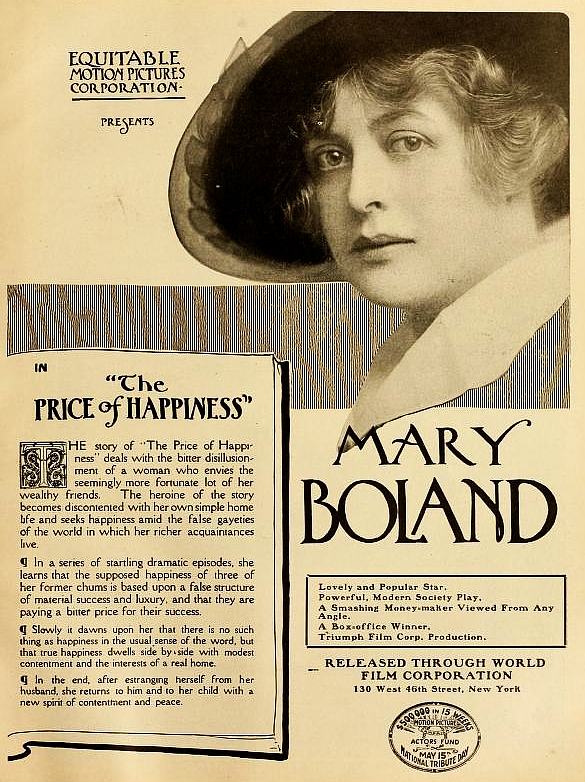
In the annals of early cinema, where narratives often served as moral compasses for a rapidly changing society, films like The Price of Happiness emerge as potent reflections of their era. This particular cinematic gem, though perhaps less heralded than some contemporaries, delves into universal themes that resonate with surprising clarity even today: the insidious allure of material wealth, the deceptive façade of outward success, and the profound, often hard-won, realization of genuine contentment. It's a journey not just for its protagonist, Bertha Miller, but for the audience, invited to peel back layers of societal expectation and discover the true cost of chasing ephemeral dreams.
Our story introduces us to Bertha Miller, a young woman whose life, by most measures, is quite agreeable. She shares a comfortable, if not opulent, existence with her diligent artisan husband. Their home is modest, their needs met, and a child graces their lives. Yet, beneath this placid surface, a subtle disquiet stirs within Bertha's heart. It's the kind of yearning that social comparison often ignites, fueled by the whispered glories of former school friends who, through marriage or career, have seemingly ascended to dazzling heights of material prosperity. These reports, filtered through gossip and chance encounters, paint vivid pictures of beautiful homes, fashionable attire, and a life devoid of the daily grind that defines Bertha's world. This initial envy isn't malicious; rather, it's a common human failing, a susceptibility to the perceived glamour of others, a silent questioning of whether her own quiet happiness truly measures up to the glittering standards set by her peers. It sets the stage for a compelling exploration of perception versus reality, a central tenet of the film's enduring message.
The catalyst for Bertha's profound awakening arrives with the return of Lucille, an erstwhile chum now an aspiring opera singer, whose arrival by steamer occasions a long-awaited reunion of Bertha and three of her seemingly successful friends. The first stop on Bertha's tour of disillusionment is the exquisite abode of Ruth Taylor. From the outside, Ruth’s residence epitomizes domestic bliss and financial security – a picture-perfect sanctuary of high society. Yet, the moment Bertha steps across the threshold, the illusion begins to fray. Ruth, far from being the picture of serene contentment, is a bundle of frayed nerves, her composure shattered by the fear of exposure. Bertha learns of clandestine letters penned to an admirer, a secret liaison threatening to unravel the very fabric of Ruth’s carefully constructed life and expose her marital infidelity. Bertha, ever the compassionate soul, agrees to intercede, to help Ruth navigate this treacherous emotional landscape. In doing so, she unwittingly places her own marriage under considerable strain, nearly estranging herself from her steadfast husband. This initial encounter serves as a stark, chilling premonition: the most beautiful exteriors often conceal the most profound anxieties and moral compromises. It's a theme beautifully echoed in films like The Woman Who Dared, where women often faced dire consequences for stepping outside societal norms.
Next, Bertha ventures into the world of high art, visiting Lucille, the opera singer, in her handsome suite of rooms within a fashionable hotel. Here, the trappings of success are undeniable: luxurious furnishings, an air of sophisticated glamour, the very scent of ambition and achievement. Yet, just as with Ruth, the surface glitter conceals a deep well of despair. Lucille, far from basking in the glow of her burgeoning career, is heartbroken. Her coveted operatic role, the culmination of years of arduous training and sacrifice, has been cruelly snatched away, bestowed upon another. The professional setback alone would be devastating, but Bertha soon discovers that Lucille’s emotional landscape is even more desolate than her professional one. The climax of this poignant scene arrives when Lucille, seeking solace and validation, introduces Bertha to the man she loves, the man she fully expects to marry. The moment is designed for shared joy, for the vicarious celebration of a friend’s happiness. However, it morphs into a devastating revelation for Bertha: Lucille’s beloved is none other than the owner of the very house Bertha and her husband call home. He is, in fact, a married man, a father of a family, living a duplicitous existence. The crushing weight of this truth descends upon Lucille, shattering her dreams of marital bliss and exposing the cruel deception at the heart of her romantic aspirations. Her expected aria of triumph turns into a lament of profound heartbreak. This complex entanglement of domestic life and illicit romance serves as a powerful commentary on the moral ambiguities prevalent in society, not unlike the intricate social webs woven in dramas such as El drama del 15 de Octubre, where personal choices have far-reaching, often tragic, consequences.
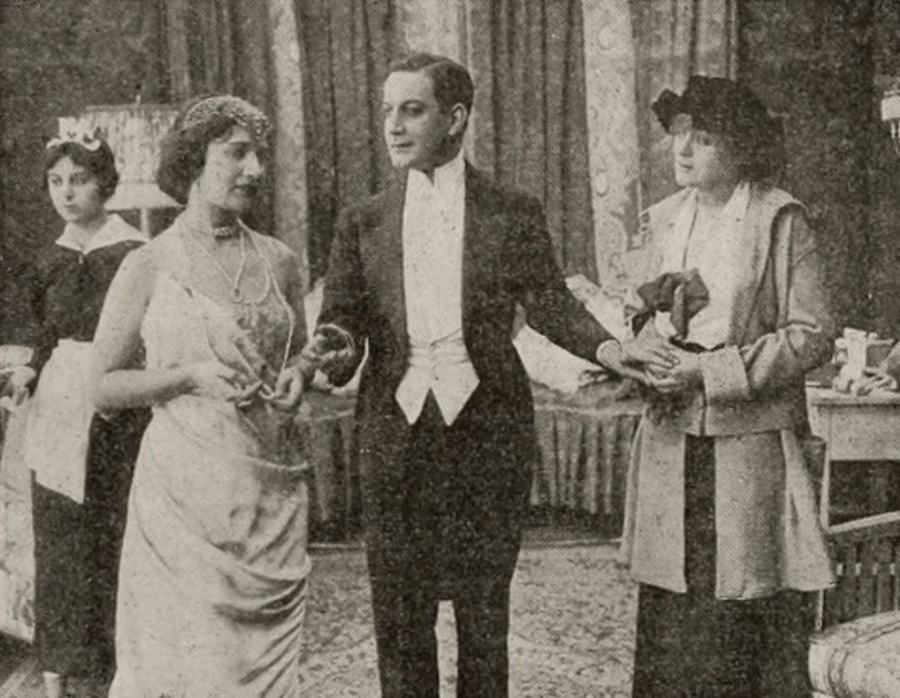
The final stop on Bertha’s enlightening, yet increasingly painful, journey is the pretty apartment of Evelyn, the third seemingly-successful friend. At first glance, Evelyn appears to embody the very essence of carefree living – an individual seemingly unburdened by worries or responsibilities. Her apartment is tastefully appointed, her demeanor light and vivacious. Drawn by Evelyn’s infectious energy and the promise of diversion, Bertha is induced to join her for a “gay party” that evening. In the context of the early 20th century, this wasn't necessarily a reference to sexual orientation, but rather to a lively, perhaps even slightly bohemian or risqué, social gathering. It is amidst the vibrant, yet ultimately hollow, revelry of Broadway nightlife that Bertha receives her ultimate, most shocking disillusionment. As the evening progresses, the façade crumbles entirely. Bertha discovers, to her horror, that Evelyn’s lovely gowns, her luxurious living, and her seemingly endless supply of carefree abandon are all being financed through “the old way of the underworld.” This euphemism, stark and unambiguous for contemporary audiences, points directly to a life of prostitution or other illicit activities. The vibrant energy of the party, once alluring, now feels like a desperate, frantic dance of deception. The glittering lights of Broadway, once symbols of opportunity and excitement, now cast long, menacing shadows. This scene, more than any other, lays bare the true, morally corrosive “price of happiness” for those who choose a path of superficial glamour over genuine integrity. It’s a stark social critique, reminiscent of the harsh realities explored in films that tackled urban decay and moral compromise, such as some of the darker social dramas of the era.
The cumulative impact of these encounters is transformative for Bertha. The envy that had once gnawed at her heart, the restless longing for a life she perceived as superior, is utterly eradicated. Each visit, each revelation, serves as a brutal yet necessary lesson. Ruth’s beautiful home harbored marital deceit; Lucille’s glamorous career masked professional failure and devastating personal betrayal; Evelyn’s carefree existence was a dangerous charade built on moral degradation. The “whole false fabric of her friends’ careers” is laid bare, revealing not success, but a tapestry woven with lies, despair, and compromise. Bertha’s initial superficial aspirations are replaced by a profound understanding of true value. She sees clearly that the material wealth she once coveted came at an unbearable human cost, a forfeiture of peace, integrity, and genuine affection.
In a silent film, the burden of storytelling falls heavily on the actors' expressive capabilities, and Marion Singer’s portrayal of Bertha Miller is central to the film’s emotional resonance. Singer navigates Bertha’s journey from wistful longing to profound disillusionment with remarkable nuance, her expressions and gestures conveying the complex inner turmoil and eventual peace. Her transformation is believable, drawing the audience into her evolving perspective. Albert Bechtel, as Bertha’s industrious husband, provides a grounding presence, a quiet beacon of stability against the tumultuous backdrops of her friends’ lives. While his role is less overtly dramatic, his steadfastness is crucial to the film’s ultimate message. The supporting cast—David Wall, Enid Francis, Carlotta De Felice, Mary Boland, and Adolphe Menjou—each contribute to the tapestry of deception and glamour, creating distinct characters that embody the various facets of superficial success. Their performances, often relying on exaggerated yet effective pantomime, paint vivid portraits of individuals caught in their own traps. The direction, while adhering to the conventions of early cinema, effectively uses visual contrasts—the starkness of Bertha’s home versus the opulence of her friends’, the bright lights of Broadway versus the dark secrets they conceal—to underscore the film’s thematic concerns. The cinematography, though perhaps rudimentary by modern standards, focuses on conveying emotion and narrative progression through composition and subtle camera movements, ensuring the audience remains engaged with Bertha’s emotional arc.
The Price of Happiness, though a product of its time, speaks to an enduring human condition. Released in an era marked by rapid industrialization, burgeoning urban centers, and shifting social norms, it reflects a society grappling with new definitions of success and morality. For women, in particular, the film highlights the limited, often perilous, paths available for upward mobility or perceived independence, and the societal pressures to conform to certain ideals of domesticity or glamour. The film’s message transcends its historical context, offering a timeless cautionary tale about the perils of coveting what others possess, especially when that possession is merely a veneer. It reminds us that true prosperity is not measured in material acquisitions or public acclaim, but in the intangible riches of integrity, genuine connection, and inner peace. This theme finds echoes in many narratives across cinematic history, from the simple virtues championed in Tess of the Storm Country to the moral dilemmas explored in The Small Town Girl, where characters often navigate the allure of urban sophistication against the grounding force of simpler, more honest lives. The film serves as a powerful reminder that our perception of others’ happiness is often incomplete, filtered through our own desires and assumptions, and that the grass is rarely greener, only perhaps more artfully painted.
With all envy wiped from her heart, a sense of profound clarity settles upon Bertha. She returns to her steady, hard-working husband and her little child, no longer burdened by the weight of comparison or the sting of perceived inadequacy. The quiet comfort of her home, once deemed insufficient, now gleams with the luster of genuine contentment. Her husband’s honest labor, her child’s innocent affection, and the steadfast integrity of her own life are revealed as the true treasures. Bertha Miller, having navigated a treacherous landscape of illusion and despair, emerges not with riches, but with a far more valuable commodity: an unwavering consciousness that hers is, after all, the real success in life. It's a poignant affirmation that happiness is not found in the pursuit of external validation or material grandeur, but cultivated within, through an appreciation of the simple, honest virtues that truly sustain the human spirit.

IMDb 5.8
1930
Community
Log in to comment.