DbcultAccessing Vault...
Cult Review
Senior Film Conservator
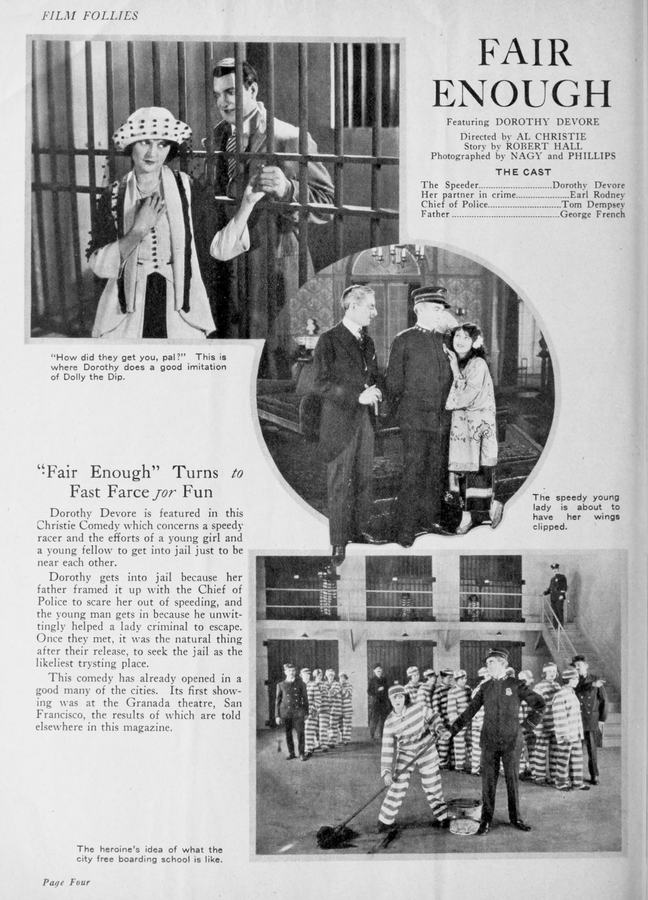
When Fair Enough opens, the camera lingers on a rain‑slicked boulevard, the neon glow of streetlamps casting long shadows that seem to whisper of impending transgression. Dorothy Devore, portrayed with a blend of reckless charm and vulnerable yearning, locks eyes with the brooding Earle Rodney (Tom Dempsey) and is instantly propelled into a vortex of desire that eclipses any sense of civic duty. The film’s opening sequence, a kinetic chase through bustling city streets, is not merely a stunt; it is a visual metaphor for the characters’ internal turbulence.
The screenplay, penned by Robert Hall, eschews conventional exposition. Instead of a gradual buildup, Hall thrusts the audience into Dorothy’s impulsive act of speeding—a decision that lands her in a stark, monochrome jail cell. The cell’s cold steel bars contrast sharply with the vivid hues of the outside world, reinforcing the thematic dichotomy of freedom versus confinement. Her father’s authoritarian decree—to keep her locked away as a punitive lesson—adds a familial layer of control that resonates with classic melodramas, yet the film subverts expectations by making the punishment a catalyst for romance.
Rodney’s arrival in the adjacent cell is orchestrated with a touch of cinematic irony. Both characters, self‑identified crooks with checkered histories, discover an unexpected kinship in their shared disdain for the law. Their dialogues, peppered with sardonic wit, reveal a sophisticated understanding of each other’s moral compass—one that is skewed, but undeniably magnetic. This mutual confession of criminality is not a mere plot device; it is an intimate confession that sets the tone for the rest of the film.
Dorothy’s performance oscillates between headstrong bravado and fragile longing. Devore’s expressive eyes convey a tempestuous soul that words cannot capture. Tom Dempsey, as Rodney, balances a hardened exterior with moments of unexpected tenderness, creating a layered portrait of a man who has learned to hide his vulnerability behind a veneer of criminality. Their chemistry is palpable, each glance charged with an electric tension that feels both inevitable and subversively playful.
Supporting actors, such as Eddie Baker and George B. French, provide comic relief without undermining the film’s darker undertones. Their performances are reminiscent of the ensemble dynamics seen in Doing Their Bit, where secondary characters enrich the narrative tapestry rather than merely filling screen time.
Visually, Fair Enough is a study in contrast. The director employs a muted palette for the prison interiors—grays and muted blues—while the exterior world bursts with the film’s signature dark orange (#C2410C) and sea blue (#0E7490) accents. These splashes of color appear during moments of emotional revelation, such as when Dorothy first confesses her love for Rodney, the screen briefly bathing in a warm orange hue that suggests both danger and passion.
The cinematography also makes clever use of shadows, often framing characters in half‑light to underscore their moral ambiguity. The use of a handheld camera during the chase scenes imparts a visceral immediacy, while static, composed shots within the jail evoke a sense of oppressive stillness.
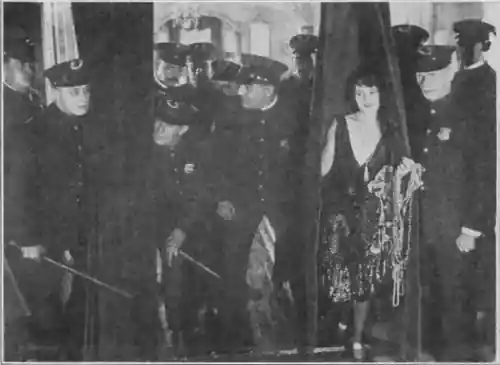
At its core, the film interrogates the paradox of love as both liberating and imprisoning. Dorothy’s repeated law‑breaking can be read as an act of rebellion against paternal authority, while Rodney’s willingness to re‑enter the penitentiary to reunite with her flips the conventional hero narrative on its head. The final courtroom scene—where a judge sentences the pair to “life together”—functions as a darkly comedic commentary on societal expectations of marriage as a form of lifelong confinement.
The film’s resolution, though seemingly whimsical, raises questions about agency: are Dorothy and Rodney truly free, or have they simply swapped one cage for another? This ambiguity aligns the film with the moral complexity found in The Shadow of a Doubt, where the audience is left to ponder the true nature of justice.
The score, a blend of jazz‑inflected motifs and low‑rising strings, mirrors the characters’ emotional oscillations. During the high‑speed chase, a throbbing percussive rhythm drives the tension, while quieter, melodic passages underscore the tender moments between Dorothy and Rodney. Sound design cleverly incorporates ambient city noises—honking horns, distant sirens—to maintain an ever‑present sense of urban chaos.
When placed alongside other period pieces such as Sea Shore Shapes or the more overtly comedic Spooks, Fair Enough carves out a niche that balances dark humor with earnest romance. Its narrative daring resembles the subversive charm of Rich Girl, Poor Girl, yet its visual language is more stark, echoing the noir‑ish sensibilities of Binnaz.
Since its release, the film has sparked lively discourse on social media platforms, with viewers debating whether the “life together” sentence is a satirical jab at traditional marriage or an earnest endorsement of partnership as a form of mutual captivity. Critics have praised the film’s willingness to subvert genre expectations, noting that its bold narrative choices make it a compelling study of love’s paradoxical nature.
Fair Enough succeeds where many romantic thrillers falter: it refuses to provide tidy moral closure, opting instead for an ending that feels both inevitable and unsettling. The film’s adept blend of stylized visuals, razor‑sharp dialogue, and nuanced performances renders it a standout entry in contemporary cinema. For audiences craving a love story that defies convention, challenges authority, and revels in the gray areas of right and wrong, this film is a must‑watch.
In the grand tapestry of modern filmmaking, Fair Enough stands as a testament to the power of daring storytelling—a reminder that sometimes, the most compelling love affairs are forged in the crucible of crime and consequence.
IMDb 5.3
1927
Community
Log in to comment.