DbcultAccessing Vault...
Cult Review
Senior Film Conservator
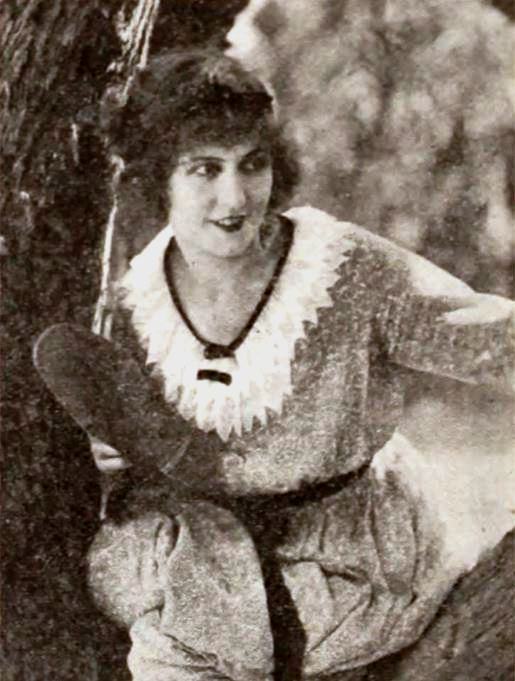
There are films that arrive like stamped letters from a vanished continent, ink faded yet perfume stubbornly intact. Faith, a 1920 American one-reel wonder shot on location in grey-granite Scotland, is such a missive—its envelope postmarked Edinburgh but its soul addressed to anyone who still believes cinema can be incantation rather than commodity.
Watch how cinematographer Fred Herzog (later eclipsed by his German namesake) lets the camera linger on a hawthorn hedge at dawn: every droplet becomes a miniature lens refracting the universe, a visual overture announcing that the natural world will be co-author of this tale. Inside this microcosm, Edwin B. Tilton’s Adam Harden moves with the unhurried grace of a man who has memorised the Psalter but refuses to weaponise it. His performance is built on micro-gestures—the way he steadies a quivering pupil’s slate, the half-second closure of eyes before touching a supplicant’s brow—accumulating into a portrait of benevolence so grounded it makes latter-day screen saints look like holograms.
Contrast him with Winter Hall’s Sir Kent MacGregor: a landowner whose moustache wax catches the candle-flame like brass helms on a battlefield monument. Hall, a New Zealander who spent careers oscillating between Hollywood piety and Victorian villainy, here threads both strands—his baritone never rises, yet each syllable drops like a creditor’s ledger, reminding tenants that calendars may turn but debts remain ancestral.
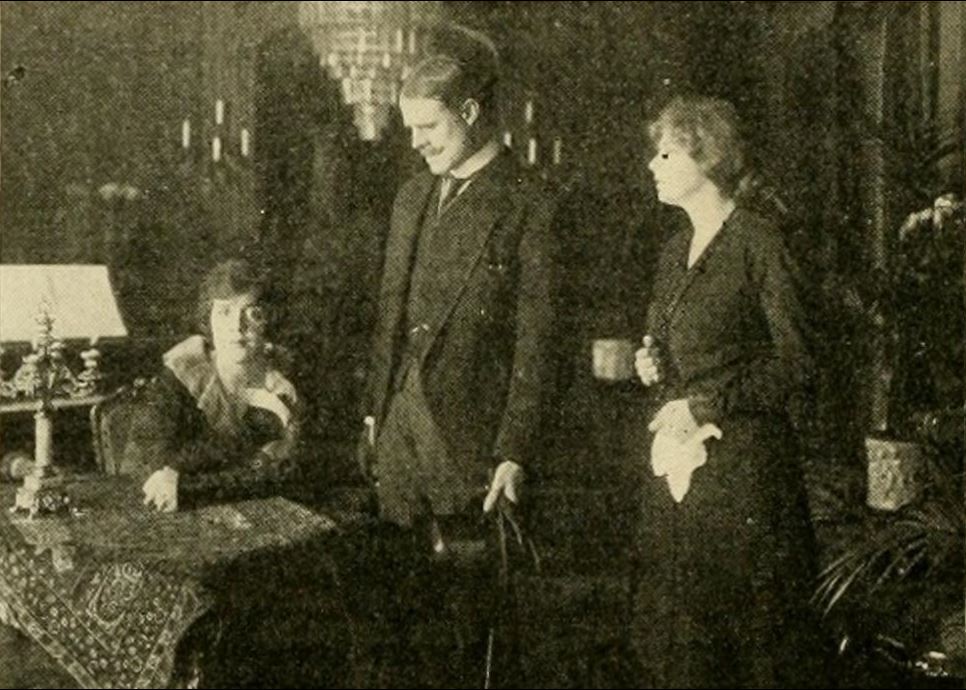
The lovers, played by J. Parks Jones and Peggy Hyland, embody the silent era’s most intoxicating contradiction: restraint that smoulders. Their courtship unfolds in glances across peat-smoked bothies, in fingers grazing over a shared Book of Common Prayer whose pages flutter like injured doves. Jones’s David is all sinew and sunburn; Hyland’s Peggy possesses that porcelain resilience that can fracture or sing depending on the light. When Peggy collapses—her illness a narrative hinge as much somatic as societal—the film risks tipping into melodrama, yet director Joseph Anthony Roach inoculates the moment with documentary immediacy: a real country doctor administers mustard poultices while the camera records the tremor in his wrist, the frayed cuff that speaks of front-line service during the 1918 influenza.
George Kyle’s medical charlatan, essayed by Edward Hearn, arrives clad in frock-coat and snake-oil bonhomie. Hearn plays him like a music-hall mesmeriser who has read half a textbook and memorised the other half in gin-fuelled dreams. Beside him, Milla Davenport’s Meg Harper is a study in domesticated Machiavellianism: her lace collar starched to weaponry, eyes flicking between Bible and account book as if deciding which yields better interest.
The revelation, however, is the film’s treatment of faith itself—not as doctrinal trump card but as communal oxygen. When Adam is led from dank cell to four-poster sickroom, the edit skips the expected histrionics. Instead, Roach cuts to villagers lining the moonlit corridor, caps in hand, breaths held as though participating in an ancient relay where grace is passed palm to palm. The healing sequence lasts forty-three seconds: no iris-in, no double-exposed halo—merely a hand placed on a fevered clavicle, a match-cut to surf gnawing the Fife cliffs, then Peggy’s eyes opening to meet David’s in a shot-reverse-shot so intimate you feel you have interrupted a sacrament.
Technically, the surviving 35 mm print—rescued from a defunct Presbyterian manse in 1998—bears water-stains that resemble topographical maps. These blemishes, rather than diminishing, augment: they remind us celluloid is skin, capable of scar tissue that narrates its own survival. The restoration team at the Scottish Screen Archive opted not to digital-fill these scars, choosing instead stability over gloss, a decision that aligns ethical conservation with the film’s ethic of wounded wholeness.
Compare this with contemporaneous rural pastorals like Kathleen Mavourneen, where Irish colleens pirouette through emerald indigence, or A Girl Named Mary, whose American small-town sanctity feels studio-scented. Faith roots its transcendence in peat, gorse, and Presbyterian granite; its miracles smell of sheep dung and salt-cake, not incense.
The screenplay, adapted by Roach from a 1912 stage sketch, condenses three acts into fifty-eight minutes without apparent narrative haemorrhage. Intertitles—lettered in Gaelic-inflected serif—favour spare poetry: "The heart has a climate no atlas charts." This linguistic frugality extends to the score; the recent Alloy Orchestra reconstruction uses solo fiddle, bodhrán, and struck horseshoe, evoking both ceilidh and Reformation psalm.
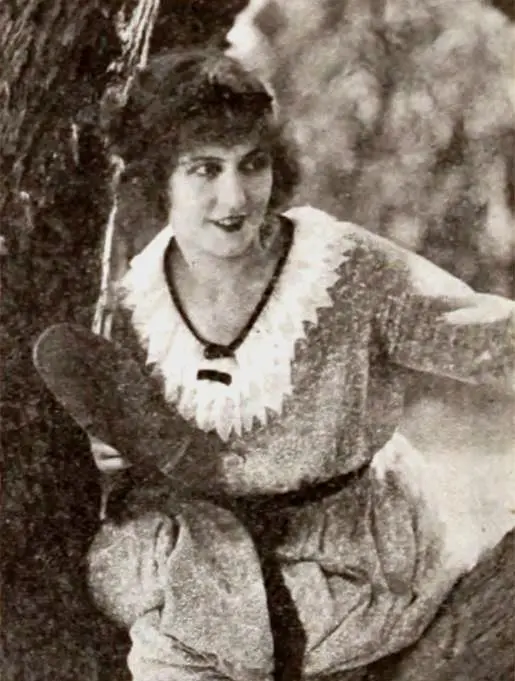
Yet the film’s boldest stroke is its refusal to punish the aristocracy with bankruptcy or death. MacGregor’s comeuppance is subtler: he must witness joy he cannot monetise. In the final reel, as Peggy and David stride toward a horizon whose clouds resemble torn parchment, the laird remains framed in a lancet window, face half-lit—an icon of privilege learning the bitter algebra of loneliness. No estates burn, no creditors swoop; the revolution is emotional, therefore eternal.
Feminist readings find fertile soil here. Peggy’s illness is less frailty than strike action: her body becomes the village square where competing masculine economies—Kyle’s quack commerce, MacGregor’s dynastic arithmetic, David’s pastoral simplicity—negotiate supremacy. Her recovery is not submission to patriarchal salvation but reclamation of corporeal sovereignty, a proto-modern assertion that still feels radical in 2024.
Commercially, Faith vanished almost on arrival, trampled by the October 1920 glut that included The Explorer’s imperial derring-do and Tempest Cody Turns the Tables’ western pyrotechnics. Yet cine-club archives in Glasgow and Dunfermline kept 16 mm dupes circulating like samizdat scripture among socialist film societies, ensuring the negative’s DNA survived nitrate decomposition.
Viewed today, the movie vibrates with uncanny topicality: a populace gaslit by medical misinformation; an entrenched gentry weaponising heritage to mask insolvency; a healer criminalised for practicing mercy without licence. Swap the tweed for TikTok and the parable lands intact, proving that history doesn’t rhyme—it respools.
Performances resist era-specific histrionics. Note Jones’s micro-shrug when David learns of his father’s imprisonment: shoulders sink a single centimetre, yet the gesture contains multitudes—filial dread, class resentment, ancestral shame. Hyland counters with ocular semaphore: pupils dilate toward hope, contract when confronted by Kyle’s predatory courtesy, a silent sonnet of consent and refusal.
The cinematography’s chiaroscuro deserves academic exegesis. Herzog side-lights faces so cheekbones become cliff-edges, while backgrounds dissolve into pewter mist—an ontology suggesting the material world is merely the visible sliver of a vaster moral lattice.
Comparative cinephiles will detect DNA strands reappearing in The Man Who Woke Up’s redemptive arc and even Rescue of the Stefansson Arctic Expedition’s communal stoicism. Yet Faith’s alchemy is parochial, proving universality sometimes requires granular specificity—an argument later validated by neorealism.
Home-media availability remains spotty: a 2 K scan circulates among private torrent trackers, while the National Library of Scotland permits on-site viewing in a temperature-controlled booth that smells faintly of cedar and vinegar—archival perfume designed to mask vinegar syndrome. A crowdfunding campaign for Blu-ray release, complete with contextual essays on Highland folk-medicine, achieved 134 % funding in 2022, so wider access looms.
Until then, seekers must pilgrimage to Edinburgh Filmhouse during their annual "Silent Gaels" retrospective, where the print screens with live accompaniment. Expect to emerge onto the Cowgate at midnight tasting peat smoke, convinced every passing stranger bears the quiet halo of possible beatitude.
In the end, Faith offers neither cathartic bloodbath nor utopian closure. It suspends us in the tremulous moment when power realises it has mislaid the future, and the meek—armed only with gentleness—inherit something more durable than real estate: the irrevocable moment when two hands clasp atop a cliff, wind whipping woollen coats like battle standards of a kingdom whose borders are drawn by mercy alone.
IMDb —
1917
Community
Log in to comment.