DbcultAccessing Vault...
Cult Review
Senior Film Conservator
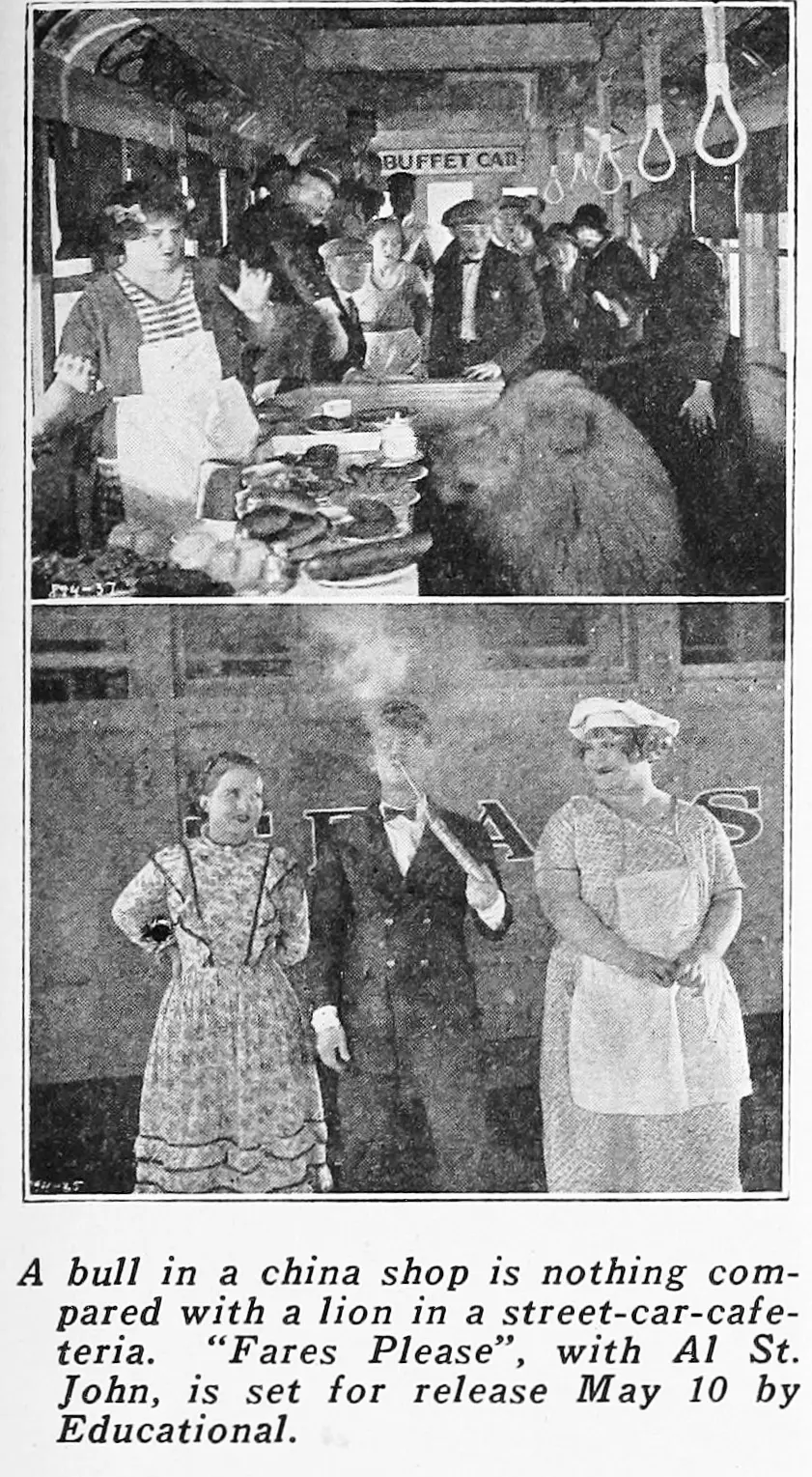
Is Fares, Please! worth your time a century after its release? Short answer: Yes, but only if you appreciate the raw, unpolished kinetic energy of early slapstick over the sanitized polish of modern comedy.
This film is for the cinephile who wants to see the literal building blocks of the action genre, where the stunts were real and the safety nets were non-existent. It is NOT for anyone who requires a complex narrative or high-definition visual clarity to remain engaged.
Al St. John is an underrated figure in the silent era. Often overshadowed by his contemporary stars, St. John brought a specific brand of frantic, almost desperate energy to the screen. In Fares, Please!, his performance as the messenger boy turned transit mogul is a masterclass in high-stakes clumsiness. He doesn't just fall; he collapses with a geometric precision that suggests a deep understanding of physics. It’s loud. Even without sound.
Consider the sequence where Al first inspects his new streetcar. The vehicle is a wreck, a skeletal ghost of a machine. St. John interacts with it not as a driver, but as a sparring partner. Every lever he pulls and every door he opens results in a counter-reaction that threatens his physical integrity. This isn't just 'funny'—it's a visceral representation of the working-class struggle against technology. Much like the characters in The Bike Bug, Al is at the mercy of his own tools.
The way St. John uses his body is fascinatingly ugly. He lacks the grace of Chaplin. He doesn't have the stoic 'Great Stone Face' of Keaton. Instead, he has a wild, bug-eyed intensity that makes every near-miss feel genuinely dangerous. When he is being pursued by the villainous Otto Fries, the stakes don't feel cinematic; they feel personal. You get the sense that if the camera stopped rolling, the bruises would still be there.
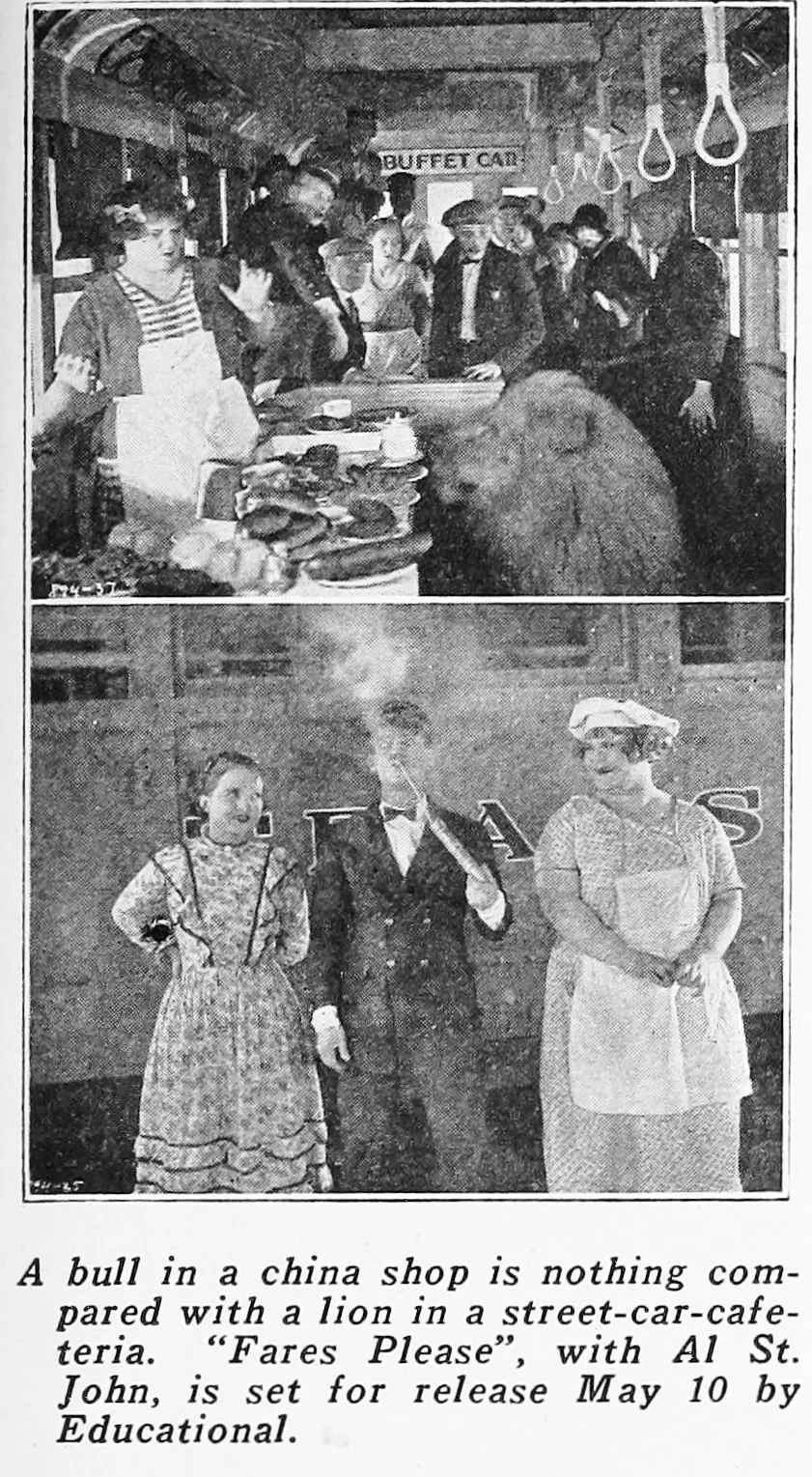
The streetcar in this film is more than a setting; it is a character. In the 1920s, the streetcar represented the pulse of the city, and Fares, Please! deconstructs that symbol with gleeful malice. The tracks become a literal cage for the protagonist, forcing him into direct confrontation with his competitor. The film uses the linear nature of the tracks to build tension—there is nowhere to turn, only forward or backward.
One standout moment involves a derailment that looks suspiciously real. In an era before sophisticated matte shots or CGI, the filmmakers had to actually wreck things. The sight of a streetcar tilting at an impossible angle while Al tries to maintain his dignity is a testament to the era's 'do or die' filmmaking philosophy. It reminds me of the rural chaos found in Back to the Woods, where the environment is the primary antagonist.
The pacing is relentless. Once the streetcar starts moving, the film rarely pauses for breath. This 'cranked up' speed was common in 1924, but here it serves the narrative of a man losing control of his destiny. The editing by the uncredited cutters of the era is surprisingly sharp, cutting between the villain's plotting and Al's frantic repairs with a rhythm that mirrors a racing heartbeat.
While St. John is the engine, the supporting cast provides the friction. Spencer Bell, a frequent collaborator of St. John, brings his usual comedic timing, though modern audiences will have to navigate the unfortunate racial tropes common to the 1920s. Despite the era's limitations, Bell’s physical rapport with St. John is undeniable. They move together like a seasoned vaudeville duo, anticipating each other's falls with uncanny accuracy.
Ruth Hiatt serves as the traditional love interest, but she isn't just a trophy. In the world of Fares, Please!, everyone is caught in the gears of the transit war. Hiatt’s presence raises the stakes; Al isn't just fighting for a business, he’s fighting for a future. This thematic weight is similar to the social pressures explored in A Fool and His Money, where financial status dictates romantic viability.
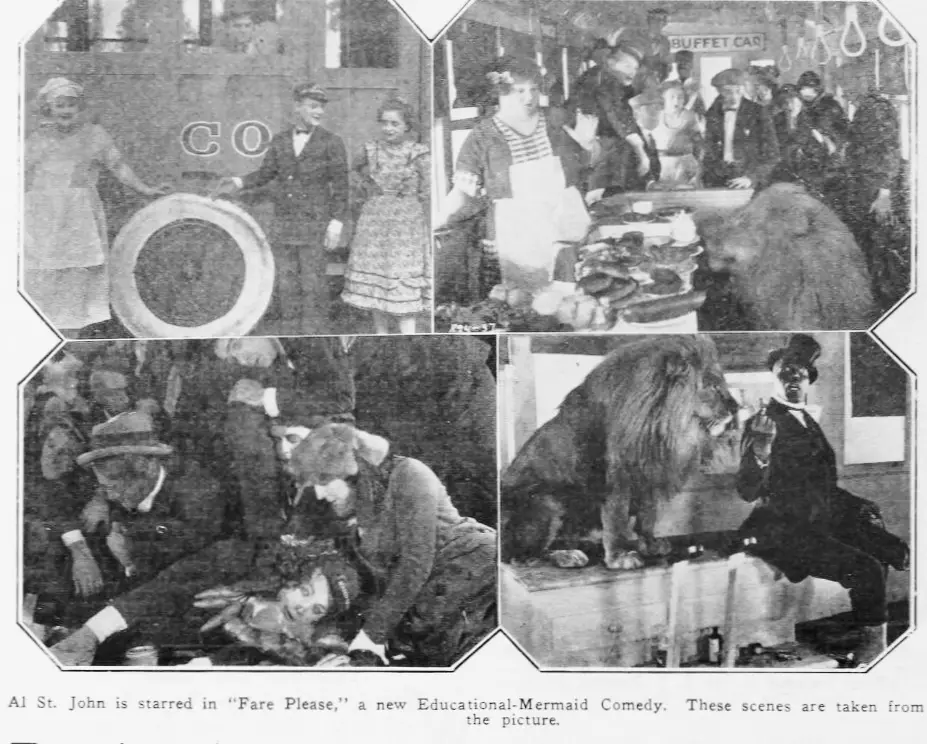
Then there is Babe London. Her brief but impactful presence adds a layer of surrealism to the comedy. London was a master of using her physical stature for comedic effect without ever losing her dignity. She represents the 'everyday passenger' caught in the middle of Al’s madness, providing a much-needed grounded perspective to the otherwise cartoonish violence.
Yes, Fares, Please! is absolutely worth watching if you want to understand the evolution of the action-comedy. It provides a raw look at 1920s stunt work that remains impressive even by today's standards. The film is a short, punchy experience that delivers more thrills in twenty minutes than many modern features do in two hours. It is a vital piece of silent cinema history that showcases the ingenuity of the 'Poverty Row' studios.
The cinematography in Fares, Please! is functional rather than poetic. The camera is often static, allowing the actors to move through the frame like athletes in an arena. However, this simplicity is its strength. By not over-complicating the shots, the director allows the scale of the streetcar stunts to speak for itself. You see the distance between the car and the obstacles; you see the lack of wires.
The 'under-cranking' of the camera—a technique where the film is shot at a slower frame rate to make the action appear faster when played back—is used here with surgical precision. It gives the streetcar a supernatural speed, making the narrow escapes feel like miracles. This technique was a staple of the time, seen in films like Rob Roy, but here it is used specifically to enhance the mechanical terror of the transit system.
"The streetcar isn't a vehicle; it's a prosthetic limb for Al St. John. He wears the machinery, and the machinery wears him."
This observation is key to enjoying the film. You have to stop looking at it as a story about a boy and a bus and start seeing it as a man wrestling with a steel beast. The 'villain' played by Otto Fries is almost secondary to the villainy of the rusted engine and the failing brakes. It's a man-versus-machine conflict that predates the more famous versions seen in later decades.
Fares, Please! is a jagged, joyful piece of history. It lacks the sophisticated soul of the major studio releases from 1924, but it makes up for it with pure, unadulterated gall. Al St. John proves here that he was a titan of the short-form comedy, capable of turning a pile of scrap metal into a comedic goldmine. It’s clunky, it’s dangerous, and it’s undeniably human. If you can overlook the dust of a century, you’ll find a film that still has plenty of fuel in the tank.
IMDb 6.3
1933
Community
Log in to comment.