DbcultAccessing Vault...
Cult Review
Senior Film Conservator
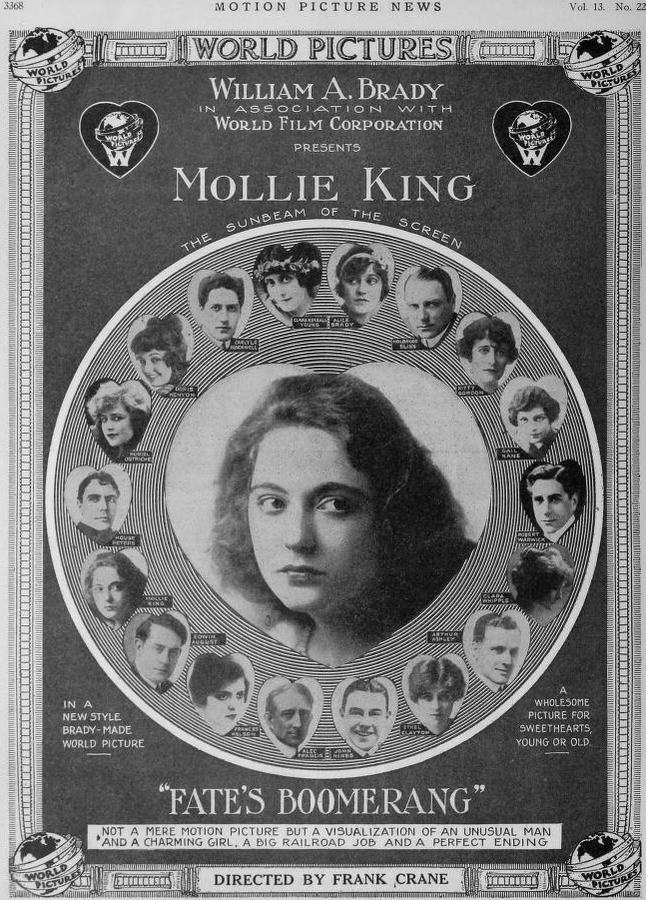
There's a certain raw, unvarnished power in early cinema, a directness of storytelling that, for all its technical simplicity, often cuts to the very core of the human condition. Fate's Boomerang, a compelling narrative from the pen of Bertie Badger Moyers, is precisely such a film. It isn't just a story; it's a moral fable, a stark commentary on the diverging paths of ambition and superficiality, and a poignant exploration of where true happiness, and indeed, true sacrifice, ultimately reside. As we peel back the layers of this cinematic artifact, we find themes that, despite the passage of a century, remain remarkably resonant, speaking to the timeless struggle between societal expectation and individual fulfillment.
Our journey begins with George Castleman, an engineer whose professional zenith is marked by the securement of a colossal railroad project in the untamed American West. His character, as portrayed by Charles Gotthold, exudes a palpable sense of purpose and a rugged idealism. This is a man who dreams in steel and steam, who sees not just mountains, but the pathways through them. His excitement, a vibrant force, propels him homeward, eager to share this momentous news with his wife, Mildred. Here, the film introduces its central dichotomy: George's world of tangible achievement and future-building versus Mildred's realm of ephemeral social engagements.
Mildred, played by June Elvidge, is the epitome of urban detachment. Her initial absence, engaged in a Bridge Club game, speaks volumes before she even utters a word. When George, brimming with his good fortune, calls her home, her delay, prioritizing a game over her husband's urgent news, sets a chilling precedent. Her eventual arrival, adorned with facile excuses and perfunctory kisses, serves only to highlight the chasm already forming between them. The subsequent conversation is a masterclass in dramatic irony and character revelation. George envisions a shared adventure, a life built together in the vastness of the West. Mildred, however, recoils with an almost aristocratic disdain: "Surely you do not expect me to go with you?" Her refusal, unwavering and absolute, underscores her profound disinterest in anything that would disrupt her carefully cultivated, superficial existence. This pivotal moment, where a shared future fractures into two divergent paths, is handled with a stark, almost brutal simplicity that defines early narrative cinema. It's a refusal that resonates with the emotional chasm often explored in films about societal expectations clashing with personal desires, perhaps echoing the marital complexities implied in a title like Her Mother's Secret, where hidden lives and unacknowledged truths often underpin domestic tranquility.
George, left with the bitter taste of Mildred's words – "When you want to see me, you can easily come home" – departs alone. His journey into the West is more than a physical relocation; it's a spiritual exile, a plunge into a wilderness that mirrors his internal desolation. The film masterfully contrasts the bustling, indifferent city with the majestic, challenging landscape of the mountains. The building of the railroad becomes a metaphor for George's own rebuilding, a slow, arduous process in a land that demands resilience and authenticity.
It is in this crucible of labor and isolation that George encounters Dan Holden and his grandchild, Zell, portrayed by Mollie King. Their lives, untouched by the modern world, are profoundly disrupted and fascinated by the arrival of the railroad crew. Zell, in particular, is drawn to George, her innocence and wonder a stark contrast to Mildred's jadedness. While George, a man of honor, initially explains his marital status, Zell's persistence stems not from malice, but from a genuine desire to alleviate his evident loneliness. Her character embodies a purity and strength born of the land, a refreshing antidote to the artificiality George left behind. This burgeoning connection, initially one of shared solitude, deepens following the tragic death of old Mr. Holden. George, carrying the injured man to his hut, performs an act of profound human kindness, solidifying his bond with Zell. This narrative turn, where a profound connection forms amidst hardship and loss, harks back to classic narratives of pioneering spirit and human resilience, not unlike the thematic undercurrents one might imagine in a film titled Way Outback, where remote settings often forge unexpected bonds.
Months later, the film reveals the profound consequences of these choices. In the rustic mountain hut, George and Zell embrace a new life, the birth of their child sealing their bond. George, once a man of ambition, now finds true love and happiness in this unexpected domesticity, his gaze upon their newborn babe radiating an authentic contentment that Mildred's world could never offer. Zell, the "little mother of the hills," represents a return to fundamental human values: nurture, connection, and unconditional love. This dramatic shift in George's life trajectory is not merely a plot device; it's a powerful statement about the nature of fulfillment, suggesting that material success pales in comparison to genuine human connection.
While George finds solace and purpose in the West, the city continues its relentless, superficial dance. Mildred, oblivious to the profound changes in her husband's life, remains trapped in her gilded cage, easily swayed by the manipulative charms of Morgan, a quintessential flirtatious society man. Morgan, with his predatory designs, subtly yet relentlessly pushes Mildred towards divorce, seeing an opportunity for personal gain. This urban subplot serves as a stark counterpoint to the genuine human drama unfolding in the mountains, highlighting the moral decay that can fester beneath a veneer of sophistication. The film, in its quiet condemnation of Mildred and Morgan's machinations, subtly critiques the moral landscape of the privileged, drawing parallels to the social commentaries found in other period dramas, perhaps even touching on themes of societal corruption or superficiality seen in a film like The Senator or the class distinctions often explored in Miss Petticoats.
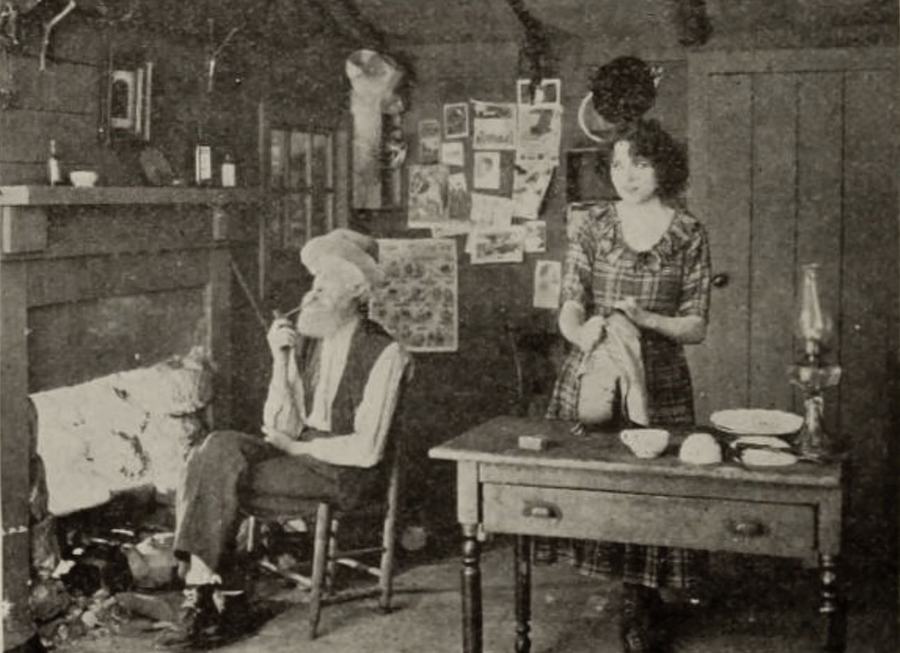
The narrative's climax is both tragic and, in a strange way, redemptive. Mildred and Morgan, driven by their selfish motives, journey to the wilderness to gather 'evidence' against George. Their ill-fated coach ride, piloted by a "half-witted chap" whose carelessness around a treacherous curve sends them plummeting over a cliff, is a shocking, yet perhaps inevitable, turn of events. The deaths of Mildred and Morgan, alongside their hapless driver, are presented with a blunt finality characteristic of the era's dramatic sensibilities. This incident, while sudden, feels less like a random act of violence and more like a karmic consequence, the "boomerang" of fate returning with devastating force to those who set it in motion. Mildred's earlier words, her dismissive 'When you want to see me, you can easily come home,' now take on a chilling new resonance, her journey home becoming a final, irreversible one.
George's reaction to the news is portrayed with a quiet dignity. He ensures the unfortunate trio receives a decent burial, demonstrating a profound humanity that transcends his personal grievances. Only then, with the past definitively laid to rest, is he truly free to embrace Zell's love without reservation. Their subsequent marriage, a union born of shared hardship and genuine affection, solidifies the film's central message: true partnership is found not in convenience or societal standing, but in mutual respect, shared values, and unwavering support. George continues his work, but now, his wife and child are truly worthy of his sacrifices, and he is, at last, content.
The performances, particularly by Charles Gotthold as George and Mollie King as Zell, are crucial to the film's emotional impact. Gotthold conveys George's stoicism, his internal conflict, and his eventual quiet joy with remarkable subtlety for the silent era, relying on nuanced expressions and gestures. King's Zell is a portrayal of innocent strength, her character's transformation from a wide-eyed mountain girl to a loving mother feeling organic and deeply moving. June Elvidge's Mildred, while perhaps a less sympathetic character, is nonetheless effective in embodying the detached superficiality that drives much of the initial conflict. Her character's choices, though seemingly small at first, ripple outwards with devastating consequences, illustrating the profound impact of seemingly minor decisions on a life's trajectory.
Beyond the individual performances, Fate's Boomerang excels in its thematic clarity. It's a powerful exploration of the choices that define us and the unpredictable ways in which destiny unfolds. The railroad itself isn't just a plot device; it's a symbol of progress, of taming the wild, and of George's own journey towards a more authentic existence. The contrast between the opulent, yet hollow, city life and the arduous, yet fulfilling, frontier existence is a recurring motif that resonates with the American pioneering spirit. The film subtly argues that true wealth lies not in material possessions or social standing, but in genuine human connection and purpose. This message, while perhaps didactic by modern standards, was a common and powerful moral thread in early cinema, offering clear lessons on virtue and vice.
In an era that often glorified grand gestures and melodramatic turns, Fate's Boomerang manages to tell a deeply human story with a surprising degree of realism for its time. It avoids overly simplistic resolutions, instead presenting a conclusion that, while tragic for some, is ultimately one of earned contentment for its protagonist. The film's title itself is a brilliant encapsulation of its central premise: actions, particularly those driven by selfishness or neglect, invariably return to impact the one who initiated them. Mildred's casual dismissal of George's dream, her refusal to join him in building a life, ultimately leads to her own undoing and, paradoxically, George's liberation and eventual happiness. It's a powerful reminder that choices have consequences, and that the path we choose, whether consciously or through apathy, shapes not only our own destiny but also the destinies of those around us.
Comparing it to other films of its time, Fate's Boomerang stands out for its clear moral compass and its effective use of environmental contrast to underscore character development. While we don't have the full plots of films like One Day or Springtime for direct thematic comparisons, Fate's Boomerang certainly embodies the popular dramatic structures of its period, where clear-cut good and evil, virtue and vice, often guided the narrative arc towards a morally satisfying, if sometimes harsh, conclusion. The narrative's unfolding, where an initial rejection leads to a new, more profound connection, echoes the transformative journeys seen in many classic stories. The film's enduring appeal lies in its straightforward yet powerful narrative, its compelling characters, and its timeless exploration of love, loss, and the unpredictable nature of fate. It serves as a valuable historical document, offering a glimpse into the social values and storytelling conventions of early 20th-century American cinema, while simultaneously delivering a message that remains profoundly relevant today.
In conclusion, Fate's Boomerang is more than just a silent film; it's a testament to the enduring power of human connection, the transformative potential of adversity, and the undeniable truth that our actions, both grand and seemingly insignificant, inevitably shape the course of our lives. It's a film that asks us to consider what truly matters, and in its poignant resolution, offers a compelling answer.
IMDb 7.2
1932
Community
Log in to comment.