DbcultAccessing Vault...
Cult Review
Senior Film Conservator
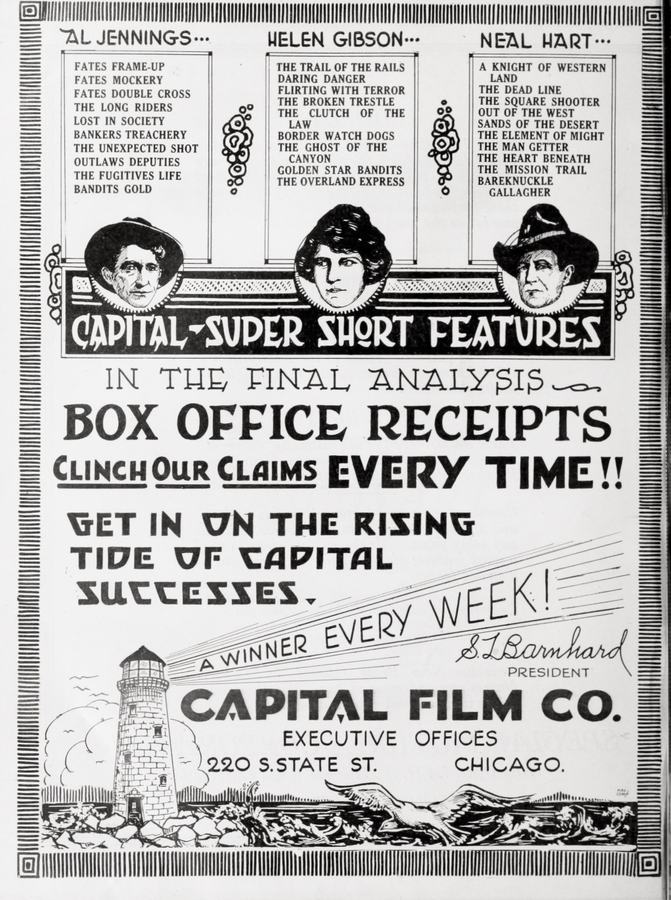
In the grand tapestry of early cinema, where narratives often painted with broad strokes of melodrama and moral fortitude, certain films distinguish themselves not merely by their technical prowess but by their profound resonance with the human condition. Fate's Mockery, a title that in itself is a dramatic pronouncement, stands as one such indelible creation, a silent film that transcends its era to speak volumes about justice, ambition, and the relentless, often cruel, hand of destiny. It is a work that, even a century later, demands our attention, inviting us to ponder the intricate dance between free will and the inescapable currents of fortune.
At its core, Fate's Mockery is a sprawling epic of a man's rise and fall, meticulously crafted to evoke both sympathy and despair. We are introduced to John 'Jack' Sterling, portrayed with a compelling blend of rugged determination and nascent vulnerability by the inimitable Al J. Jennings. Jennings, whose own life was a tapestry of outlawry and eventual redemption, brings an authentic gravitas to the role, imbuing Jack with an almost palpable sense of lived experience. Jack is a prospector, a solitary figure pitted against the vast, indifferent expanse of the Sierra Nevada. His discovery of a mother lode of gold is not merely a moment of triumph; it is the fulcrum upon which his entire world, and indeed the world of those around him, irrevocably pivots. The initial elation, the silent, almost reverent awe in Jennings's eyes as he unearths his fortune, is a masterclass in understated acting, conveying more through gesture and expression than any dialogue ever could.
This newfound wealth, however, is a double-edged sword, attracting not just prosperity but also the insidious shadow of human avarice. The film brilliantly establishes a stark contrast between the purity of Jack's initial ambition – to build a life with his beloved Eleanor Vance – and the corrupting influence that wealth often wields. Vivian Gane, as Eleanor, delivers a performance of remarkable subtlety and emotional depth. Her character is not merely a damsel in distress but a woman of formidable inner strength, whose faith and resilience are tested to their absolute limits. The burgeoning romance between Jack and Eleanor is depicted with a tender authenticity, making their subsequent separation all the more heart-wrenching. Gane's portrayal of Eleanor's initial joy, her quiet devotion, and later her profound anguish, anchors the film's emotional core, offering a beacon of humanity amidst the encroaching darkness.
The true conflict ignites with the introduction of a cunning and unscrupulous rival, whose identity remains shrouded in early mystery, only to be revealed with devastating impact. This antagonist, driven by a rapacious desire for Jack's fortune, orchestrates a meticulous frame-up, implicating Jack in a crime of shocking brutality. The sequence depicting the false accusation and Jack's subsequent arrest is a masterclass in silent film suspense, building tension through rapid cuts, exaggerated shadows, and the frantic, desperate expressions of Jennings. The injustice is palpable, a visceral blow not just to Jack but to the audience, who have borne witness to his honest struggles and aspirations. This narrative thread, of a man wrongly accused, resonates powerfully, finding echoes in cinematic history from the early justice dramas to more modern thrillers. One might even draw a thematic parallel to the wrongful accusations that plague characters in films like Fantômas: The False Magistrate, where the machinations of evil often ensnare the innocent in a complex web of deceit.
Society, ever eager to condemn, swiftly turns its back on Jack. The visual language employed here – the sneering faces of townsfolk, the newspaper headlines screaming condemnation, the stark imagery of prison bars – effectively conveys the crushing weight of public scorn. Eleanor, caught in the eye of this social storm, becomes a tragic figure, her belief in Jack's innocence battling against an overwhelming tide of circumstantial evidence. Gane's performance during these scenes is particularly poignant; her silent tears, her defiant gaze, her desperate pleas for understanding, speak volumes about the pain of loyalty tested by societal pressure. Her plight is reminiscent of the moral quandaries faced by characters in melodramas like Heartsease, where personal integrity is pitted against the harsh judgment of the world.
Jack's escape from custody marks a pivotal turning point, transforming him from a wronged man into a hunted fugitive. The film masterfully portrays his descent into a shadowed existence, his spirit hardening with each passing year of exile. The cinematography here is particularly effective, utilizing stark landscapes and isolated settings to emphasize Jack's solitude and the immense burden he carries. Jennings's physical transformation – a gauntness in his face, a weariness in his gait, a haunted look in his eyes – conveys the toll of his ordeal. This period of his life, marked by a relentless pursuit of either redemption or revenge, forms the emotional backbone of the latter half of the film. It is a journey of self-discovery through hardship, a theme explored in many early cinematic tales of the American frontier, often found in films like The Spoilers, where the harsh realities of the wilderness forge and break men.
The passage of time is handled with remarkable grace and economy, employing visual cues and subtle shifts in character appearance to convey the years that bleed into decades. Eleanor, too, undergoes a transformation. She is no longer the naive fiancée but a woman tempered by sorrow and resilience, her quiet strength now a formidable force. Her struggle to maintain her dignity and her belief in Jack, even in his prolonged absence, speaks to an enduring human spirit. The film's portrayal of their separate, yet inextricably linked, journeys, builds a powerful anticipation for their eventual reunion, an event that the title itself suggests will be anything but straightforward.
The climax of Fate's Mockery is a tour de force of narrative complexity and emotional intensity. Jack, now a hardened man, his quest for justice or vengeance nearing its conclusion, finally confronts the true orchestrator of his suffering. The revelation of the villain's identity and the intricate details of their deceit are delivered with dramatic precision, shattering any lingering illusions of a simple, clean resolution. The film expertly avoids the pitfall of a saccharine ending, opting instead for a conclusion that truly embodies its title. The reunion between Jack and Eleanor, long-awaited and fraught with unspoken emotion, is not one of unbridled joy. Instead, it is tinged with the profound melancholy of lost time, irreversible damage, and the bitter knowledge that fate, in its cruelest jest, often grants understanding only after the most devastating sacrifices have been made.
The true culprit's comeuppance, while satisfying on a superficial level, doesn't erase the years of pain or restore what was irrevocably lost. This nuanced approach to justice and consequence elevates the film beyond a simple revenge narrative, aligning it more with profound meditations on destiny found in works like The Pagan God, where human actions are often dwarfed by larger, unseen forces. The final scenes, with Jack and Eleanor standing together but undeniably altered, their hands clasped but their gazes distant, offer a powerful, almost existential commentary on the nature of suffering and the elusive promise of happiness. It is a testament to the film's artistic courage that it denies its characters, and by extension its audience, the easy comfort of a fully resolved, 'happily ever after' conclusion. Instead, it leaves us with a lingering sense of the fragility of human endeavor against the backdrop of an indifferent universe.
Al J. Jennings, as Jack Sterling, delivers a performance that is both physically demanding and emotionally resonant. His transformation from an optimistic prospector to a haunted, vengeful, yet ultimately weary man is utterly convincing. He masterfully uses his physicality, his expressive eyes, and subtle facial contortions to convey a vast spectrum of emotions without uttering a single word. This depth of character portrayal sets a high bar for silent film acting, placing him in the company of the era's most compelling dramatic leads. Similarly, Vivian Gane's Eleanor is a triumph of understated resilience. She eschews overt histrionics, opting instead for a portrayal rooted in quiet strength and unwavering loyalty. Her silent agony, her moments of defiant hope, and her eventual resignation to a fate intertwined with Jack's, are depicted with a grace that is truly captivating. Together, Jennings and Gane create a magnetic on-screen chemistry, their unspoken bond a powerful force that drives the narrative.
The direction of Fate's Mockery is nothing short of visionary for its time. The use of natural landscapes, particularly the rugged beauty of the Sierra Nevada, is not merely decorative but integral to the storytelling. The vastness of the mountains mirrors the immensity of Jack's ambition and later his isolation. The camera work is dynamic, employing a variety of angles and movements to enhance dramatic impact. Close-ups are used judiciously to highlight emotional moments, while wide shots emphasize the characters' vulnerability against the grandeur of nature. The editing is crisp and purposeful, maintaining a steady pace that allows the story to unfold organically while building suspense towards its dramatic crescendos. The intertitles, rather than merely conveying dialogue, are crafted with a poetic sensibility, often adding layers of thematic depth and foreshadowing.
Fate's Mockery is a rich tapestry woven with enduring themes. The pursuit of wealth, and its corrupting influence, is a central tenet, echoing the cautionary tales of the gold rush era, a subject often explored in films like La fièvre de l'or. The film asks profound questions about justice – its elusive nature, its often-delayed arrival, and its true cost. It delves into the destructive power of ambition unchecked by morality, and the resilience of the human spirit in the face of overwhelming adversity. But perhaps its most compelling theme is the very concept of fate itself. Is Jack's destiny predetermined, or is he merely a victim of circumstance and human malevolence? The film suggests a complex interplay, where individual choices are made within a larger, seemingly indifferent cosmic design.
The title itself, Fate's Mockery, encapsulates this core philosophical inquiry. It implies a sardonic, almost cruel, humor in the way destinies are shaped, often twisting expectations and delivering outcomes that are far from what is deserved or desired. This exploration of destiny's caprice can be seen as a precursor to the existential ponderings in later cinematic works. The film's lasting impact lies in its ability to provoke thought and stir emotion without relying on spoken dialogue. It is a testament to the universal power of visual storytelling and the enduring appeal of archetypal narratives.
In an age saturated with sound and spectacle, returning to a film like Fate's Mockery is a profoundly rewarding experience. It reminds us of the raw power of cinematic art in its purest form, where expressions, gestures, and the masterful manipulation of light and shadow carried the entire weight of a story. It is a film that challenges us to look beyond the surface, to engage with its characters on a deeper, more empathetic level, and to contemplate the timeless questions it poses about life, love, loss, and the ever-present, often enigmatic, hand of fate. Its legacy is not just as a historical artifact, but as a vibrant, living work of art that continues to resonate with audiences who appreciate the nuanced beauty of silent cinema. The film, much like a precious nugget of gold, retains its luster and value, a testament to the enduring craft of early filmmakers and the timeless power of human drama.
IMDb 5.4
1917
Community
Log in to comment.