DbcultAccessing Vault...
Cult Review
Senior Film Conservator
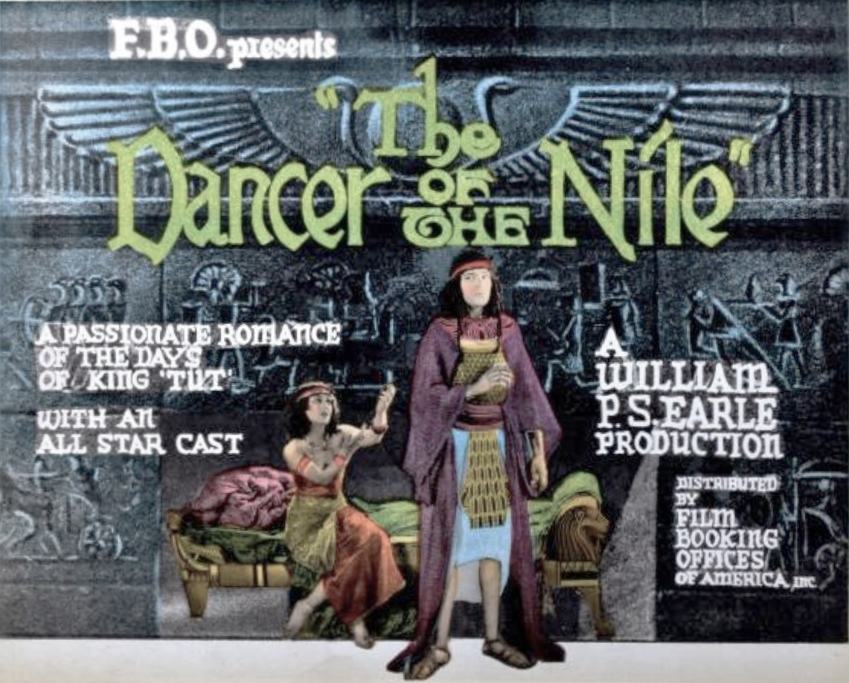
The cinematic tapestry woven by The Dancer of the Nile, a silent film from 1923, is one of grandiose ambition, simmering passion, and the stark realities of power dynamics in an ancient world. It's a narrative that, even a century later, speaks to the timeless conflicts of the human heart, albeit through the stylized lens of early filmmaking. The film plunges us headfirst into the gilded cages and treacherous corridors of an Egyptian royal court, where emotions are as volatile as the desert sands and loyalty is a commodity often bought at a steep price.
At its core, this is a story of unrequited love and the destructive force of obsession. The central figure, an unnamed Egyptian princess (portrayed with compelling intensity by Carmel Myers, whose expressive eyes and regal bearing command the screen), is a woman accustomed to having her every whim indulged. Her gaze falls upon Karmet, the dashing Prince of Syria (Sam De Grasse, embodying the stoic, conflicted hero with remarkable subtlety for the era), and what begins as an infatuation rapidly calcifies into a possessive demand. Myers masterfully conveys the shift from haughty entitlement to a chilling resolve, her performance a testament to the power of non-verbal communication in silent cinema. De Grasse, in turn, renders Karmet's predicament with a quiet dignity, his devotion to Arvia palpable even amidst the princess’s suffocating advances.
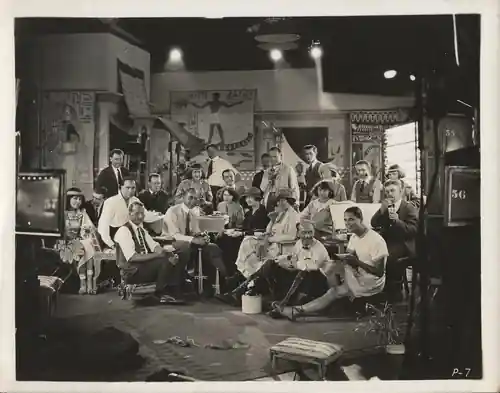
Arvia, the titular dancer (brought to life by Iris Ashton with an ethereal grace that justifies Karmet's devotion), is the innocent fulcrum upon which this royal drama teeters. Her beauty and artistry are her greatest assets, yet also her gravest liabilities in a world where powerful women view rivals as expendable. The writers, William P.S. Earle and Blanche Earle, craft a scenario that, while steeped in melodramatic conventions, explores the brutal calculus of love and survival within a rigid societal hierarchy. The narrative doesn't shy away from the darker aspects of human nature, presenting the princess not merely as a villain but as a product of her environment, where absolute power corrupts absolutely. Her actions, though heinous, are depicted as logical extensions of her upbringing and expectations.
The visual spectacle of The Dancer of the Nile is undoubtedly one of its most striking features. While details of specific directorial choices are often lost to the mists of time for many silent films, the sheer scale of the production is evident. The sets, costumes, and overall art direction transport the viewer to an Egypt of myth and legend, a land of towering temples and sun-drenched palaces. The attention to detail in the ancient Egyptian aesthetic is commendable, creating an immersive backdrop for the unfolding drama. These visual elements are not mere window dressing; they amplify the narrative's themes of power and exoticism, making the princess's authority feel tangible and Arvia's vulnerability all the more poignant. The use of elaborate headdresses, flowing robes, and intricate jewelry for the royal characters contrasts sharply with the simpler, yet still elegant, attire of Arvia, subtly reinforcing their differing stations.
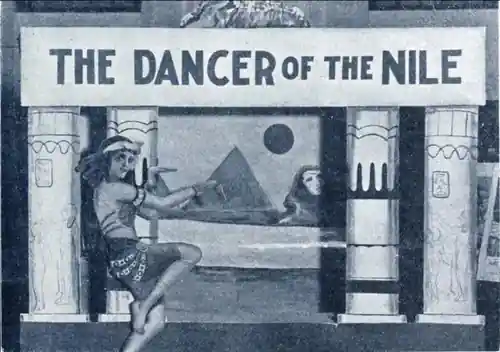
The cinematography, though adhering to the techniques of its era, often finds moments of striking beauty. Close-ups on the actors' faces, particularly during moments of intense emotion, draw the audience into their internal struggles. The wide shots of bustling court scenes or solemn rituals provide a sense of scope, allowing the viewer to appreciate the grandeur of the setting. One can almost feel the oppressive heat of the desert sun or the cool, shadowed interiors of the royal chambers. The film achieves a remarkable balance between intimate emotional drama and epic historical spectacle, a feat that many contemporary productions still strive for. This meticulous visual storytelling is crucial in a silent film, where every gesture, every expression, and every frame must convey meaning without the aid of dialogue. The subtle interplay of light and shadow, for instance, often underscores character motivations, with the princess frequently framed in domineering light, while Arvia might be shown in softer, more vulnerable illumination.
The cast, a formidable ensemble for the period, delivers performances that transcend the limitations of silent cinema. Carmel Myers, as the princess, is a revelation. Her portrayal is not one-dimensional; she imbues the character with a complex blend of vulnerability, entitlement, and chilling resolve. Her transition from a woman scorned to one who pragmatically accepts a politically advantageous union with Prince Tutankhamen (Malcolm McGregor, who projects an appropriate blend of youthful authority and strategic ambition) is handled with a subtlety that belies the theatricality often associated with silent film acting. It’s a performance that echoes the calculated ambition seen in characters from later historical dramas. One might even draw a thematic parallel to the ruthless self-preservation observed in films like The Winning of Sally Temple, where personal desires are often sacrificed or rechanneled for greater strategic gains.
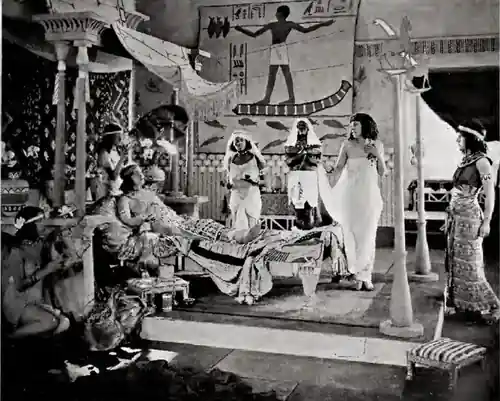
Sam De Grasse, as Karmet, provides a grounded counterpoint to Myers's tempestuous royalty. His quiet strength and unwavering loyalty to Arvia are conveyed through a restrained performance, making his character's plight all the more sympathetic. He represents the ideal of romantic devotion, a stark contrast to the princess's transactional view of love. Iris Ashton, as Arvia, radiates an innocence and grace that makes her the emotional heart of the film. Her dance sequences, though perhaps not as technically elaborate as modern choreography, are imbued with an expressive quality that communicates her character's spirit and purity. June Elvidge, Bertram Grassby, Gretchen Waterman, and Howard Gaye, though in supporting roles, contribute to the film's rich tapestry, each adding depth to the royal court and its machinations. Their collective efforts create a believable world, populated by characters whose motivations, though sometimes extreme, feel authentic within the narrative's context.
The narrative, penned by William P.S. Earle and Blanche Earle, delves into compelling themes of fate versus free will, and the extent to which individuals can defy their predetermined paths or the will of those in power. Arvia's father, the high priest (portrayed with gravitas by Bertram Grassby), acts as a pivotal figure, a deus ex machina who intervenes to save his daughter. This act of defiance against a tyrannical ruler’s decree introduces a fascinating moral dilemma: does divine intervention (or at least, the power of a high priest) supersede royal authority? This element adds a layer of spiritual and ethical complexity to what might otherwise be a straightforward love triangle. His actions, while seemingly a straightforward act of paternal love, also represent a challenge to the established order, a quiet rebellion against the princess’s absolute power.

The film's resolution, where the princess turns her attention to Prince Tutankhamen, is particularly insightful. It’s not a moment of redemption, but rather one of pragmatic adaptation. She does not learn humility or compassion; instead, she merely redirects her ambition, finding a new target for her desires that aligns with her political interests. This cynical yet realistic portrayal of power dynamics is what elevates The Dancer of the Nile beyond a simple romance. It suggests that for some, love is merely another tool in the arsenal of power, a means to an end rather than an end in itself. This cold calculation gives the film a surprising modern resonance, exploring the transactional nature of relationships in high society, a theme that echoes through centuries of storytelling.
Comparing The Dancer of the Nile to its contemporaries or even later works reveals its distinctive qualities. While not as overtly experimental as some European silent films, its narrative construction and character development demonstrate a sophisticated approach to storytelling. One might find thematic echoes in films like Der junge Medardus, another historical drama grappling with ambition and complex loyalties, though set in a different era. The intricate web of relationships and the dramatic tension of a forbidden love can also be loosely paralleled with the emotional stakes in Blazing Love, where passions run high and consequences are severe.
The film's legacy lies in its ability to transport audiences to a bygone era while exploring universal human experiences. It showcases the artistry of silent film, where every gesture, every facial expression, and every intertitle must carry the weight of dialogue. The pacing, though deliberate by modern standards, allows for a deeper immersion into the characters' emotional states. The dramatic irony inherent in the high priest's deception and the princess's subsequent shift in affections provides a satisfying narrative arc, even if the moral compass of the protagonist remains firmly skewed towards self-interest. This nuanced portrayal of morality, or lack thereof, adds a layer of depth that prevents the film from descending into simplistic good-versus-evil tropes.
In conclusion, The Dancer of the Nile stands as a compelling artifact of early cinema, a testament to the power of visual storytelling and the enduring appeal of epic historical dramas. It's a film that demands engagement, rewarding the viewer with a rich tapestry of human emotion, political intrigue, and breathtaking spectacle. The performances, particularly Carmel Myers's captivating turn as the tyrannical princess, elevate the material beyond mere melodrama, cementing its place as a noteworthy entry in the silent film canon. It’s a silent epic that truly speaks volumes, inviting us to ponder the nature of power, desire, and the intricate dance of fate that governs even the most royal of lives. The sheer ambition of its scope, coupled with the intimate tragedy of its core romance, ensures its continued relevance for those who appreciate the foundational works of cinematic art. This is a film that, despite its age, still possesses the power to enchant and provoke thought, proving that truly compelling stories transcend the eras in which they are told.

IMDb 6.2
1934
Community
Log in to comment.