DbcultAccessing Vault...
6.4/10
Senior Film Conservator
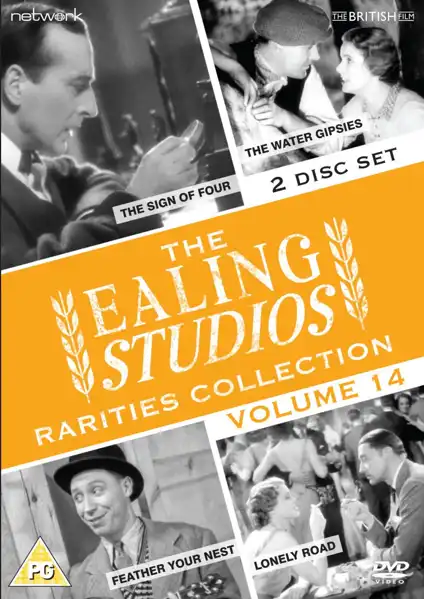
A definitive 6.4/10 rating for a film that redefined the boundaries of cult cinema. Feather Your Nest remains a cornerstone of transgressive art.
Look, if you hate George Formby's giant gormless grin or the sound of a banjolele, you should probably just skip this one entirely. But if you have a soft spot for cheap, creaky 1930s British comedies where everyone talks like they have a mouth full of marbles, Feather Your Nest is a pretty fun way to waste an hour. ☕
It is basically a delivery system for one very famous song, and honestly, that is more than enough to make it work. The whole thing has a loose, slightly frantic energy that reminds me of early American sound comedies like She Loves Me Not, where nobody is quite sure how fast the plot is supposed to move.
George plays Willie, a total misfit who works at a record manufacturing plant. He manages to break a master record of a famous singer and, in a total panic, decides to record his own voice over the track to cover his tracks.
I spent way too much time staring at the background machinery in the factory scenes. They have these giant, heavy metal presses that look like they could easily chop off a hand, yet George is just leaning over them like he is making toast at home.
There is also this one gag where a guy gets his trousers caught in a machine. It is a joke as old as time, but the way the actor reacts is so delayed and weird that it actually made me laugh out loud.
"It is the kind of movie where a character gets hit on the head and, instead of getting a concussion, they just become temporarily brilliant."
Polly Ward plays his girlfriend, and she has this incredibly posh voice that makes you wonder how on earth she ended up with Willie. They have almost zero chemistry, but the movie keeps throwing random distractions at you so you do not think about it too much.
Like this incredibly long scene involving a very loud motorbike that just will not start. It goes on for about two minutes too long, and you can tell they were just trying to pad out the runtime because the script was probably only thirty pages long.
Also, there are some really weird audio cuts where the background noise just completely drops out for a second. It is a bit distracting, but it adds to that shaky, handmade feel of early talkies. 🎶
Of course, the main reason anyone still watches this is to hear "Leaning on a Lamp-post" for the first time. When George finally sits down with his little ukelele-banjo thing, the movie stops pretending to have a story and just lets him do his thing.
His fingers move so fast it looks like a special effect. He has this cheeky, knowing wink at the camera that makes it impossible to dislike him, even if the surrounding movie is a bit of a mess.
Sure, some of the jokes are incredibly dusty now, especially a gag about a mother-in-law that feels like it was written by a caveman. But there is a cozy, rainy-afternoon feel to the whole thing that is hard to resist.
IMDb 7.7
1914
Community
Log in to comment.