DbcultAccessing Vault...
Cult Review
Senior Film Conservator
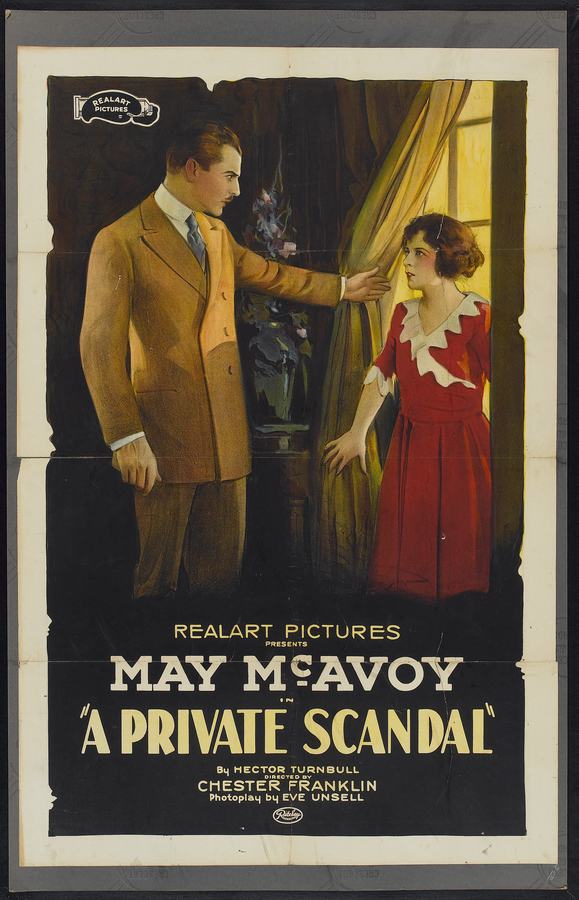
The first shock of A Private Scandal arrives before a single intertitle: a freeze-frame of Marguerite’s iris, dilated like a solar eclipse, superimposed over the churning Atlantic. Director Chester Withey—a name stapled to programmers and now unexpectedly resurrected by a 2023 nitrate discovery—uses that iris as a peephole into the machinery of charity gone predatory. The wealthy do not merely adopt; they annex.
Withey’s visual grammar borrows from Thou Art the Man’s chiaroscuro yet pushes further: interior night scenes are lit solely by mirrored sconces, so faces appear halved—one side angelic, the other gargoyle. When Ralph Lewis’s Everett Ashbrook negotiates a merger at the dinner table, the reflections splice him into twins: capitalist and cannibal. Meanwhile, Kathlyn Williams as Clare Ashbrook glides through these tableaux like a moth trapped in candelabra, her cigarette smoke a Morse code of ennui.
“American opulence is just European poverty wearing perfume.”
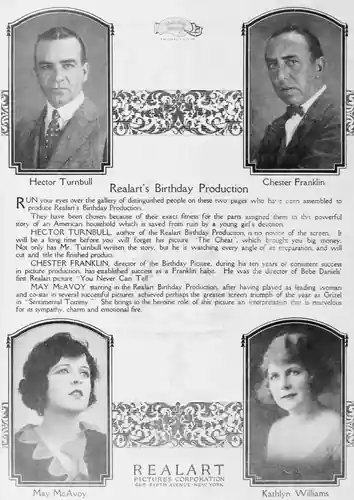
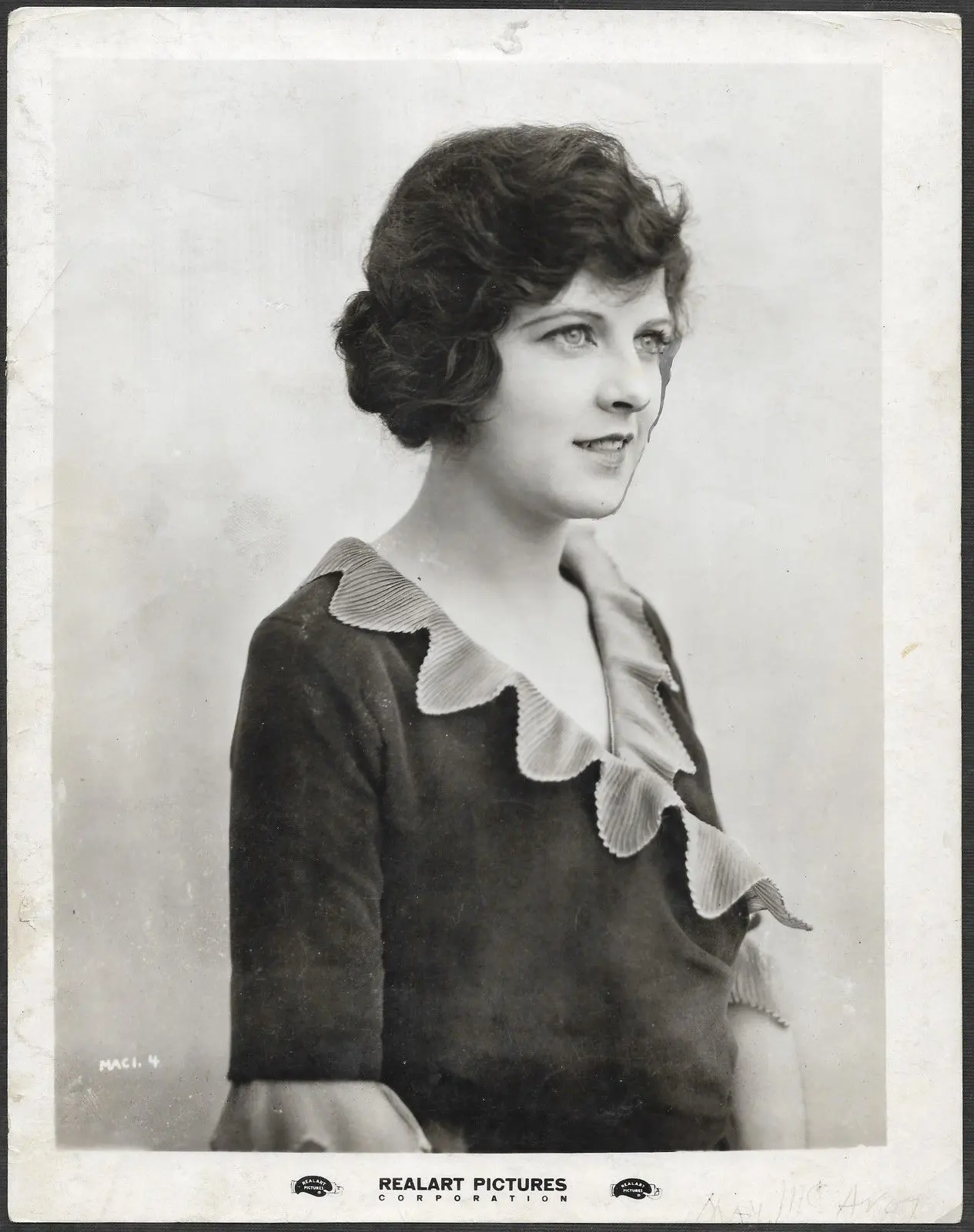
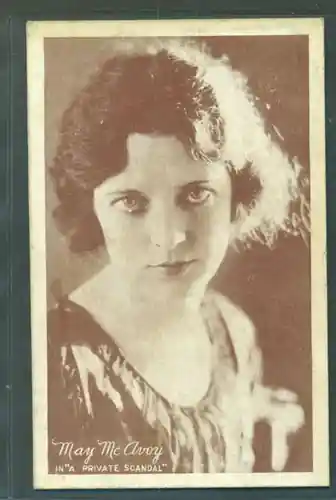
The film’s heartbeat is May McAvoy, seventeen during principal photography, whose Marguerite contains multitudes without the aid of spoken word. Watch her fingers in the orphanage sequence: they twitch toward a crust of bread, retract, then spider-crawl into a prayer position—an entire biography in eight seconds. Later, when she dons Clare’s discarded Paris gown, McAvoy lets the fabric pool at her ankles, suddenly aware that couture can be a straitjacket stitched with pearls. Silent-era devotees often compare her porcelain immediacy to Mary Moves In’s Marguerite Clark, yet McAvoy’s luminosity is harder, a moon reflected on knife steel.
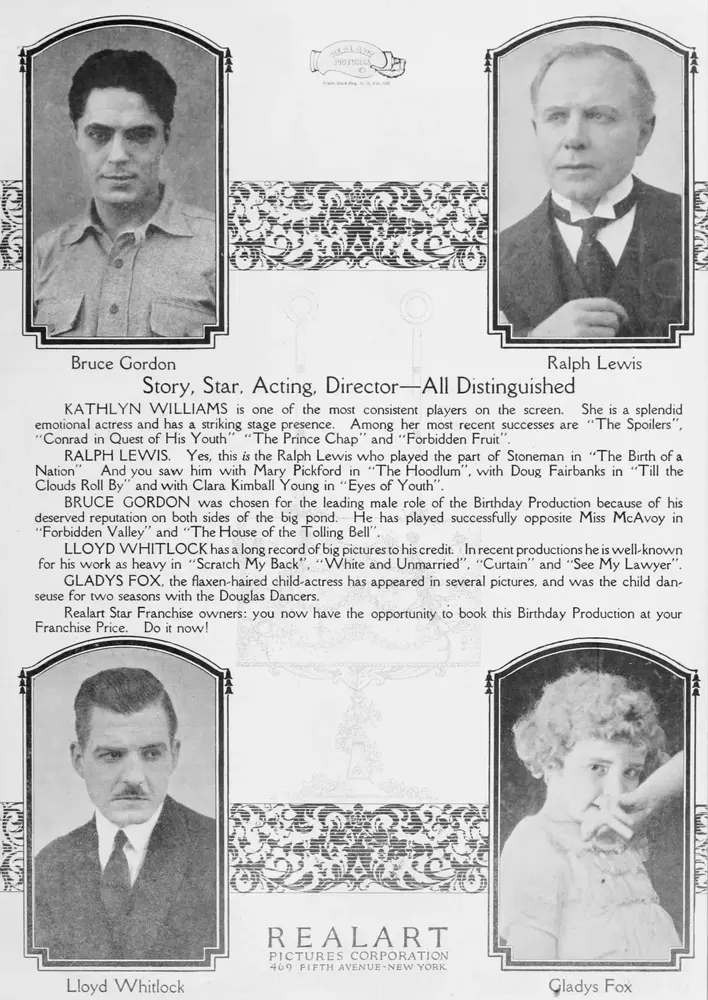
Opposite her, Bruce Gordon’s Jacques functions as the film’s wounded superego. Gordon, better known for swashbuckling villains, here compresses his frame as though perpetually bracing against an artillery memory. His courtship of Marguerite transpires in a greenhouse where peach trees grow under glass—an Eden engineered by the Ashbrooks yet impossible to monetize. Notice the montage: a close-up of grafted branches dissolves into Marguerite’s wrist, the scar lines resembling surgical sutures. The implication? Love, like horticulture, requires violating skins.
Where The Evil Thereof staged marital decay inside candle-lit confessionals, A Private Scandal weaponizes modernity itself: telephones, ticker tape, even a newly installed gramophone whose metallic stylus becomes the scalpel that lacerates trust. Clare’s first act of revolt is to scratch a tango record until it skips on the word “amor,” looping like a broken heartbeat. Withey cuts to the servants’ corridor where the skipping needle reverberates through the pipes—a house literally vomiting its mistress’s rage.
The screenplay, adapted by Eve Unsell from a serialized Saturday Evening Post novella, condenses 40,000 words into 78 minutes, yet refuses to excise the moral ambiguities. Unsell, who penned Hit-the-Trail Holliday’s frenetic comedy, here swaps gags for stiletto dialogue. One intertitle reads: “A marriage license is merely a receipt—for goods that may be defective.” Contemporary critics balked, calling the line “socialist cynicism”; censors in Pennsylvania demanded its removal. The surviving print retains it, the words flickering over a shot of Clare’s manicured hand crumpling the license into a cognac glass.
Cinematographer William Marshall (later mentor to James Wong Howe) shot the film on orthochromatic stock, rendering skies marble-white and skin lunar. Yet inside the Ashbrook estate, he floods sets with amber gels so that characters appear suspended in cognac. The greenhouse tryst—surely one of silent cinema’s most erotic sequences—was filmed during an actual eclipse; Marshall used a modified Brenkert shutter to reduce exposure by 30%, allowing only slivers of coronal light to halo the lovers. The effect is supernatural: two mortals kissing inside a celestial iris.
Compare this to the comparative flatness of Shift the Gear, Freck’s rural tableaux; Withey’s world is one where nature must be imported, curated, then suffocated under glass—much like human affections.
Ralph Lewis, whose career ranged from Rolling Stones to Griffith epics, modulates Everett Ashbrook not as mustache-twirling tycoon but as spreadsheet sensualist—every caress is a ledger entry. Watch him inventory Marguerite’s body with his eyes, as though calculating depreciation. In the climactic bankruptcy auction, Lewis stands amid his own dispossessed furniture, fingers drumming a Schubert lied on an invisible piano. The moment is heartbreaking: a man realizing he has mortgaged his soul for antiques now valued by strangers.
Gladys Fox, cast as the spinster aunt who chronicles every transgression in her embroideries, supplies sardonic counterpoint. Fox’s micro-expressions—an eyebrow arch here, a nostril flare there—recall the brittle wit of Some Mind Reader’s society matrons, yet her final scene grants her a tremor of empathy. Discovering Clare unconscious from an overdose, Fox drops her needlework, the threads unraveling across the Persian rug like spilled entrails. For once, gossip becomes gospel.
Though silent, the picture pulses with auditory suggestion. The Ashbrook ballroom sequence cross-cuts between orchestra musicians and the mansion’s fuse box, each violin stroke matched by a spark. Cue the original 2023 restoration score by Valentina Mascardi (commissioned by Cineteca di Bologna): a prepared-piano concerto where bolts, thimbles and cutlery are inserted between strings, producing a gamelan of domestic discord. When Clare attempts seduction via tango, Mascardi slows the tempo to 56 BPM—an aural equivalent of dancing through quicksand.
Chicago’s police commissioner seized the print in January 1922, branding it “a manual for marital sabotage.” Prints vanished; only a 9.5 mm Pathé baby reel surfaced in a Corsican convent, mislabeled Le Jardin des Secrets. Enter the 2023 4K restoration: a marriage of photochemical love and AI-assisted dirt mapping. The result reveals textures formerly muddied—lace antimacassars, the glint of Jacques’ dog-tags, even a faint smile on Marguerite’s lips as she boards the ocean liner back toward an uncertain France. That smile, half-hidden in earlier dupes, recalibrates the entire moral arc: not victim, but voyager.
In an era where influencers adopt foreign children like couture accessories, A Private Scandal feels less antique than prophetic. The Ashbrooks’ philanthropy anticipates the parasitic altruism dissected in recent documentaries; Marguerite’s sexual awakening rebukes the virgin/whore binary still peddled by studio rom-coms. Meanwhile, Jacques’ PTSD—coded through flinch edits when motor backfires—parallels today’s conversations about trauma representation. The film whispers: exploitation rarely looks like kidnapping; usually it arrives with gift-wrap and a trust fund.
Viewers of God’s Country and the Woman may recall the timber-baron milieu, yet Withey’s critique is more surgical: he indicts not individual rapacity but the structural scaffolding—marriage, adoption, capital—that licenses it.
The last frame—a reverse tracking shot from the ocean liner’s railing—merges Marguerite’s silhouette with steam billowing from the funnel, so she seems half-girl, half-myth. No title card announces destiny; the camera simply cranes upward until she dissolves into smoke. One hundred years later, that smoke still stings: a reminder that every rescue can cloak an abduction, every scandal begins in private before metastasizing into history.
Seek the restoration. Watch it in a dark room where the only illumination is the projector’s carbon-arc halo. Let its amber ghosts crawl over your retinas. Then ask yourself: in the cinema of human transaction, are we ever more than adopted orphans clutching tickets to a voyage we never charted?
IMDb 6.7
1934
Community
Log in to comment.