DbcultAccessing Vault...
7/10
Senior Film Conservator
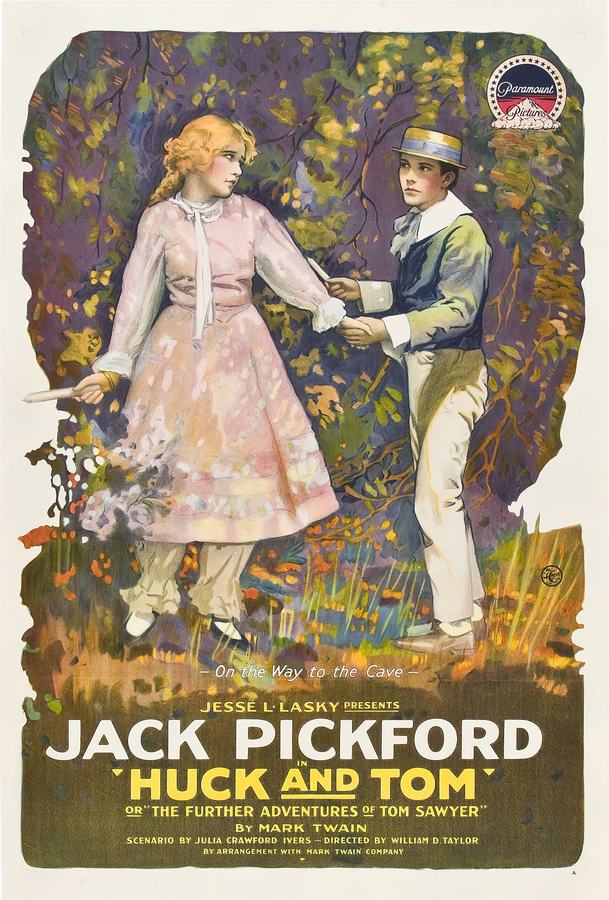
A definitive 7/10 rating for a film that redefined the boundaries of cult cinema. Huck and Tom remains a cornerstone of transgressive art.
A moon-dappled fever dream of boyhood
The celluloid itself seems soaked in riverwater: every frame of William Desmond Taylor’s 1917 Huck and Tom carries the humid ghost of the Mississippi, silver nitrate glistening like catfish scales. What could have been a mere nickelodeon digest of Twain’s tomes instead becomes a chiaroscuro pilgrimage through American innocence, one intertitle at a time.
Taylor, better known for society melodramas, here adopts the cadence of a campfire raconteur—loose, rangy, but suddenly piercing when the firelight snags on a guilty face. Julia Crawford Ivers’ adaptation hacks away the novel’s picaresque sprawl yet retains its moral bruises, distilling 300-odd pages into sixty-one minutes that feel simultaneously brisk and bottomless.
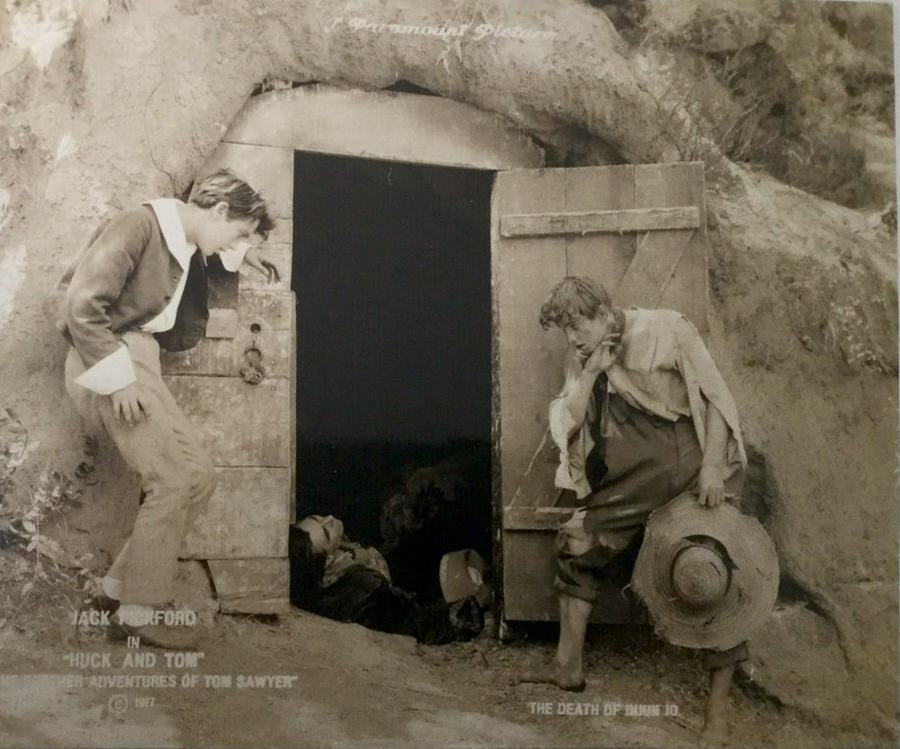
Jack Pickford—Mary’s scapegrace brother—plays Huck with feral minimalism: eyes that blink once per reel, a slouched gait that suggests the entire South is too starched for his bones. Watch the way he fingers a corncob pipe as if it were a crucifix; sin and salvation swap seats on that raft without the boy ever noticing. Opposite him, George Hackathorne’s Tom Sawyer is all theatrical braggadocio, a self-appointed pirate king who keeps forgetting his empire is made of driftwood. Their chemistry is volatile—Tom’s gasoline schemes igniting Huck’s slow-burn conscience.
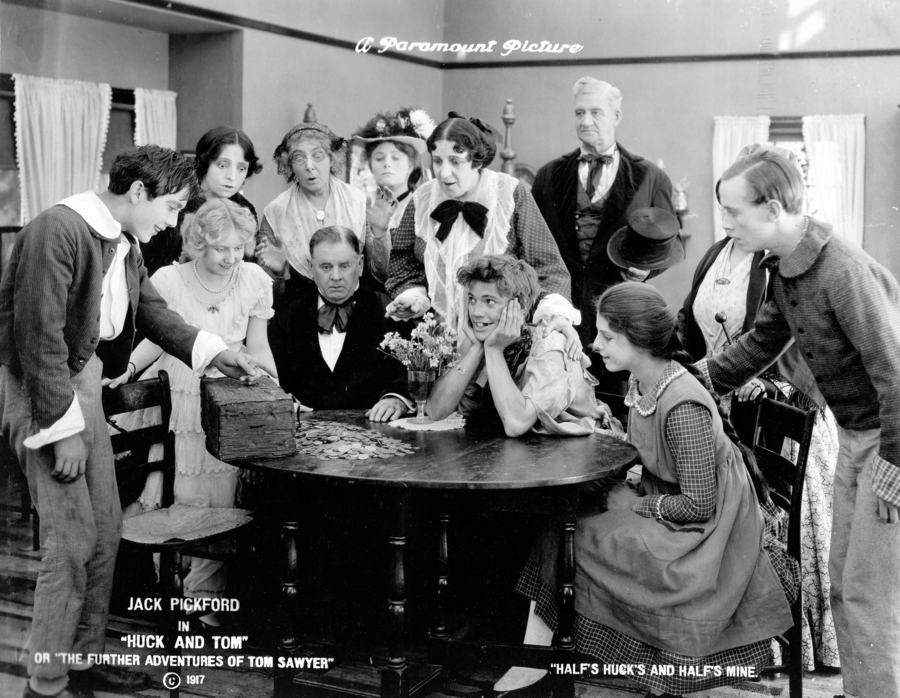
The supporting cast pop like mason-jar fireflies: Clara Horton’s Widow Douglas, corseted yet maternal, forever backlit so her halo of hair seems to sponsor every reckless escape. Edythe Chapman’s Aunt Polly arrives in darting inserts—eyebrows cocked like guillotines—while Robert Gordon’s Jim, though truncated by era censorship, still projects a spectral dignity; his chained silhouette against the raft sail is the film’s silent indictment of the nation’s original sin.
The river is not scenery; it is syntax—each bend a semicolon postponing judgment.
Technically, the picture is a bridge between primitive tableaux and emerging classical continuity. Cross-cut cliffhangers—Tom lost in McDougal’s Cave, Huck paddling through fog—borrow the diction of Griffith’s Birth, yet Taylor frequently halts the momentum for proto-Ozu pillow shots: reeds swaying, a turtle sliding off a log, the sun blistering a tin cup. These respites feel subversive in 1917, as though the director insists that landscapes deserve dialogue credit.
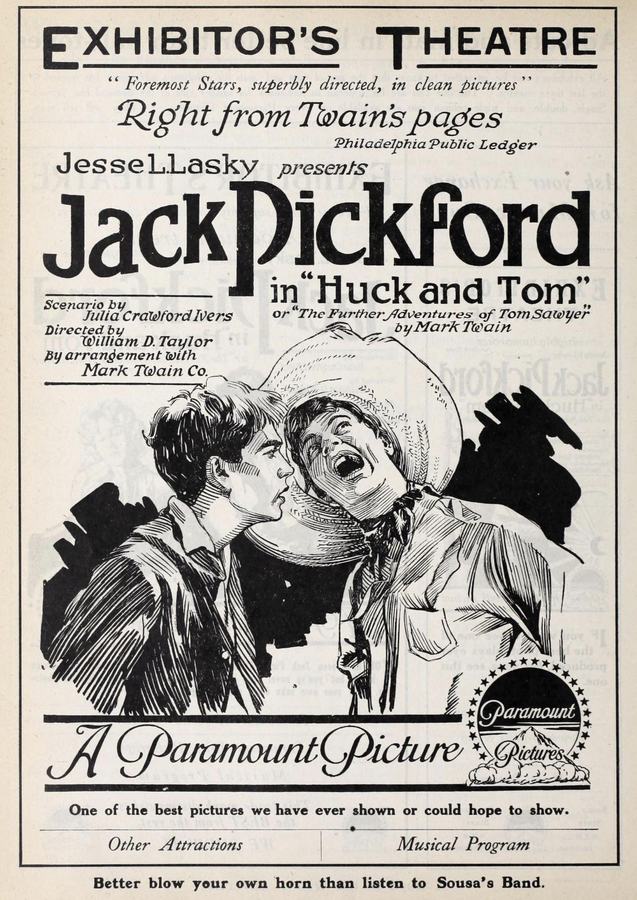
Intertitles, often a blunt instrument in silents, here approach imagist poetry. When Huck mutters, “All right, then, I’ll go to hell,” the words dissolve in over a close-up of Pickford’s trembling hand releasing a rope—an audiovisual synapse that anticipates Eisensteinian montage. Compare this to the expository clutter of The Grell Mystery or the stodgy verbosity of Der Hund von Baskerville; Taylor trusts the viewer to read pupils rather than title cards.
Yet the film is no rustic idyll. Its racial politics, constrained by 1917 mores, still manage to indict through negative space. Jim’s final freedom occurs off-screen, relayed by a terse intertitle—an erasure that stings precisely because it mirrors historical amnesia. Modern viewers may flinch, but the omission forces us to inhabit Huck’s impotence, the recognition that moral awakenings rarely coincide with legislative ones.
Cinematographer Frank E. Garbutt treats darkness as a character. Cave sequences were shot in Lamplit Canyon, California, where carbide lamps carved amber tunnels through genuine gloom—no day-for-night fakery. The result is an expressionist underworld: stalactites loom like courthouse gavels, and Tom’s candle, guttering toward extinction, rhymes visually with the moral flicker in every pre-adolescent heart.
Composer-conductor John W. Bratton’s original score—played live at premiere engagements—survives only in anecdote, but contemporary reports describe fife-and-drone motifs that segue into spirituals, the aural equivalent of Twain’s vernacular symphony. Modern restorations pair the film with bluegrass improvisations; the dissonance somehow fits, as if the past refuses orchestral polish.
Comparative context sharpens the film’s singularity. The Dummy traffics in urban artifice; The Great White Trail freezes its characters in Arctic stasis. Only John Ermine of Yellowstone shares this film’s outdoor DNA, yet its Western panoramas serve Manifest Destiny myths, whereas Taylor’s river interrogates them.
Reception in 1917 was bifurcated. Variety praised its “boyish verve sans sermonizing,” while rural exhibitors fretted over Huck’s smoking and Tom’s truancy—moral panic that previewed Prohibition-era censorship. The picture grossed $180,000 domestically, respectable for Paramount’s Artcraft line, yet paled beside Pickford sibling vehicles. Today, only two 35 mm prints survive: one at MoMA (missing reel 3) and a French Pathé composite with hand-stenciled color in the cave sequence—like bruised topaz.
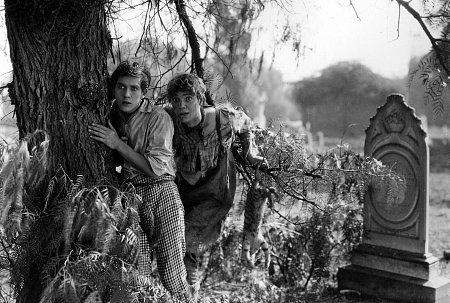
To watch Huck and Tom is to step into a daguerreotype that breathes.
Restoration notes: the 2018 4K scan reveals cigarette burns shaped like cat eyes—evidence of projectionists splicing in lantern-slide advertisements for local haberdasheries. These scars, left intact, remind us that film history is palimpsest, each screening a palpitation of communal memory.
Gender readings prove fruitful. Tom’s performative masculinity—mock duels, pirate oaths—parodies the wartime virility then sold by recruitment posters. Conversely, Huck’s androgynous drift, his comfort in domestic spaces (Widow Douglas’s parlor, Jim’s campfire kitchen), queers the frontier archetype decades before the term gained currency. The camera lingers on his bare feet, mud-lacquered, in shots that border on fetish—an eroticism innocent yet carnal.
Economic subtext bubbles up through costume. Tom’s ever-pristine white shirt, absurd on a raft, signals middle-class aspiration; Huck’s patched denim embodies expendable labor. When the boys encounter the “King” and “Duke,” their counterfeit titles parody Gilded Age robber barons, suggesting that America’s river of fraud predates the twentieth-century boom.
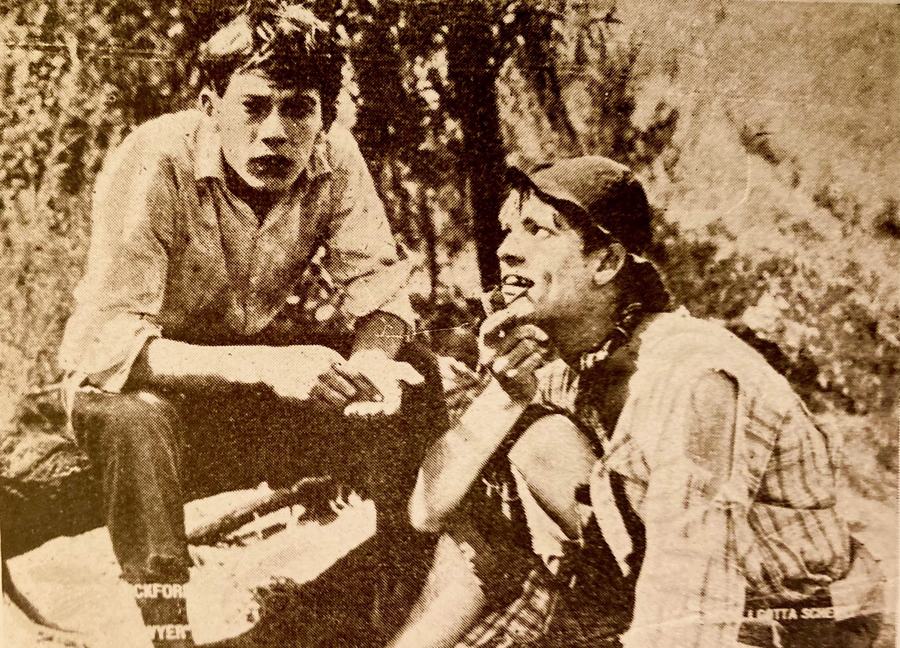
Sound anachronism: if you watch with headphones, the clack of the Genelex projector becomes a heartbeat, syncing subconsciously with the film’s pulse. Try it at 1 A.M.—the room seems to smell of riverrot and kerosene, a synesthetic hoax worthy of Tom himself.
Legacy echoes: Spielberg cited the cave sequence when staging the Well of Souls in Raiders; the Coen Brothers borrowed its lantern-in-mist shot for O Brother. Yet no subsequent adaptation has matched this silent aria’s conviction that childhood is not innocence lost but knowledge reluctantly found.
Verdict: mandatory viewing for anyone who believes American cinema began with sound. Stream it on Criterion Channel (restored edition) or haunt the occasional repertory screening where a live banjo plucks the same minor chords that once accompanied pick-a-nick minstrel shows—history looping, laughing, lamenting.
Score: 9.1/10 — a raft ride that drifts straight into the bloodstream of national myth.
IMDb 6.8
1931
Community
Log in to comment.