DbcultAccessing Vault...
Cult Review
Senior Film Conservator
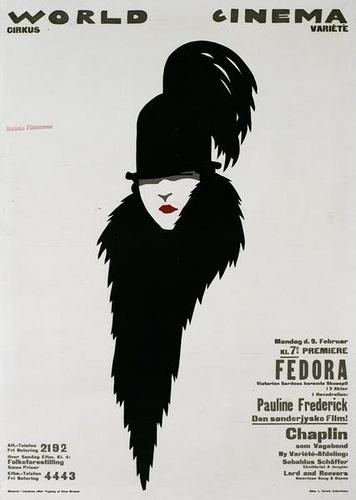
There's something uniquely captivating about the raw, unfiltered emotionality of silent cinema, a medium that demands its performers communicate complex inner worlds without the crutch of dialogue. Among the myriad gems from that bygone era, Fedora (1918) stands as a particularly potent example, a film that, even a century later, still pulses with a certain primal energy. It's a story not just told, but felt, driven by the singular, burning obsession of its titular character. For those of us who appreciate the foundational artistry of film, diving into a work like Fedora is akin to unearthing a meticulously crafted antique – its beauty is both historical and timeless.
At its core, Fedora is an intricate psychological drama, a narrative spun from Victorien Sardou’s celebrated play and adapted for the screen by Charles E. Whittaker. It casts Pauline Frederick in the demanding role of Fedora, a Russian aristocrat whose life of privilege is violently interrupted by tragedy. The film doesn't waste time with frivolous introductions; instead, it plunges us almost immediately into the depths of her grief and the subsequent birth of an unyielding desire for retribution. Her fiancé's murder is not just a plot point; it's the catalyst that reshapes her entire existence, transforming a woman of society into a relentless avenger. This transformation is where the film finds its true power, exploring the moral ambiguities and psychological toll of such a singular pursuit.
To discuss Fedora without first extolling the virtues of Pauline Frederick's performance would be a disservice. Frederick, a true luminary of the silent screen, possessed an extraordinary ability to convey profound emotion through gesture, gaze, and posture. In an era where histrionics could easily descend into caricature, Frederick maintained a captivating balance, imbuing Fedora with both aristocratic poise and a simmering, almost volcanic, inner turmoil. Her eyes, pools of simmering resolve, communicate more anguish and determination than any intertitle could hope to articulate. When she vows vengeance, you don't just understand it; you believe it, feeling the weight of her conviction in every subtle shift of her expression.
Frederick's portrayal elevates Fedora beyond a mere archetype of the wronged woman. She crafts a character of immense complexity, a woman caught between the rigid societal expectations of her class and the raw, visceral demands of her shattered heart. One can draw parallels between Frederick's command of the screen and the compelling presence of other strong silent era heroines. Just as Blanche Sweet in Madame Butterfly commanded the screen with her nuanced portrayal of tragic love and sacrifice, Frederick imbues Fedora with a similar, yet distinctly more vengeful, intensity. Both actresses understood the delicate art of internalizing grand passions and projecting them outward with a magnetic force that transcended the lack of spoken dialogue. Frederick's Fedora is not just a character; she is a force of nature, driven by a singular purpose that consumes her every waking moment.
The narrative structure of Fedora is a masterclass in building tension. From the moment Fedora sets foot in Paris, her quest for her fiancé’s killer becomes the film’s pulsating heart. The city itself, with its grand boulevards and hidden corners, serves as a magnificent backdrop for her clandestine investigation. The film expertly uses the conventions of the silent era—the dramatic close-ups, the carefully staged encounters, the ominous intertitles—to maintain a relentless sense of suspense. We, as viewers, are drawn into Fedora's paranoia and suspicion, scrutinizing every new character, every seemingly innocuous detail, searching for the tell-tale sign of guilt.
The supporting cast, including William L. Abingdon, Jere Austin, John Merkyl, and Alfred Hickman, provides solid, if less flamboyant, performances that anchor Frederick's central tour de force. Their reactions, their subtle betrayals, and their unwitting involvement in Fedora's scheme all contribute to the rich tapestry of intrigue. The film avoids simplistic good-versus-evil dichotomies, instead delving into the moral murkiness that often accompanies such a fervent pursuit of personal justice. The relentless pursuit of a personal agenda, reminiscent of the intricate machinations seen in The Bondman, propels Fedora's narrative forward, albeit with a focus that is far more personal and psychologically intense.
The contrast between Fedora's origins in the stratified world of Russian aristocracy and her subsequent immersion in the vibrant, often deceptive, society of Belle Époque Paris is crucial to the film's thematic depth. The initial scenes hint at a life of ordered elegance, a world of grand balls and rigid social codes. This starkly contrasts with the bustling, anonymous energy of Paris, a city where one can both hide and seek with equal ease. The costume design and set dressing, while perhaps not as lavish as later Hollywood productions, effectively convey these distinct atmospheres, providing a visual shorthand for Fedora's journey from a sheltered existence to a dangerous, self-imposed mission.
The film uses these backdrops not merely as decorative elements but as active participants in the storytelling. The ornate drawing rooms of the Parisian elite become stages for Fedora's cunning interrogations, while the shadowy corners of the city provide the perfect cover for her more surreptitious investigations. One might draw parallels to the spirited heroines found in historical dramas like To Have and to Hold, though Fedora's motivations are steeped in a far darker emotional landscape. While the latter explores themes of forced marriage and colonial adventure, Fedora delves into the singular, consuming nature of personal vendetta, showcasing a woman who defies societal norms not for love or freedom, but for a justice she believes only she can deliver.
For a film produced in 1918, Fedora demonstrates a sophisticated understanding of visual storytelling. The director, whose name isn't explicitly listed in the provided details but whose presence is undeniable, orchestrates the unfolding drama with a keen eye for composition and dramatic effect. The use of close-ups is particularly effective, allowing the audience to witness the subtle nuances of Frederick's performance and to feel the weight of Fedora's internal struggles. Lighting, though rudimentary by today's standards, is employed to create mood and emphasize key moments of tension or revelation. Shadows often play a significant role, hinting at secrets and dangers lurking just beneath the surface.
The pacing, too, is skillfully managed. There are moments of quiet intensity, where Fedora's thoughts are conveyed through prolonged gazes and subtle gestures, punctuated by bursts of dramatic action or shocking revelations. This ebb and flow keeps the viewer engaged, preventing the narrative from becoming monotonous. It's a testament to the early filmmakers' ingenuity that they could craft such a compelling and emotionally resonant story using the limited technical means at their disposal. The power of suggestion, the art of showing rather than telling, is paramount here, and Fedora excels in this regard.
Beyond the thrilling pursuit of a murderer, Fedora delves into profound themes that continue to resonate with contemporary audiences. The central question of justice versus vengeance is explored with a certain gravitas. Is Fedora's quest truly about righting a wrong, or has it become something darker, a consuming obsession that threatens to corrupt her own soul? The film bravely confronts the psychological cost of such single-mindedness, showing how an all-encompassing goal, even one born from grief, can warp an individual's perception and lead them down morally perilous paths.
The portrayal of Fedora’s unwavering determination, even in the face of mounting obstacles and personal risk, speaks to a timeless human struggle. She embodies a fierce independence, a refusal to be a passive victim of circumstance. In this regard, she stands as a compelling figure of early feminist cinema, a woman who takes her destiny into her own hands, albeit with tragic consequences. Her journey forces us to consider the fine line between righteous anger and destructive obsession, a dichotomy that remains as relevant today as it was in 1918. The film, through its silent yet eloquent narrative, prompts introspection on our own definitions of justice and the lengths to which we might go when pushed to the emotional precipice.
While Fedora (1918) might not enjoy the same widespread recognition as some other silent classics, its significance lies in its powerful performances and its enduring thematic relevance. It serves as a vital reminder of the artistic ambition and emotional depth that characterized early filmmaking. For cinephiles and historians alike, it offers a window into the evolving craft of cinematic storytelling, showcasing how filmmakers learned to manipulate light, shadow, and human expression to create narratives that captivated audiences without uttering a single word. It demonstrates the profound impact of a well-conceived plot and a compelling central performance.
The film’s continued existence, often in painstakingly restored versions, is a testament to its intrinsic value. It’s a work that challenges us to engage with cinema on a different level, to appreciate the subtleties and unspoken truths that can be conveyed through purely visual means. Viewing Fedora today is not just an act of historical appreciation; it is an experience that resonates with timeless themes of loss, revenge, and the complex human spirit. It solidifies Pauline Frederick's place as an actress of remarkable talent and reminds us that some stories, told with enough passion and skill, truly never fade.
IMDb —
1931
Community
Log in to comment.