DbcultAccessing Vault...
Cult Review
Senior Film Conservator
T
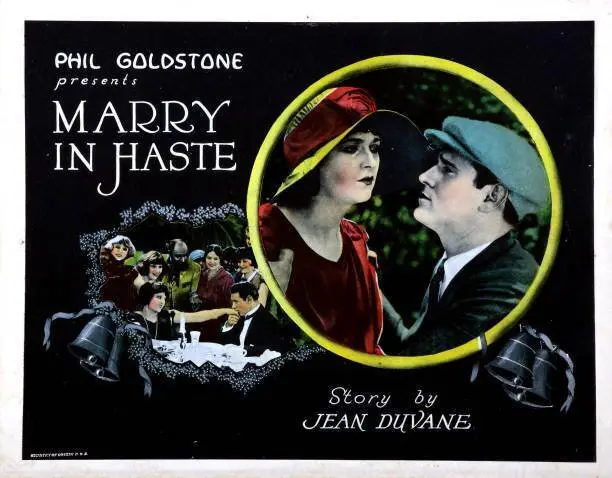
he 1924 cinematic landscape was often characterized by a dichotomy between urban opulence and the rugged, unyielding frontier. In this milieu, Marry in Haste emerges not merely as a cautionary tale of impulsive matrimony, but as a sophisticated exploration of the friction between inherited wealth and the grueling reality of agrarian indigence. Directed with a keen eye for the psychological underpinnings of its characters, the film transcends the melodramatic tropes of its era, offering a nuanced portrait of a marriage under siege by both external poverty and internal disillusionment. The narrative arc, while seemingly straightforward, serves as a canvas for a deeper interrogation of the American Dream and the patriarchal structures that governed early 20th-century social mobility.
At the heart of this drama lies the visceral performance of William Fairbanks as Wayne Sturgis. Unlike the swashbuckling personas often associated with his namesake, Fairbanks imbues Wayne with a quiet, albeit stubborn, dignity. His decision to marry Joan Prescott (the ethereal Dorothy Revier) is presented as an act of radical autonomy—a rejection of the Wyoming cattle empire's cold, transactional nature. However, the film quickly pivots from the euphoria of rebellion to the suffocating weight of its consequences. The cinematography captures the transition from the expansive, sun-drenched vistas of the Sturgis estate to the claustrophobic, dust-choked confines of the small farm with a stark realism that anticipates the gritty naturalism of later decades.
This shift in visual tone mirrors the internal decay of the central relationship. Joan, an art student whose very identity is rooted in the creation of beauty, finds herself in a world where beauty is an unaffordable luxury. Dorothy Revier delivers a performance of haunting vulnerability; her gradual physical and emotional decline is rendered with a subtlety that avoids the histrionics common in the silent era. We see her hands, once meant for the brush, coarsened by labor, and her eyes, once full of artistic fervor, growing vacant. This thematic preoccupation with the death of the artistic spirit under the boot of economic necessity draws interesting parallels to Mr. Opp, where the tragedy of the small-town dreamer is explored with similar pathos.
The introduction of Monte Brett, played with a slithering, opportunistic charm by Gladden James, serves as the narrative’s catalyst for crisis. Brett is not merely a villain; he is a manifestation of the temptation to escape. He represents the comfort and ease that Wayne can no longer provide. The interactions between Brett and Joan are filmed with an unsettling intimacy, highlighting the precariousness of a marriage when the foundational pillars of security have been removed. James’s performance provides a sharp contrast to Fairbanks’s stoicism, creating a volatile triangle that propels the second act into a fever pitch of emotional tension.
One cannot help but compare this domestic volatility to the maritime harshness found in The Sea Wolf. While the settings differ—one a desolate farm, the other a brutal ship—the underlying theme of survival in an environment that seeks to strip away one's humanity remains constant. In Marry in Haste, the "sea" is the unending cycle of debt and failed harvests, and Monte Brett is the shark circling the wreckage of the Sturgis marriage.
The elder Sturgis, portrayed with a granite-like severity by Alfred Hollingsworth, represents the uncompromising spirit of the Old West—a patriarch whose love is conditional upon obedience. His absence for much of the film’s midsection is as palpable as his presence; he is the specter of the life Wayne and Joan lost. The film handles the theme of paternal forgiveness with a surprising amount of restraint. It doesn't present the eventual reconciliation as a simple happy ending, but rather as a somber acknowledgment of the toll the years of estrangement have taken. This exploration of the maternal and paternal bond, and the devastation caused by its rupture, echoes the emotional core of The Old Nest, though with a distinctly more masculine, frontier-oriented focus.
"The tragedy of Wayne Sturgis is not that he chose love over money, but that he underestimated the degree to which money provides the oxygen for love to breathe."
Jean Duvane’s writing deserves significant praise for its rejection of easy resolutions. The dialogue titles are sparse but impactful, allowing the visual storytelling to carry the weight of the narrative. The pacing is deliberate, reflecting the slow, grinding nature of the characters' lives. We feel the passage of time not through title cards, but through the deepening lines on the actors' faces and the increasing clutter of their modest home. This commitment to temporal realism is a hallmark of the better independent productions of the mid-20s, standing in contrast to the more frenetic energy of films like This Way Out.
The Wyoming landscape in Marry in Haste is more than a backdrop; it is a silent antagonist. The vastness that once symbolized freedom for Wayne becomes a prison for Joan. The cinematography utilizes wide shots to emphasize the isolation of their farmstead, making their small house look like a lonely island in a sea of sagebrush. This use of environment to reflect internal states is a technique that would later be perfected in the Western genre, but here it is applied to a domestic drama with devastating effect. The contrast between this rugged realism and the stylized grandeur of The Queen of Sheba illustrates the incredible range of the silent medium during this period.
Furthermore, the film’s treatment of Joan’s health is handled with a commendable lack of sentimentality. Her illness is not a plot device but a logical consequence of her environment. The lighting in these scenes is particularly effective, using shadows to hallow out Revier’s features, turning her into a ghost of the vibrant woman she was in the opening reels. This descent into physical frailty adds a layer of urgency to Wayne’s struggle; he is not just fighting for his pride, but for his wife’s life. It brings to mind the stakes of The Dawn of Freedom, where personal liberty and physical survival are inextricably linked.
The final act, involving the elder Sturgis’s change of heart, is handled with a level of gravitas that prevents it from feeling like a deus ex machina. The reconciliation is born out of a recognition of Wayne’s tenacity—a quality the father finally realizes he instilled in his son. It is a moment of mutual respect rather than mere pity. While some might find the ending too tidy, the preceding ninety minutes of hardship ensure that the audience feels the weight of the characters' relief. The film concludes not with a celebratory flourish, but with a quiet sense of homecoming that is deeply moving.
In the broader context of silent cinema, Marry in Haste stands as a testament to the power of character-driven storytelling. It eschews the spectacle of When Broadway Was a Trail or the suspense of $5,000 Reward in favor of a profound, empathetic look at the human condition. It reminds us that the most harrowing battles are often fought within the four walls of a home, and the greatest victories are those of the heart. For those interested in the evolution of American social drama, this film is an essential piece of the puzzle, offering a window into a world where every choice had a price, and every haste had its long, slow repentance.
Ultimately, the legacy of Marry in Haste is found in its refusal to simplify the complexities of class and marriage. It is a film that understands that love is not a vacuum, but something that must exist within the constraints of the world. Dorothy Revier and William Fairbanks create a screen partnership that is both grounded and aspirational, making their journey from the heights of wealth to the depths of poverty and back again a compelling cinematic odyssey. It is a work of quiet brilliance that deserves a place in the pantheon of great 1920s dramas, standing tall alongside contemporaries like Dodging a Million in its exploration of the fickle nature of fortune.
IMDb —
1932
Community
Log in to comment.