DbcultAccessing Vault...
6.2/10
Senior Film Conservator
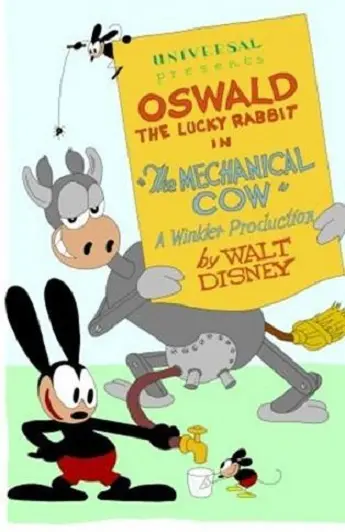
A definitive 6.2/10 rating for a film that redefined the boundaries of cult cinema. The Mechanical Cow remains a cornerstone of transgressive art.
Is this 1927 relic worth your time today? Short answer: Yes, but primarily as a fascinating, surrealist window into a creator finding his voice before the mouse took over.
This film is for animation historians and those who enjoy the dark, elastic weirdness of the pre-code era. It is definitely NOT for those who expect the polished, moralistic storytelling of modern-day Disney.
1) This film works because it embraces the absolute freedom of the medium, where a cow can sleep in a bed and a tail can be used as a crank handle without explanation.
2) This film fails because the narrative structure is essentially a series of loosely connected gags that lose momentum before the final rescue sequence begins.
3) You should watch it if you want to see the DNA of modern animation and witness Walt Disney’s early mastery of visual characterization through movement.
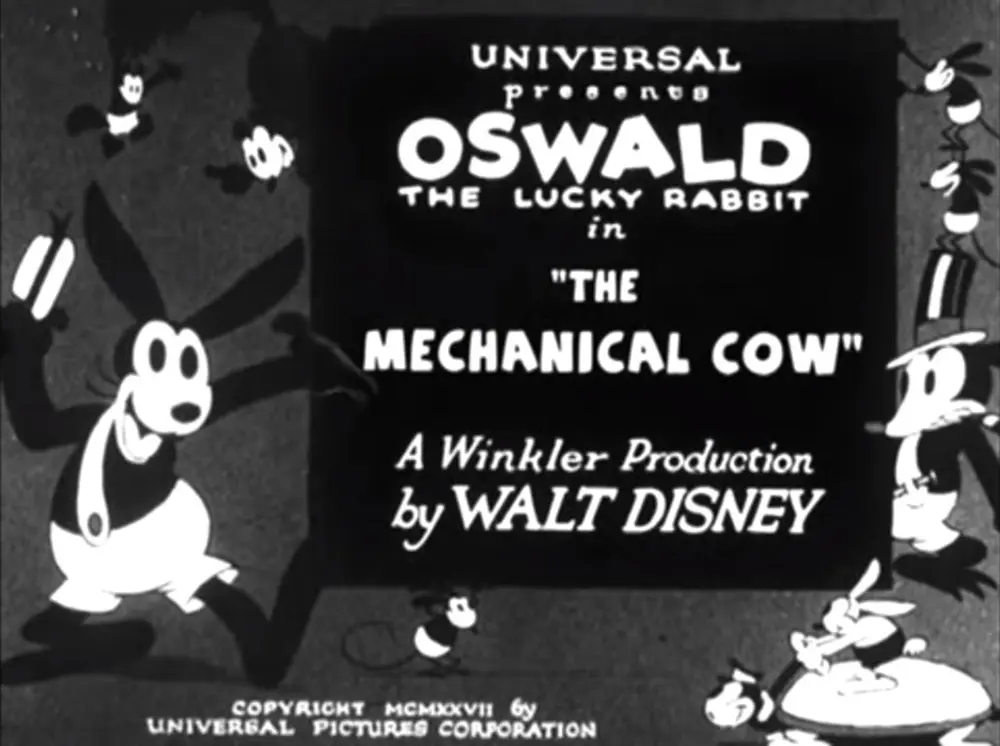
The opening of The Mechanical Cow is a masterclass in character-driven slapstick. Oswald’s struggle with his alarm clock isn't just a gag; it’s a declaration of war against the inanimate. We see a level of personality here that was missing in many contemporary shorts like Peculiar Pets.
Oswald is grumpier and more tactile than Mickey ever was. He kicks, he pulls, and he reacts with a genuine sense of frustration. The way he tries to wake the mechanical cow—his bedmate, which is a bizarre choice in itself—highlights the dream-logic of 1920s animation. There is no internal logic, only the logic of the next laugh.
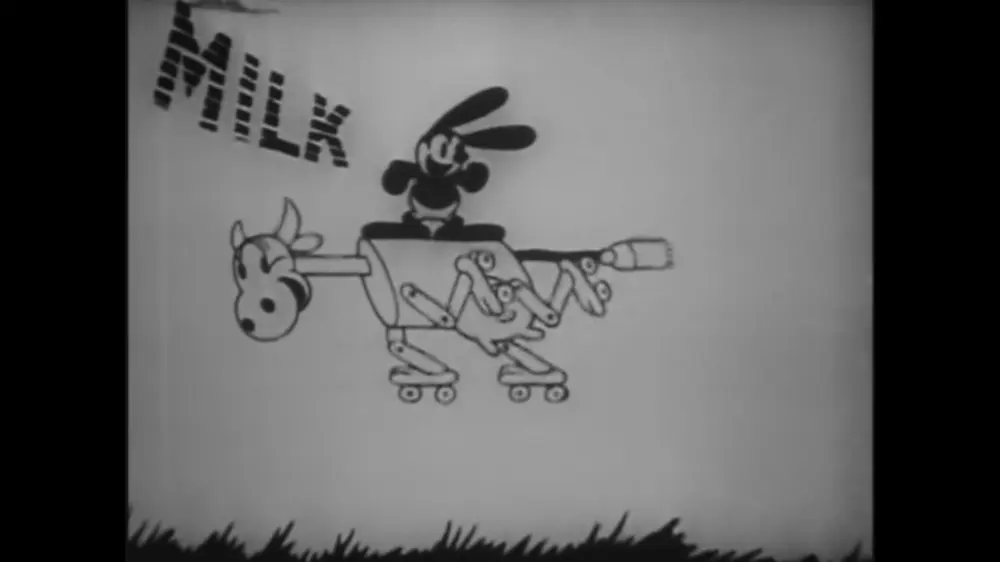
The cow itself is a terrifying marvel. It’s a hybrid of biology and industry. When Oswald starts it up like a Model T Ford, we see the era’s fascination with mechanization. It’s a theme that pops up in other works of the time, such as Stop That Shimmy, reflecting a world transitioning into a machine age.
While the backgrounds are sparse, the character animation is remarkably fluid for 1927. Walt Disney and his team were already experimenting with the principles that would define the industry. In the scene where the cow is milked, the distortion of the cow’s body is a proto-version of 'squash and stretch.'
The milk delivery sequence is where the pacing shines. Each stop is a micro-story. The way the milk is distributed—often involving the cow's tail or a series of levers—is clever, if repetitive. It lacks the haunting atmosphere of The Governor's Ghost, but it gains points for pure, unadulterated energy.
One specific moment stands out: when the cow’s neck stretches to incredible lengths to reach a customer. It’s a simple gag, but the timing is perfect. It shows a confidence in the medium's ability to lie to the eye for the sake of a joke. It’s punchy. It’s effective.
The film takes a sharp turn when the girlfriend is introduced and immediately kidnapped. This is a standard trope of the era, seen in everything from White Eagle to The Web of the Law. However, in The Mechanical Cow, the stakes feel strangely low because the world is so plastic.
The rescue mission is a frantic chase. This is where the mechanical cow truly becomes a character rather than a prop. It acts as a vehicle, a weapon, and a companion. The choreography of the chase is impressive, utilizing depth in a way that many silent cartoons ignored. The hills roll by with a rhythmic precision that suggests a sophisticated understanding of frame rates.
But here is a debatable opinion: the cow is more interesting than the girl. The girlfriend is a MacGuffin, a generic prize to be won. The cow, with its blank eyes and mechanical udders, is the true star. It represents a weird, forgotten era of Disney where the 'sidekick' was often a grotesque or surreal object.
Does The Mechanical Cow hold up for a modern audience?
Yes, if you view it as a piece of art history. If you are looking for a cohesive story, you will be disappointed. However, if you want to see the raw, unpolished genius of Walt Disney before he became a corporate icon, this is essential viewing. It’s short, it’s weird, and it’s undeniably creative.
Pros:
Cons:
It’s impossible to watch this without thinking about what happened next. Walt Disney would lose the rights to Oswald shortly after this, leading to the creation of Mickey Mouse. In many ways, Oswald is the more 'human' character. He’s flawed. He’s lazy. He’s lucky.
When you compare this to The Price of Pleasure or Burnt Wings, you see a clear divide between the 'serious' cinema of the time and the anarchic freedom of the cartoon. The Mechanical Cow doesn't care about the price of pleasure; it only cares about the next movement.
It works. But it’s flawed. The animation is a triumph of spirit over technology. The cow is a nightmare of gears and milk. It is a beautiful, clanking mess.
"The Mechanical Cow is a fascinating, if disjointed, relic of an era where animation was still discovering its own rules. It is a must-watch for anyone who wants to see the foundations of the Disney empire before the polish set in."
Ultimately, this film serves as a reminder that creativity often thrives in the absence of logic. It’s a 6-minute trip into a world where machines have souls and rabbits are heroes. It’s not perfect, but it’s vital.
IMDb 5.5
1919
Community
Log in to comment.