DbcultAccessing Vault...
Cult Review
Senior Film Conservator
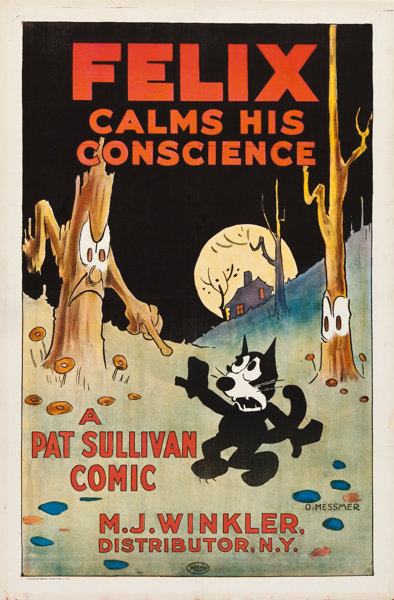
Stepping back into the formative years of animated cinema, we encounter a gem that transcends its simple premise to offer a surprisingly nuanced glimpse into the very fabric of character and ethical struggle. 'Felix Calms His Conscience,' a pivotal creation from the fertile imagination of Otto Messmer, isn't just another slapstick short; it's a profound, albeit playful, exploration of the internal battles that even our most beloved, rubber-limbed characters face. Before Mickey Mouse danced or Bugs Bunny quipped, Felix the Cat reigned supreme, a true icon of the silent screen whose mischievous grin and resourceful antics captivated audiences worldwide. This particular short, however, delves beneath the surface of his usual trickery, presenting Felix not merely as an entertainer but as a protagonist grappling with a very human, or rather, very feline, moral dilemma. It’s a testament to Messmer's genius that such weighty themes could be conveyed with such economy and visual wit, cementing Felix's place not just as an animation pioneer but as a surprisingly complex figure in early cinematic storytelling.
Otto Messmer, the visionary animator and the primary creative force behind Felix the Cat, carved out a unique niche in the burgeoning world of film. His work on Felix wasn't just about moving drawings; it was about imbuing them with personality, thought, and even an internal life. 'Felix Calms His Conscience' stands as a striking example of this ambition. The narrative, deceptively straightforward, begins with Felix's comfortable world of romantic pursuit. He is, by all accounts, smitten with Miss Kitty, a character often depicted as the object of his affections, representing an idealized femininity in his animated universe. Their courtship, however, takes an unexpected turn with the introduction of a rival – a ‘low-rent Bowery cat.’ This isn't just any competitor; this character embodies a stark contrast to Felix's more refined, albeit still impish, demeanor. The Bowery cat signifies a societal 'other,' a gritty, less polished presence from the urban underbelly, whose very existence threatens Felix's perceived status and claim over Miss Kitty’s heart. This immediate threat ignites a primal jealousy within Felix, a powerful emotion that drives the initial, darker trajectory of the plot. The genius here lies in how Messmer uses this simple romantic triangle to initiate a far more profound internal conflict, setting the stage for Felix’s moral reckoning.
The animation style of the era, often characterized by its 'rubber hose' aesthetic, allowed for incredible fluidity and exaggerated expressions, perfectly suited for conveying Felix's rapidly shifting emotional states. Messmer masterfully employs visual gags and physical comedy to hint at the depths of Felix's frustration and anger. The 'Bowery cat' is drawn with a certain rough-and-tumble charm, a visual shorthand for his character, which further fuels Felix's indignation. The rivalry isn't just about who gets the girl; it's a clash of social strata, however subtly portrayed in an animated short. The visual language of the film conveys Felix's initial, almost impulsive, decision to eliminate his rival. We see his schemes hatch in thought bubbles, a common yet effective device of the period, allowing the audience direct access to his nefarious intentions. The simplicity of the imagery belies the complexity of the emotions being portrayed. Felix’s signature large, expressive eyes and his versatile tail, which often served as a prop or a narrative device, would have been instrumental in communicating his evolving thought process, from vengeful plotting to conflicted introspection. This minimalist approach to character animation, relying heavily on clear actions and universally understood expressions, made Felix a global sensation, transcending language barriers.
The true brilliance of 'Felix Calms His Conscience' emerges when Felix's meticulously crafted plan for his nemesis's watery demise begins to unravel, not due to external intervention, but from an unexpected internal source: his own burgeoning conscience. This pivotal moment elevates the film beyond mere cartoon antics, transforming it into a compelling psychological drama, albeit one rendered with ink and celluloid. We witness Felix's characteristic smirk falter, replaced by expressions of doubt and nascent regret. The weight of his intended action, the moral gravity of what he plans to inflict upon another sentient being, begins to press upon him. This internal conflict is a remarkable narrative choice for an early animated short, typically focused on pure escapism or broad comedy. It suggests a sophistication in Messmer's storytelling, an understanding that even a two-dimensional cat could embody complex ethical struggles. The film doesn't shy away from depicting the discomfort of guilt, the way a dark thought can fester and ultimately demand a reckoning. Felix's struggle becomes a mirror to universal human experience, showcasing the battle between our baser instincts and our higher moral compass. This turn is where the film truly earns its title, as Felix embarks on the arduous, yet necessary, journey of 'calming his conscience,' necessitating a profound shift from malicious intent to a path of moral rectification.
While 'Felix Calms His Conscience' operates within the distinct framework of early animation, its central theme of a character grappling with a profound moral dilemma resonates powerfully across the broader spectrum of cinematic history. Consider the stark choices faced by protagonists in silent-era dramas, where the fate of individuals often hinged on a single, agonizing decision. Films like The Gunfighter, though decades removed and from a different genre, explores the inescapable consequences of past actions and the desire for a different path, a form of moral reckoning. Even in a film like Dangerous Pastime, the underlying tension often stems from characters navigating treacherous ethical landscapes, where personal desires clash with societal expectations or inherent goodness. Felix's internal struggle, though presented with charming simplicity, prefigures the complex psychological arcs found in countless later films, from noir thrillers to epic sagas. The animation's ability to convey such a weighty internal conflict without dialogue further emphasizes its innovative storytelling prowess. It speaks to a fundamental human experience – the battle against one's darker impulses – that is timeless and universal, proving that a compelling narrative doesn't always require grand pronouncements or elaborate plots, but rather a keen understanding of character and motivation. This early animated short, therefore, serves as a fascinating precursor to the myriad ways cinema would later explore the intricacies of the human (or feline) psyche.
The resolution of Felix's internal conflict, though not explicitly detailed in the plot summary, is implied by the title itself. The act of 'calming his conscience' suggests a rejection of his initial vengeful plan and a turning towards a more ethical, or at least less destructive, resolution. This moral pivot is what makes 'Felix Calms His Conscience' such a significant piece of early animation. It demonstrates that animated characters were not merely conduits for physical comedy but could also embody deeper psychological processes. Otto Messmer, through Felix, pioneered a form of character-driven storytelling that allowed for emotional depth and thematic richness. The film's lasting impact lies not just in its historical place as an early Felix short, but in its bold decision to explore the often-unseen interior world of its protagonist. It showcased that animation, even in its infancy, possessed the capacity to delve into complex human emotions like jealousy, guilt, and the struggle for moral rectitude. This short is a vital piece of cinematic heritage, reminding us that even in the seemingly simple world of silent cartoons, profound narratives and character development were already taking shape, laying the groundwork for the rich tapestry of animated storytelling that would follow for decades to come. It’s a compelling reminder of the genius of its creators and the timeless power of well-crafted narrative, regardless of its medium.
In conclusion, 'Felix Calms His Conscience' stands as a compelling testament to the pioneering spirit of early animation and the creative brilliance of Otto Messmer. It's a short film that transcends its era, offering a timeless exploration of jealousy, temptation, and the profound, often unexpected, stirrings of a moral compass. Its narrative simplicity belies a sophisticated understanding of character psychology, proving that even a mischievous cartoon cat could carry the weight of an ethical dilemma. For cinephiles and animation historians alike, this film is not merely a historical artifact but a vibrant piece of storytelling that continues to resonate, reminding us of the foundational principles of character development and thematic depth in visual media.
IMDb —
1920
Community
Log in to comment.