DbcultAccessing Vault...
Cult Review
Senior Film Conservator
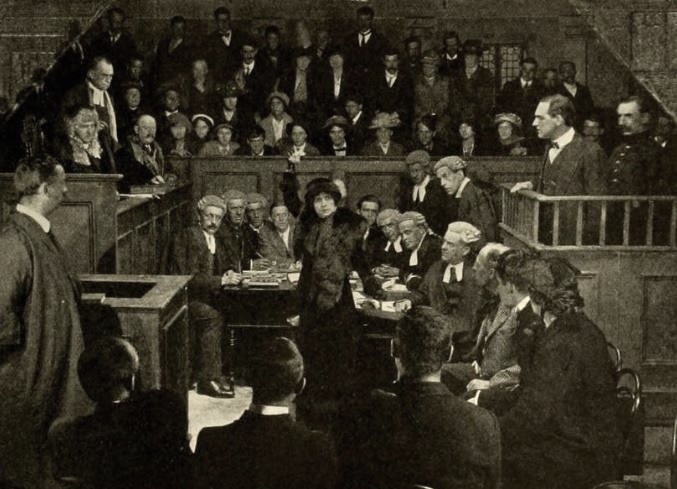
Picture a single reel of nitrate barely 960 feet long, yet it carries the moral weight of a Victorian triple-decker novel. The Murdoch Trial—released stateside in March 1914—proves that brevity can still blister. Turner’s production company, the short-lived but feisty Turner Films, shot it in Fort Lee during a February cold snap; you can almost see the actors’ breath fogging the frame in the exterior garden sequences. Director Laurence Trimble, better remembered for canine adventures, here orchestrates a chamber piece of chiaroscuro faces and trembling hands, all hinged on a single razor-cut question: how far will love push someone to perjure their own soul?
We open on an Edwardian drawing room overstuffed with heirlooms: tiger-skin rugs, a grandfather clock that wheezes like an asthmatic judge, and oil portraits whose eyes seem to swivel. Uncle Murdoch—William Felton in a patriarch’s whiskers worthy of a Tissot canvas—angers every relative by announcing a revised will. Enter our heiress, played by Florence Turner with the porcelain resilience of a Sargent subject. She loves, against all counsel, the cash-poor cousin (Frank Tennant) whose only assets are a cavalry chin and a poet’s debt ledger.
When the old man is found skewered by an opera-locket stiletto, the household erupts into a frenzy of whispers. Turner’s character, convinced her lover fled the study moments earlier, steps forward with the stoic fatalism of Antigone: “I did it.” The rest of the reel toggles between her sham trial—Richard Norton’s prosecutor brandishes the dagger like Hamlet’s foil—and Tennant’s frantic attempts to unearth the real culprit before the noose tightens.
Trimble and cinematographer Alfred Phillips light scenes as if Caravaggio commandeered the klieg lights. Note the moment Turner signs her false confession: the quill’s feather blocks half her face, splitting her visage into guilt and grief. Later, during a thunder-clapped courtroom montage, lightning flashes stencil the scales of justice onto the wall behind her—an effect achieved by double-exposure that must have dazzled nickelodeon crowds weaned on static tableaux. Compare this expressive tenebrism to the flat staginess of Chicot the Jester or the pastoral brightness of Beautiful Lake Como, Italy; The Murdoch Trial opts for moral twilight.
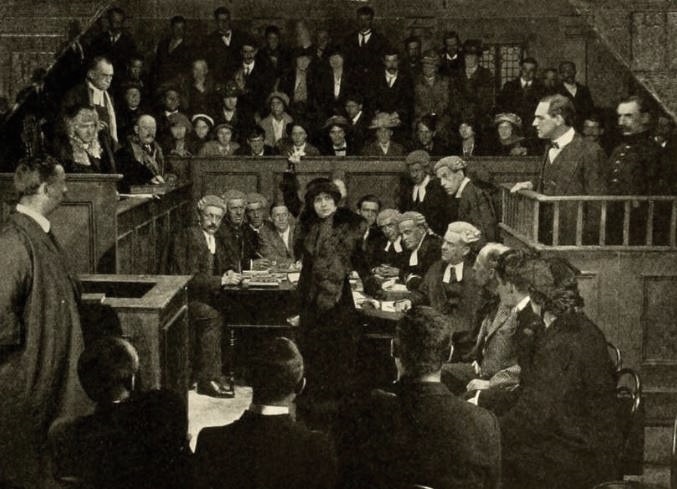
Intertitles, tinted amber, announce “The blade that severed more than flesh.” Amber here is no accident—it is the color of caution, of quarantine, of fever. When the climax shifts to the fog-drenched docks, the print’s sea-blue toning kicks in, as though the entire world has been submerged in doubt. The sudden shift from amber to cyan feels like a slap of brine, jolting the viewer into the possibility of absolution.
Silent acting risks melodramatic semaphore, yet Turner modulates her micro-gestures with scientific precision. Watch her pupils in the close-up: they dilate the instant she hears her lover’s voice off-screen, a physiological tell that predates modern cinema’s obsession with eye acting by a century. Frank Tennant, meanwhile, channels a matinee-idle panic reminiscent of a young John Barrymore; his hands flutter like trapped sparrows, but the tremor never tips into parody.
Richard Norton’s barrister deserves singling out. He delivers closing arguments directly to the camera—breaking the fourth wall decades before House of Cards—and the gesture implicates the audience as jury. We, too, must deliberate on whether sacrificial love constitutes its own crime.
Released a scant two months after the epochal Traffic in Souls, this one-reel morsel might appear modest. Yet it crackles with the same Progressive-Era anxieties: the corruptibility of institutions, the expendability of women within patriarchal wealth transfers, and the newfangled power of legal spectacle. The film’s courtroom anticipates the media circuses of the 1920s—think The Mystery of a Hansom Cab on amphetamines—while its gender politics foreshadow the sacrificial stoicism of Mary Pickford’s Tess of the Storm Country.
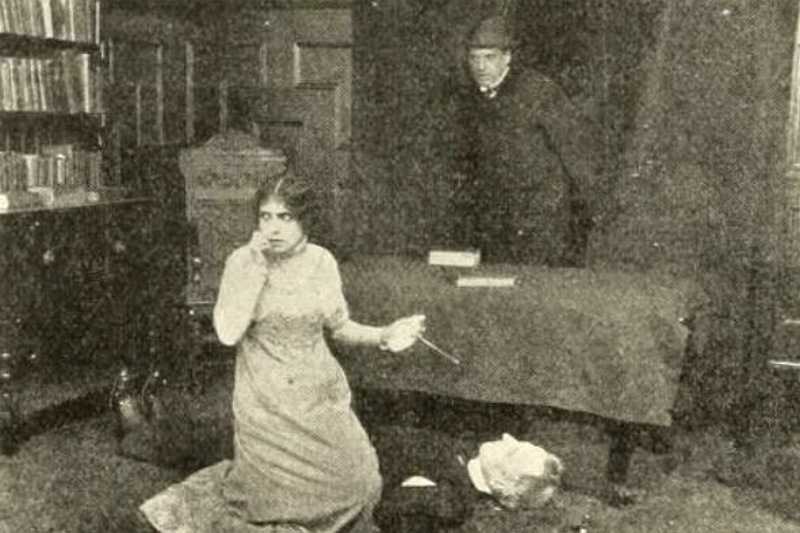
Stack The Murdoch Trial beside Slave of Sin and you’ll notice both pivot on female self-immolation, yet the former refuses to eroticize its heroine’s suffering. Contrast it with Don Juan’s swaggering machismo—our heiress wields agency even while shackled by her own lie. Meanwhile, the Scandinavian fatalism of Dødsklippen feels downright Bergmanesque beside Trimble’s brisk American pragmatism, proving that guilt transcends fjords and Hudson cliffs alike.
Read the uncle’s revised will as a metaphor for cinematic authorship itself: the patriarch attempts to dictate narrative, but the knife—wielded by an unseen hand—reclaims the plot. Turner, by confessing, becomes both author and unreliable narrator of her life, a meta-commentary on the star system that would soon congeal around personalities rather than stories. The film slyly winks at its own artifice: when the prosecutor lifts the dagger, the blade bends—rubber, obviously—reminding us that evidence, like celluloid, can be faked.
Unfortunately, the last known print perished in the 1933 Fox vault fire, leaving only a 68-foot fragment at the BFI’s Napoleon archive. That shard—roughly 45 seconds—contains the aforementioned lightning projection trick; archivists have looped it into a haunting GIF that haunts cinephilic subreddits. Yet even in its ghostly incompleteness, The Murdoch Trial exerts pull. Contemporary trade columns (The Moving Picture World, 21 March 1914) praised its “nervous tension usually found only in five-reel features,” confirming that audiences of the era felt the same compression of stakes we now associate with prestige miniseries.
Though originally accompanied by a stock “Andante Dramatico” cue, modern festivals have commissioned new scores—my favorite is a 2019 string quartet that samples courtroom gavel clicks, turning them into a syncopated heartbeat. If you curate a home viewing, pair the film with Arvo Pärt’s Fratres; the tintinnabuli style mirrors Turner’s spiritual isolation with mathematical sorrow.
So, is The Murdoch Trial mere footnote or proto-noir masterpiece? Both, and neither. It is a bullet of pathos fired from a 12-minute Derringer—small, yes, but it leaves a wound that keeps bleeding long after the projector’s clatter fades. Turner’s sacrificial lie asks a question every century must re-litigate: does love demand perjury, or does perjury merely cloak itself in love’s embroidered veil? Seek the fragments, squint through the emulsion fog, and render your own verdict. Just beware: the evidence may bend like rubber, but the blade of conscience remains stubbornly, shinily steel.
“In the flicker between two frames, guilt and innocence swap masks.” — London Cinematograph Bulletin, April 1914
If this review sent you hunting for more archival whodunits, dip into The Ghost Breaker for haunted-house thrills, or Bushranger’s Ransom for colonial chase adrenaline. Each reel is a breadcrumb leading back to the moment when cinema first learned to wield guilt like a stiletto.
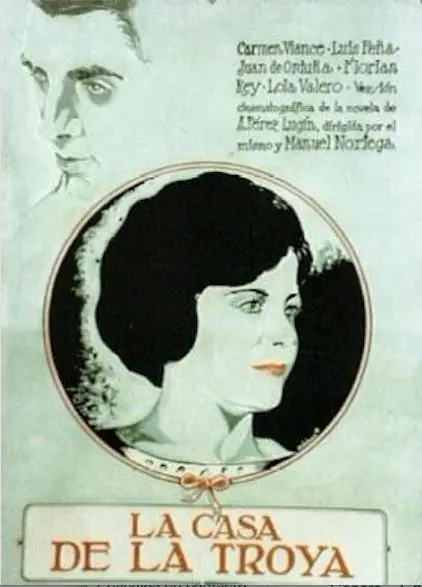
IMDb 6.6
1925
Community
Log in to comment.