DbcultAccessing Vault...
Cult Review
Senior Film Conservator
When *Mr. Logan, U.S.A.* (1918) rolls its opening reel, it’s not merely the creak of a projectionist’s reel that signals impending tension but the rustle of tungsten dust in the New Mexican winds. Directed with a lean, no-nonsense precision by Lynn Reynolds and Jay Coffin, this pre-code silent film carves a niche in early American cinema by merging industrial drama with espionage thriller. The film’s premise—a German saboteur (Gage) attempting to cripple a war-critical tungsten mine—is as timely as it is timeless, yet its execution is anything but derivative.
At its core, *Mr. Logan, U.S.A.* functions as a geopolitical allegory, reflecting the anxieties of a nation embroiled in World War I. The mine, operated by the paternalistic Uncle Billy, symbolizes not just economic infrastructure but the moral backbone of American industry. The intrusion of Gage—a name echoing both menace and ambiguity—sparks a conflict that transcends mere labor disputes. His manipulation of the miners into a strike is less a plot device than a mirror to the era’s fears of foreign agitators exploiting social unrest. Yet, the film avoids didacticism by grounding its stakes in human-scale drama: Suzanne’s vulnerability, Logan’s stoic heroism, and Dolly Dugan’s transformation from saloon singer to secret operative.
The film’s narrative tightrope-walk between overt patriotism and nuanced character development is admirable. While Uncle Billy’s loyalty to his mine borders on the archetypal, his relationship with Suzanne adds a layer of familial warmth that humanizes the industrial setting. Similarly, Logan’s dual role as a rugged cowboy and covert agent subverts the silent film’s tendency toward one-dimensional heroes. His decision to shoot the Gila monster—a scene that could have been a mere action set piece—is instead rendered with tactile realism, the serpent’s coiled threat and Logan’s steady aim evoking a primal respect for the desert’s dangers.
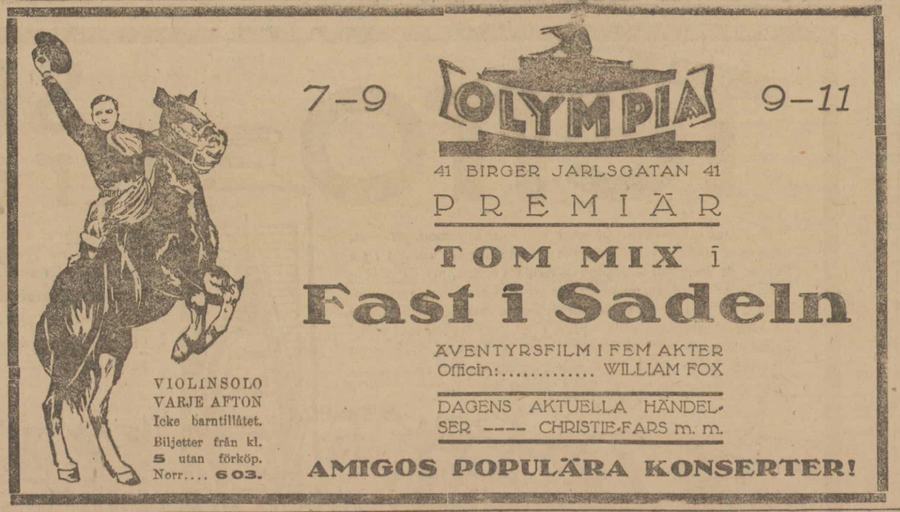
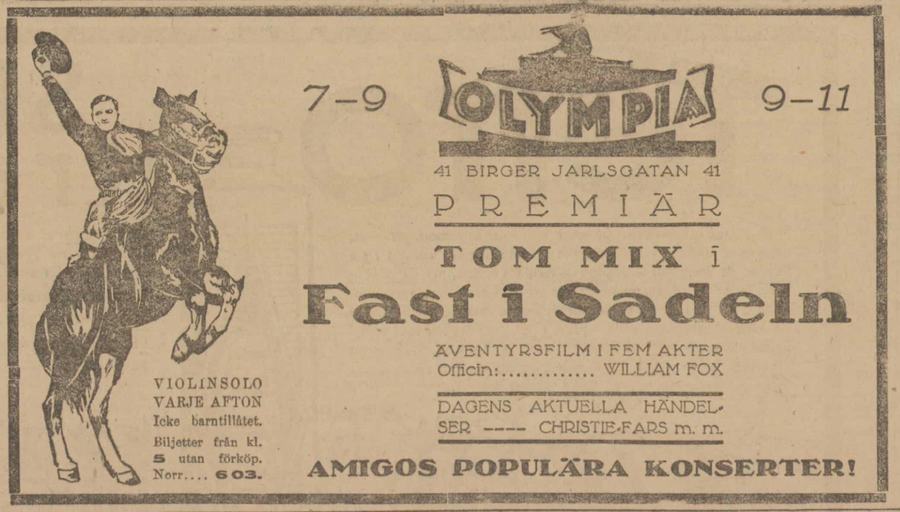
Val Paul, as Gage, embodies the film’s most intriguing paradox: a villain who is neither cartoonish nor entirely believable. His calculated charm and glinting eyes suggest a man who believes in his cause, even as the narrative condemns it. This ambiguity is rare for the silent era, where antagonists were often reduced to mustache-twirling caricatures. Conversely, Tom Mix’s cameo as a mule Skinner—a brief but pivotal role—brings a folksy gravitas, his physical comedy contrasting with the film’s darker undertones. Dick La Reno’s portrayal of Jim Logan is a masterclass in understatement; his stoic demeanor and deliberate gestures speak volumes in a medium reliant on visual storytelling.
Maude Emory, as Suzanne, navigates the limitations of her script with grace, her expressions conveying both fear and quiet resilience. The film’s most compelling dynamic, however, lies in the chemistry between Logan and Kathleen O’Connor’s Dolly Dugan. Their partnership, hinted at through subtle glances and shared missions, avoids the clichés of the damsel-in-distress trope. Dolly’s role in aiding Logan’s escape—executed with a blend of wit and resourcefulness—elevates her from a plot device to a fully realized character.
The film’s visual design leans into the austere beauty of New Mexico’s landscapes, using the mine’s cavernous interiors and sun-bleached exteriors to amplify its themes. The mine itself becomes a character, its shafts and tunnels echoing with the tension of impending sabotage. In one striking sequence, the miners’ strike meeting is framed through a narrow doorway, the crowd’s murmurs swelling into a visual and auditory crescendo as Gage’s manipulations take hold. This use of confined spaces to heighten anxiety is a precursor to later suspense films, where architecture becomes a narrative tool.
Contrast this with the film’s use of open vistas: when Suzanne falls from the cliff, the camera lingers on the vastness of the desert, her small figure dwarfed by the landscape. Logan’s rescue, framed in wide shots, positions him as both man and myth, his silhouette against the horizon evoking the lone hero trope while grounding it in tangible stakes. The film’s color palette—though limited by the era’s black-and-white constraints—is rich in texture, with the tungsten dust and the miners’ overalls adding depth to the visual lexicon.
Gage’s plan to blow up the mine is not just a plot device but a metaphor for the fragility of progress. The film frames the mine as a beacon of American ingenuity, its production a direct contribution to the war effort. By making the mine the target, the narrative critiques the vulnerability of industrial progress to ideological subversion. Yet, the film’s resolution—Logan’s triumph and Gage’s capture—feels less like a victory and more like a temporary truce. The final scenes, with the mine resuming operations and Suzanne’s relief, suggest a cyclical nature to such conflicts, a theme ripe for deeper exploration but constrained by the film’s brevity.
The subplot involving the trumped-up charge against Logan and Dolly’s subsequent escape adds a layer of moral ambiguity. Their status as Secret Service operatives is revealed only at the climax, a narrative choice that reframes earlier events. This twist, while effective, hints at the film’s reliance on surprise over sustained character development. Still, it underscores a central tension: can heroism exist outside of institutional authority, or is it always bound to patriotic duty?
Placing *Mr. Logan, U.S.A.* alongside its contemporaries reveals its unique position in early cinema. Like *The Lash of Power* (1917), it explores the intersection of industrial labor and political intrigue, yet it distinguishes itself with a more grounded portrayal of its protagonists. Compared to *Intrigue* (1918), which leans heavily on melodrama, *Mr. Logan*’s taut structure and focus on action set it apart. Its thematic echoes of *The Money Mill* (1918)—another film about economic sabotage—are tempered by a stronger emphasis on individual agency.
What sets *Mr. Logan, U.S.A.* apart, however, is its proto-western elements. The inclusion of mule skinners, the rugged terrain, and Logan’s cowboy persona nod to the genre’s conventions while subverting them. Unlike the purely romanticized westerns of the era, this film infuses frontier life with the gritty realities of war-time production and espionage. This duality—mythic heroism and industrial pragmatism—resonates with later works like *The Deep Purple* (1919), though *Mr. Logan*’s silent-era restraint keeps it from veering into over-the-top spectacle.
For all its merits, *Mr. Logan, U.S.A.* is not without its flaws. The narrative’s reliance on coincidence—Gage’s perfect disguise as an American, Suzanne’s uncanny fall just as the Gila monster arrives—stretches credulity. Additionally, the film’s pacing, while brisk for its time, occasionally feels rushed, particularly in the resolution of the strike subplot. The abrupt shift from Gage’s manipulation to Logan’s intervention lacks the nuanced escalation one might expect from a film with higher production values.
Yet, these lapses are mitigated by the film’s stylistic boldness. The use of cross-cutting during the mine’s explosion sequence, for instance, is a technical marvel for 1918, its rapid alternation between Gage’s detonation and Logan’s pursuit creating a pulse-pounding tension. Such sequences showcase the filmmakers’ understanding of rhythm and visual storytelling, proving that even within the constraints of silent cinema, innovation thrived.
If there’s one enduring quality to *Mr. Logan, U.S.A.*, it’s its prescient themes. The film’s exploration of foreign interference in critical infrastructure—long before the term “economic warfare” entered common parlance—feels eerily relevant in today’s climate. Its portrayal of a working-class hero (Logan) rising against corporate and political corruption also resonates with modern sensibilities, albeit within the framework of patriotic narrative. This duality—supporting the war effort while critiquing its human costs—gives the film a layered complexity that transcends its era.
Moreover, the film’s gender dynamics, while progressive for 1918, remain contentious. Dolly’s role as a secret agent challenges the era’s rigid gender roles, yet her agency is often tied to her relationship with Logan. Suzanne, though a victim of Gage’s schemes, is defined more by her vulnerability than her resilience. These contradictions are not unique to *Mr. Logan*, but they underscore the era’s limitations in portraying women as independent forces.
**Mr. Logan, U.S.A.** is a film that demands to be revisited, not for its perfection but for its ambition. It is a relic of a time when cinema was still finding its voice, yet it speaks volumes about the tensions of its age. For modern audiences, it offers a window into early 20th-century anxieties, wrapped in a taut, if occasionally contrived, narrative. Its legacy lies not in its plot mechanics but in its ability to blend industrial drama with action-thriller elements, creating a template that would influence decades of American cinema.
While the film may lack the polish of later works, its raw energy and historical context make it a fascinating artifact. Fans of silent film will appreciate its technical ingenuity, while those interested in the intersection of politics and popular culture will find much to unpack. In a world increasingly shaped by the same forces of industrialization and espionage, *Mr. Logan, U.S.A.* remains a testament to the power of cinema to reflect—and critique—the times.
IMDb —
1920
Community
Log in to comment.