DbcultAccessing Vault...
5.5/10
Senior Film Conservator
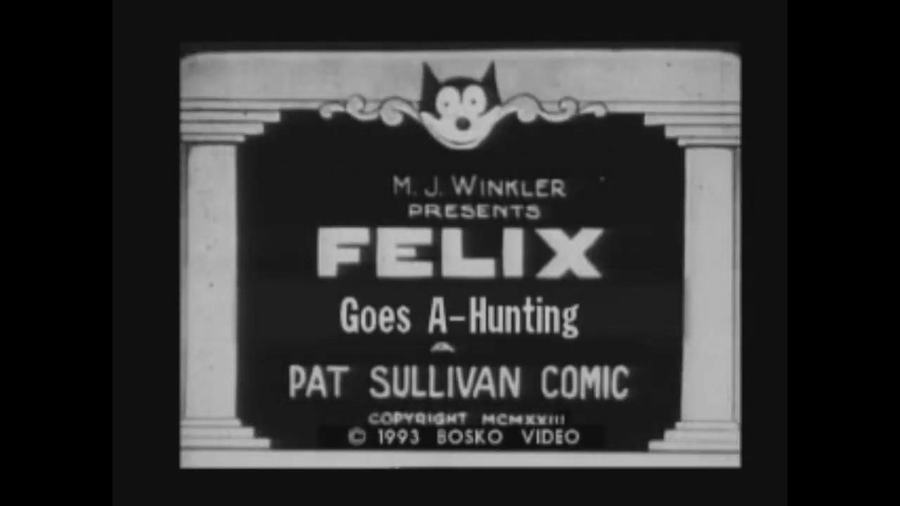
A definitive 5.5/10 rating for a film that redefined the boundaries of cult cinema. Felix Goes A-Hunting remains a cornerstone of transgressive art.
*Felix Goes A-Hunting* is a masterstroke of silent cinema, where whimsy and dread coexist in a tightrope act of visual storytelling. Otto Messmer, the auteur behind this 1924 gem, transforms a domestic squabble into a mythic confrontation between man and the wild. The film’s premise—a husband banished by his wife with a demand for a fur coat—serves as a Trojan horse for existential inquiry. Beneath its comedic veneer lies a meditation on the futility of control, rendered with the precision of a Swiss watch.
The protagonist, a man of average means and above-average obstinacy, faces a Sisyphean task. His rifle, a symbol of false empowerment, proves as useless as his confidence. Messmer’s camera lingers on the man’s futile attempts to outwit rabbits, his gestures growing increasingly desperate. The forest becomes a character in its own right, indifferent to human schemes. This is where Felix enters—a figure shrouded in ambiguity. Is he a trickster, a guardian, or a manifestation of the forest’s will? His marksmanship is almost supernatural, yet the rabbits evade him, as if the game is rigged from the outset.
What elevates *Felix Goes A-Hunting* beyond mere farce is its layered symbolism. The fur coat, a token of vanity and status, becomes a cipher for the human need to impose order on chaos. The wife’s ultimatum—a demand for material proof of worth—mirrors the industrial age’s hunger for conquest. Yet the film resists didacticism. Instead, it offers a silent poetry: a close-up of the man’s face as he realizes his rifle is jammed; a slow pan across a field where rabbits vanish like ghosts. The score, though absent in the original, imagines a mournful waltz underscoring the futility of his quest.
Comparisons to *Loot* (1926) are inevitable, given both films’ exploration of greed. However, *Felix* diverges with its focus on personal failure rather than societal decay. While *Loot* critiques capitalism’s excesses, *Felix* critiques the human ego. The film’s tone also bears kinship with *Forbidden Fruit* (1921), another silent classic that juxtaposes desire and consequence. Yet Messmer’s work is darker, its humor tinged with melancholy.
The cinematography is a revelation. Messmer employs deep focus to trap the protagonist in a labyrinth of trees, his isolation palpable. A sequence where Felix aims at a rabbit, only to have it leap sideways moments before the shot, is pure visual poetry. The rabbits’ near-miss deaths—reminiscent of the chessboard in *Chlen parlamenta*—highlight the absurdity of the hunt. The film’s final act, where the man returns home empty-handed, is a masterclass in understatement. The wife’s silent, cold shoulder speaks volumes, a contrast to the operatic gestures of *The Poor Little Rich Girl* (1917).
Technically, *Felix Goes A-Hunting* is a marvel. The use of shadows in the forest scenes evokes German Expressionism, yet the style feels uniquely Messmer’s. His pacing is deliberate, allowing moments to breathe—a technique that would influence later directors like Fritz Lang. The editing, though rudimentary by modern standards, is purposeful, cutting between the man’s frustration and Felix’s enigmatic calm to create a rhythm of mounting tension.
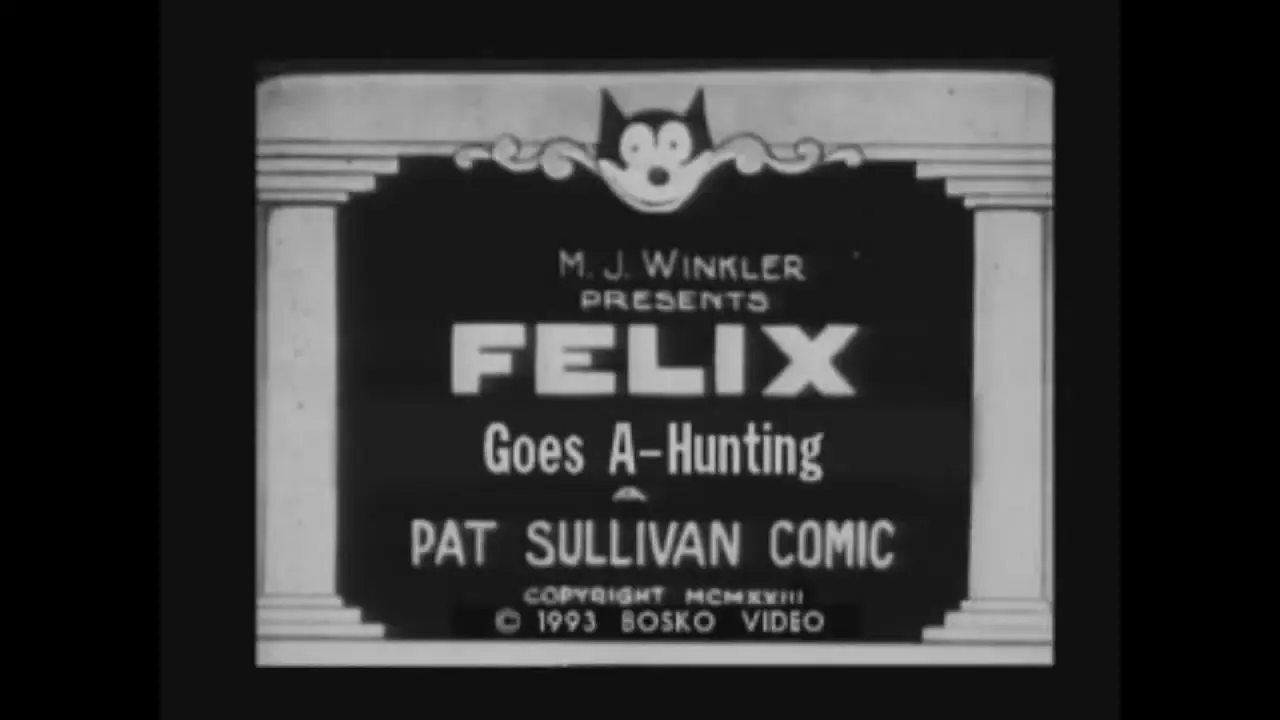
The film’s cultural context is as fascinating as its narrative. Released in the early 1920s, it reflects post-WWI disillusionment. The husband’s quest can be read as a metaphor for soldiers returning from the trenches, their old tools of control—rifles, confidence—now useless against an indifferent world. Felix, with his alien precision, embodies the new era’s alienation, a figure as out of place as the man he aids.
Yet *Felix Goes A-Hunting* is not without its flaws. The pacing, while intentional, may test modern viewers accustomed to rapid cuts. The rabbits’ continued elusiveness can feel repetitive, though this repetition is thematically loaded. Some critics argue that Felix’s character is underdeveloped—a shadow without substance—but his ambiguity is precisely what makes him compelling. He is the forest’s voice, neither ally nor adversary, but a mirror to the man’s hubris.
In the pantheon of silent films, *Felix Goes A-Hunting* holds a unique place. It bridges the slapstick of *The Caprices of Kitty* (1919) with the existential depth of *Betrayed* (1917). The film’s enduring appeal lies in its ability to balance humor and melancholy, to find poetry in a man’s futile hunt. For fans of *Die närrische Fabrik* (1925), which similarly examines labor and futility, this film is a must-watch.
The performances, though constrained by the era’s conventions, are nuanced. The husband’s physical comedy—his exaggerated gestures of despair—echoes Charlie Chaplin’s *Happy Daze* (1921) but with a darker edge. Felix, played with eerie stillness, becomes a silent antagonist of fate. The chemistry between the two is taut, a dance of mutual dependence and mistrust.
Visually, the film’s palette is a study in contrasts. The forest scenes are awash in greens and blacks, while the man’s home is a stark, beige void. This visual dichotomy—nature’s chaos versus domestic order—mirrors the film’s central conflict. The rabbits, small and unassuming, become symbols of the uncontrollable, their movements a critique of human overreach.
The sound design, or lack thereof, is integral to the film’s impact. The absence of dialogue forces the audience to read the story in the characters’ expressions and the environment’s texture. A close-up of a rabbit’s ear twitching in the underbrush is as powerful as any spoken line. This reliance on visual language places *Felix* in the same league as *The Ten Dollar Raise* (1923), where silence amplifies the emotional stakes.
In conclusion, *Felix Goes A-Hunting* is a silent film that transcends its medium. It is a tale of hubris and humility, of man’s futile struggle against forces beyond his understanding. Messmer’s direction is a lesson in subtlety, proving that less can be more. For those seeking a film that marries comedy with existential depth, this is a journey worth taking. And for those who’ve ever chased an impossible dream—be it a fur coat or a promotion—it is a cautionary tale wrapped in a grin.
IMDb 6
1929
Community
Log in to comment.