DbcultAccessing Vault...
Cult Review
Senior Film Conservator
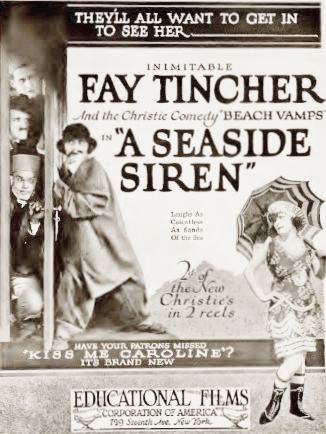
A gull shrieks, a phonograph needle crackles, and the frame blooms with nitrate phosphorescence: A Seaside Siren begins as if someone just kissed the horizon and slipped, breathless, into the tidal dark. Scott Darling’s scenario, distilled from three separate story conferences with M.B. Hageman and Maie B. Havey, feels like a cocktail of Oscar Wilde’s epigrams and a tabloid confession—equal parts fizz and venom.
Director Earle Rodney—better known for two-reel barn-burners—reveals an unexpected gift for chiaroscuro. Notice how he lights Fay’s first entrance: a single kerosene lantern swings behind her, projecting her silhouette onto a canvas wall; for a heartbeat the maid becomes a colossus, a shadowplay prophecy that she will tower over the plot. Cinematographer James Harrison (who also plays the lovesick composer) layers diffusion filters until the seaside resort looks dipped in opal dust, yet he keeps faces razor-sharp. The result is a world that is simultaneously cocktail froth and scalpel edge.
Virginia Ware’s socialite, Margo Dalrymple, floats through each scene with a flapper’s bored languor, but watch her pupils—every time the camera dollies in they contract like a cat’s when it spots prey. Ware weaponizes passivity; her shrug can wound. Contrast that with Fay Tincher, a Keystone alumna who here trades custard pies for something more corrosive. Tincher times every micro-reaction—an eyelid flutter, a corner-mouth twitch—to the 18-frames-per-second rhythm, so the lie grows roots inside her character’s conscience. When she finally confesses to the imposture, the admission erupts in a staccato laugh that is half-sob, half-war-cry, a moment so electrically private you almost feel guilty witnessing it.
Scholars often cite L'invidia or The Wasp when charting proto-feminist motifs in silent European cinema, yet A Seaside Siren deserves a seat at that seminar. The film insists identity is not a garment you don but a negotiation you survive. Each time Fay rehearses her mistress’s handwriting, the quill scratches like a scalpel dissecting class markers: loops fattened to imply leisure, pressure softened to suggest a life free of manual labor. Rodney lingers on those ink-blotted pages until they resemble topographical maps of a country that exists only in performance.
Recurring symbols orbit three gravitational centers:
Where Le destin est maître philosophizes predestination via nautical allegory, A Seaside Siren stages destiny as an amateur theatrical: underfunded, over-rehearsed, and forever on the verge of collapse. Compared to The Suspect’s noir fatalism, this coastal caper is jazz-improv—same moral keys, different tempo. And if Life in a Western Penitentiary interrogates incarceration, Siren explores the subtler prison of social expectation, its bars woven from silk and small talk.
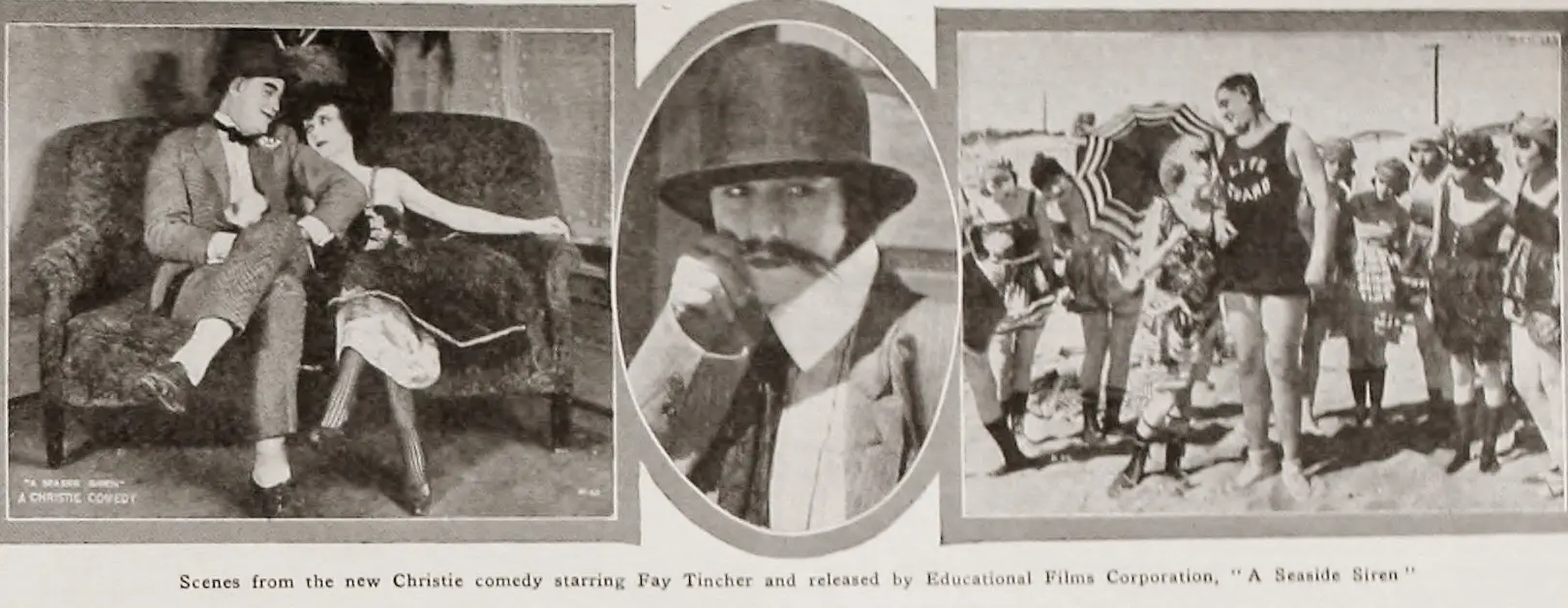
Though released two years before the watershed of The Jazz Singer, the film anticipates sound cinema through rhythmic montage. Notice the beach bonfire sequence: Rodney alternates long shots of crackling driftwood with close-ups of Fay’s face flickering orange. The cutting cadence—8 frames, 12 frames, 6—mimics the syncopated hiss of surf, so your brain hallucinates audio. Contemporary exhibitors often commissioned local organists to improvise rags during this reel; surviving cue sheets suggest minor-key waltzes that slide dissonantly into Charleston stomp, mirroring the heroine’s ideological whiplash.
Darling’s script is a Möbius strip: the final scene loops back to the first image—a parasol tumbling along the tide line—yet meaning has mutated. Dialogue intertitles, lettered in art-nouveau curlicues, read like aphorisms from a sardonic seaside oracle: “Love is a shell—hold it to the ear and hear your own blood roaring.” The line appears twice, once as flirtation, later as indictment, proving that context is the ultimate costume change.
Only one 35 mm nitrate print survives, housed at the George Eastman Museum, Rochester. Restoration in 2019 used a 4K wet-gate scan, revealing textures previously lost: the glint of Fay’s stolen pearl choker, the frayed hem of Margo’s negligee signifying dynastic decay. The Eastman edition runs 71 minutes at 22 fps; beware truncated 58-minute YouTube transfers that excise the subplot involving Eddie Baker’s bellboy, a character whose mute loyalty offers the film’s sole glimpse of ethical north.
Upon release, Variety dismissed it as “a trifle of lace and lemonade,” yet French ciné-clubs of the 1950s championed it as a missing link between Max Linder’s social farces and the forthcoming sophistication of Ernst Lubitsch. Modern scholars cite its influence on everything from Mitchell Leisen’s Lady of the Night to Olivia Wilde’s Booksmart—specifically the idea that female friendship is a crucible where identity is both forged and liquefied.
Here is a film that understands seduction not as conquest but as conversation across a canyon of want. It winks, it weeps, it waltzes away on a tide of contradictions, leaving you ankle-deep in foam and existential vertigo. Seek it out—whether via archive Blu-ray or a repertory house brave enough to project nitrate—because in an age when identity is curated pixel by pixel, A Seaside Siren whispers that every avatar is a shadow, every filter a parasol against an inevitable storm.
For further exploration of identity swaps under social pressure, pair this viewing with Saved from the Harem or The On-the-Square Girl, both mining similar ore of masquerade and moral whiplash.
IMDb 5.1
1932
Community
Log in to comment.