DbcultAccessing Vault...
Cult Review
Senior Film Conservator
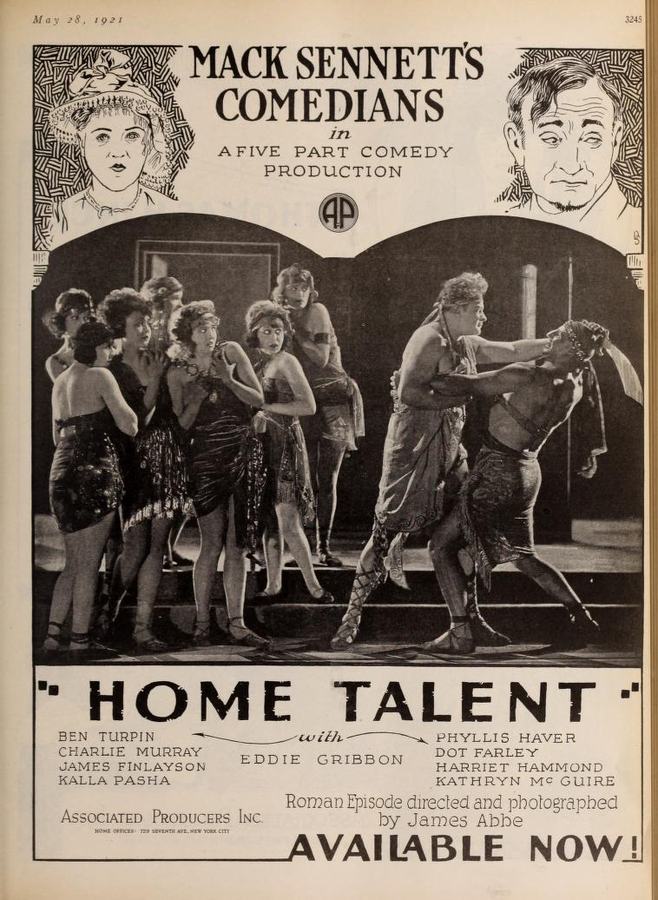
*Home Talent* (1921) is a relic of an era when cinema grappled with the raw, unvarnished realities of human aspiration. Directed with a deft hand by an uncredited crew, the film unfolds in the shadowy corners of a boarding house run by Charles Murray and Phyllis Haver, a pair whose weary partnership mirrors the fragile balance between artistic idealism and economic survival. The house, a decrepit yet oddly sacred space, is inhabited by a rogues’ gallery of itinerant performers, their lives a cacophony of rehearsed monologues, half-finished waltzes, and whispered auditions for a world that never responds.
What sets *Home Talent* apart is its refusal to romanticize the Bohemian mythos. Here, the ‘struggle’ of the artist is not a badge of honor but a slow erosion of self-respect. Kalla Pasha, playing a Turkish vaudevillian named Abdul, delivers a performance that oscillates between manic bravado and quiet desolation, a man whose identity is tethered to the stage yet untethered from any audience. Similarly, Virginia Fox’s portrayal of a washed-up bathing beauty—a role that echoes the tragic arcs of *The Soul of a Magdalen* and *Yamata*—is a masterclass in conveying the fragility of physical capital in a world that worshipped youth yet abandoned it without ceremony.

The boarding house itself is a character, its peeling wallpaper and creaking floorboards a silent testament to the erosion of old-world charm. Murray, as the landlady, is a figure of gruff tenderness, her interactions with tenants oscillating between stern pragmatism and reluctant empathy. Her dynamic with Phyllis Haver—a young woman caught between inherited duty and personal ambition—echoes the fraught relationships in *La vie de Bohème* and *Stingaree*, yet here the emotional stakes feel more intimate, as if the film is eavesdropping on a family drama rather than dramatizing it.
Technically, *Home Talent* is a curiosity. The camera work—though rudimentary by modern standards—captures the claustrophobic tension of its setting with a voyeuristic intensity. Long takes linger on faces, allowing the actors to convey volumes without dialogue. The use of natural light, particularly in scenes shot in the boarding house’s parlor, evokes a melancholic realism that resonates with the grainy textures of *The Might of Gold* and *Hubby’s Mistake*. Yet where those films leaned into melodrama, *Home Talent* favors understatement, letting the absurdity of its characters’ circumstances speak for themselves.
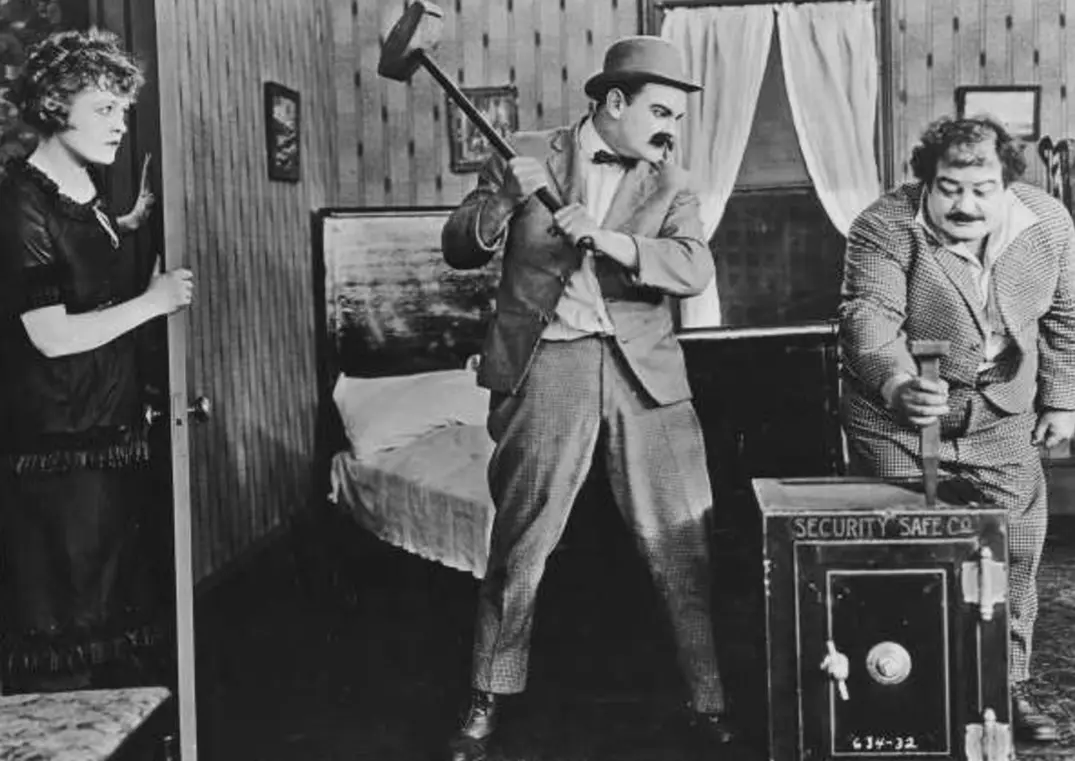
The film’s greatest strength lies in its ensemble. Eddie Gribbon, as a would-be playwright with a penchant for self-dramatization, is a standout, his over-the-top gestures and stammering soliloquies a darkly comic counterpoint to the film’s heavier themes. His scenes with James Finlayson—a man playing a man playing a man, in a recursive loop of failed reinvention—are among the film’s most poignant, recalling the meta-theatricality of *Around the Clock with the Rookie*. Meanwhile, Dot Farley’s turn as a brash yet vulnerable chorus girl injects much-needed levity, her physical comedy a reminder that laughter can be both armor and vulnerability.
Thematically, *Home Talent* lingers in the liminal space between satire and tragedy. The boarding house is a microcosm of a society in flux, where the old hierarchies of talent and legacy are giving way to a new, meritocratic—but equally brutal—world. This tension is crystallized in the subplot involving Mildred June, a young hopeful whose belief in her own stardom borders on delusion. Her arc, which mirrors the cautionary tales of *The Tiger* and *The Legacy of Happiness*, is a masterstroke of subtlety, with June’s gradual realization of her irrelevance rendered in glances, not grand speeches.

Visually, the film’s palette is dominated by muted grays and sepia tones, enhancing the sense of a world seen through a veil of dust. The sets, particularly the cramped bedroom where Phyllis Haver plots her escape from the life she’s inherited, are meticulously detailed, with every faded photograph and cracked mirror a silent commentary on the passage of time. The score—a sparse, haunting piano motif—returns at key moments, its melancholy notes underscoring the inevitability of the characters’ fates.
Comparisons to later works like *A Taste of Life* and *Fires of Conscience* are inevitable, but *Home Talent* retains a unique texture. It lacks the grandeur of those films’ moral allegories, instead opting for a more intimate, almost anthropological approach. The result is a film that feels both of its time—capturing the jittery energy of post-war disillusionment—and ahead of it, in its unflinching examination of the costs of artistry.
For modern viewers, *Home Talent* offers a rare glimpse into the silent film era’s capacity for emotional nuance. The absence of dialogue is not a limitation but an invitation to focus on the interplay of light, shadow, and expression. The film’s ending—where Murray and Haver, after a night of whispered conversations and unspoken goodbyes, watch their tenants depart for the dawn’s uncertain promises—is a masterclass in visual storytelling. There are no catharses here, only the quiet resignation of people who know the game is rigged, yet keep playing anyway.
In an age where cinema often prioritizes spectacle over substance, *Home Talent* serves as a reminder of the medium’s power to capture the human condition in all its messy, contradictory glory. It’s a film that demands patience, rewarding it with moments of profound insight and quiet beauty. For those seeking a window into the soul of early 20th-century artistic struggle, or a comparative study of pre-code character dynamics, this is essential viewing. Just don’t mistake its austerity for artifice—this is a film that wears its heart on its sleeve, and its sleeve is frayed.
To fully appreciate *Home Talent*, consider pairing it with *La vie de Bohème*, which shares its focus on Bohemian communities, or *A Taste of Life*, another exploration of societal mores. For a contrast in tone, *Sylvia on a Spree* offers a more lighthearted take on performance and identity.
IMDb 6.5
1933
Community
Log in to comment.