DbcultAccessing Vault...
6.7/10
Senior Film Conservator
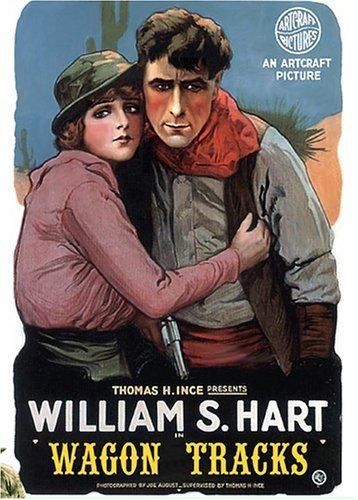
A definitive 6.7/10 rating for a film that redefined the boundaries of cult cinema. Wagon Tracks remains a cornerstone of transgressive art.
William S. Hart's Buckskin Hamilton emerges not as a hero but as a geological formation of masculinity, eroded by loss yet immovable in purpose. His eyes, squinted against the desert sun, become twin telescopes scanning not just for Apache raiders but for guilt's subtle tremors. Director Lambert Hillyer frames the wagon train as a microcosm of manifest destiny's fragility - each canvas-covered schooner a coffin awaiting burial in dust. The genius lies in how C. Gardner Sullivan's screenplay braids the mundane horrors of westward expansion with Greek tragedy: Hamilton doling out water rations with one hand while fingering his revolver with the other.
Hart's performance transcends the era's theatricality through controlled restraint. Watch how his leather-gloved hand lingers on a water barrel - is he calculating rations or imagining the killer's throat? Jane Novak's settler Judith embodies pioneer resilience without cliché, her quiet courtship with Leo Pierson's greenhorn developing in stolen glances during Comanche attacks. Robert McKim's suspected murderer plays not a mustache-twirling villain but a man corroded by secrets, sweating whiskey through his pores during Hamilton's forensic cross-examination around the campfire. The supporting cast feels authentically grimy, their faces cracked like dry riverbeds beneath sun-bleached bonnets.
"The desert doesn't kill you quick, it lets hope do the work" - Hamilton's warning echoes the film's central philosophy
Hillyer's visual grammar transforms the Mojave into an existential antagonist. Wide shots reduce the wagon train to insect-like insignificance against dunes that ripple like poisoned honey. When Hamilton discovers his brother's grave marker (a bullet-riddled canteen on a stake), the camera lingers on its shadow stretching eastward - a sundial tracking vengeance's approach. The midnight confrontation uses moonlight as a moral x-ray, the killer's face half-illuminated like a coin deciding fate. Unlike later sound-era westerns, the silence here becomes a physical presence, broken only by the mournful protest of wagon axles and the buzz of flies circling dying oxen.
Beyond its revenge framework, Wagon Tracks explores America's founding paradox - the tension between communal survival and individual justice. Hamilton's leadership during the river crossing sequence (oxen drowning in quicksand as women clutch babies overhead) establishes him as the settlers' necessary patriarch. Yet his private war threatens this delicate social order, mirroring how The Web of Life's interconnectedness frays under personal ambition. The film's moral complexity anticipates The Curious Conduct of Judge Legarde by presenting justice not as binary but as shifting desert sands.
Notice how Hamilton's investigation methodically strips away frontier veneer: the hymn-singing grandmother who hoards medicine, the merchant trading bullets for kisses. Unlike the romanticized odyssey in The Gypsy Trail, this journey exposes civilization's thin lacquer. The killer's motive - a gambling debt paid with lead - reflects the emerging West's brutal capitalist calculus where human life weighs less than gold dust.
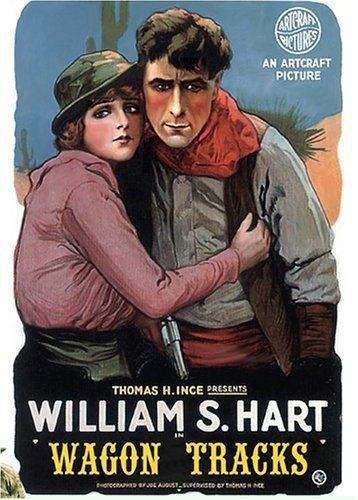
Within the 1919 cinematic landscape, Hart's vision stands apart like a butte in badlands. While Mr. Barnes of New York peddled urban melodrama, Hart embraced the West's spiritual desolation. His gunfights lack bravado - just functional violence in service of narrative gravity. The iconic climax where Hamilton forces the entire company to empty their revolvers into a water bucket (comparing bullet rifling to his brother's fatal wound) predates forensic procedurals by decades. This scene alone elevates the film beyond contemporaries like The Swagman's Story through psychological intensity.
The film's treatment of Native Americans reflects era-specific myopia - Comanches appear as savage plot devices rather than people. Yet within this limitation, Hillyer avoids grotesque caricature, framing attacks as tactical actions against invaders. Modern viewers should contextualize these elements while appreciating the film's groundbreaking naturalism. Hart insisted on real locations where temperatures melted camera grease, that authenticity seeping into every frame like blood into bandages.
The confrontation eschews theatrical showdowns for something more unnerving. Cornered not at high noon but during a dust storm that turns men into ghosts, the killer's confession emerges through cracked lips - not from remorse but dehydration. Hamilton's final act of mercy (offering the murderer his canteen before delivering justice) distills the film's core question: Can civilization flourish when its architects are damned by necessary violence? The closing shots of wagon wheels crushing sagebrush feel less like triumph than indictment, the tracks stretching westward like scars.
Hart's legacy as the Western's moral architect finds its purest expression here. While later films like The Right Direction softened frontier ethics, Wagon Tracks remains uncompromising. Its power lies not in plot mechanics but in existential weight - every frame heavy with the understanding that building nations requires burying brothers. The wind-scoured landscapes aren't merely settings; they're witnesses to America's original sins, where justice comes measured in lead and thirst.
Unlike the sentimental When Love Was Blind or the didactic Du sollst keine anderen Götter haben, Hart offers no easy absolution. The wagons reach California, but Hamilton remains forever in that desert, his shadow stretching long over the genre he defined. In the silent spaces between gunshots, you hear the birth of the modern Western - not a horse opera, but a eulogy whispered to the wind.
IMDb 6.6
1934
Community
Log in to comment.