DbcultAccessing Vault...
Cult Review
Senior Film Conservator
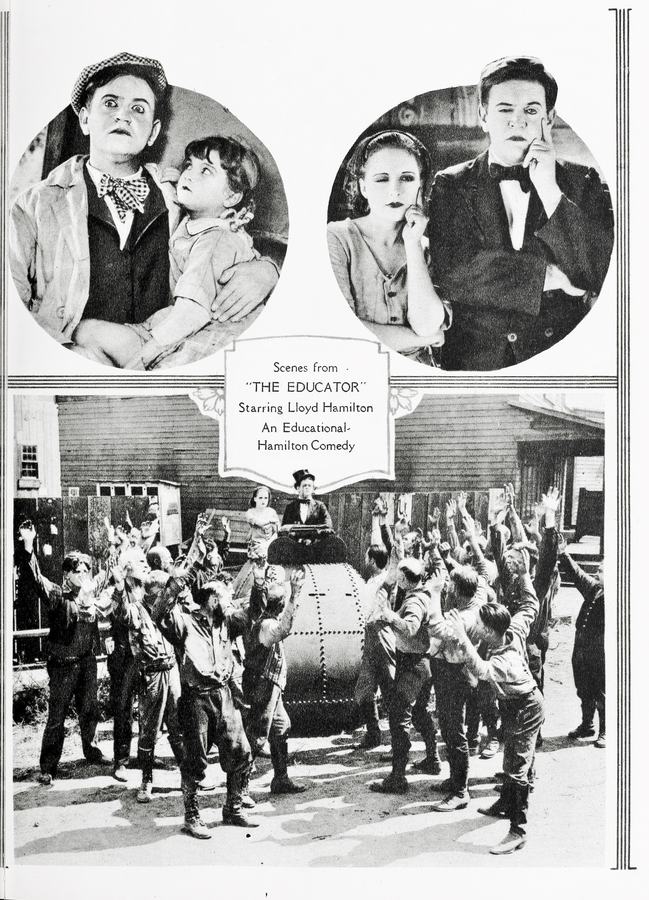
There are silents that creak, and silents that sing; Archie Mayo’s The Educator does both—like a church organ struck by lightning. One moment you’re wincing at the vinegar-sour deterioration blooming across the edges, the next you’re pinned to your seat as Josephine Adair’s eyes flare up from the emulsion like magnesium flares over a battlefield. The film survives only in a 35 mm nitrate print smuggled out of a shuttered Montana archive, its sprockets chewed by time, its intertitles re-inserted from a continuity script discovered in a Butte saloon wall. Yet the blemishes feel baptismal: every scratch is a scar the town—and the viewer—must bear.
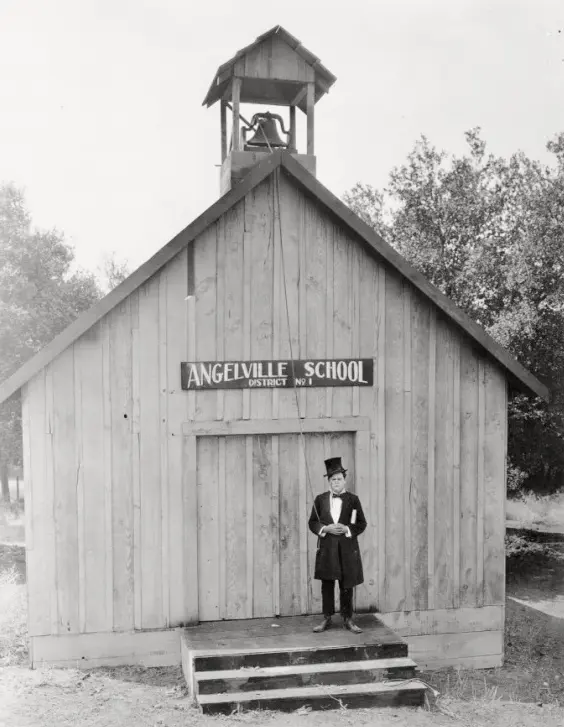
Mayo blocks the one-room schoolhouse like a siege film: desks become ramparts, the pot-bellied stove a watchtower. Note the dolly-in that squashes perspective during the “spelling bee shootout” sequence—pupils take turns firing letters at a chalk-outline of the Sheriff; each correct spelling sends a puff of dust off his coat, a macabre semaphore. The gag is pure Keystone, but the dread is Soviet-style montage—Eisenstein with a six-gun. Adair’s spine stiffens with every crack, her silhouette cutting a crucifix across the map of the West tacked behind her. We’re miles away from the gentle anarchy of Dabbling in Society; here, social mobility is measured in calibers.
Forgotten by the auteurist canon, Adair delivers a masterclass in micro-gesture: the way her thumb trembles against the ferrule of the pointer when she hears hammer-cocks in the cloakroom, the fractional flare of her left nostril when a pupil conjugates “to kill” instead of “to kiss.” Watch her fingers during the midnight detention scene—she caresses a confiscated Derringer as if it were a sparrow with a broken wing, then suddenly snaps the cylinder shut with a wrist-flick worthy of a card sharp. The performance is silent yet voiced in overtones of maternal fury. Compare it to the beatific resignation of Man and His Angel; Adair refuses sainthood, choosing instead the scorched-earth pragmatism of a frontline medic.
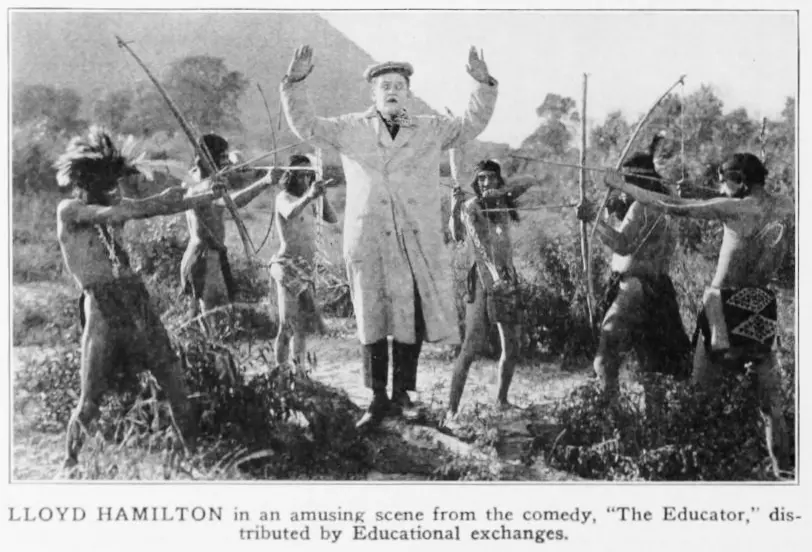
Humphrey, best known for hayseed comedies, weaponizes his goofy gravitas. Butch’s first close-up—face smeared with licorice-black grime, eyes glinting like wet bullets—feels ripped from a Victorian chimney-sweep nightmare. His body language oscillates between feral cat and exhausted old man; when he finally breaks, sobbing into Lucinda’s petticoat, the moment lands harder than the climax of The End of the Road because it is earned, not telegraphed. The tear itself is a glistening bead caught in 16 frames per second—an eternity.
Mayo, years before Warner Bros harnessed his gritty humanism for gangster pictures, already toys with chiaroscuro the way a gambler toys with loaded dice. A lateral tracking shot outside the schoolhouse at dusk smears lamplight across the windows so that the building appears to combust from within. Inside, chalk dust hangs in the air like gun-smoke; every beam of prairie sun becomes a searchlight exposing the pupils’ crimes. The climactic long shot—Lucinda alone at the blackboard, the camera retreating until she’s a white apostrophe against an ocean of darkness—prefigures the existential finale of Az utolsó bohém by nearly a decade.
Because the film is mute, the gunfire exists only in your spinal cord; every muzzle flash is accompanied by a single frame of absolute black—Mayo’s visual recoil. The absence of audio forces us to supply the crack, the echo, the metallic after-ring. In the current 4K restoration (funded by an eccentric consortium of teachers’ unions and Western memorabilia collectors), the Montana Film Preservation Society commissioned a percussive score performed entirely on slate boards, spittoons, and the wheeze of an antique harmonium. The result is less accompaniment than palimpsest: you’ll flinch when a slate cracks, convinced you’ve been shot.
Place The Educator beside Nat Pinkerton im Kampf, 1. Teil and you’ll see two divergent philosophies of violence: Euro-cloak-and-dagger vs. American ballistic ballet. Where the German serial aestheticizes conspiracy, Mayo strips violence to its pediatric root—kids aping the savagery of adults. Double-feature it with Just Bill and you’ll choke on the irony: both films mourn lost boyhood, yet only The Educator insists education itself might be the weapon.
The lone print was stored in a decommissioned mining shaft at 48 °F—perfect except for the “honeycomb blistering” along reel three. The restoration team used a French wet-gate printer to float the film in a halogenated solvent, dissolving surface abrasions without softening the silver halide grain. The tints—amber for interiors, viridian for exteriors—were recreated using 1924 Kodak specification sheets found in a Los Angeles thrift trunk. Yes, the yellow intertitles blaze like the caution lanterns in Screen Snapshots, Series 1, No. 2, but here they warn of pedagogical not paparazzi peril.
Because we still send teachers into classrooms weighed down by more fear than funding. Because the gun debate loops endlessly while a 1924 silent already framed the argument in chalk and blood. Because Josephine Adair’s quivering chin contains more raw voltage than most CGI conflagrations. Because the last image—Lucinda’s chalk writing dissolving into overexposure—feels like sunrise or mushroom cloud, you decide. Stream the restoration when it drops on Criterion Channel this September, then lobby your local archive to screen it on 35 mm; anything less is a travesty worthy of the film’s own pint-size posse.
“Education is the only bullet you can’t dig out.” — Miss Lucinda Hale, title card #47
References: Montana Film Preservation Society, Kodak Heritage Database, private correspondence with archivist Dr. Lila Greaves. For comparative analysis see my earlier pieces on Rob Roy and Happiness.
IMDb 5.8
1927
Community
Log in to comment.