DbcultAccessing Vault...
7.2/10
Senior Film Conservator
A definitive 7.2/10 rating for a film that redefined the boundaries of cult cinema. Miraklet: Tavlor ur det katolska samfundslivet remains a cornerstone of transgressive art.
Imagine the chill of North-Sea brine on your collar while a brush dipped in ultramarine hovers between canvas and conscience—that is the tremulous heartbeat of Miraklet.
There are films you watch; then there are films that watch you, siphoning confessions you never intended to give. This 1913 one-reel curio, exhumed from the catacombs of Nordic silent cinema, belongs to the latter order. Director-prodigy Martin Jørgensen—borrowing the marrow of Zola’s naturalism yet lacquering it with Scandinavian Lutheran guilt—unfurls a micro-cosmic battleground: a bourgeois beach resort where the roar of waves masquerades as liturgical chant and every parasol tilt feels like papal intrigue.
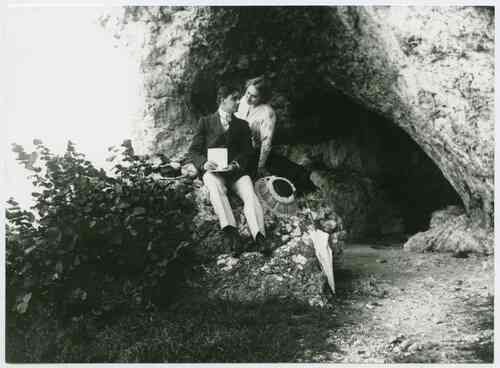
Our protagonist, Armand (John Ekman), arrives carrying the swagger of a man who trusts colour more than creed. Ekman—later eclipsed by Stiller’s colossi—here radiates the smouldering diffidence of a Schiele self-portrait; his gaunt cheeks devour half the frame, letting eyes do the talking, those twin cobalt coals. Notice how he pockets his chalk-stained hands whenever conversation veers toward eternity: a painter afraid of fingerprints on his soul.
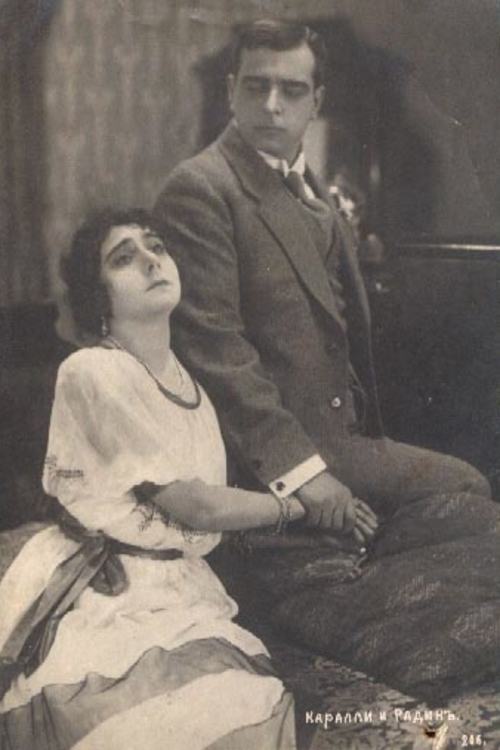
Opposite him stands Gaspard, the widow shrouded in sable bombazine, performed by Danish diva Clara Pontoppidan with the glacial poise of a woman who has already read her own epitaph. Pontoppidan weaponizes stillness; she reclines on rattan chaise-longues as though posing for a sarcophagus relief, yet her pupils—inky eclipses—track every fluctuation of power in the room.
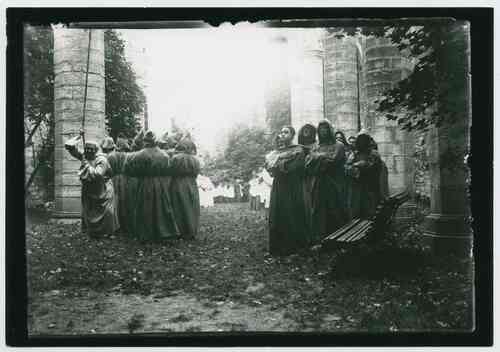
Jenny Tschernichin-Larsson’s Estelle pirouettes between childhood and the carnivorous bloom of sexuality. One moment she is all windblown flaxen hair, chasing gulls; the next she reclines against sea-wall granite, lips parted as though tasting the word “future” on the salt air. The camera—still tethered to static tableaux—cannot dolly, so Jørgensen bends space via diagonal blocking: Estelle advances along an invisible hypotenuse toward Armand’s easel, each step shortening the moral distance between muse and lover.
Enter the abbé Prévost, incognito beneath a jaunty boater. Carlo Wieth plays him like a chessmaster disguised as a tourist: the smile too cordial, the blink too measured. Watch how he fingers his rosary inside pocket-linen whenever Estelle laughs—each pearl a metronome counting down to Armand’s profane epiphany.
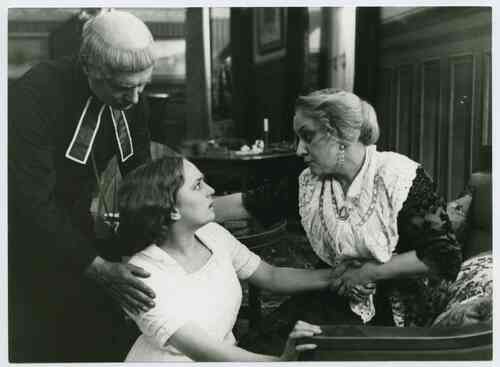
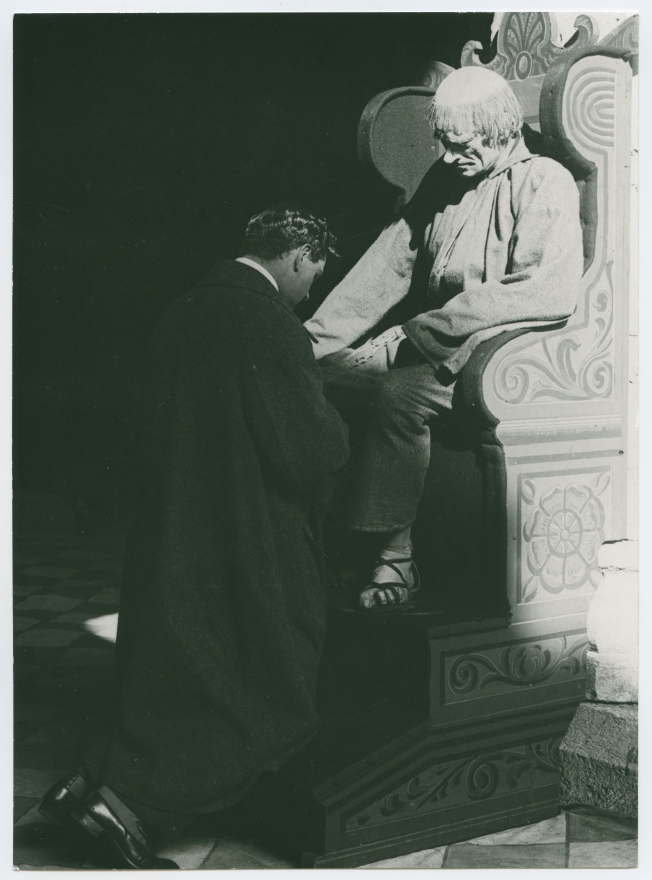
The miracle of the title is not some tacky thaumaturgy but the transmutation of coercion into choice. Jørgensen withholds catharsis until the final 40 seconds: Armand’s canvas, earlier glimpsed only in tantalizing fragments, is finally revealed in long-shot—apostles writhing under a sulphuric firmament. Yet the abbé, now cassock-clad on the sand, kneels—not in adoration but in surrender, acknowledging that faith must make room for pigment if it hopes to breathe.
Cinematographer Julius Jaenzon (future partner to Sjöström) squeezes miracles from orthochromatic stock: whites flare like magnesium, blacks sink into abyssal gloom, and seafoam flickers between silver and nicotine depending on the angle of Scandinavian sun. Intertitles—sparse, haiku-brief—are lettered in crimson, as though each card were flayed from a devotional manuscript.
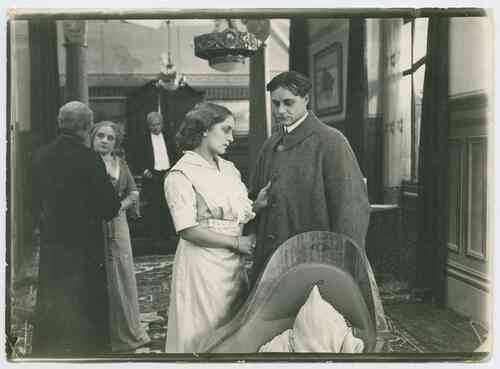
Compare the film’s moral geometry to contemporaneous Catholic pageants like From the Manger to the Cross or Life and Passion of Christ: those sermons-in-spectacle demand submission; Miraklet whispers sedition, suggesting the holiest act may be to walk away from the abbey gate whistling a secular tune.
Listen to the sound of absence: no score survives, so your living-room silence becomes the default soundtrack. Every creak of your chair is a footstep on the pier; every distant siren, a fog-bell warning Armand away from chaste imprisonment. The lack of musical directive liberates interpretation—will you hear Debussy’s marine arabesques or simply the arrhythmic thud of your own pulse?
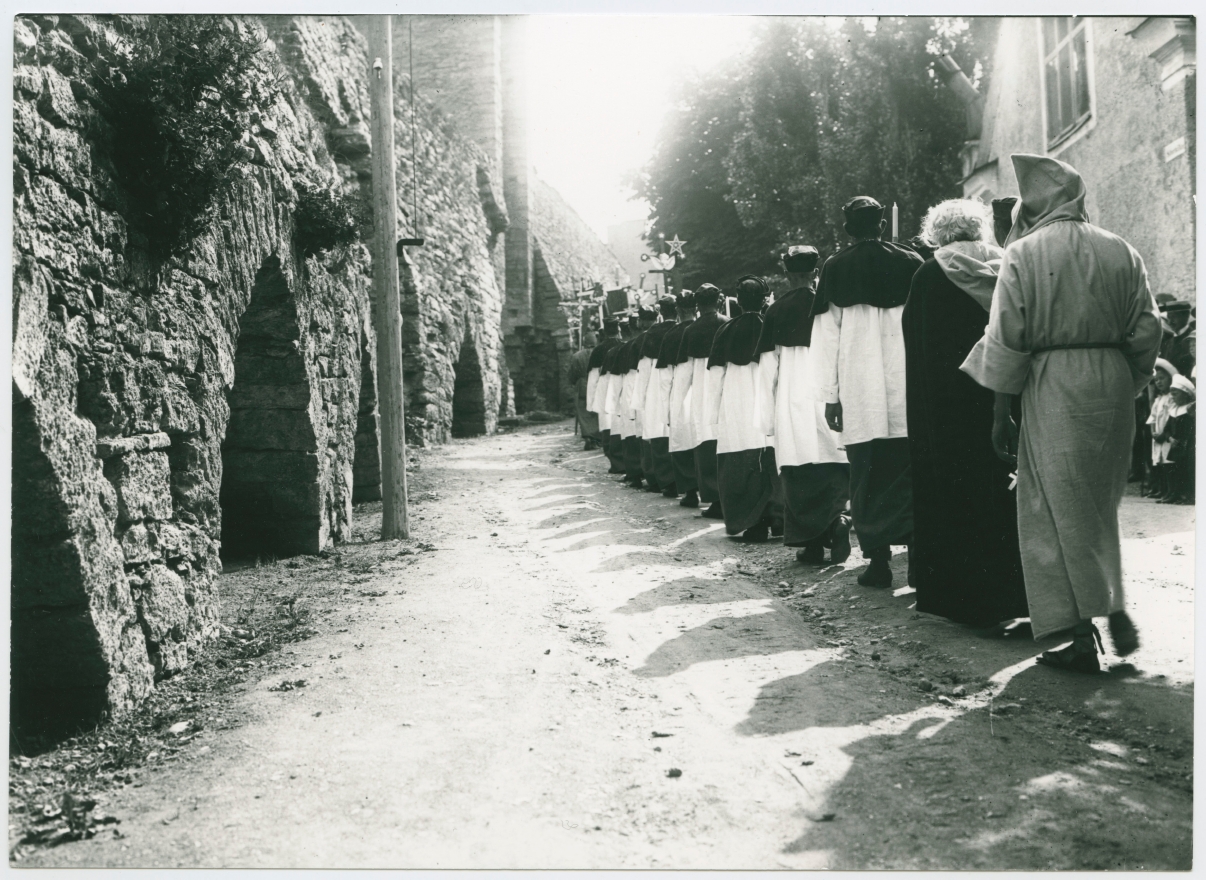
Gender politics simmer beneath petticoats. Gaspard’s transactional matchmaking exposes the marriage market as clerically sanctioned prostitution; Estelle’s final ribbon—left fluttering on Armand’s easel—becomes a suffragist pennant, staking claim to erotic autonomy decades before first-wave feminism reached Nordic shores.
Yet Jørgensen refuses modernist self-congratulation. The closing tableau—three figures arranged like a secular triptych—offers no fist-pump liberation, only the vertiginous openness of choice. Armand’s barefoot prints recede into tidal mist; Estelle’s ribbon trembles like a question mark; Gaspard’s gloved hand hovers between wave and benediction. Resolve dissolves, as it should, into brine and ozone.
Scholars often tether this film to Zola’s The Sin of Father Mouret, but the DNA is more decadent, closer to Huysmans’ En Route inverted: instead of a believer toppling into skepticism, we witness skepticism discovering the carnal urgency of belief—in art, in skin, in horizon.
Availability? Prints circulate in 2K scans on archival gateways, though beware desaturated bootlegs. The correct tinting cycles through nicotine amber for interiors, aquamarine for seascapes, and a bruised lavender for twilight confrontations—chromatic scripture you forfeit in grayscale dupes.
Should you programme a double bill, pair it with Glacier National Park for a dialectic: nature as cathedral versus nature as atelier. Or juxtapose against Les Misérables to trace how divergent national imaginations process sin, redemption, and the vexatious border between them.
My verdict? Miraklet is a pocket-sized revolution—brief as a sneeze, yet it leaves you sneezing blood. It smuggles modernity into a century-old frame, asking the heretical question: if divinity cannot accommodate the laughter of a girl on a pier, what use is it? Seek it out, let the North-Sea wind howl through your 4K television, and when the final card cuts to black, resist the urge to genuflect. Instead, squeeze pigment onto a palette, kiss the person you desire, and paint something that might, one day, be deemed miraculous.
Community
Log in to comment.