DbcultAccessing Vault...
Cult Review
Senior Film Conservator
There are films you watch and films that watch you. Ferravilla belongs to the latter breed—an orphaned reel that seems to coil around your ankles like celluloid smoke, tugging you backward into a century-old argument between a country and its own reflection.
Shot on the eve of the Great War, when Europe teetered like a tipsy tightrope walker, this one-reel oddity bypasses plot in favor of atmosphere-as-arsenal. Giacomelli—actor, phantom, possibly projectionist—never announces a character name; instead he shape-shifts through social strata the way a moth flits across candle flames, leaving wisps of wing-dust that spell out forgotten occupations: charcoal burner, telegram boy, mule-skinner, penitent. The camera, starved of orthodox coverage, lingers on gestures rather than events: calloused thumbs rubbing the braille of a worn lira coin, a woman’s shoulder blade twitching when distant artillery is only rumor, a child’s thumbnail scraping the same blister on the same heel—repetition as historiography.
Context is everything and nothing. Italy in 1915 had just shed its neutral stance; patriotic broadsheets papered over regional fault lines. Ferravilla internalizes that fracture by never committing to geography. Arched aqueducts suggest Lazio, while flat marshlands whisper Veneto; dialects collide in intertitles that sometimes spell the same noun three contradictory ways. The effect is delirious cartography: the viewer becomes compass-less, forced to navigate by scent—rosemary, anise, algae, gun oil—rather than signpost. You feel the nation as pulsating organism rather than map.
Compare this to The Battle and Fall of Przemysl, where siege logistics are diagrammed with military clarity. Ferravilla offers the antithesis: war as weather front, sensed in joints before it breaks. When a squad of soldiers eventually marches across the frame, their boots fall out of sync with the hand-cranked shutter, turning advance into shudder—an army that can’t quite convince itself to exist.
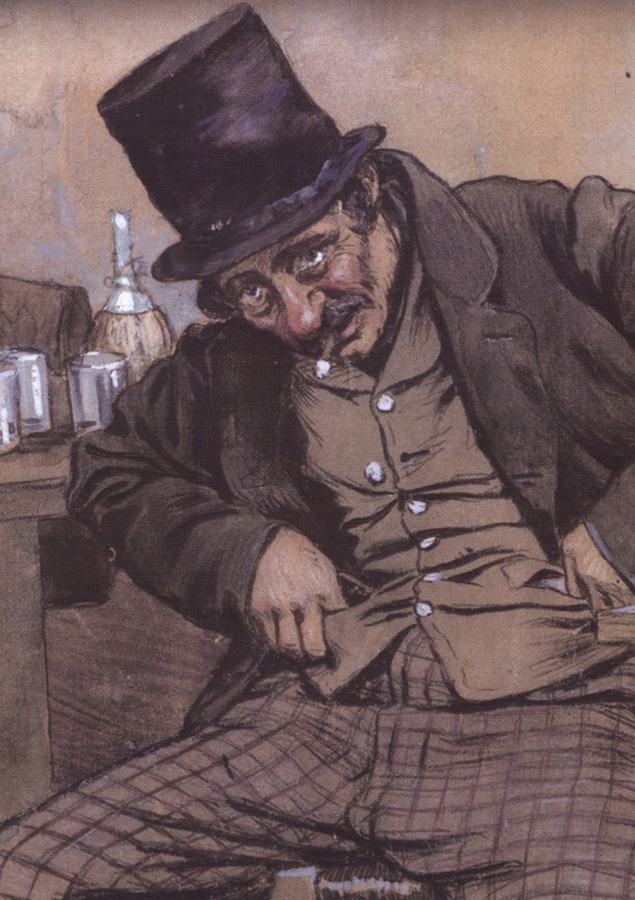
Arnaldo Giacomelli allegedly played every credited role, a claim historians debate yet no one definitively refutes. Face-obscuring devices—burnt-cork mustache, widow’s veil, straw boater tilted to eye-level—abet the illusion, but the giveaway is gait. Watch how the shoulders cave inward when he embodies the village drunk, then square into right-angle righteousness as the Carabinieri corporal. Silent cinema usually relies on physiognomic shorthand; Giacomelli weaponizes postural polyphony, turning body language into dialect.
This multiplicity dovetails with Italy’s own identity crisis: regions stitched together by railway and rhetoric, still measuring citizenship in town-square rivalries. By fragmenting himself across caste, Giacomelli stages the nation’s self-interrogation: Who are we when language, diet, and superstition mutate every fifty kilometers? The performance is Brechtian decades before Brecht, though played not for alienation but for ache—the ache of belonging everywhere and therefore nowhere.
Most surviving prints glow the color of weak tea, yet within that chromatic prison the cinematographer wrings chromatic miracles. Day-for-night scenes are achieved not with filters but with under-exposure and candle bounce, producing umber skies where stars seep through like flecks of mica. Interiors alternate between honeyed lamplight and petrol-blue shadows, a chiaroscuro tug-of-war that anticipates the spiritual agony in Hypocrites yet feels earthier, steeped in garlic and cellar mold.
Note the recurrent motif of cracked vessels: a terracotta urn fissured by frost, a wine flask cleaved during a toast, a hand mirror fractured so that reflections arrive in slivers. Each rupture cues a temporal skip—sometimes forward, often backward—suggesting history itself as fractured crockery glued by storytelling. The editing rhythm mimics this brittleness: shots end on stutter-cuts, actors freeze mid-gesture as if the film itself doubts their corporeality.
Though released without official score, regional exhibitors often commissioned local quartets to improvise. Accounts mention mandolin strums overlaying march tempos, accordion drones that turn Neapolitan song into dirge. Contemporary curators sometimes accompany the reel with field recordings—olive groves at dusk, gravel shifting under pilgrim boots—restoring a sonic topsoil that the original silence excavated. Viewed this way, Ferravilla becomes archaeological site rather than entertainment: you hear the vanished empire in cicada pulse.
Contrast that with Napoleon, whose montage storms forward on symphonic propulsion; here the approach is hydrostatic—history pools, stagnates, breeds larvae. The absence of directive score forces the spectator to provide internal metronome, turning passive consumption into complicit testimony.
Women flicker at frame edges—laundry-whipped silhouettes, market stall matriarchs, a girl who trades marbles for cigarette papers—yet their scarcity charges each appearance with oracular voltage. One sequence lingers on an elderly contadina shelling fava beans; her thumbs, filmed in Bergman-esque close-up, become topographical maps of toil. The camera’s refusal to cut away feels almost indecent, as if cinema itself is siphoning her lifeforce to fuel its own flicker. Meanwhile male bodies parade, posture, perish, but the tactile memory of those beans—husk rasping cotyledon—outlasts their rhetoric. Labor becomes liturgy, matriarchal endurance the only scripture this secular film permits itself.
Adjacent concerns surface in The Squatter’s Daughter, where colonial landscapes masculinize ambition. Ferravilla inverts that gaze: the peninsula itself is feminized—furrowed, harvested, scorched—yet never conquered, an indifferent Madonna watching sons squabble over her lap.
For decades the film survived only as hushed citation in memoirs of projectionists who swore it cursed their booths with spontaneous fires. A nitrate partial surfaced 1987 in a Lucca flea market, missing its finale; digital restoration stitched on a later-found Portuguese export print, resulting in a Frankensteinian composite whose scars show like celluloid varicose veins. Purists howl, but the patchwork aesthetic dovetails thematically—Italy itself is sutured kingdom, its seams always showing.
Cine-clubs now program it alongside Chains of the Past as double-bill of historical amnesia, though Ferravilla offers no redemptive flashback, only the sobering recognition that nations remember in loops as obsessive as hand-washing compulsion. Grad students mine its DNA for post-colonial discourse; TikTok creators sample its shutter-stutter for lo-fi horror shorts. Thus the reel keeps reincarnating, proving that orphan status can be generative: without estate to police copyright, the imagery mutates, meme-ifies, re-authors itself.
Because it refuses to solve the equation of Italianità, preferring to let variables bleed. Because Giacomelli’s eyes—dark as espresso rim—harbor a self-disgust that feels unnervingly contemporary. Because the film’s abrasions teach us that history is not curated museum piece but splintered jug reassembled with bits of our own fingerprints. In an era when algorithmic feeds flatten time into perpetual present, Ferravilla drags you into chronological quicksand: you emerge caked with 1915’s dust, tasting copper, convinced your own pulse has adopted hand-crank cadence.
Seek it in rep houses that risk projector hiccups, or in glitchy 2K streams that smuggle compression artifacts as modern battle scars. Watch it alone if you dare; watch it communally if you crave the nervous laughter that erupts when viewers realize they’ve collectively forgotten how to blink. Either way, let the final freeze-frame haunt you—a piazza empty save for a dog sniffing the spot where soldiers vanished. The bell tolls, the plate cracks, the film loops. Somewhere in those sprocket holes, Ferravilla keeps asking, without subtitle or mercy: “Is this your country, or merely the wound you choose to call home?”
Community
Log in to comment.