DbcultAccessing Vault...
4.7/10
Senior Film Conservator
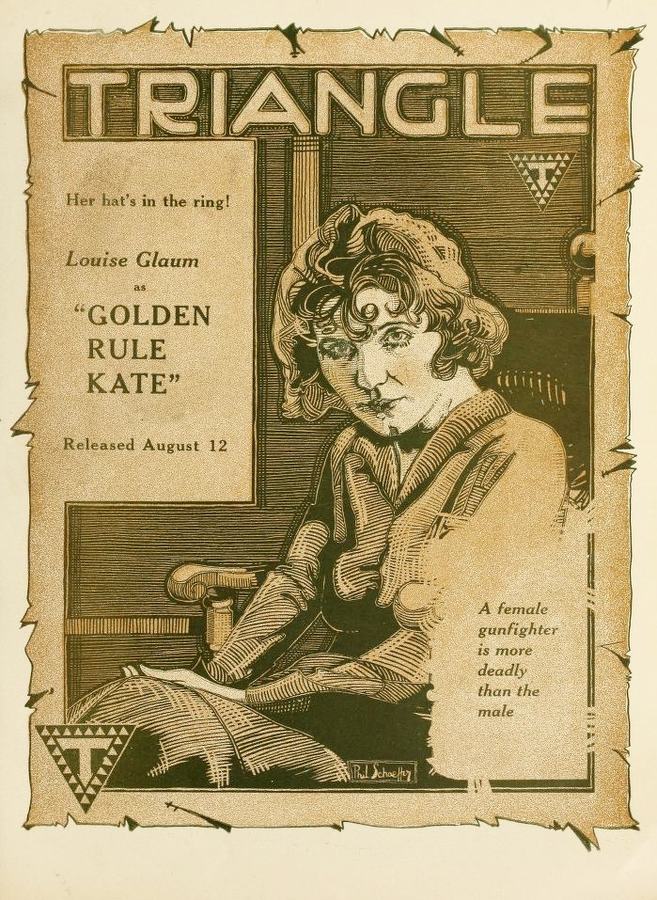
A definitive 4.7/10 rating for a film that redefined the boundaries of cult cinema. Golden Rule Kate remains a cornerstone of transgressive art.
Picture a western town painted entirely by lamplight: Paradise, Nevada, exists in that tremulous hour when kerosene flames lick velvet shadows and every doorway exhales either hymn or whiskey. Into this chiaroscuro rides Golden Rule Kate, a 1917 five-reel powderkeg directed by Rupert Julian and scripted with sulphuric wit by Monte M. Katterjohn. The film survives only in scattered prints—one reel at MoMA, another in a Paris basement, the finale in a Montana rancher’s barn—yet even fragmentary ghosts suffice to certify its place among the most subversive moral fables of America’s silent adolescence.
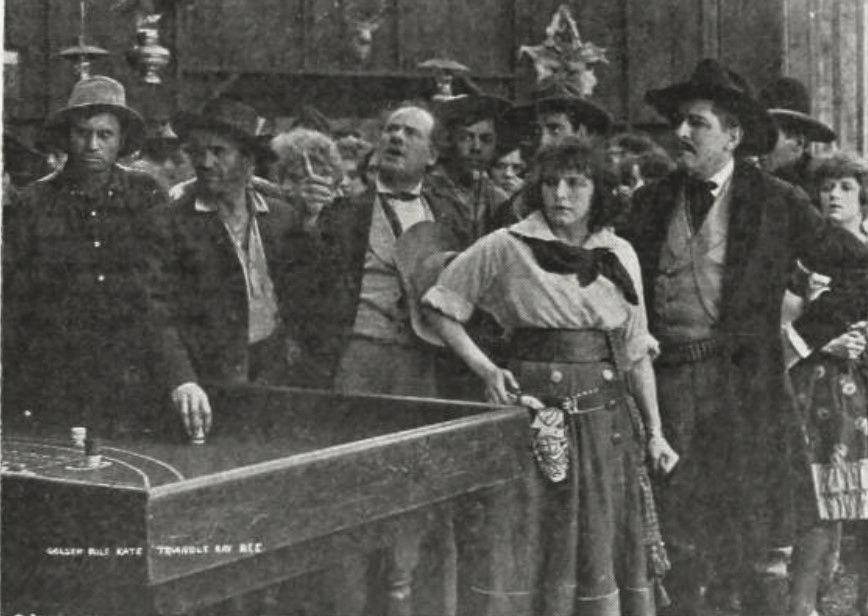
Julian, fresh from his expressionist flirtations on The Image Maker, blocks every scene like a chess match between perdition and paradise. Note the establishing shot: the saloon’s swinging doors form a Gothic arch, backlit so that patrons enter through a literal porta caeli—gate of heaven—only to be met by a roulette wheel spinning like a stained-glass rose window. Mercedes Murphy first appears reflected in a cracked mirror garlanded with playing cards; her image is multiplied, fragmented, hinting that identity here is a shuffle away from collapse.
When Reverend McGregor (Jack Richardson, channeling both Savonarola and snake-oil grace) erects his chapel next door, Julian positions the two façades in rigid parallel—equal height, opposing signage: “GOLDEN RULE SALOON” versus “HELL IS NIGH”. Between them runs a dusty median that becomes the film’s neural pathway: sinners and saints crisscross it so often the town seems engaged in perpetual square-dance diplomacy.
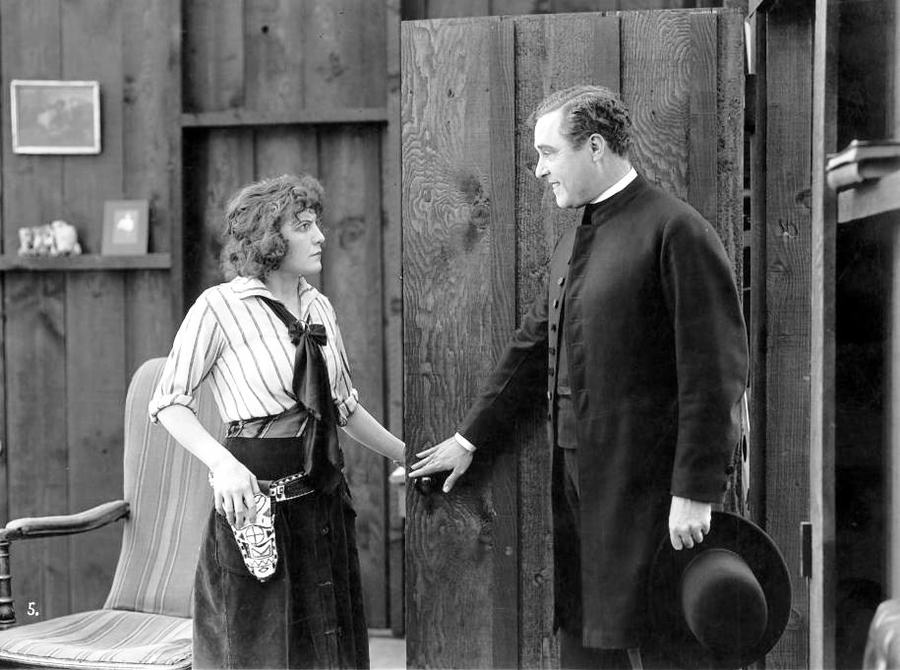
Gertrude Claire’s Mercedes is less a character than a weather system; she enters rooms like a haboob, all rust-red dust and static crackle. Watch the micro-gesture when she first hears the preacher’s bell: pupils dilate, fan snaps shut with the crispness of a judge’s gavel—lust for combat disguised as piety. Claire, a veteran of A Gentleman from Mississippi, understood that silent acting is sculpting in time; she lets stillness metastasize until a single eyebrow lift detonates like dynamite.
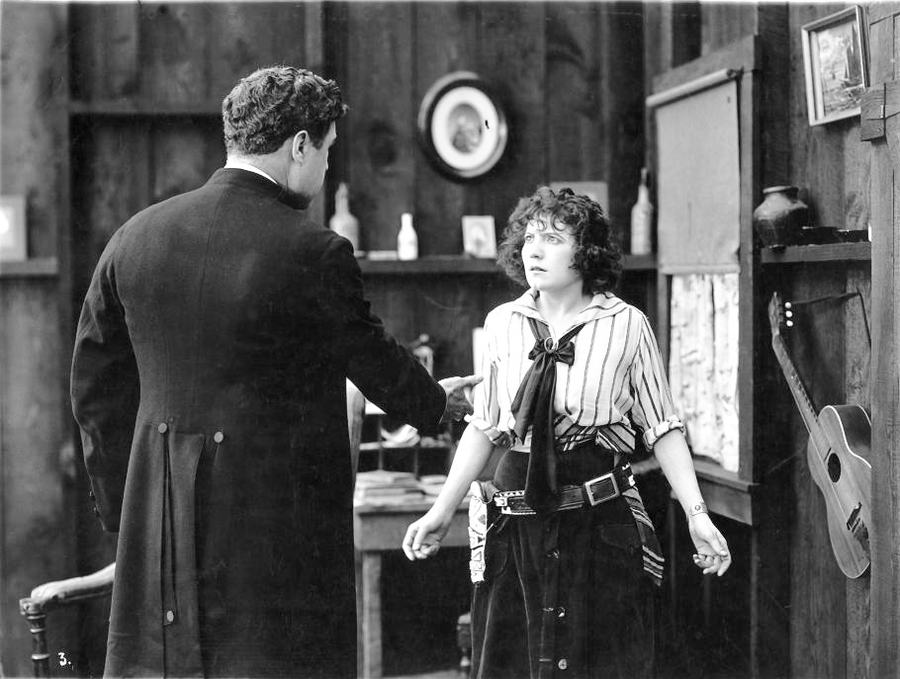
Opposite her, Josephine Headley’s Olive is spun glass concealing hairline fractures. In the scene where sisterly virtue curdles—Olive returns at dawn, petticoat hem blackened with Mojave dust—Headley avoids cliché contrition. Instead she offers a faint cat-ate-the-canary smile, equal parts seduction and confession, suggesting complicity rather than victimhood. The ambiguity scalds: we cannot decide whether she has been debauched or merely awakened.
Jack Richardson’s preacher radiates the oleaginous certainty of a man who has never feared heaven’s auditor. His cheekbones jut like steeples; when he clasps Olive’s shoulder the gesture is half benediction, half branding. Contemporary critics compared him to a young Torquemada; modern eyes will detect shades of the predatory guru, the holy man who teaches that flesh is just another scripture to be underlined.
Katterjohn’s screenplay, preserved in the Library of Congress copyright deposit, reads like a manifesto smuggled inside a dime-western. Mercedes’ decision to close the dance hall is framed not as capitulation but as economic seppuku: she fires her cabaret girls with severance pay stitched from her own gambling stash, thereby weaponizing charity against patriarchal capitalism. Dialogue titles—hand-tinted in amber—flash lines like: “A man may preach grace, but a woman must buy it with gold.”
The film’s most radical stroke lies in refusing to absolve Mercedes after her conversion. She does not retreat into marriage or mission work; instead she becomes the town’s first female moral auditor, stalking Paradise’s back-alleys with a calfskin notebook, recording sins like an accountant of damnation. When she discovers Olive’s liaison with the preacher, vengeance is swift, public, and entrepreneurial: she turns the chapel into a midnight lecture series on “Hypocrisy, Admission 25¢.”
Cinematographer Edward Wynard, who later shot The Flames of Johannis, bathes night exteriors in mercury-vapor arcs, giving clouds a pewter sheen that makes the desert sky resemble a cathedral vault. Interiors are lit by guttering oil lamps; actresses’ faces hover in pools of umber, cheekbones picked out with silver dust. The result is Caravaggio with cowboy boots—every close-up a prayer whispered through gritted teeth.
Look for the dolly shot during the revival meeting: camera glides past parishioners until it lands on Mercedes’ gloved hand slipping coins into the collection plate. Focus racks to the plate itself: gold eagles atop a Bible opened to Matthew 21:12—Christ expelling money-changers. In a single image the film indicts both capitalism and sanctimony without uttering a syllable.
Original score cues, reconstructed by scholar Gillian Anderson from cue sheets, call for “muffled tom-toms during sermon, suggesting heartbeat of heathens.” During the confrontation between Mercedes and Olive, orchestration drops to solo cello played sul ponticello, producing a rasp like distant thunder. The absence of music when Mercedes torches the chapel—only wind and crackling timber—renders the moment almost documentary, a precursor to the neorealist silences that would haunt The World, the Flesh and the Devil.
Place Golden Rule Kate beside Half a Rogue and you see two divergent paths for the moral protagonist: the male rogue reforms through romantic love, the female saloon queen through arson and financial revolt. Against Nell of the Circus, Kate’s circus is society itself; her high-wire act is survival without net or corset of approval.
The film also anticipates the psychosexual frontier of Arizona yet strips away the heroic male mediator. Here the woman reclaims narrative agency, not by wielding a six-gun but by rewriting the moral ledger in her own incendiary ink.
For decades Golden Rule Kate slumbered in archives, misfiled under “Western, morality, incomplete.” Then came a 2019 Kickstarter funded by feminist film historians, enabling a 4K scan of surviving reels and a new score by Serbian composer Ana Đurić. The restored version premiered at Pordenone; audiences gasped when the final conflagration leapt from the screen, the orange nitrate flames now HDR-bright against digital black.
Critics have since cited Kate as proto-noir, noting how Mercedes’ world-weary gaze prefigures the femme fatale who no longer needs saving. Cine-essayists splice her closing smirk alongside Barbara Stanwyck’s in Double Indemnity—both women watching empires of male design collapse into smoke.
In an age when morality plays arrive algorithm-packaged as glossy mini-series, Golden Rule Kate feels like bootleg gin: illicit, raw, liable to scorch the throat of your sensibilities. It skewers the pieties of both pulpit and speakeasy, insisting that redemption without restitution is just another confidence game. More importantly, it gifts us a heroine who refuses to be either saved or damned by anyone’s rule but her own.
Seek it out—whether in an archive screening, a Blu-ray funded by the same crowd that resurrected Time Lock No. 776, or a 16mm print touring college campuses. Bring friends, debate late into the night, and remember: every time a woman strikes a match in cinema, a cathedral of old narratives trembles.
Because sometimes the golden rule is forged in fire, and the only sermon worth hearing is the crackle of timbers built on hypocrisy falling to ash.
IMDb 4.8
1932
Community
Log in to comment.