DbcultAccessing Vault...
7.3/10
Senior Film Conservator
A definitive 7.3/10 rating for a film that redefined the boundaries of cult cinema. Way Down East remains a cornerstone of transgressive art.
Stepping back into the cinematic landscape of 1920, one encounters D.W. Griffith's monumental achievement, Way Down East. This isn't merely a silent film; it's a colossal melodrama, a testament to an era when narrative spectacle and raw emotionality converged to captivate audiences on an unprecedented scale. Griffith, ever the showman and a pioneer of the medium, takes the well-worn tropes of the wronged woman and the societal outcast and elevates them into an operatic tragedy, punctuated by moments of breathtaking suspense and genuine human pathos. It's a film that, even a century later, retains its power to enthrall, primarily due to its audacious direction, an incandescent central performance, and a narrative that, for all its melodramatic flourishes, digs deep into timeless societal anxieties.
At the heart of this sprawling narrative is Anna Moore, brought to vivid, vulnerable life by the incomparable Lillian Gish. Anna is the epitome of rural purity, a guileless country girl whose naiveté becomes her tragic flaw. Her world, a pastoral idyll, is shattered by the arrival of Lennox Sanderson, portrayed with a chilling blend of charm and duplicity by Lowell Sherman. Sanderson, a quintessential cad of the silver screen, preys upon Anna's trusting nature, luring her into what she believes is a legitimate marriage. The sham ceremony, a cruel deception, leaves her utterly exposed, pregnant, and ultimately abandoned. Griffith meticulously crafts this descent, allowing the audience to feel the crushing weight of Anna's betrayal and the subsequent societal opprobrium. Her journey from the vibrant innocence of her home to the cold, unforgiving streets of a city, burdened by an illegitimate child, is depicted with an unflinching gaze, highlighting the brutal hypocrisy of a society quick to condemn the victim while often excusing the perpetrator. The loss of her infant, a scene rendered with heart-wrenching realism by Gish, cements her status as a figure of profound sorrow, a pariah in a world that offers little solace or understanding.
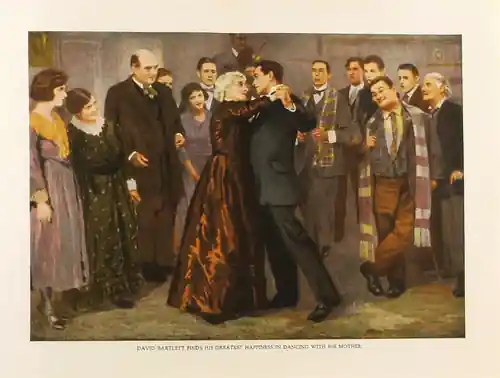
Anna’s odyssey doesn't end in despair, however. She seeks refuge in a new community, finding work and a semblance of peace in the household of Squire Bartlett, a stern but ultimately benevolent patriarch, played by Burr McIntosh. Here, she encounters David Bartlett (Richard Barthelmess), the Squire's son, a man of genuine kindness and integrity who falls deeply in love with her, unaware of her shadowed past. This period of fragile happiness is constantly threatened by the specter of her former life. The tension builds relentlessly as the audience anticipates the inevitable revelation, the moment when Anna’s carefully constructed new identity will crumble under the weight of her secret. It's a masterful exercise in suspense, rooted not in physical peril but in the emotional vulnerability of its protagonist and the rigid moral codes of the era. The film thus transforms from a tale of personal tragedy into a broader indictment of societal judgment, exploring how a single misstep, however manipulated, could irrevocably brand an individual, particularly a woman, in the eyes of her community.
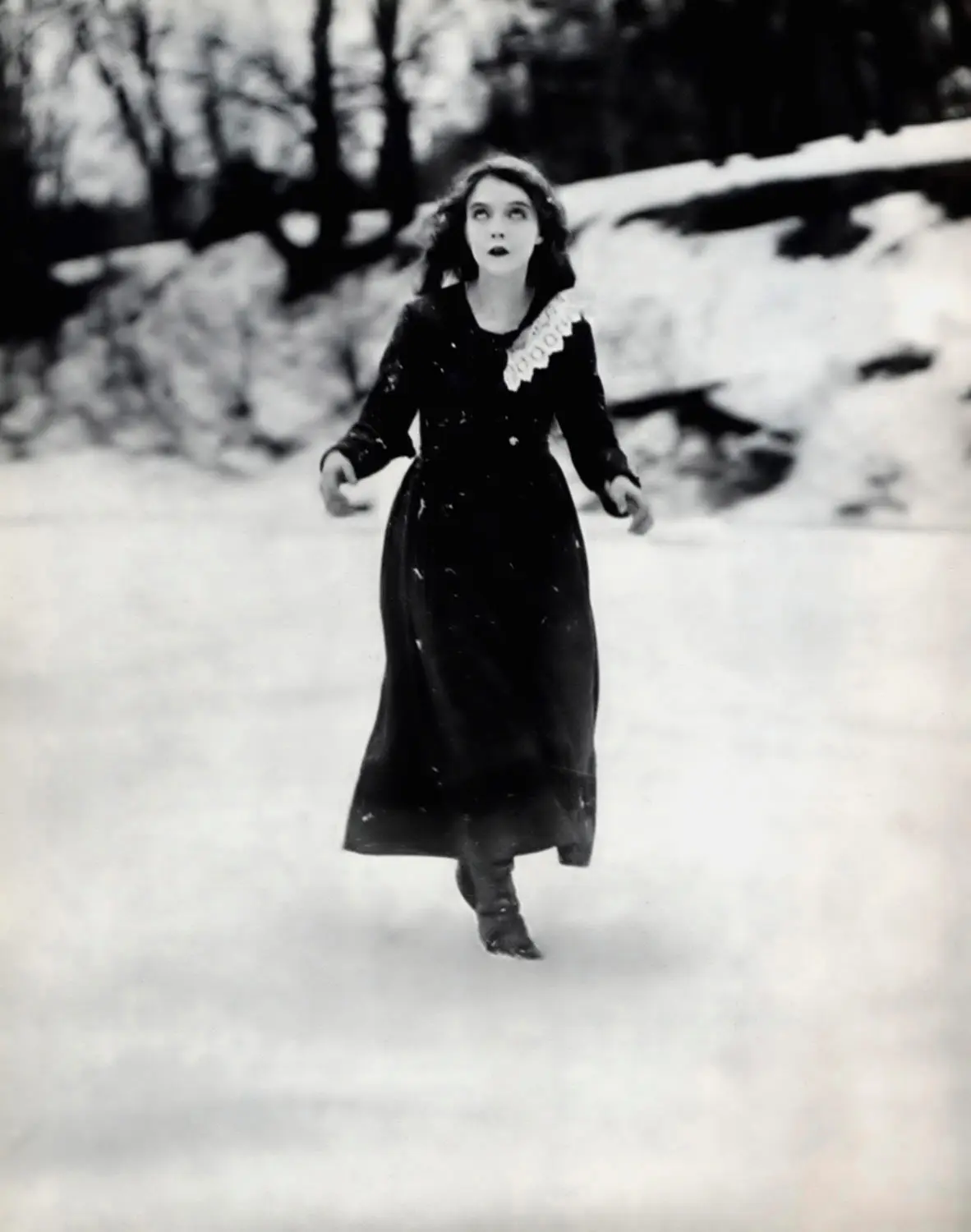
To speak of Way Down East without extolling the virtues of Lillian Gish's performance would be a critical oversight of the highest order. Gish, already a seasoned veteran of Griffith’s ensemble, delivers a tour de force that remains one of the most celebrated in silent cinema history. Her portrayal of Anna Moore is a masterclass in nuanced expression, transforming what could have been a one-dimensional damsel into a complex, deeply empathetic character. From the initial blush of youthful infatuation to the crushing despair of abandonment, the quiet dignity of her resilience, and the sheer terror of her final ordeal, Gish conveys every emotion with an authenticity that transcends the limitations of silent acting. Her eyes, often wide with innocence or brimming with unshed tears, are windows into Anna’s tortured soul. Her body language, whether shrinking from a judgmental glance or desperately clinging to life on an ice floe, speaks volumes without uttering a single word. It is a performance of breathtaking physicality and profound emotional depth, cementing her legacy as one of the greatest actors of any era.
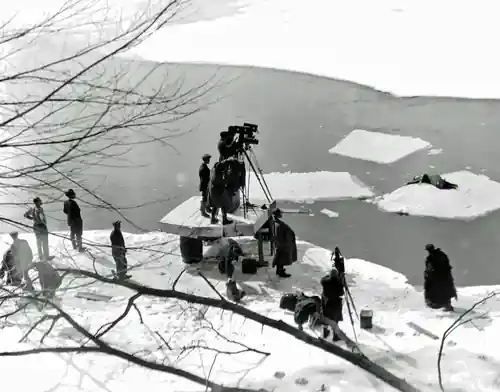
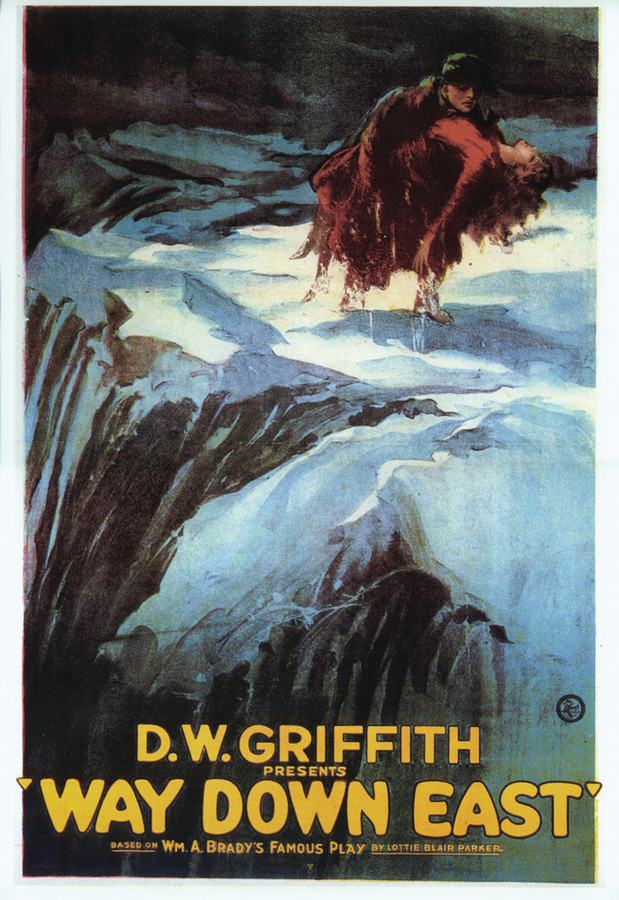
One particular scene that showcases Gish's unparalleled commitment and Griffith's audacious vision is the infamous ice floe sequence. Here, Gish's dedication borders on the legendary, spending hours in freezing water, her fragile frame tossed amidst real ice. This wasn't merely acting; it was an endurance test, and her suffering, visibly etched on her face, lends an almost unbearable realism to the sequence. The sheer physical vulnerability she projects makes Anna's struggle against the raging elements not just a plot device but a visceral experience for the viewer. This commitment to verisimilitude, pushed to its extreme, distinguishes Gish's work and elevates the entire film from a mere melodrama to an unforgettable cinematic event.
D.W. Griffith’s directorial hand is evident in every frame of Way Down East. Known for his pioneering techniques, Griffith employs a rich tapestry of cinematic devices that keep the narrative propulsive and visually engaging. His use of parallel editing, particularly in the climactic chase, is nothing short of masterful, intercutting between Anna’s perilous journey on the ice and David’s desperate race to save her. This technique, which Griffith had refined in earlier works, builds suspense to an almost unbearable pitch, drawing the audience into the urgency of the moment. The film's pacing, while deliberate in its emotional buildup, explodes into a flurry of action during its famous climax, demonstrating Griffith's command over cinematic rhythm.
Beyond the technical prowess, Griffith uses the film to explore complex themes that resonate even today. The stark contrast between urban vice and rural innocence, the unforgiving nature of societal judgment, and the possibility of redemption through unwavering love are all central tenets. The character of Lennox Sanderson, the wealthy seducer, embodies a particular kind of class-based moral decay, while Anna represents the vulnerability of the less privileged. Griffith, alongside writers Lottie Blair Parker, William A. Brady, Joseph R. Grismer, and Anthony Paul Kelly, adapted the popular stage play, retaining its melodramatic heart but expanding its scope for the cinematic medium. The film, therefore, functions not just as entertainment but as a commentary on the rigid moral codes and class distinctions prevalent at the turn of the century.
While Gish undeniably commands the screen, the supporting cast provides crucial anchors for the narrative. Richard Barthelmess as David Bartlett is the embodiment of steadfast virtue, his earnest love for Anna providing the emotional counterpoint to Sanderson's villainy. His portrayal is earnest and heartfelt, making his eventual discovery of Anna's past all the more agonizing. Lowell Sherman, as Sanderson, is wonderfully despicable, oozing a superficial charm that makes his betrayal all the more sinister. The film also features strong character actors like Vivia Ogden as the gossipy Martha Perkins and Emily Fitzroy as the stern but ultimately compassionate Mrs. Bartlett, each contributing to the rich tapestry of the rural community.
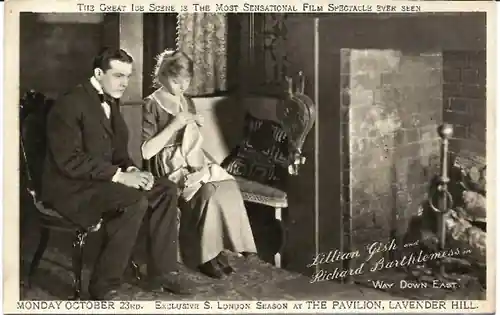
The narrative, for all its grand gestures, is also attentive to smaller, human details. The warmth of the Bartlett home, the simple pleasures of rural life, and the tight-knit community provide a stark contrast to Anna's earlier experiences. These moments ground the melodrama, making Anna's plight feel more immediate and her eventual acceptance (or rejection) by the community carry significant weight. The film's examination of societal forgiveness and the power of genuine empathy is particularly poignant. It suggests that true virtue lies not in adhering to rigid dogma but in extending compassion, a message that resonates profoundly.
No discussion of Way Down East would be complete without a deep dive into its legendary climax. The sequence, where Anna drifts precariously on an ice floe towards a thundering waterfall, with David in a desperate race against time to save her, is a masterclass in cinematic suspense. Griffith orchestrates this scene with an almost unbearable tension, cutting rapidly between Anna's increasingly desperate situation, the raging river, and David's frantic pursuit. The use of real ice and the genuine peril faced by Gish lend an authenticity that CGI could never replicate. The scene is a physical manifestation of Anna's internal struggle, her life hanging by a thread, mirroring her emotional journey through societal condemnation. The close-ups on Gish's freezing, terrified face are iconic, conveying raw human fear and fragility. The sheer scale of the natural elements — the vast, indifferent river and the looming waterfall — dwarfs the human drama, yet simultaneously amplifies its stakes. It is a sequence that has been endlessly imitated but rarely equaled, a testament to Griffith's daring and Gish's incredible bravery. This scene alone is often cited as a reason for the film's enduring legacy, a spectacle that transcends its era.
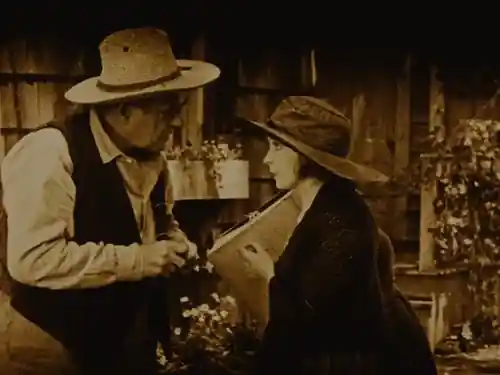
The visual storytelling here is unparalleled. The vast, expansive shots of the river, juxtaposed with the intimate terror in Anna's eyes, create a powerful dynamic. The sound of the rushing water, though absent in a silent film, is almost palpable through the sheer force of the visuals. This climax is not just an action sequence; it's a profound metaphor for Anna's life, constantly on the brink, battling forces far larger than herself. The eventual rescue, though anticipated, is no less exhilarating, offering a cathartic release after such prolonged tension.
Way Down East stands as a towering achievement in silent cinema and a defining example of the melodrama genre. It demonstrated the immense power of film to evoke strong emotions and tell grand, sweeping stories. Its influence can be seen in countless films that followed, particularly those that explore themes of social injustice, personal redemption, and the triumph of good over evil. While some might dismiss melodrama as overly sentimental, Griffith's film proves that when executed with such conviction and artistic prowess, it can be deeply affecting and socially resonant. The film's success also cemented the star power of Lillian Gish, whose ability to convey profound emotion without dialogue made her a legend.
Comparing it to other films of its era, one might draw parallels with other narratives centered on female struggle against societal constraints. While perhaps less overtly political than some, The Stronger Vow or The Better Woman, Way Down East excels in its intimate portrayal of a woman's battle for dignity and acceptance. It shares with films like Sins of Ambition a dramatic exploration of moral corruption among the wealthy, but grounds its narrative in the profound personal suffering of its protagonist. Its enduring appeal lies in this potent combination of spectacular action, heartfelt emotion, and a timely critique of moral rigidity.
In conclusion, Way Down East is more than just a historical artifact; it is a vibrant, compelling piece of cinema that continues to resonate. Its masterful blend of intense drama, pioneering filmmaking techniques, and an unforgettable central performance by Lillian Gish ensures its place in the pantheon of great films. Griffith's ability to craft a narrative that is both deeply personal and grandly spectacular is on full display here. It reminds us of the enduring power of storytelling, the resilience of the human spirit, and the timeless struggle between innocence and experience, compassion and judgment. If you've never experienced the breathtaking suspense of Anna Moore's journey across the ice, or the raw emotionality of Gish's performance, then you owe it to yourself to delve into this silent era masterpiece. It’s a journey that, even without spoken words, speaks volumes to the human heart.
IMDb —
1927
Community
Log in to comment.