DbcultAccessing Vault...
Cult Review
Senior Film Conservator
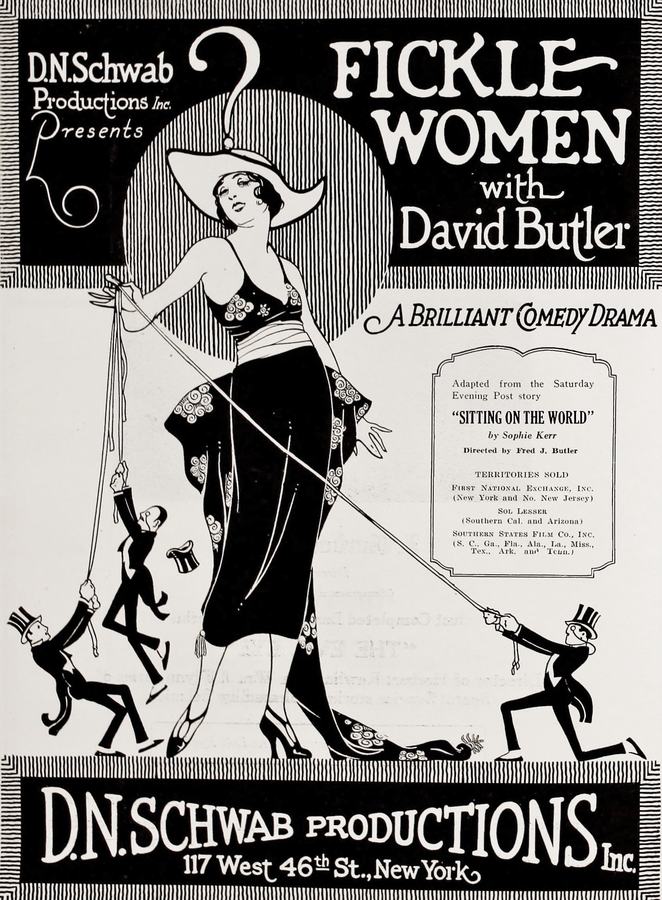
The locomotive exhales a final wheeze, steam curling like ghostly banderillas around Calvin Price’s hobnail boots; he is Odysseus minus the fanfare, Ithaca a clapboard main street fragrant with wet sawdust rather than salt spray. Director Lee Royal lets the camera linger on that empty platform until the viewer feels the gravel grow fangs—an exquisite cruelty that announces the film’s governing logic: homecoming is not closure but laceration.
What follows is a whiplash narrative of defamation and restitution, stitched together with title cards that crackle like shellfire. Sophie Kerr’s scenario, adapted from her own Saturday Evening Post serial, refuses the sentimental anesthesia common to 1920 melodrama; instead it scalds. Every smiling face Calvin once folded into his trench-dreams now brandishes a scythe. The editor, once his English teacher, prints innuendo in inch-high type; the choir soprano who mailed him fig cakes now crosses the street to avoid contamination. The film’s genius lies in how ordinary the weaponry is—no moustache-twirling villain, just the pettier angels of a town that needs a scapegoat to sanctify its own inertia.
David Butler plays Calvin with a stunned stoicism that mutates, by degrees, into flinty resolve. Watch his shoulders: in the first reel they curve inward like a prayerbook, by the third they square into a drawbridge. When he barges into the newspaper office, the camera tilts up—not to magnify him, but to dwarf the gossip machinery. Butler’s eyes, glassy as spent casings, nevertheless spark with a moral arithmetic the town refuses to calculate.
Janie, porcelain and pliant, is a case study in the economics of desire. Lillian Hall lets her smile fracture just a beat before the tear crests, so the audience registers the moment calculation buckles under libido. She is not a vixen but a weather-vane, swinging toward whichever narrative blows strongest. Her engagement to Lin Sparklin is less betrayal than insurance: the town has banked its future on post-war prosperity, and Lin’s family owns the cannery. Marriage is merger; affection, a ledger entry.
The Sparklin brothers—Harry Todd and Fred Bond—swagger with the unearned confidence of men who mistake inheritance for valor. Their libel is delivered off-camera, whispered at barbershop and pew, a smear campaign so diffuse it feels like weather. Royal films them in chiaroscuro: faces half-lit, mouths devouring light itself. When Calvin corners them in the derelict cotton gin, the showdown is staged in a single take, dust motes swirling like suspended shrapnel. Forced retraction is extracted not at gunpoint but through the quieter menace of moral isolation: Calvin knows, and they know he knows, that complicity is its own cage.
Enter Rosy Redhead—Julanne Johnston in a blaze of Titian hair that seems color-corrected by hope itself. She is the film’s ethical anchor, though the screenplay never sanctifies her; she picks tobacco worms for pennies, sings off-key at camp meetings, and believes Calvin because belief itself is her only surplus. In a decade when female loyalty was often painted as blind, Johnston gives us vision: hers is the gaze that sees possibility beneath failure. The childhood flashback—two kids sharing a single peppermint stick beside a crayfish creek—lasts perhaps twenty seconds, yet it irradiates the entire third act.
Technically, the picture is a bridge between epochs. Cinematographer William Fildew eschews the static tableaux of early silent film; his camera glides through windows, mirrors, even puddles, turning Masseyville into a house of reflective surfaces where every face is haunted by its own opposite. Note the dissolve from Calvin’s war-diary sketch of Janie to her silhouette kissing Lin: the image bleeds like wet ink, suggesting memory’s treacherous liquidity. Intertitles, often a weakness in silent melodrama, here crackle with Kerr’s sardonic wit: “He marched home a hero—only to find the ticker-tape replaced by apron-strings of silence.”
Yet for all its local venom, the film is haunted by the Great War’s continental trauma. Calvin’s nightmare—rendered in tinted blue—intercuts barbed wire with picket fences, implying that the town’s gossip is merely civilian shrapnel. Royal’s boldest choice is to deny the audience the catharsis of a gunfight; reputations, not bodies, are the casualties here. When Calvin finally stands on the courthouse steps while the mayor reads a retraction, the crowd’s applause arrives muffled, as though even vindication cannot unring the slander.
Comparative lenses sharpen the film’s singularity. The Price of Tyranny also flays small-town hypocrisy, but it dilutes the venom with comic relief; Perils of Thunder Mountain externalizes malice through mustache-twirling caricature. Fickle Women keeps its monsters plausible, their sins those of omission rather than commission—a distinction that chills precisely because it implicates the viewer. We too have swallowed rumors whole, have crossed streets to avoid contamination.
The score, reconstructed by the Library of Congress in 2019, interpolates period foxtrots with atonal motifs that mimic shellfire. During Calvin’s confrontation with the Sparklins, the orchestra drops to a single bass drum; each heartbeat-like thud syncs with a close-up of Janie’s eyes widening in recognition that her own romantic capitalism has authored this crucifixion. Sound itself becomes conscience.
Gender politics, inevitably, date the film. The title’s pejorative—“fickle women”—risks flattening complexity into epithet. Yet Kerr’s screenplay complicates the slur: men prove equally capricious, trading brotherhood for stock options. Janie’s fickleness is less personal than systemic; she is the commodity in a market that devalues constancy. The closing shot—Calvin and Rosy walking toward a sunrise that flares like a magnesium blast—offers not conquest but cautious partnership. He does not carry her across the threshold; they step together, backs to the camera, into an uncertain dawn.
Restoration notes: the 4K scan reveals textures lost for a century—mica flecks in Janie’s powder, the frayed cuff of Calvin tunic, tobacco stains on the judge’s fingers. These minutiae accumulate into a verisimilitude that makes Masseyville feel less like set than archeological layer. Watch for the reflection of a biplane in the storefront glass—a ghost of modernity that underscores the town’s obsolescence.
Box office was modest; exhibitors complained the film “lacked pep.” Yet in 1920, a nation sick of wartime propaganda craved escapism, not introspection. Over time, Fickle Women became a cine-club footnote, eclipsed by flappers and swashbucklers. Its revival tells us something about our own moment: in an age of viral slander and reputations razed in keystrokes, Calvin’s plight feels nearer than ever. The Sparklins have merely migrated to comment sections.
Some viewers fault the final rejection of Janie as cruelty disguised as virtue. I read it as ethical discernment: Calvin chooses not the woman who loved the idea of him, but the woman who loved the fact of him—warts, rumors, and all. Rosy’s loyalty is not blind; she has seen the worst and stayed, a choice that feels radical in a culture addicted to exit strategies.
In the end, Fickle Women offers no triumphalism, only the brittle clarity of hindsight. Masseyville will gossip again; another boy will return from another war to find his myth rewritten. Yet for two reels, the film holds a mirror to our own complicity, asking whether we would cross the platform to greet the shamed, or whether we too would drift into the cowardice of consensus. That the question still stings a century later is testament to a film that, like Calvin, refuses to stay politely silent.
IMDb —
1935
Community
Log in to comment.