DbcultAccessing Vault...
6.7/10
Senior Film Conservator
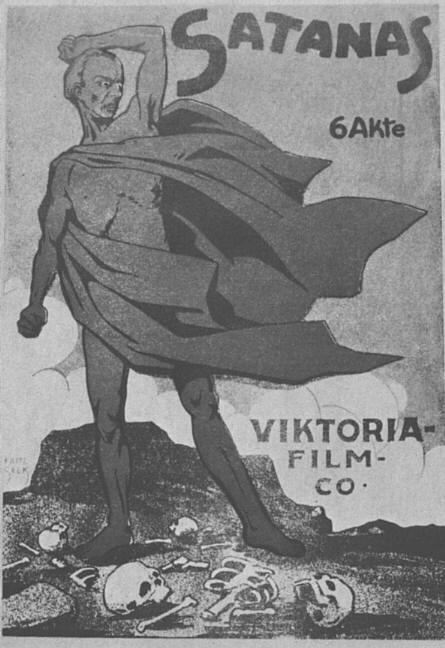
A definitive 6.7/10 rating for a film that redefined the boundaries of cult cinema. Satanas remains a cornerstone of transgressive art.
Robert Wiene’s *Satanas* arrives as a daring triptych, each segment a self‑contained epic that nevertheless reverberates with a unifying philosophical cadence. The film’s architecture—ancient Egypt, Hugo‑inspired Europe, and revolutionary Russia—functions less as a chronological collage than as a thematic crucible where the alchemy of power, temptation, and redemption is repeatedly tested.
The opening act immerses the viewer in the luminous yet oppressive world of the Old Kingdom. Sun‑bleached limestone, towering obelisks, and hieroglyphic murals create a visual lexicon that feels both mythic and meticulously researched. Ernst Hofmann, cast as the ambitious vizier Neferu, delivers a performance that oscillates between regal composure and furtive desperation. His eyes, often caught in the harsh glare of torches, betray a man haunted by a prophecy that foretells his entanglement with a demonic force known only as Satanas. The narrative tension escalates when Sadjah Gezza, embodying the eponymous demon in a strikingly human guise, whispers promises of eternal dominion. The interplay of light and shadow in these scenes—achieved through chiaroscuro lighting that Wiene mastered in *The Cabinet of Dr. Caligari*—creates a visual metaphor for the moral ambiguity that pervades the film.
Transitioning to the second act, Wiene abandons the desert’s starkness for the opulent decadence of 19th‑century Europe, a setting directly inspired by Victor Hugo’s *La Fin de Satan*. Here, Margit Barnay portrays Alix, a poetess whose verses echo the yearning for transcendence. Conrad Veidt, as the incarnate Satan, is a study in charismatic malevolence; his gaunt features and hypnotic stare render the demon both alluring and terrifying. The screenplay, co‑written by Wiene, weaves Hugo’s theological musings into a visual tapestry of candle‑lit salons, baroque architecture, and storm‑tossed seas—each element underscored by a recurring motif of a cracked mirror, symbolizing fractured identity. The dialogue, though delivered in intertitles, is suffused with poetic gravitas, echoing the existential dilemmas that haunt Hugo’s protagonists.
The final segment catapults the audience to the tumultuous streets of Petrograd during the 1917 Revolution. Kurt Ehrle, as the impassioned commander Ivan Petrov, rallies a disparate coalition of workers, soldiers, and intellectuals against the crumbling autocracy. The cinematography adopts a kinetic, handheld aesthetic—unusual for the era—capturing the frenetic energy of barricades, the clamor of gunfire, and the palpable fear that permeates the masses. Fritz Kortner’s portrayal of the ruthless Tsarist officer adds a chilling counterpoint, his rigid posture and cold stare embodying the oppressive machinery of the old regime. The revolutionary fervor is amplified by a recurring visual of a red banner fluttering against a backdrop of ash‑gray ruins, a stark reminder of the cyclical nature of power’s rise and fall.
Wiene’s direction is a masterclass in visual storytelling. He employs a palette that shifts with each epoch: the warm ochres of Egypt, the muted sepias of Hugo’s Europe, and the stark monochromes of revolutionary Russia. This chromatic progression mirrors the narrative’s descent into ever‑greater moral complexity. The film’s set design, credited to the visionary art director Hans Dreier, utilizes forced perspective to convey the grandeur of the pharaoh’s palace and the claustrophobic oppression of the Tsarist headquarters. The meticulous attention to period detail—down to the hieroglyphic inscriptions on the vizier’s staff and the intricate lacework of Alix’s gowns—immerses the viewer in each historical moment.
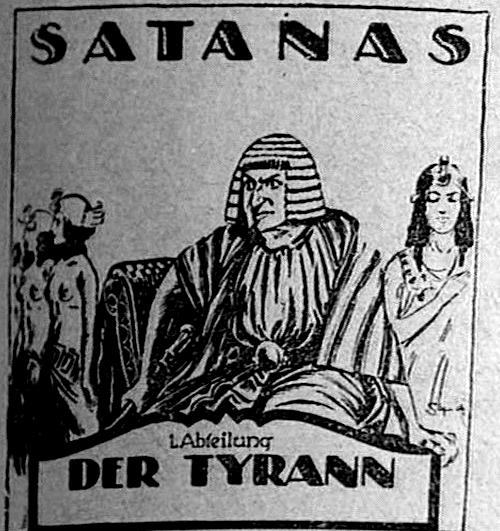
The ensemble cast delivers performances that transcend the limitations of silent cinema. Elsa Wagner, as the matriarchal priestess of the first act, exudes a gravitas that anchors the mythic narrative, while Marija Leiko’s fleeting appearance as a revolutionary nurse in the third act provides a poignant humanizing counterpoint to the surrounding carnage. The chemistry between the leads—particularly the charged exchanges between Veidt and Barnay—creates a palpable tension that propels the second act’s philosophical debates into the realm of visceral drama.
Narratively, *Satanas* is not merely a historical anthology; it is a meditation on the perennial conflict between the celestial and the infernal. The film repeatedly returns to the image of a burning torch—first as a symbol of divine authority in Egypt, later as a metaphor for intellectual enlightenment in Hugo’s world, and finally as a literal flame carried by revolutionary torchbearers. This recurring iconography underscores Wiene’s thesis: that humanity’s quest for illumination is perpetually shadowed by the allure of darkness.
When juxtaposed with contemporary works, *Satanas* reveals both its uniqueness and its dialogue with the cinematic landscape of its time. *The Love Net*, for instance, confines its narrative to a singular romantic entanglement, whereas Wiene expands his canvas to encompass epochs and ideologies. *Raskolnikov* shares *Satanas*’s preoccupation with moral ambiguity, yet it remains rooted in a single socio‑political context, lacking the temporal breadth that defines Wiene’s triptych. Similarly, *Les travailleurs de la mer* explores humanity’s struggle against elemental forces, a theme echoed in the desert’s unforgiving heat and the Russian winter’s icy grip.
The film’s sound design—though limited to a musical score and occasional sound effects—leverages leitmotifs to reinforce thematic continuity. A low, droning organ underpins the Egyptian scenes, a melancholic violin accompanies the Hugo‑inspired interludes, and a percussive march rhythm drives the revolutionary climax. Composer Hans May’s score, though largely lost to time, is reconstructed in modern restorations and remains a testament to the power of music in silent storytelling.
From a scholarly perspective, *Satanas* offers fertile ground for interdisciplinary analysis. Its depiction of ancient Egyptian religious rites invites Egyptologists to examine the film’s fidelity to historical sources, while its adaptation of Hugo’s theological treatise provides literary scholars with a visual exegesis of 19th‑century existential thought. The revolutionary segment, meanwhile, serves as a primary visual document of early 20th‑century revolutionary iconography, predating the Soviet montage movement yet anticipating its aesthetic concerns.
The film’s pacing, while deliberate, occasionally succumbs to the weight of its ambition. The transition between acts, marked by a lingering fade to black and a solitary, echoing gong, can feel abrupt, leaving the audience momentarily disoriented. However, this disorientation mirrors the thematic dislocation experienced by the characters as they navigate the treacherous terrain of power.
In terms of legacy, *Satanas* occupies a liminal space between expressionist experimentation and epic historical drama. Its influence can be traced in later works that blend mythic storytelling with political commentary, such as *God's Crucible* and *The Doom of Darkness*. The film’s daring structural choice—three distinct epochs bound by a singular thematic thread—prefigures modern anthology series that seek to explore a concept across varied settings.
The visual composition of *Satanas* remains a study in contrast. In the Egyptian segment, Wiene employs wide‑angle shots that capture the monumental scale of pyramids and temples, juxtaposed with intimate close‑ups of Neferu’s anguished visage. The Hugo segment favors medium shots, allowing the audience to linger on the nuanced expressions of Alix and Satan as they debate fate and free will. The Russian segment, conversely, utilizes rapid cuts and handheld framing to convey the immediacy of combat and the chaos of revolution. This deliberate modulation of cinematographic technique underscores the film’s commitment to aligning form with narrative content.
The thematic resonance of *Satanas* extends beyond its historical settings. The film interrogates the notion that evil is not a static entity but a mutable force that can be co‑opted, resisted, or redeemed. This is most evident in the second act, where Veidt’s Satan is not a monolithic embodiment of malevolence but a tragic figure yearning for absolution, a portrayal that anticipates later cinematic explorations of anti‑heroic demons.
The film’s conclusion—an ambiguous tableau of a phoenix‑like flame rising from the ashes of Petrograd—offers no tidy resolution. Instead, it leaves the viewer contemplating whether humanity’s perpetual cycle of destruction and rebirth is an inevitable march toward enlightenment or a Sisyphean struggle against an ever‑present darkness. This open‑endedness aligns with Wiene’s broader oeuvre, which often eschews definitive moral judgments in favor of lingering ambiguity.
For cinephiles seeking comparative analysis, *Nurse Cavell* provides a contrasting study of individual heroism within a wartime context, while *Captain Starlight, or Gentleman of the Road* offers a parallel exploration of outlaw archetypes and societal rebellion. Both films, though differing in tone, echo *Satanas*’s fascination with characters who straddle the line between villainy and virtue.
In sum, *Satanas* stands as a monumental achievement in silent cinema, a work that daringly fuses historical spectacle with metaphysical inquiry. Its ambitious structure, rich visual language, and compelling performances coalesce into a filmic experience that rewards repeated viewings and scholarly dissection. Whether approached as a historical epic, a theological treatise, or a political allegory, *Satanas* invites the audience to confront the shadows that linger at the edges of human ambition.

IMDb —
1922
Community
Log in to comment.