DbcultAccessing Vault...
Cult Review
Senior Film Conservator
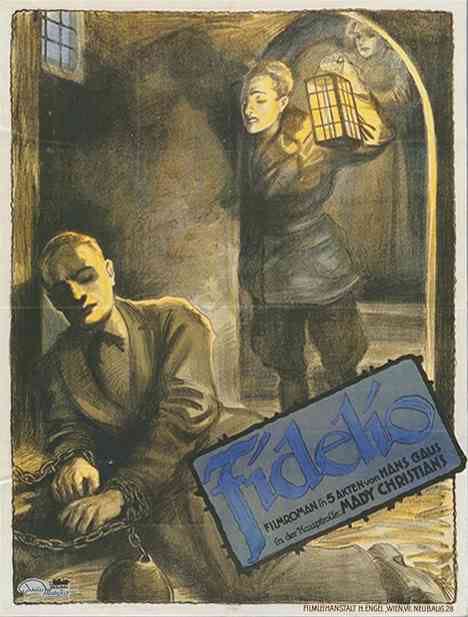
From the opening frames, Fidelio immerses the viewer in a chiaroscuro world where the cold geometry of the prison walls mirrors the emotional austerity of its inhabitants. Paul Passarge delivers a performance that is simultaneously rigid and vulnerable; his eyes betray a lingering tenderness that the script scarcely permits him to express. The cinematography, bathed in muted grays, occasionally erupts into bursts of sea blue (#0E7490) during the nocturnal escape sequence, a visual cue that underscores the fleeting hope that flickers amidst oppression.
The narrative unfolds with a measured deliberateness reminiscent of the structural precision found in classic German expressionist cinema, yet it diverges by weaving a romantic undercurrent that feels both inevitable and subversive. The central conceit—Fidelio’s internal conflict between his oath to the state and his love for Elise—evokes the timeless motif of the individual versus the institution, a theme explored in False Evidence but here rendered with a more intimate, almost claustrophobic intensity.
Elise (Mady Christians) emerges as a fulcrum of emotional gravity; her quiet resolve and whispered defiance provide a counterpoint to Fidelio’s stoicism. The chemistry between Christians and Passarge is palpable, their silences speaking louder than any dialogue. This dynamic invites comparison to the tragic love in La dame aux camélias, where societal constraints suffocate the protagonists’ yearning.
Ernst Stahl‑Nachbaur’s portrayal of General von Hartmann is a masterclass in restrained menace. He navigates the character’s authoritarian veneer with a subtle tremor of doubt, particularly in the scene where he discovers Elise’s clandestine letters—a moment that crackles with electric tension. Julius Brandt, as the lawyer Matthias, offers a flamboyant counterbalance, his theatrical gestures injecting a breath of levity that prevents the film from succumbing to relentless gloom.
The supporting ensemble—Carl Schütte as the relentless detective, Helene Sauer as the enigmatic Countess Livia, and Felix Rossert as the austere Judge Friedrich—each contribute layers of complexity. Schütte’s relentless pursuit feels less like a procedural plot device and more like an embodiment of the state's omnipresent gaze, a motif that resonates with the surveillance themes explored in Mixed Blood.
Director Hans Gaus employs a palette that oscillates between oppressive monochrome and strategic splashes of dark orange (#C2410C) during moments of emotional climax. The prison’s interior, lit by stark overhead bulbs, casts elongated shadows that dance across the stone floors, evoking the oppressive weight of the regime. Conversely, the rooftop scene where Fidelio watches Elise fade into the night bathes the frame in a muted orange glow, symbolizing both the warmth of memory and the ember of lost possibility.
The sound design, though restrained, is meticulously curated; the clank of iron bars, the distant echo of a train whistle, and the whispered rustle of paper letters coalesce into an auditory tapestry that amplifies tension without overwhelming dialogue. The score, a haunting string arrangement, subtly references Beethoven’s opera of the same name, creating an intertextual echo that enriches the viewing experience for connoisseurs of classical motifs.
The film’s pacing is deliberate, allowing each character’s internal struggle to unfurl organically. The first act establishes the oppressive environment; the second act introduces the clandestine romance and the brewing resistance; the third act culminates in the daring escape and courtroom reckoning. This tripartite structure mirrors the classical three‑act model, yet Gaus subverts expectations by interspersing flashbacks that reveal Fidelio’s past as a soldier, thereby contextualizing his present rigidity.
The courtroom sequence, rendered in stark, high‑contrast lighting, is a tour de force of theatrical performance. Passarge’s delivery of his final testimony—“I am not a man of law, but a man of love”—resonates with a raw sincerity that pierces the film’s otherwise measured tone. The judge’s deliberation, punctuated by Rossert’s measured pauses, underscores the moral ambiguity that pervades the narrative.
When juxtaposed with Puppy Love, which treats youthful affection with whimsical lightness, Fidelio treats love as a sacrificial act, a conduit for political dissent. Similarly, the film’s exploration of personal sacrifice aligns with the tragic undercurrents in Rosemary, though Fidelio grounds its tragedy in historical realism rather than supernatural speculation.
The motif of a secretive underground network recalls the resistance portrayed in Il Fauno, yet Gaus refrains from the overt fantastical elements, opting instead for a grounded, almost documentary‑style depiction of subversion.
Released in the interwar period, Fidelio can be read as a veiled commentary on the rise of authoritarianism in Europe. The film’s subtle critique of state surveillance and the erosion of personal freedoms anticipates the cinematic anxieties later articulated in post‑war noir. Its nuanced portrayal of a woman navigating patriarchal constraints offers a proto‑feminist perspective, positioning Elise as both victim and agency‑bearer.
The production design, overseen by art director Friedrich Lenz, meticulously reconstructs the austere architecture of 1920s penitentiaries, lending authenticity that bolsters the film’s political commentary. Costume choices—military uniforms rendered in muted khaki, civilian attire in drab earth tones—further reinforce the dichotomy between the oppressive apparatus and the fragile humanity of the characters.
Contemporary critics lauded the film’s daring narrative choices and Passarge’s compelling performance, while some dismissed its melodramatic romance as superfluous. Modern scholarship, however, re‑evaluates Fidelio as a seminal work that bridges expressionist aesthetics and early political cinema. Its influence can be traced in later German films that grapple with themes of resistance, such as Murphy of Anzac, which echoes the moral quandaries faced by its protagonists.
The film’s preservation status remains precarious; only a limited number of prints survive, making each viewing a rare encounter with a piece of cinematic history that continues to inspire discourse on art’s capacity to confront tyranny.
In sum, Fidelio stands as a testament to the power of cinema to fuse personal tragedy with sociopolitical critique. Its layered performances, meticulous visual composition, and resonant themes coalesce into a work that rewards repeated analysis. For aficionados of historic drama, political allegory, and nuanced romance, the film offers a richly textured experience that lingers long after the final frame fades into darkness.
IMDb —
1920
Community
Log in to comment.