DbcultAccessing Vault...
Cult Review
Senior Film Conservator
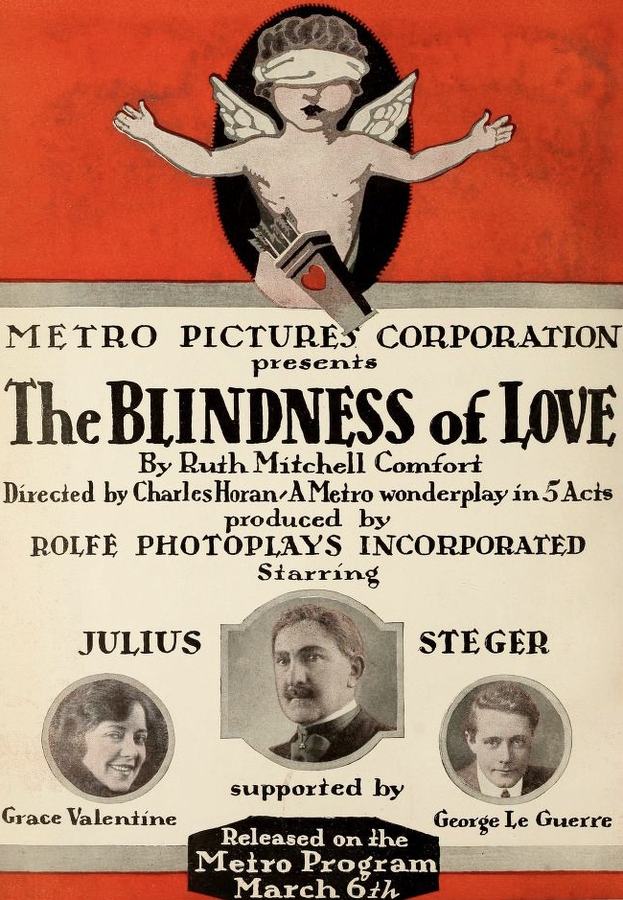
Imagine a film that strips the varnish off paternal worship until the raw wood of obsession gleams white. Director Harry O. Hoyt, scripting alongside novelist Ruth Comfort Mitchell, delivers exactly that in The Blindness of Love—a 1915 one-reel miracle that feels closer to a scalpel than to entertainment. The flickers may be ancient, yet the emotional voltage could fry a modern cynic’s circuits.
Cinematographer Walter Hitchcock (also essaying the thankless role of George Lennan) shoots Joseph’s workshop like a cathedral: shafts of dust float in amber backlight, each suspended particle a mote of deferred dreams. Note the spatial rhetoric once the narrative relocates to campus: the Wilton père is repeatedly framed in long shot, dwarfed by neo-gothic arches that sneer at his provincial coat. The edit never announces the humiliation; it simply lets stone win over flesh frame by frame—a proto-Third Degree critique of institutional arrogance.
Contrast this with the gambling den sequence—an iris-in that feels almost obscene. Cards flutter like wounded birds under a haze of cigar smoke; the camera tilts slightly, as though the world itself has begun to slip off its axis. The distortion anticipates the Expressionist nightmares that would storm German screens a decade later, proving that American silents were never the naive cousins European critics loved to patronize.
Edgar L. Davenport’s Joseph Wilton could teach a masterclass in minimalist devastation. Watch the moment he pockets the bank’s last promissory note: a microscopic flinch of the left eye, the way his thumb unconsciously polishes the paper as if it might turn to gold through friction alone. No intertitle could articulate the arithmetic of guilt with such crystalline economy.
Harry Neville’s Bob, meanwhile, charts a believable arc from callow entitlement to hemorrhaging remorse without the histrionic heel-clicking that mars so many collegiate villains of the era. His body language graduates from slack-jawed lounging to a coiled forward-lean, as though the man is perpetually walking into a headwind of his own making.
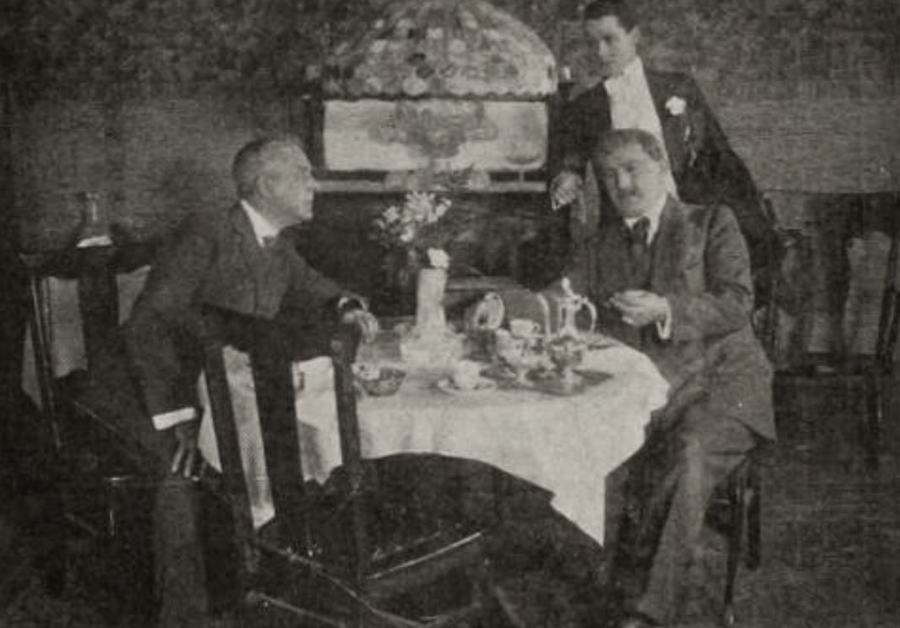
Vera Pearce’s Molly deserves special commendation for refusing the sainted-sister cliché. Her eyes spark with intelligent rage when she confronts her father; later, when she finally tracks him through a Lower East Side flophouse, her embrace is swift yet businesslike—an act of salvation, not sentiment.
Beneath the tear-stained surface lies a ruthless dissection of early-twentieth-century finance. The Wilton-Graham bank is a mere sliver compared with the trusts then strangling America, yet its rise and collapse follows the identical arc: easy credit, social ornamentation, rumor, panic, ruin. Hoyt’s script anticipates both C.O.D. and The Middleman in its cynicism toward small-town boosterism masquerading as opportunity.
Consider the suicide shot: Graham slumps across a ledger, fountain pen still leaking ink that pools like black blood over the balance column. The composition is a crucifixion, but the messiah is fiduciary illusion itself. The film insists that worship of capital is the era’s true state religion, with fathers and sons as its most devout martyrs.
Molly’s banishment from the household forms the moral spine that prevents the picture from toppling into patriarchal self-pity. When she counsels restraint, Joseph’s thunderous rebuttal—“A woman’s place is harmony, not counsel”—lands with Shakespearean resonance, all the more damning because the narrative refuses to vindicate him. His subsequent penance in the slums reads as the film’s quiet admission that every prophetess expelled returns as history itself.
Grace Maynard, though sidelined in the third act, embodies another form of social currency: the collateral daughter. Her father Aubrey’s threat of prosecution exposes how readily the judicial system morphs into a paternal cudgel, protecting assets while policing desire. The script spares her the usual fallen-woman fate, granting instead a deferred but autonomous future—progressive for 1915, and still refreshing today.
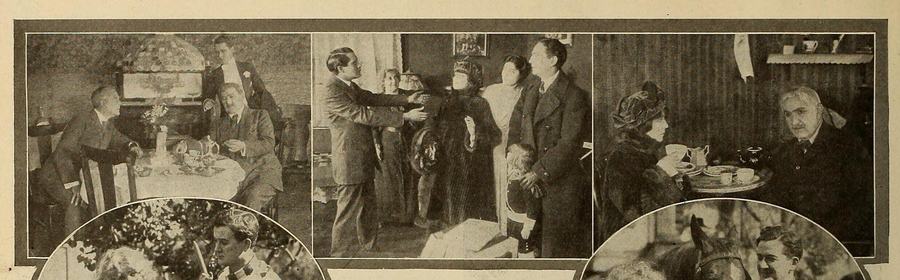
Popular cinema then and now loves a montage of moral laundering. Not here. Bob’s rehabilitation occurs off-screen, relayed through letters and ledger entries, implying that contrition is less photogenic than the sin that necessitates it. When he finally strides back into the narrative, the camera maintains a wary medium-shot; reunion is allowed, but close enough to smell the prison still lingering on his overcoat.
The closing tableau—three generations framed in a tenement doorway—avoids the iris-out kiss of death so endemic to melodrama. Instead, the child tentatively offers a battered toy piano key to his grandfather. Joseph accepts it the way a communicant takes the host: trembling, silent, aware that absolution is an annuity, not a lump sum.
If you found the father-son rupture in The Man from Home too tidy, or the financial panic in The House of Temperley oddly bloodless, The Blindness of Love supplies the jagged emotional sutures those films avoid. It lacks the Expressionist shadows of The Unknown, yet the psychological chiaroscuro is equally potent—achieved not through set design but through the scalding clarity of its moral gaze.
Fully intact 35 mm prints survive in both the Library of Congress and the EYE Filmmuseum, thanks to a 2018 restoration funded by the Hobson Trust. A 2K scan circulates via streaming service SilentMajesty, accompanied by a new piano score from Guenter Buchwald that interpolates motifs from Schumann’s Humoreske—the same piece Joseph labors over in the opening scene. Physical media devotees can snag the Blu-ray from CinePurge, which adds a commentary by historian Karen O’Donnell that excavates the banking records Hoyt used as source material.
All art risks didacticism when it lectures rather than embodies. The Blindness of Love sidesteps that trap by trusting the viewer to feel the chill radiating from a discarded bank statement, to hear the crack of a denied handshake across a football field. It argues, without sermon, that love calcifies into blindness only when it demands repayment in the currency of our own self-worth. See it for the historical insight; revisit it for the mirror it still holds up to every family dinner table where achievement is tallied like a quarterly report.
—Reviewed by a devotee of nitrate shadows and human consequence, published first on Celluloid Sacrament.
IMDb 6.2
1933
Community
Log in to comment.