DbcultAccessing Vault...
Cult Review
Senior Film Conservator
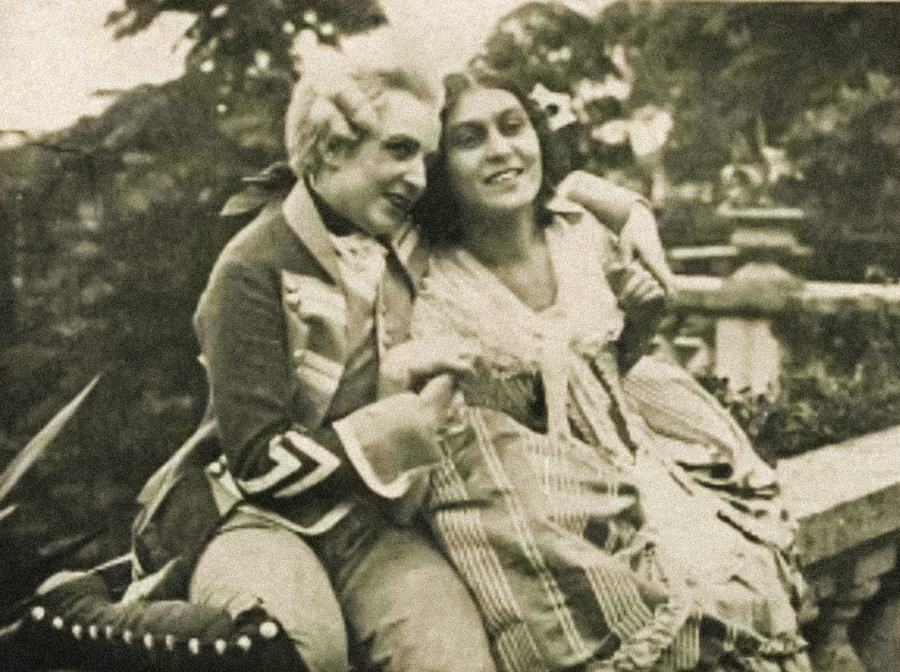
There is a moment—roughly halfway through Figaros Hochzeit—when the camera glides past a gilt mirror and catches Alexander Moissi mid-smirk; the reflection doubles, then trebles, until an army of Figaros crowds the frame. It is 1949, Europe is busy stapling itself back together, and cinema here performs the same trick: multiplying insurgent laughter until aristocratic solemnity shatters like porcelain under a hammer. Director Richard Oswald strips the play’s Rococo ornamentation to something starker: whitewashed arcades, iron-grilled windows, dust motes that swirl like gossip in hot afternoon light. The effect is not archaeological but alchemical—every powdered wig becomes a spark plug for revolution.
Forget synopsis as mere sequence; think instead of a clockwork heart where every gear is horny, vengeful, or both. The Count wants to exercise droit du seigneur on Susanna, Figaro’s bride-to-be. Figaro, debtor records in hand, schemes to outwit his master with a maze of disguises, forged letters, and one very pregnant chambermaid. By the time Vera Schwarz’s Countess glides into the garden at twilight, disguised in her rival’s cloak, the film has become a stately quadrille turned stampede. The final act—lit entirely by torches whose flames paint faces the color of molten gold—feels less like nuptial revelry than a controlled explosion whose shrapnel is marital bliss.
Moissi’s Figaro sports a Cheshire grin that precedes him into every room; you hear teeth before footsteps. Compare him to Charles Laughton’s blustery bootmaker in Hobson’s Choice—both comic tyrants of their tiny kingdoms—yet Moissi adds a whiff of existential gambler, as though each prank might be his last. Opposite him, Ilka Grüning never lets Susanna calcify into plucky ingenue; her glances carry the arithmetic of survival—half Cupid, half bookkeeper. Meanwhile, Eduard von Winterstein plays Almaviva like a man who has read the libretto of his own downfall and still strides toward it, chest bared, craving the wound of ridicule.
Watch her fan work: flick-flick-pause. Each pause is a verdict, each flick a reprieve. In close-up her pupils seem to measure the exact social distance between her and whoever speaks, the way surveyors gauge falling rock. She is listening—a rarity in screen performances of the era—turning dialogue into ammunition she’ll fire three scenes later.
Cinematographer Georg Bruckbauer shoots daylight like a crime scene: high contrast, long shadows, white walls bruised by shade. Interiors glow amber from candelabra, faces emerging from chiaroscuro as if painted by Goya. Sea-blue (#0E7490) shutters recur whenever freedom peeks through; yellow (#EAB308) appears only in Susanna’s skirt flips and the Countess’s lament, a visual promise that joy and sorrow share bolt of cloth. Dark orange (#C2410C) blooms at dawn during the triple-wedding finale, spilling across paving stones like overturned sangria—an earthbound sunrise heralding new, chaotic hierarchies.
Though 1949, the production kept an early-sound austerity: sparse score, lots of footsteps, doors that slam like pistol shots. When Mozart’s melodies do surface—whistled by a gardener, hummed by Susanna—they feel contraband, smuggled into the film the way librettos were once smuggled past imperial censors. Silence becomes its own character, stretching until even breathing feels operatic.
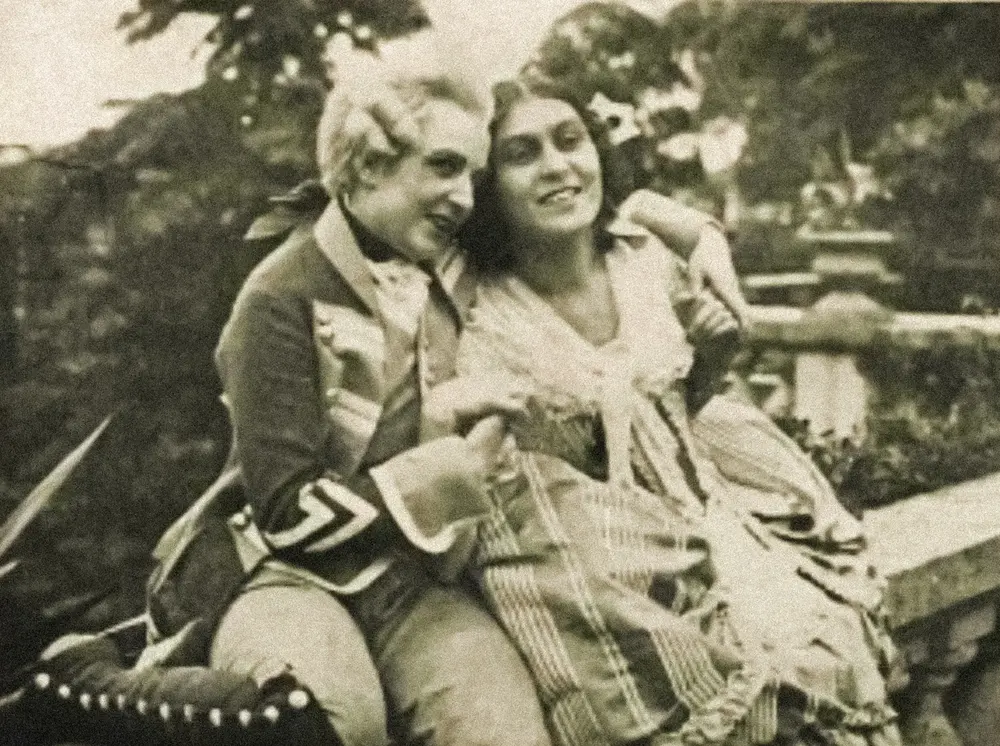
Place Figaros Hochzeit beside The Fatal Secret—both hinge on clandestine letters—but Oswald’s film trades Gothic gloom for erotic sunniness. Conversely, measure it against Love Is Love; where that comedy dissolves class tension into sentimental syrup, here class warfare stays sharp enough to nick arteries. Even She Couldn’t Help It shares the theme of feminine ingenuity, yet its flapper milieu lacks the political powder keg that gives Beaumarchais’ lovers their ozone crackle.
Yes, the men strut and scheme, but notice who really architects the day: Susanna’s handwriting on forged assignations, the Countess’s decision to trade sorrow for strategy, even the adolescent page Cherubino whose pubescent chaos functions like wild card in power poker. The film quietly insists revolution begins not in parliaments but bedchambers, where the personal vaults over balconies into politics.
“To seduce is to confess one’s own enslavement,” Almaviva mutters, half drunk on his own doom. The line is nowhere in Beaumarchais, but Oswald inserts it like tracer bullet: desire arcs, lands, and suddenly the master finds himself manacled to his own appetite.
Viennese critics of ’49 lauded the film’s “Biedermeier elegance,” missing entirely its subterranean snarl. Post-war audiences, weary of uniforms, wanted escapism; instead they got a reminder that the ancien régime is never more than a bedroom farce away. Modern viewers will clock MeToo resonances in every grasping hand, every ledger of entitlement. The Count’s attempted assault—played for laughs on stage—here lands with gut-punch realism because Grüning’s Susanna lets terror flicker across her face for exactly three frames before masking it with wit.
A 4K restoration by Filmarchiv Austria resurfaced in 2021, scanning nitrate elements stored in a salt mine. The new print reveals texture: lace, sweat, cloud-drift of powder. Streaming platforms with arthouses queues (Criterion Channel, Mubi) occasionally license it, but your best bet is Blu-ray from Alpha-Omega with German intertitles and English subtitles that capture the snap of Beaumarchais’ epigrams.
Great farce doesn’t just tickle; it topples. Oswald’s Figaros Hochzeit understands that every slammed door is a rehearsal for the Bastille’s breach, every wedding veil a potential flag. Ninety minutes of flirtation, forgery, and forgiveness leave you giddy, yes, but also faintly winded—as if history itself has sprinted through the room, trailing lace, gunpowder, and the faint whiff of orange blossom.
IMDb 7.6
1937
Community
Log in to comment.