DbcultAccessing Vault...
Cult Review
Senior Film Conservator
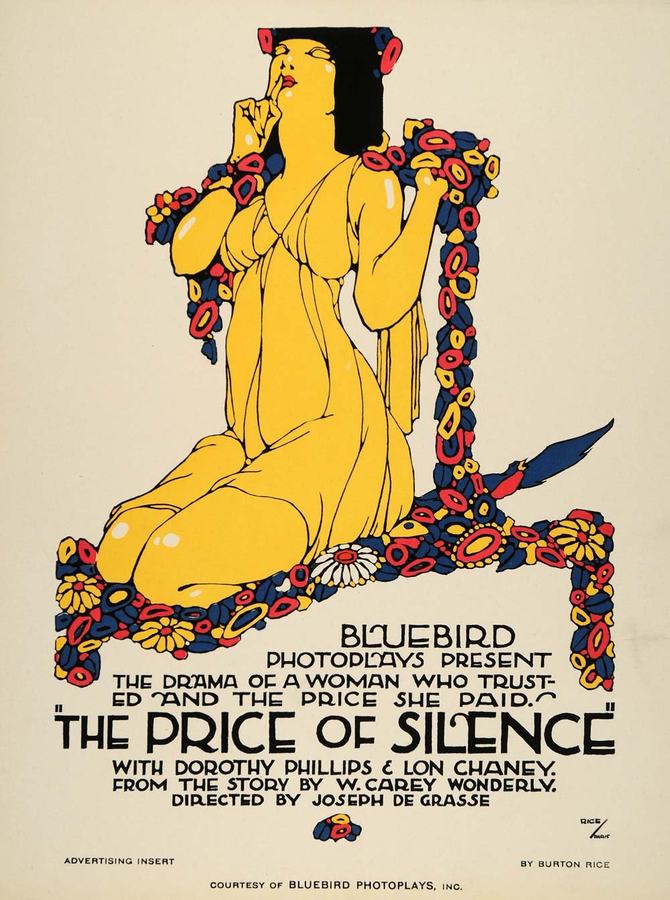
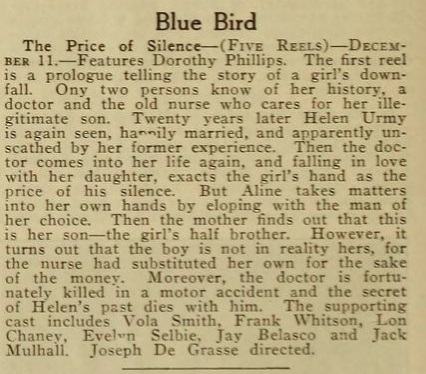
Stepping back into the flickering shadows of early cinema, one often encounters narratives that, despite their age, resonate with an almost startling contemporary relevance. Such is the case with W. Carey Wonderly and Ida May Park's 'The Price of Silence,' a 1916 drama that, even from its terse plot synopsis, promises a profound exploration of human frailty, societal hypocrisy, and the crushing weight of a secret. This isn't just a story; it's a social commentary, a psychological thriller veiled in the melodramatic conventions of its time, offering a window into the moral labyrinth faced by women in an unforgiving era.
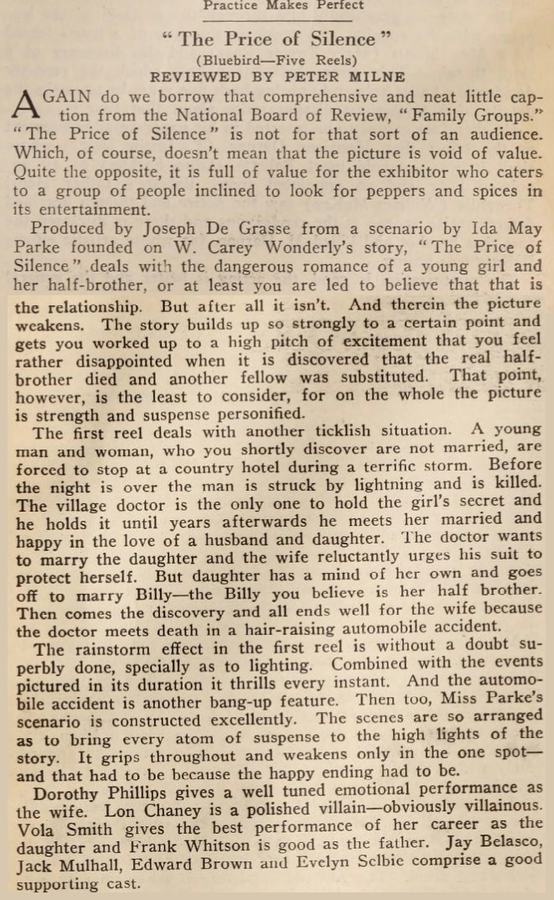
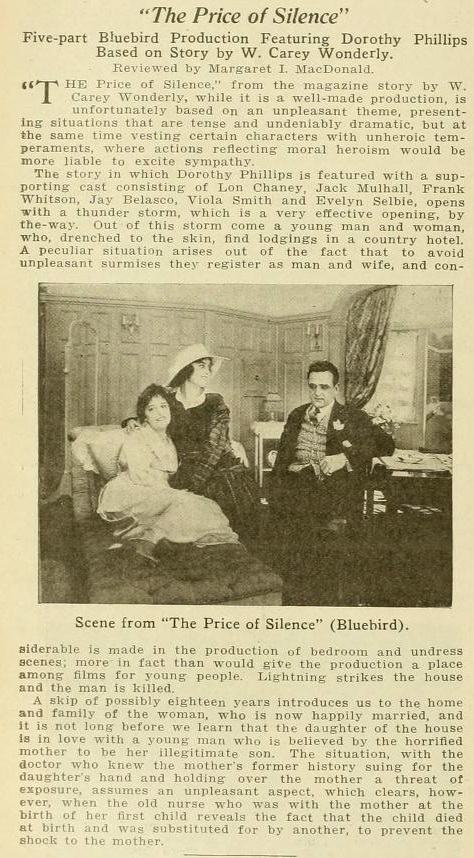
The premise is stark yet potent: a woman, forced to surrender her illegitimate child, subsequently enters into marriage, keeping her past a closely guarded secret from her unsuspecting husband. This core conflict, simple in its articulation, unravels a multitude of complex themes. It speaks to the societal double standards of the early 20th century, where a woman's 'honor' was inextricably linked to her perceived purity, and any deviation from this path could lead to utter ruin. The decision to give up a child, while heartbreaking, was often a desperate act of survival in a world that offered little compassion or support for unwed mothers. The film, therefore, doesn't merely present a plot point; it confronts a harsh social reality, forcing its audience to grapple with the ethical dilemmas and emotional turmoil inherent in such a predicament.
The central character, whose name regrettably eludes the surviving records, becomes a vessel for this profound internal struggle. Her life, seemingly idyllic on the surface, is a carefully constructed façade, a house of cards perpetually threatened by the faintest breeze of revelation. The 'price' in the title isn't just the literal giving up of her child, but the perpetual anxiety, the gnawing fear of exposure, and the emotional distance this secret inevitably places between her and her husband. It's a psychological burden that permeates every interaction, every shared moment, casting a long, dark shadow over what should be a joyful union. The silent film medium, with its reliance on exaggerated expressions, poignant intertitles, and evocative cinematography, would have been particularly adept at conveying this internal anguish, allowing the audience to project their own understanding onto her unspoken torment.
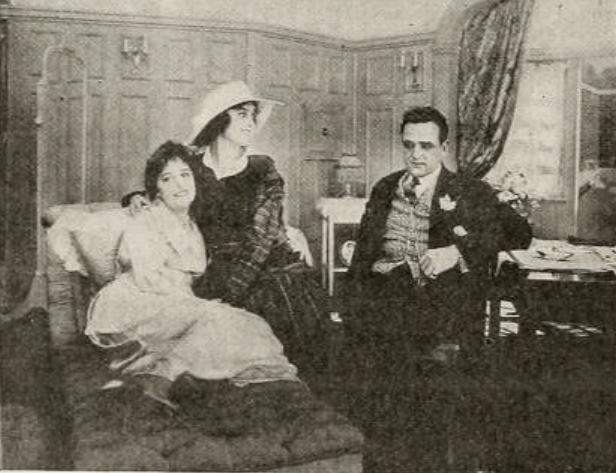
The casting, even with limited information on specific roles beyond the general plot, offers tantalizing possibilities. Dorothy Phillips, a prominent star of the era, likely brought a nuanced vulnerability and strength to the lead role, embodying the grace under pressure demanded by such a character. Her ability to convey deep emotion through gesture and gaze would have been crucial in eliciting audience empathy. Then there's the magnetic presence of Lon Chaney, often dubbed 'The Man of a Thousand Faces.' While his role isn't specified as the husband or a villain, Chaney's involvement almost guarantees a performance of intense dramatic power, regardless of his character's alignment. One can easily imagine him in a role that either supports the protagonist with quiet understanding, or, more likely given his oeuvre, embodies the potential threat, the lurking danger of discovery, or even a sympathetic figure from her past. His unique ability to transform and convey complex inner lives without dialogue would have added immense depth to any scene he graced. Frank Whitson, Evelyn Selbie, Vola Vale, J. Edwin Brown, Jay Belasco, and Jack Mulhall complete a cast that, collectively, would have contributed to the film's dramatic texture, each playing a part in the intricate web of relationships and potential conflicts.
The narrative structure, typical of silent melodramas, likely builds tension through a series of near-misses and escalating threats. Will the child reappear? Will a former acquaintance inadvertently reveal her past? The film’s dramatic arc would depend on skillfully delaying the inevitable, allowing the audience to fully invest in the protagonist's plight and dread the moment of truth. This tension, masterfully crafted, could be compared to other films of the era that explored profound moral quandaries or hidden identities. For instance, the intricate web of deceit and self-preservation in a film like The Deserter, though different in its specific context, shares a thematic thread of individuals grappling with the consequences of past actions and the fear of exposure. Similarly, the psychological depth required to portray a character living a lie might draw parallels with the intricate character studies found in films like A Study in Scarlet, where internal conflict drives much of the narrative.
Ida May Park and W. Carey Wonderly, as writers, were tasked with crafting a story that could convey such emotional weight and narrative complexity through visual storytelling. Their challenge was to develop characters whose motivations were clear, whose struggles were palpable, and whose ultimate fates resonated deeply with a contemporary audience. The subtlety of their characterizations, conveyed through directorial choices and actor's performances, would have been paramount. In an age where intertitles provided key dialogue and exposition, the visual narrative had to carry the bulk of the emotional resonance. The success of 'The Price of Silence' would have hinged on its ability to transcend mere plot points and delve into the psychological ramifications of its central dilemma.
The film's very existence, preserved in the Archives du Film du CNC and noted in the American Silent Feature Film Survival Database, is a testament to its historical significance and, one hopes, its artistic merit. The survival of such cinematic artifacts is crucial for understanding the evolution of storytelling, acting techniques, and societal values. To view 'The Price of Silence' today is not just to watch an old movie; it is to engage with a piece of cultural history, to witness the nascent power of film to explore profound human experiences. It’s a stark reminder that the 'price of silence' is not just borne by the individual, but can ripple through families and communities, shaping destinies in unforeseen ways.
The themes explored in 'The Price of Silence' – secrets, betrayal, societal judgment, and the quest for redemption – are timeless. While the specific social context of illegitimate children and marriage in the 1910s might seem distant, the underlying human emotions are universal. Who among us hasn't harbored a secret, or feared the repercussions of a past mistake? This universal appeal is what allows silent films, despite their lack of synchronized sound and often melodramatic pacing, to continue to captivate. The film's title itself is a poignant commentary, suggesting that silence, far from being a shield, often exacts a heavy toll, demanding a constant vigilance and an emotional detachment that ultimately compromises genuine connection.
Consider the directorial choices that would have been necessary to articulate this intricate emotional landscape. The use of close-ups to capture the protagonist's anguish, the subtle shifts in lighting to reflect her internal state, or the deliberate pacing to build suspense – these were the tools of the silent filmmaker. The visual language of cinema was still evolving, and films like 'The Price of Silence' contributed to its lexicon, demonstrating how complex narratives could be conveyed without a single spoken word. The interplay between the actors' physical performances and the intertitles would have formed a powerful dialogue, drawing the audience into the protagonist's inner world.
In an era that also produced films like Children of the Stage; or, When Love Speaks, which explored familial bonds and difficult choices, 'The Price of Silence' stands as a powerful example of how silent cinema tackled weighty moral and social issues. It goes beyond simple entertainment, offering a mirror to the prevailing anxieties and ethical quandaries of its time. The film’s power lies not just in its dramatic unfolding but in its implicit critique of a society that forced such impossible choices upon individuals, particularly women.
The very concept of a 'hidden past' was a popular trope in early cinema, reflecting a broader cultural fascination with secrets and their eventual unearthing. However, 'The Price of Silence' elevates this trope by embedding it within a narrative that focuses on the profound psychological impact of maintaining such a façade. It's not just about the secret itself, but about the *cost* of keeping it, the emotional erosion it causes, and the potential for explosive revelation. This makes the film a compelling study in human endurance and the fragile nature of happiness built on deception.
Ultimately, 'The Price of Silence' emerges as more than just a historical curiosity. It is a poignant reminder of the enduring power of storytelling, particularly when it delves into the universal human experience of regret, secrecy, and the yearning for acceptance. Its survival allows us to appreciate the artistry of its creators and to reflect on how much, and how little, human nature has changed over the decades. The film, in its quiet intensity, speaks volumes about the burdens we carry and the profound impact of choices made in moments of desperation. It compels us to consider the intricate dance between truth and illusion, and the often-devastating consequences when the music finally stops.
The thematic resonance extends beyond the immediate plot. It prompts questions about forgiveness, both self-forgiveness and the forgiveness of others. How would the husband react upon learning the truth? Could their love withstand such a revelation, or would the foundation of their marriage crumble under the weight of the concealed past? The film, even without knowing its ultimate resolution, invites us to ponder these very human reactions, making it a powerful vehicle for empathy and introspection. This ability to provoke thought, to stir the audience's moral compass, is a hallmark of truly impactful cinema, regardless of its era.
Indeed, the enduring appeal of such narratives lies in their exploration of universal dilemmas. While the specific social stigma attached to illegitimacy has evolved, the concept of a past secret threatening a present happiness remains a potent dramatic device. Films like On the Night Stage or The Moth and the Flame, though perhaps different in their specific genre or setting, often relied on similar dramatic tension derived from hidden motivations or concealed identities. 'The Price of Silence' taps into this fundamental human experience, allowing audiences across generations to connect with the protagonist's plight.
The film, therefore, serves as a powerful historical document, not only of cinematic technique but also of societal attitudes towards morality, family, and the roles prescribed for women. It’s a testament to the fact that even in the nascent days of film, complex human dramas were being explored with sensitivity and depth. The 'price of silence' is, ultimately, the burden of a life lived in shadow, a life where genuine connection is always just out of reach, overshadowed by the fear of a past that refuses to stay buried.
To be able to revisit such a film, even in fragments or through its historical record, is a privilege. It allows us to appreciate the foundational elements of cinematic storytelling and the enduring power of human drama. The film's title, The Price of Silence, remains a compelling hook, inviting us to delve into a narrative that promises emotional intensity and a profound commentary on the human condition. It reminds us that some stories, like some secrets, are too powerful to ever truly be silenced.
The artistry of silent film, particularly in its capacity for visual metaphor and symbolic imagery, would have been crucial in conveying the nuances of the protagonist's internal world. Imagine shots of shadows lengthening around her, or a recurring motif of a locked door, symbolizing the secret she keeps. These visual cues, combined with the emotive performances of the cast, would have created a rich tapestry of meaning, allowing the audience to feel the weight of her burden without a single word being spoken aloud. This sophisticated visual language is a hallmark of the era's best films, and 'The Price of Silence' undoubtedly contributed to this evolving cinematic grammar.
Moreover, the historical context of the film's production cannot be overstated. Released in 1916, it reflects a society on the cusp of significant change, yet still deeply entrenched in Victorian-era moral codes. The film serves as a valuable document for understanding these societal pressures and the dramatic ways they manifested in popular entertainment. It offers a lens through which to examine how film both reflected and, perhaps, subtly challenged the prevailing norms, by inviting empathy for characters who transgressed against them. This dual role of mirror and provocateur is a fascinating aspect of early cinema, and 'The Price of Silence' exemplifies it beautifully.
The sheer audacity of the premise for its time is also worth noting. While melodrama often featured scandalous elements, the focus on a woman's agency, albeit under duress, and the long-term psychological impact of her choices, elevated the material beyond mere sensationalism. It ventured into the realm of character study, exploring the internal landscape of a woman caught between her past and her precarious present. This depth of exploration is what distinguishes a memorable silent film from a forgettable one, ensuring its place in the cinematic archives.
In conclusion, while direct access to 'The Price of Silence' may be limited, its synopsis alone paints a vivid picture of a compelling silent drama. It’s a film that speaks to the enduring power of secrets, the weight of societal judgment, and the profound human cost of living a lie. Its themes are universal, its dramatic potential immense, and its historical significance undeniable. For cinephiles and historians alike, it stands as a testament to the rich narrative tapestry woven by early filmmakers, proving that even a century later, the price of silence still resonates with a chilling clarity.
IMDb —
1920
Community
Log in to comment.